openPR Recherche & Suche
Presseinformation

Reducing manure and fertilizers decreases atmospheric fine particles

27.10.201721:00 UhrWissenschaft, Forschung, Bildung
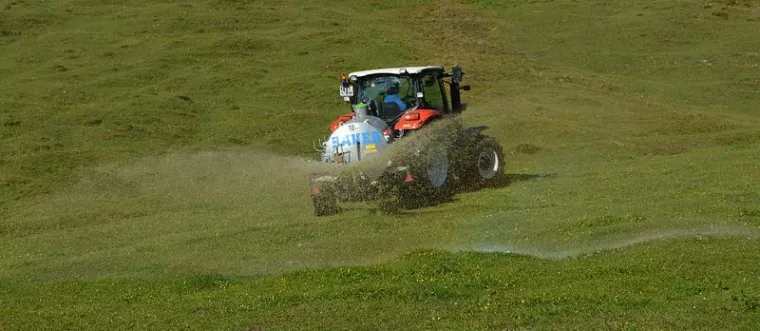
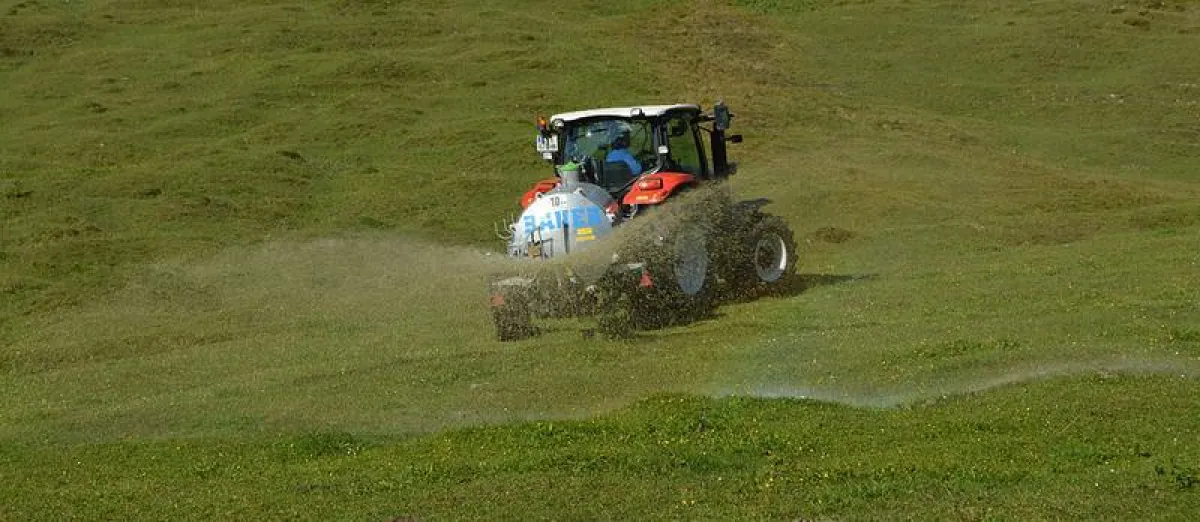
Bild: Reducing manure and fertilizers decreases atmospheric fine particles
An important source of fine particulates: agricultural ammonia emissions from fertilizer use and animal husbandry. (Wald1siedel/Creative-Commons Lizenz)

(openPR) A decrease of agricultural ammonia emissions avoids mortality attributable to air pollution

Mainz, 27 Oktober 2017

---
Fine particulates have numerous sources – not only traffic, which is currently under particular scrutiny. Reducing agricultural emissions could also considerably reduce the particulate levels that are hazardous to health, concludes a study by researchers at the Max Planck Institute for Chemistry in Mainz, Germany. The scientists calculated that especially in Europe and North America, the atmospheric fine particle concentration would decrease substantially by reducing ammonia (NH3) emissions by fertilizer use and animal husbandry. If agricultural emissions were 50 percent lower, more than 250,000 deaths per year, caused by air pollution, could be avoided globally. The results are published in Atmospheric Chemistry and Physics, a journal of the European Geosciences Union.


According to the World Health Organization (WHO), fine particulate matter with a diameter less than 2.5 micrometers (PM2.5) is particularly harmful to health, because the particles penetrate deep into the lungs and can cause cardiovascular and respiratory diseases. This significantly reduces life expectancy in many regions of the world. According to the “Global Burden of Disease”, a study that assesses mortality and disability from major diseases, injuries, and risk factors, outdoor air pollution is the fifth-ranked risk factor of global total mortality.

'Currently, the public debate primarily focusses on the particulate load from traffic, while other sources such as agriculture are neglected', says Jos Lelieveld, Director of the Atmospheric Chemistry Department at the Institute in Mainz. Particulate emissions from motor vehicles can make a critical contribution to local air pollution in urban areas, especially near roads with heavy traffic. However, most fine particulates (PM2.5) are the result of chemical processes in the air during transport by the wind. 'The concentration of fine particulates in the atmosphere could be drastically reduced by preventing the release of ammonia from agriculture', says Lelieveld, which is underpinned with recent calculations of his research team.

Ammonia reacts to form the salts that make particulates

In an earlier study, the Max Planck researchers pointed out that 3.3 million people around the globe died in the year 2010 as a consequence of air pollution. Meanwhile the estimates for recent years have increased significantly. The scientists emphasize that in many regions of the world industry and traffic are not the leading sources of air pollution, which is generally assumed, but that agriculture can play an important role, in addition to residential energy use for heating and cooking.

The scientists have identified the release of ammonia from animal husbandry and fertilizer use as a leading cause of air pollution, especially in large parts of Europe. Ammonia contains nitrogen which is an important nutrient for plants, but it escapes to the atmosphere from manure and by fertilizing agricultural crops. It reacts with other substances, such as sulphuric and nitric acid, to form ammonium sulphate and nitrate salts that make up the particulates.

50 percent less NH3 would avoid 250,000 deaths per year globally

In their present study, the scientists concentrate on four regions where particulate air quality limits are frequently exceeded: North America, Europe, South and East Asia. Their calculations show that a 50 percent reduction of agricultural emissions would lead to a global decrease in deaths attributable to air pollution of around eight percent. This figure corresponds to a mortality rate of 250,000 people per year. If ammonia emissions could be fully excluded, about 800,000 deaths from air pollution related diseases would be avoided globally.

'The effect of ammonia reduction on particulate formation is non-linear. Air quality improvement is most efficient after certain reductions have been realized. 'From this point on, however, the effect is exponential', explains Andrea Pozzer, Group Leader at the Max Planck Institute for Chemistry and leading author of the study. A reduction in ammonia emissions of more than 50 percent would, therefore, be highly effective and desirable, Pozzer adds.

Europe, especially, would profit from lower ammonia emissions

The scientists determined mortality rates in two stages: first, with the aid of an atmospheric chemistry model, they calculated how strongly fine particulates would be reduced by decreasing ammonia emissions. The results show that by cutting the global source by half, in Europe 11 percent less PM2.5 particulates would result, in the USA 19 percent and in China 34 percent. In Germany, the average level of fine particulates in the year 2015 was around 14 micrograms per cubic meter of air, meaning that in the 50 percent reduction scenario it would drop to about 12.5 micrograms per cubic meter.

Based on an additional model, which describes the public health impacts that occur for a given particulate exposure, the researchers calculated the influence on mortality by lung cancer, cardiovascular and respiratory diseases. In particular Europe would profit from a reduction in ammonia emissions and the consequent decrease of fine particulates: for example, a Europe-wide NH3 reduction of 50 percent would decrease mortality from PM2.5 by almost 20 percent, meaning that about 50,000 deaths per year could be avoided.

Andrea Pozzer and colleagues calculated that an ammonia reduction of this magnitude in the USA would lead to a 30 percent drop in the air pollution related mortality rate. In contrast, the computer models indicate smaller improvements for the same reduction in East Asia, about eight percent, and only three percent in South Asia.

Based on these results, Jos Lelieveld concludes: 'Emission policies, in particular in North America and Europe, should impose more stringent ammonia controls to effectively reduce fine particulate concentrations.' Sulphur dioxide (SO2) and nitrogen oxide (NOx) reduction measures are critically important for clean air, but should be complemented by a reduction of ammonia from agriculture, which can be implemented relatively efficiently and economically. (AR/SB/PH)

Contact
Prof. Dr. Jos Lelieveld
Max Planck Institute for Chemistry, Mainz
Phone: +49 6131 305-4040
Email: E-Mail

Dr. Andrea Pozzer
Max Planck Institute for Chemistry, Mainz
Phone: +49 6131 305-4600

Original publication
“Impact of agricultural emission reductions on fine particulate matter and public health”: Andrea Pozzer, Alexandra P. Tsimpidi, Vlassis A. Karydis, Alexander de Meij, and Jos Lelieveld; Atmos. Chem. Phys., doi:10.5194/acp-2017-390, 2017
Email: E-Mail

Weitere Informationen:
- http://www.mpic.de/en/news/press-information/news/reducing-manure-and-fertilizers-decreases-atmospheric-fine-particles.html

Quelle: idw

Diese Pressemeldung wurde auf openPR veröffentlicht.

Verantwortlich für diese Pressemeldung:

News-ID: 977160
 698

Kostenlose Online PR für alle

Jetzt Ihren Pressetext mit einem Klick auf openPR veröffentlichen

Jetzt gratis starten

Pressebericht „Reducing manure and fertilizers decreases atmospheric fine particles“ bearbeiten oder mit dem "Super-PR-Sparpaket" stark hervorheben, zielgerichtet an Journalisten & Top50 Online-Portale verbreiten:

PM löschen PM ändern
Disclaimer: Für den obigen Pressetext inkl. etwaiger Bilder/ Videos ist ausschließlich der im Text angegebene Kontakt verantwortlich. Der Webseitenanbieter distanziert sich ausdrücklich von den Inhalten Dritter und macht sich diese nicht zu eigen. Wenn Sie die obigen Informationen redaktionell nutzen möchten, so wenden Sie sich bitte an den obigen Pressekontakt. Bei einer Veröffentlichung bitten wir um ein Belegexemplar oder Quellenennung der URL.

Pressemitteilungen KOSTENLOS veröffentlichen und verbreiten mit openPR

Stellen Sie Ihre Medienmitteilung jetzt hier ein!

Jetzt gratis starten

Weitere Mitteilungen von Max-Planck-Institut für Chemie

Bild: Weniger Dünger reduziert die FeinstaubbelastungBild: Weniger Dünger reduziert die Feinstaubbelastung
Weniger Dünger reduziert die Feinstaubbelastung
Die Senkung landwirtschaftlicher Ammoniakemissionen kann die Sterblichkeit durch Luftverschmutzung erheblich reduzieren. Mainz, 27. Oktober 2017 --- Für Feinstaub gibt es viele Quellen – nicht nur den Verkehr, der dafür derzeit besonders viel Aufmerksamkeit erfährt. Auch eine Reduktion landwirtschaftlicher Emissionen könnte die Menge an gesundheitsschädlichem Feinstaub erheblich senken, wie eine Studie von Forschern des Max-Planck-Instituts für Chemie in Mainz zeigt. Die Wissenschaftler berechneten, dass speziell in Europa und Nordamerika d…
Bild: Knapp neun Milliarden Tonnen mehr CO2 durch El NiñoBild: Knapp neun Milliarden Tonnen mehr CO2 durch El Niño
Knapp neun Milliarden Tonnen mehr CO2 durch El Niño
Gemeinsame Pressemeldung der Max-Planck-Institute für Chemie und für Biogeochemie Mainz, Jena, 19.10.2017 Verstärkte Freisetzung des Treibhausgases CO2 in die Atmosphäre während eines El Niño-Jahres erstmalig mit Satellitendaten quantifiziert. Dürre-geschwächte Vegetation nahm weniger CO2 auf. --- Das Klimaphänomen El Niño findet durchschnittlich alle vier Jahre im Pazifik statt. In El Niño-Jahren wird die ohnehin schon ansteigende Menge an Treibhausgasen wie Kohlendioxid (CO2) in der Atmosphäre zusätzlich erhöht. Wissenschaftler ermittel…

Das könnte Sie auch interessieren:

Bild: Wald- und Klima-Kampagne online. Waldportal waldundzukunft.de informiert zu Wald- und KlimaschutzBild: Wald- und Klima-Kampagne online. Waldportal waldundzukunft.de informiert zu Wald- und Klimaschutz
Wald- und Klima-Kampagne online. Waldportal waldundzukunft.de informiert zu Wald- und Klimaschutz
… in eine nachhaltige Existenzsicherung der Menschheit. Darüber hinaus werden mögliche Maßnahmen zum Schutz der Wälder und Finanzierungsmechanismen dargestellt und diskutiert. REDD (Reducing Emissions from Deforestation and Degradation), ein Konzept zur Vermeidung von Emissionen durch Entwaldung, steht dabei im Vordergrund. Das Portal ist Bestandteil der …
Optimierte Vitamin D-Versorgung beugt Karies vor
… ng/ml) gilt in der Wissenschaft als Wert, ab dem Vitamin D seine positiven Wirkungen ausreichend entfalten kann. Als optimal gelten Werte von 40 bis 60 ng/ml. Quelle: William B. Grant: „A review of the role of solar ultraviolet-B irradiance and vitamin D in reducing risk of dental caries“, in: Dermato-Endocrinology 3:3, 1-6; July/August/September 2011
Bild: Webinar: WCC feat. Gartner in \'Hire Better People Faster with Guided Search\'Bild: Webinar: WCC feat. Gartner in \'Hire Better People Faster with Guided Search\'
Webinar: WCC feat. Gartner in \'Hire Better People Faster with Guided Search\'
… WCC Smart Search & Match will tackle some of the major dilemmas that managers face in the employment arena: > cost cutting and budget freeze vs filling vacancies > reducing time to hire vs keeping quality results on high level > increasing the quality of your candidate search results vs reduce time to hire > empowering your user …
Tagung “Im Blickpunkt? – Indigene Rechte in der Deutschen Entwicklungs- und Umweltpolitik”
Der Klimagipfel in Kopenhagen brachte für die indigenen VertreterInnen zumindest einen Teilerfolg: Im Abschlusstext zu REDD (Reducing Emissions from Deforestation and Forest Degradation) wird die Bedeutung der indigenen Völker anerkannt und ihre Einbindung gefordert. Was bedeuten diese kleinen Erfolge auf der lokalen Ebene? Ändert sich damit die Situation …
Bild: Qualitätssiegel der Swiss Society For Anti-Aging Medicine And Prevention erhaltenBild: Qualitätssiegel der Swiss Society For Anti-Aging Medicine And Prevention erhalten
Qualitätssiegel der Swiss Society For Anti-Aging Medicine And Prevention erhalten
… nun wissenschaftlich abgesichert ist, lautet: Auch das Gewicht und die Ernährung beeinflussen den Alterungsprozess. Die CALERIE-Studie (Comprehensive Assessment of Long-term Effects of Reducing Intake of Energy) des America's National Institutes of Health bestätigt, dass sich eine Kalorienreduktion positiv auf die Lebenserwartung von uns Menschen auswirkt. …
Bild: Win-win strategies for climate and food securityBild: Win-win strategies for climate and food security
Win-win strategies for climate and food security
… help mitigate climate change while avoiding steep hikes in food prices. --- Climate policies that target agriculture and forests could lead to increased food prices, but reducing deforestation and increasing soil carbon sequestration in agriculture could significantly reduce greenhouse gas emissions while avoiding risk to food security, according to new …
The world's first Quiet Mark certified super smart electric toothbrush - Oclean X Pro Elite
… suppression algorithm that suppresses the sound wave and harmonic cavity generated by the motor's work, and achieves ultra-bass operation, so that the sound of brushing is quieter without reducing the cleaning effect.Oclean X Pro Elite has completed a major upgrade of the cleaning system through the optimization of the motor and chip, the increase of the …
Bild: Zum 19. Deutschen Lungentag: Der positive Nutzen von Sonne und Solarium bei AtemwegserkrankungenBild: Zum 19. Deutschen Lungentag: Der positive Nutzen von Sonne und Solarium bei Atemwegserkrankungen
Zum 19. Deutschen Lungentag: Der positive Nutzen von Sonne und Solarium bei Atemwegserkrankungen
… (AHR) and cellular responses oft he airways to respiratory allergens. Further, this study implicates UVB or ist downstream mediators as a potential approach to reducing the severity of asthma.” „UVB-Strahlung auf der Haut unterdrückt eine Hyperreaktivität der Atemwege (AHR) und die Zellreaktion auf Allergene, die verantwortlich für Allergiesymptome der …
Configuration Management Conference am 27.06.2006
… Configuration Management – best practices today and tomorrow Configuration Management in the Aerospace Industry has a long and traditional background. Managing customer requirements efficiently and reducing time to market, as well as simultaneously reducing costs, are the current and future challenges for the complex Aerospace world. Are historically grown …
Zilliant veranstaltet B2B Pricing-Gipfel
… Dienstleistungsunternehmen, zeigt auf einem exklusiven Pricing-Gipfel neue Wege zur Steigerung von Margen und Erträgen in einem sich erholenden Marktumfeld. Die eintägige Veranstaltung “Maximizing Margin and Reducing Risk during a Recovery” findet am 23. April 2010 im Schlosshotel Kronberg in Frankfurt am Main statt. In Vorträgen und Networking-Runden wird vermittelt, wie die …
Sie lesen gerade: Reducing manure and fertilizers decreases atmospheric fine particles