openPR Recherche & Suche
Presseinformation

How Caries-Causing Bacteria Can Survive in Dental Plaque

02.11.201711:02 UhrWissenschaft, Forschung, Bildung

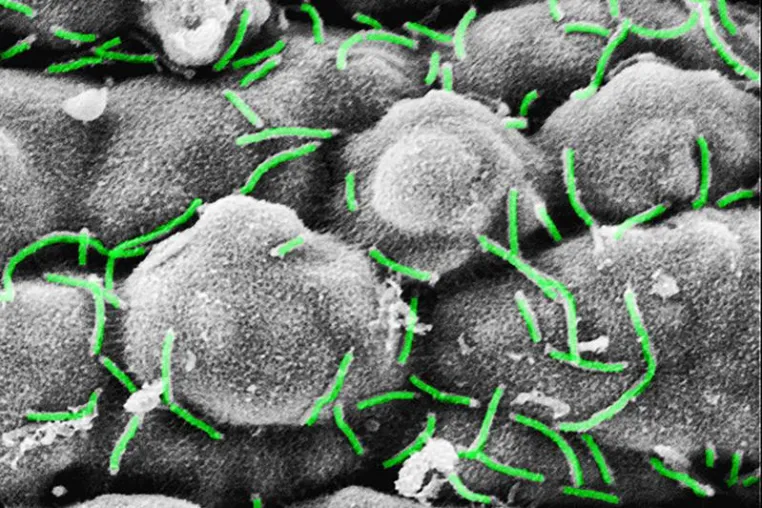
(openPR) Extracellular polysaccharides play a central role in the survival capabilities of caries-causing bacteria in dental plaque, report researchers from the University of Basel’s Preventative Dentistry and Oral Microbiology Clinic and Department of Biomedical Engineering in the journal Plos One.


---
Cariogenic bacteria live in biofilm and attack dental enamel by converting sugar and starch into acids that dissolve out calcium from the enamel. This process can cause caries. The dissolution of calcium increases the concentration of calcium locally, creating an environment that is hostile to bacterial life. In their study, the researchers investigated how bacteria manage to survive in dental plaque despite these conditions.

They hypothesized that extracellular polysaccharides (EPS) support the bacteria’s survival capabilities. EPS are substances that build extracellular cariogenic bacteria from sugar residue. They create the biofilm’s scaffolding and ensure that bacteria are able to anchor themselves in the dental plaque.

EPS integrate calcium into the biofilm

The study showed that the more calcium cariogenic bacteria dissolve, the greater their calcium tolerance and survival capability in the biofilm becomes. The scientists were able to prove that cariogenic bacteria develop mechanisms to help them survive the high concentrations of calcium.

They demonstrated that extracellular polysaccharides possess a high number of calcium binding sites through which they can integrate the free calcium into the biofilm. This neutralizes the toxic substance and strengthens the EPS structure of the biofilm.

New insights into the causes of caries

The EPS’ integration of calcium doesn’t just help cariogenic bacteria to survive in dental enamel; it also causes caries. “EPS’ integration of calcium inhibits the remineralization of the enamel, as there is no longer sufficient free calcium present in the plaque. This discovery is important in gaining a better understanding of calcium regulation in caries,” explains microbiologist Monika Astašov-Frauenhoffer.

Original source
Monika Astašov-Frauenhoffer, Muth M. Varenganayil, Alan W. Decho, Tuomas Waltimo, Olivier Braissant
Exopolysaccharides regulate calcium flow in cariogenic biofilms
PLOS ONE (2017), doi: 10.1371/journal.pone.0186256

Further information
Dr. Monika Astašov-Frauenhoffer, University Center for Dental Medicine Basel, Preventative Dentistry and Oral Microbiology Clinic, Tel. +41 61 267 26 03, E-Mail: E-Mail

Weitere Informationen:
- https://www.unibas.ch/en/News-Events/News/Uni-Research/How-Caries-Causing-Bacteria-Can-Survive-in-Dental-Plaque.html

Quelle: idw

Diese Pressemeldung wurde auf openPR veröffentlicht.

Verantwortlich für diese Pressemeldung:

News-ID: 977701
 380

Kostenlose Online PR für alle

Jetzt Ihren Pressetext mit einem Klick auf openPR veröffentlichen

Jetzt gratis starten

Pressebericht „How Caries-Causing Bacteria Can Survive in Dental Plaque“ bearbeiten oder mit dem "Super-PR-Sparpaket" stark hervorheben, zielgerichtet an Journalisten & Top50 Online-Portale verbreiten:

PM löschen PM ändern
Disclaimer: Für den obigen Pressetext inkl. etwaiger Bilder/ Videos ist ausschließlich der im Text angegebene Kontakt verantwortlich. Der Webseitenanbieter distanziert sich ausdrücklich von den Inhalten Dritter und macht sich diese nicht zu eigen. Wenn Sie die obigen Informationen redaktionell nutzen möchten, so wenden Sie sich bitte an den obigen Pressekontakt. Bei einer Veröffentlichung bitten wir um ein Belegexemplar oder Quellenennung der URL.

Pressemitteilungen KOSTENLOS veröffentlichen und verbreiten mit openPR

Stellen Sie Ihre Medienmitteilung jetzt hier ein!

Jetzt gratis starten

Weitere Mitteilungen von Universität Basel

Bild: Bei Zuckermangel in der Zelle leben Boten-RNAs längerBild: Bei Zuckermangel in der Zelle leben Boten-RNAs länger
Bei Zuckermangel in der Zelle leben Boten-RNAs länger
Leidet eine Zelle unter Zuckermangel, speichert sie bestimmte Boten-RNAs, um so ihr Leben zu verlängern. Wie eine Forschungsgruppe am Biozentrum der Universität Basel nun herausfand, entscheidet das Protein Puf5p bei Zuckermangel in der Zelle darüber, ob eine Boten-RNA aufbewahrt oder abgebaut wird. Wie die in eLife veröffentlichte Studie zeigt, schickt das Protein die Boten-RNAs dazu in eine Zellorganelle, wo ihr Schicksal besiegelt wird. --- Ist eine Zelle Stress ausgesetzt, sei es durch Mangel an Nährstoffen oder einem Zuviel an Spurenele…
Akshay Venkatesh erhält Ostrowski-Preis für höhere Mathematik
Der US-Mathematiker Akshay Venkatesh erhält den mit 100'000 Franken dotierten internationalen Ostrowski-Preis für höhere Mathematik 2017. Die Auszeichnung geht auf den Mathematikprofessor Alexander M. Ostrowski zurück, der an der Universität Basel gelehrt hat. --- Akshay Venkatesh, Professor an der Stanford University, erhält die Auszeichnung für seine bahnbrechenden Leistungen auf den Gebieten der Zahlentheorie, der Theorie der automorphen Formen, der Repräsentationstheorie, der homogenen Dynamik und der arithmetischen Geometrie. Ein wicht…

Das könnte Sie auch interessieren:

Bild: No gene is an islandBild: No gene is an island
No gene is an island
… in Guet’s group, shows that a gene’s neighborhood can influence whether and how the activity of a gene changes. The study was published today in the open access journal eLife. --- From bacteria to humans, the way organisms look and function depends a lot on how much product is made from each gene, in other words how active their genes are. The activity …
Bild: How protein islands formBild: How protein islands form
How protein islands form
Researchers at the University of Freiburg identify protein that inhibits the development of autoimmune diseases --- The immune system protects humans from threats such as, for example, disease-causing bacteria, and cancer as well. Yet if the system malfunctions, it can attack the body it is supposed to defend and cause autoimmune diseases such as type …
Fast and adaptable
Fast and adaptable
Dendritic cells regulate the immune system, attack viruses and bacteria and prevent unwanted and harmful immune system reactions. There are many different sub-species of dendritic cells. To date, however, it has been unclear how these various sub-species initiate immune system responses. But now researchers at Friedrich-Alexander-Universität Erlangen-Nürnberg …
Bild: Researchers discover Achilles' heel of bacteriaBild: Researchers discover Achilles' heel of bacteria
Researchers discover Achilles' heel of bacteria
… antibiotics since they possess not only one, but two membranes that protect them from harmful substances. This makes them members of the so-called Gram-negative bacteria. Since Salmonella infections are becoming increasingly difficult to treat with antibiotics, researchers are looking for alternative agents to control these pathogens. One possible target …
Bild: Silencing bacteriaBild: Silencing bacteria
Silencing bacteria
HZI researchers pave the way for new agents that render hospital pathogens mute --- Pathogenic bacteria are becoming resistant to common antibiotics to an ever increasing degree. One of the most difficult germs is Pseudomonas aeruginosa, a pathogen that elicits serious infections in humans and is resistant to a range of antibiotics. Researchers are therefore …
Bild: An island getaway: Why some Listeria strains survive good food hygiene standardsBild: An island getaway: Why some Listeria strains survive good food hygiene standards
An island getaway: Why some Listeria strains survive good food hygiene standards
Despite high standards of cleanliness and hygiene in food industry, bacteria such as Listeria monocytogenes can still be found in the food processing environment. In a study published in Applied and Environmental Microbiology, researchers from Vetmeduni Vienna have now shown that certain Listeria strains – figuratively speaking – take refuge on an island. …
Bild: Cnidarians remotely control bacteriaBild: Cnidarians remotely control bacteria
Cnidarians remotely control bacteria
CAU research team proves for the first time that host organisms can control the function of their bacterial symbionts. In modern life sciences, a paradigm shift is becoming increasingly evident: life forms are no longer considered to be self-contained units, but instead highly-complex and functionally-interdependent communities of organisms. The exploration …
Bild: Fraunhofer launches a pioneering collaboration: the German-Australian iCAIR projectBild: Fraunhofer launches a pioneering collaboration: the German-Australian iCAIR project
Fraunhofer launches a pioneering collaboration: the German-Australian iCAIR project
Even a “simple” infection can become a deadly threat. Bacteria keep developing new resistances to antibiotics, and presenting the international medical community with a significant problem. There is a desperate need for new medications. The biggest hurdle in developing these new medications is getting them from the laboratory and into clinical trials. …
Bild: Chewing gum rapid test for inflammationBild: Chewing gum rapid test for inflammation
Chewing gum rapid test for inflammation
… Communications". --- Dental implants occasionally entail complications: Six to fifteen percent of patients develop an inflammatory response in the years after receiving a dental implant. This is caused by bacteria destroying the soft tissue and the bone around the implant in the worst case. In future, patients will benefit from a quick and affordable method assessing whether …
Bild: How the smallest bacterial pathogens outwit host immune defences by stealth mechanismsBild: How the smallest bacterial pathogens outwit host immune defences by stealth mechanisms
How the smallest bacterial pathogens outwit host immune defences by stealth mechanisms
Despite their relatively small genome in comparison to other bacteria, mycoplasmas can cause persistent and often difficult-to-treat infections in humans and animals. An extensive study by researchers from Vetmeduni Vienna has now shown how mycoplasmas escape the immune response despite their minimal “genetic arsenal”. Mycoplasmas “mask” themselves. …
Sie lesen gerade: How Caries-Causing Bacteria Can Survive in Dental Plaque