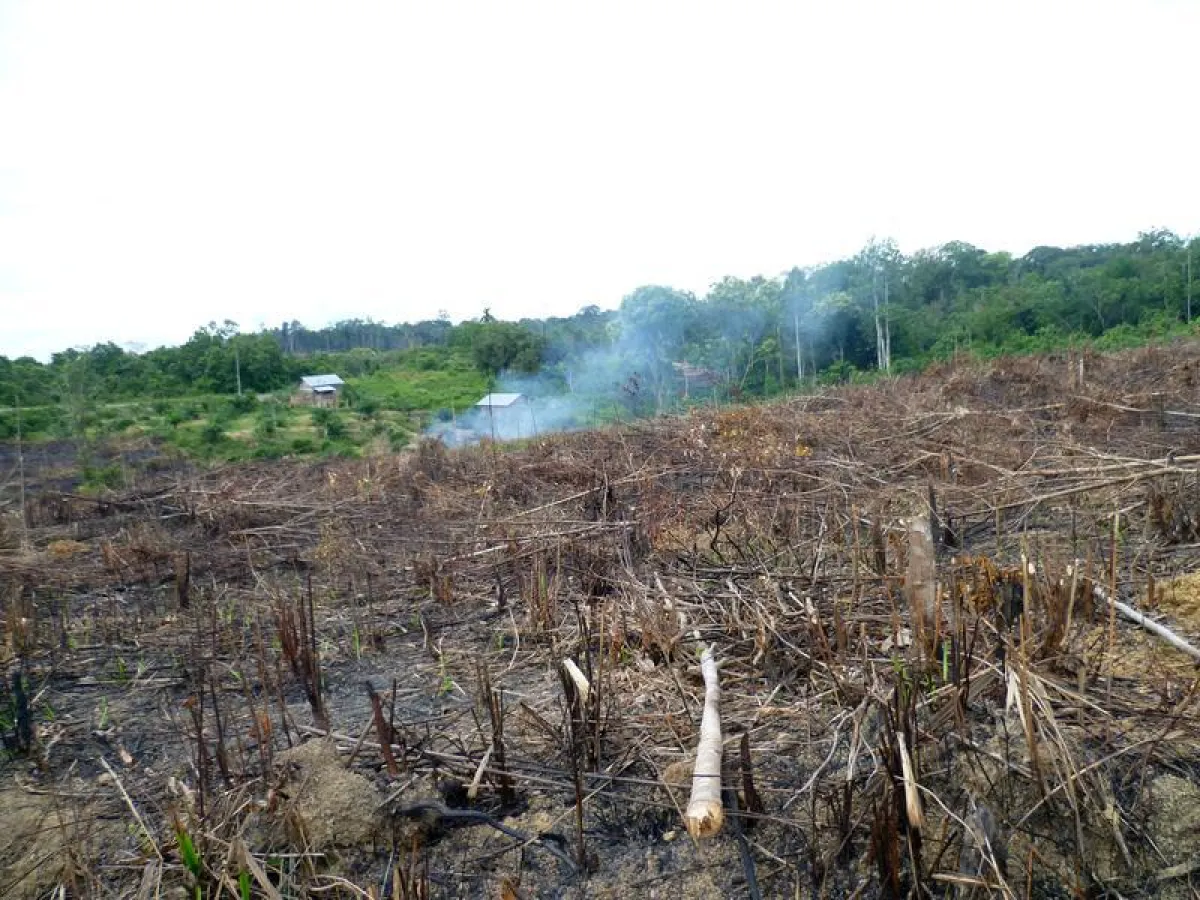
(openPR) In the past decades, large areas of forest in Sumatra, Indonesia have been replaced by cash crops like oil palm and rubber plantations. New research, published in the European Geosciences Union journal Biogeosciences, shows that these changes in land use increase temperatures in the region. The added warming could affect plants and animals and make parts of the country more vulnerable to wildfires.
---
Palm oil is the most widely used vegetable oil in the world, appearing in the ingredients’ list of many consumer goods, from chocolate to soap. Indonesia, the world’s largest producer of palm oil, has seen large swathes of rainforest cleared away and replaced by oil palm plantations at rates that exceed those of Brazil. On the island of Sumatra, which has had the highest loss of native rainforest in all of Indonesia, the changes in land use have meant a substantial loss of animal and plant diversity. However, the impact of these changes on the region’s temperatures had not been studied until now.
An international team of researchers, led by Clifton Sabajo and Alexander Knohl from the University of Göttingen in Germany, have published a new study showing that the expansion of oil palm and other cash crops in Sumatra has made the region warmer. “Land use change from forest to cash crops such as oil palm and rubber plantations does not only impact biodiversity and stored carbon, but also has a surface warming effect, adding to climate change,” says Knohl, a professor in bioclimatology.
The team studied differences in surface temperature for various types of land cover, such as forests, clear-cut land, and cash crops, in the Jambi province of Sumatra. They used satellite data collected between 2000 and 2015 by the NASA Landsat missions and the MODIS instrument, as well as data collected on the ground.
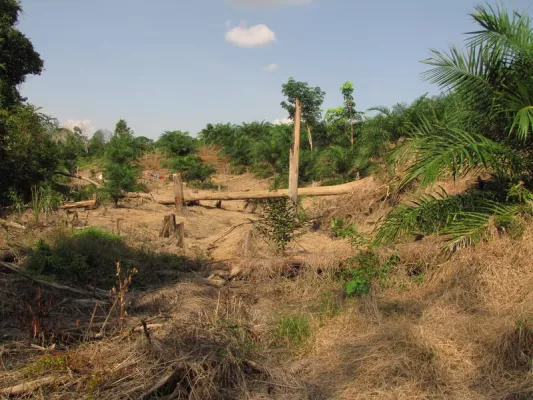
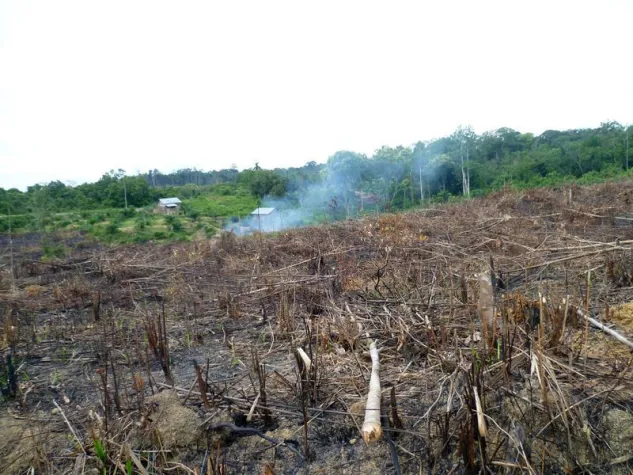
They found that clear-cut land, which is mainly used for agriculture, was up to 10 °C warmer than forests. “Clear-cut land is the phase between forest and other land cover types, such as small-holders [small-scale family farms] or commercial plantations,” says Sabajo, a PhD student and the lead author of the Biogeosciences study. “From field observations, we know that the landscape is so dynamic that there are continuous land use changes all the time, so clear-cut land is always present.”
Mature palm oil plantations were about 0.8 °C warmer than forests, while young palm oil plantations were 6 °C warmer. “Young palm oil plantations have fewer and smaller leaves and an open canopy, thus they transpire less water. Also, the soil receives more solar radiation and dries out faster,” explains Sabajo. Mature palm oil plantations, which are older than 5 years, have a closed canopy and larger and more abundant leaves, which results in a cooler ground compared to a young plantation.
Sabajo says surface temperatures in forests are lower than in palm oil plantations and clear-cut land mainly because of “evaporative cooling”, which is similar to the process that cools us down when we sweat. There’s more evaporation and transpiration of water from plants and the soil into the atmosphere in a forest than in clear-cut land or a young oil-palm plantation, meaning the ground is cooler for that type of land cover.
Overall, the average mid-morning surface temperature in the Jambi province increased by 1.05 °C between 2000 and 2015. Some of this warming is a result of climate change, but some is a direct consequence of the changes in land use. “We compared the average land-surface temperature increase in the province with a site that was covered by forest over the entire period and that can be considered as a control, unaffected by direct land-use change. The land-surface temperature of the forest sites (at 10:30am) only increased by 0.45 °C, suggesting that at least 0.6 °C of the 1.05 °C increase is due to land-use change,” says Knohl.
“The strong warming effect we show for the Jambi province may serve as an indication of future changes in land-surface temperature for other regions of Indonesia that will undergo land transformations towards oil palm plantations,” the scientists write in the study. The Indonesian government plans to substantially expand the country’s production of oil palm, as the demand for this product increases around the world.
What this additional increase in temperature means for the region is yet unclear, but Knohl notes that “land surface temperature is an important part of the microclimate, which shapes habitat conditions for plants and animals.” In the study, they write that the observed warming may affect ecosystems, reduce how much water is available in the region over the dry season, as well as make the area more vulnerable to wildfires.
“We think that current land-use developments in Indonesia need to carefully evaluate all aspects of environmental and socio-economic consequences. Land-surface temperature and microclimate should be considered,” says Knohl.
The research is part of a large German-funded project, the Collaborative Research Centre 990: Ecological and Socioeconomic Functions of Tropical Lowland Rainforest Transformation Systems (Sumatra, Indonesia).
###
Please mention the name of the publication (Biogeosciences) if reporting on this story and, if reporting online, include a link to the paper (https://www.biogeosciences.net/14/4619/2017) or to the journal website (https://www.biogeosciences.net).
MORE INFORMATION
This research is presented in the paper ‘Expansion of oil palm and other cash crops causes an increase of land surface temperature of the Jambi province in Indonesia’ to appear in the EGU open access journal Biogeosciences on 25 October 2017.
The scientific article is available online, free of charge, from the publication date onwards, at https://www.biogeosciences.net/14/4619/2017/ (this URL will redirect to the final, peer-reviewed paper after it is published). While the embargo is in place, a pre-print version of the final paper is available for download at https://www.egu.eu/news/355/deforestation-linked-to-palm-oil-production-is-making-indonesia-warmer/ (scroll down to the 'Media' section).
Citation: Sabajo, C. R., le Maire, G., June, T., Meijide, A., Roupsard, O., and Knohl, A.: Expansion of oil palm and other cash crops causes an increase of the land surface temperature in the Jambi province in Indonesia, Biogeosciences, 14, 4619–4635, https://doi.org/10.5194/bg-14-4619-2017, 2017.
The team is composed of Clifton R. Sabajo (University of Göttingen, Germany & AgroParisTech, Mont-pellier, France), Guerric le Maire (CIRAD, Montpellier, France), Tania June (Bogor Agricultural University, Indonesia), Ana Meijide (University of Göttingen), Oliver Roupsard (CIRAD & Tropical Agriculture Cen-tre for Research and Higher Education, Costa Rica), Alexander Knohl (University of Göttingen).
The European Geosciences Union (www.egu.eu) is Europe’s premier geosciences union, dedicated to the pursuit of excellence in the Earth, planetary, and space sciences for the benefit of humanity, worldwide. It is a non-profit interdisciplinary learned association of scientists founded in 2002. The EGU has a current portfolio of 17 diverse scientific journals, which use an innovative open access format, and organises a number of topical meetings, and education and outreach activities. Its annual General Assembly is the largest and most prominent European geosciences event, attracting over 13,000 scientists from all over the world. The meeting’s sessions cover a wide range of topics, including volcanology, planetary exploration, the Earth’s internal structure and atmosphere, climate, energy, and resources. The EGU 2018 General Assembly is taking place in Vienna, Austria, from 8 to 13 April 2018. For more information and press registration, please check http://media.egu.eu, or follow the EGU on Twitter (@EuroGeosciences) and Facebook (https://www.facebook.com/EuropeanGeosciencesUnion/).
If you wish to receive our press releases via email, please use the Press Release Subscription Form at http://www.egu.eu/news/subscribe/. Subscribed journalists and other members of the media receive EGU press releases under embargo (if applicable) at least 24 hours in advance of public dissemination.
Biogeosciences (BG, http://www.biogeosciences.net/) is an international scientific journal dedicated to the publication and discussion of research articles, short communications, and review papers on all aspects of the interactions be-tween the biological, chemical, and physical processes in terrestrial or extraterrestrial life with the geo-sphere, hydrosphere, and atmosphere. The objective of the journal is to cut across the boundaries of established sciences and achieve an interdisciplinary view of these interactions. Experimental, concep-tual, and modelling approaches are welcome.
CONTACTS
Scientists
Alexander Knohl
Professor of Bioclimatology, University of Göttingen
Göttingen, Germany
Phone: +49 551 39 33682
Email:

Clifton Sabajo
PhD Student in Bioclimatology, University of Göttingen
Göttingen, Germany
Phone: +49 551 39 12114
Email:

Press officer
Bárbara Ferreira
EGU Media and Communications Manager
Munich, Germany
Phone: +49-89-2180-6703
Email:

Twitter: @EuroGeosciences
Weitere Informationen:
- http://www.egu.eu/news/355/deforestation-linked-to-palm-oil-production-is-making-indonesia-warmer/ – press release on the EGU website, w. photos & video
- http://www.biogeosciences.net/14/4619/2017 – Scientific paper (link will be active after study is published on 25 October, 14:00 CEST; embargoed pre-print available at link above)
- http://www.egu.eu/medialibrary/video/2804/video-summary-deforestation-linked-to-palm-oil-production-is-making-indonesia-warmer/ – Video summary of research
Quelle: idw