openPR Recherche & Suche
Presseinformation

From bacteria to birds: tropical plantations disrupt biodiversity

28.08.201718:00 UhrWissenschaft, Forschung, Bildung
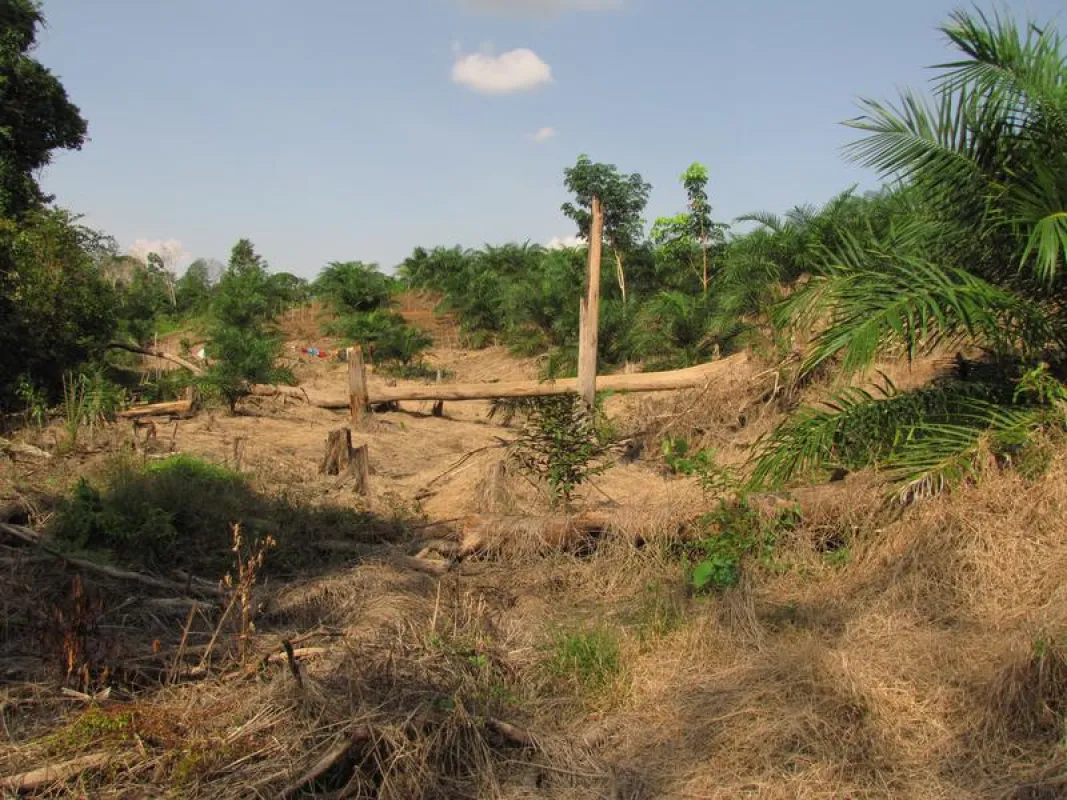
Bild: From bacteria to birds: tropical plantations disrupt biodiversity
A recently established smallholder oil-palm plantation in the Jambi region of Sumatra, Indonesia. (Photo: Andrew Barnes)

(openPR) A research team at the University of Göttingen has conducted a large-scale study in Indonesia to understand how the conversion of rainforest to rubber and oil palm plantations alters biodiversity of these ecosystems. The researchers found that land-use change directly reduces the number of different species as well as the number of individual plants and animals, especially at the highest trophic levels, and that interactions among different organisms control how the whole ecosystem responds to land use.


---
Press release
No. 160/2017 – August 28, 2017

From bacteria to birds: tropical plantations disrupt biodiversity
Scientists from Göttingen University investigate effects of land conversion in South-East Asia

(pug) A research team at the University of Göttingen has conducted a large-scale study in Indonesia to understand how the conversion of rainforest to rubber and oil palm plantations alters biodiversity of these ecosystems. The researchers found that land-use change directly reduces the number of different species as well as the number of individual plants and animals, especially at the highest trophic levels, and that interactions among different organisms control how the whole ecosystem responds to land use. The study was published in Nature Ecology and Evolution.

Tropical rainforests are under threat from the human demand for natural products like vegetable oils and rubber, which are found in food and common household products around the world. The demand is driving the conversion of tropical biodiversity hotspots to agricultural plantations, and over the past two decades, deforestation rates in South-East Asia have rapidly increased. This has profound consequences for biodiversity, affecting, for example, plants, insects and birds. These different organisms constantly interact with each other, especially through trophic interactions, like when insects eat plants or birds eat insects. Because of these interactions, when one group of organisms is affected by deforestation, this may have negative consequences for another group as well. Ultimately, trophic interactions can determine how whole ecosystems respond to disturbances.

The Göttingen researchers investigated the direct and cascading effects of land-use change in Sumatra by collecting data from a range of organisms, among them plants, bacteria, invertebrates and birds. Their research plots were located in rainforest, areas of rubber trees mixed with forest tree species (“jungle rubber”) and monoculture rubber and oil palm plantations. The researchers found that species diversity was as much as 65 percent lower on the study plots in monoculture plantations compared to rainforest plots. This was due to direct effects like higher mortality of insects due to the use of toxic pesticides in plantations, and also to indirect effects which occur through the disruption of organisms at lower trophic levels that serve as resources for organisms higher in the food chain. For example, they found reduced species diversity of invertebrates that eat leaf litter (such as millipedes and cockroaches) in plantations, which then impacted the predators that rely on these invertebrates for food, like spiders.

“Essentially, we found that responses of ecosystems to land-use change are highly complex when we look at many taxonomic groups simultaneously,” explains lead author Dr. Andrew D. Barnes. Dr. Kara Allen, the other lead author, points out: “Our results provide important insight into how whole ecosystems react to human disturbances. However, they also suggest that we still have much to learn about how high-diversity systems operate.”

The study also revealed other interesting trends: It has often been shown that larger-bodied species at higher trophic levels, such as predatory birds or tigers, tend to be the first to go extinct when natural ecosystems are disturbed by humans. The researchers were able to confirm this theory – the highest trophic levels were indeed the most strongly affected because of the combination of their reliance on organisms at the lower trophic levels for food, along with the simultaneous direct impacts of land-use change. “By pointing to groups that will have the most impact on ecosystem-level conservation, these sorts of insights should help to better inform conservation management decisions,” says Prof. Ulrich Brose, senior author of the study who has since moved to the German Centre for Integrative Biodiversity Research (iDiv) and the University of Jena, where he is head of the research group Theory in Biodiversity Science.

The study was conducted within the collaborative research centre “Ecological and Socioeconomic Functions of Tropical Lowland Rainforest Transformation Systems (Sumatra, Indonesia)” (EFForTS), a larger collaboration between the University of Göttingen and several Indonesian universities funded by the German Research Foundation (DFG). Further information can be found online at .

Original publication: Andrew D Barnes, Kara Allen et al. Direct and cascading impacts of tropical land-use change on multi-trophic biodiversity. Nature Ecology and Evolution 2017. Doi: 10.1038/s41559-017-0275-7.

Contact:
Dr. Andrew Barnes
German Centre for Integrative Biodiversity Research (iDiv) Halle-Jena-Leipzig
Leipzig University
Phone: +49 341 9733-122
Email:
Internet:

Dr. Kara Allen
West Virginia University
Department of Biology
Email:
Internet:

Prof. Dr. Ulrich Brose
German Centre for Integrative Biodiversity Research (iDiv) Halle-Jena-Leipzig
Friedrich Schiller University Jena
Phone: +49 341 9733-205
Email:
Internet:

Weitere Informationen:
- http://www.uni-goettingen.de/en/310995.html

Quelle: idw

Diese Pressemeldung wurde auf openPR veröffentlicht.

Verantwortlich für diese Pressemeldung:

News-ID: 965566
 527

Kostenlose Online PR für alle

Jetzt Ihren Pressetext mit einem Klick auf openPR veröffentlichen

Jetzt gratis starten

Pressebericht „From bacteria to birds: tropical plantations disrupt biodiversity“ bearbeiten oder mit dem "Super-PR-Sparpaket" stark hervorheben, zielgerichtet an Journalisten & Top50 Online-Portale verbreiten:

PM löschen PM ändern
Disclaimer: Für den obigen Pressetext inkl. etwaiger Bilder/ Videos ist ausschließlich der im Text angegebene Kontakt verantwortlich. Der Webseitenanbieter distanziert sich ausdrücklich von den Inhalten Dritter und macht sich diese nicht zu eigen. Wenn Sie die obigen Informationen redaktionell nutzen möchten, so wenden Sie sich bitte an den obigen Pressekontakt. Bei einer Veröffentlichung bitten wir um ein Belegexemplar oder Quellenennung der URL.

Pressemitteilungen KOSTENLOS veröffentlichen und verbreiten mit openPR

Stellen Sie Ihre Medienmitteilung jetzt hier ein!

Jetzt gratis starten

Weitere Mitteilungen von Georg-August-Universität Göttingen

Virtueller Stall der Zukunft
Die anhaltende gesellschaftliche Kritik an der Nutztierhaltung setzt die gesamte Branche der landwirtschaftlichen Nutztierhaltung massiv unter Druck. Tierhaltungssysteme müssen deshalb heutzutage nicht nur wirtschaftliche, sondern auch ethische und gesellschaftliche Kriterien erfüllen. Wie sich die verschiedenen Erwartungen miteinander vereinbaren lassen, erforschen Wissenschaftlerinnen und Wissenschaftler unter der Leitung der Universität Göttingen im Verbundprojekt „Virtueller Stall der Zukunft“. --- Pressemitteilung Nr. 3/2018 Virtueller…
Bild: Innovative Promotionsprogramme mit georgischen Hochschulen geplantBild: Innovative Promotionsprogramme mit georgischen Hochschulen geplant
Innovative Promotionsprogramme mit georgischen Hochschulen geplant
Die Universität Göttingen hat Fördermittel in Höhe von rund 1,8 Millionen Euro für zwei geplante gemeinsame Promotionsprogramme mit Hochschulen in Georgien eingeworben. Mit der Förderung baut die Universität Göttingen in den kommenden Jahren ein multidisziplinäres Promotionsprogramm mit der Ilia State University Tbilisi (ISU) und ein mathematisches Promotionsprogramm mit der Ivane Javakhishvili Tbilisi State University (TSU) auf. --- Pressemitteilung Nr. 2/2018 Innovative Promotionsprogramme mit georgischen Hochschulen geplant Universität G…

Das könnte Sie auch interessieren:

Bild: #UPCYCLETHEFUTUREBild: #UPCYCLETHEFUTURE
#UPCYCLETHEFUTURE
… Abend voll Kreativität, Expertise und Handwerk. Freitag 23. Mai 17Uhr - 21Uhr Die erste Veranstaltung aus der Serie der internationalen Verkaufs-Kollaborationen des britischen Labels From Shomewhere findet im Upcycling Fashion Store Berlin statt. Es erwartet Sie ein maßgeschneiderter Abend, der die Wurzeln des Labels zurückverfolgt und als interaktives …
Bild: Facts to Keep in Mind When Shipping to Ghana Morocco and Angola from USABild: Facts to Keep in Mind When Shipping to Ghana Morocco and Angola from USA
Facts to Keep in Mind When Shipping to Ghana Morocco and Angola from USA
Ghana, Morocco and Angola are countries which lie in African continent and shipping household goods or commercial cargo from USA to these African countries would need deliberate consideration on the part of Import/export companies and individuals. It is very important that you check on different points when shipping to Ghana from USA, or shipping to …
Bild: AFRIKUN AUF ARTE TRACKSBild: AFRIKUN AUF ARTE TRACKS
AFRIKUN AUF ARTE TRACKS
ARTE TRACKS 11.02.2012 22:40 Uhr AFRIKUN is a new audiovisual project from “ Kumar Sublevao-Beat”, together with the multiinstrumentalist duo” Machete Horns”. The main goal from this Band is the research and tribute to the many different African tribes through music. Coming from every single corner in Africa ,digging any kind of rhythms, samples from …
“Software Engineering 2009” at the Fraunhofer Center in Kaiserslautern
… conference “Software Engineering 2009” opens on 02 March. “Guaranteed Quality – A Requirement of Industrial Software Development” is the motto of this meeting of experts from research and industry in the context of the well-established professional conference organized by the Gesellschaft für Informatik e.V. Experts from industry and research will participate …
Bild: Michel Montecrossa's Single ‘Talking Selfish David From England‘ ist Premierminister David Cameron gewidmetBild: Michel Montecrossa's Single ‘Talking Selfish David From England‘ ist Premierminister David Cameron gewidmet
Michel Montecrossa's Single ‘Talking Selfish David From England‘ ist Premierminister David Cameron gewidmet
Mira Sound Germany veröffentlicht die Single und DVD ‘Talking Selfish David From England (Is It David Cameron?)‘, ein New-Topical-Song von Michel Montecrossa, gewidmet dem englischen Premierminister David Cameron, der sein Veto gegen eine effektive Veränderung des EU-Abkommens zur Bekämpfung der Eurozonen-Krise eingelegt und damit den Fehler gemacht …
Free from
Free from
Free From jetzt auch als Fachmesse. Dass „Free from“ ...-Auslobungen boomen, ist in vielen Veröffentlichungen beschrieben worden und wird durch zahlreiche Studien und Marktuntersuchungen belegt. Jetzt wurde sogar eine neue Fachmesse für die europäische Lebensmittelindustrie „Free From Food“ – erstmalig am 4. und 5. Juni in Freiburg – veranstaltet. Free …
Bild: Neglected diseases: Dogs are a possible source of for zoonotic strongyloidasisBild: Neglected diseases: Dogs are a possible source of for zoonotic strongyloidasis
Neglected diseases: Dogs are a possible source of for zoonotic strongyloidasis
Tübingen, 21th of August 2017. Scientists from the Max Planck Institute for Developmental Biology Tübingen isolated the nematode Strongyloides stercoralis from humans and their dogs in rural Cambodia and compared the worms using molecular-biological analyses. The aim of the study was to find out whether dogs are a potential source of zoonotic transmission …
15th Meeting of the Austrian Neuroscience Association held at IST Austria a success
… Klosterneuburg near Vienna. The Institute, which was founded in 2009, has become the home institution of several renowned researchers in neuroscience, and for this week, has invited scientists from all over the world to the 15th ANA Meeting. With 193 registered participants discussing a broad range of topics from molecular to systemic, and from basic to …
Wind measurement worldwide – Ge:Net at the Eolica Expo Mediterranean in Rome
Meteo towers and wind measurement systems from Ge:Net can be found all over the world – from Capetown to Kamchatka, even in difficult terrain and at remote sites. Now the company presents its range of products and services at the Eolica Expo Mediterranean from 14.09. to 16.09 2011 in Rome. Ge:Net invites consultants, developers, investors and other interested …
direct/Eye for Transport: 3rd Annual Report on European 3PL Industry
… demanding more for less, and the survey revealed that a large number of respondents are finding it difficult to maintain profits under price pressures from customers. eyefortransport´s European 3PL Market Survey drew responses from over two hundred and fifty logistics professionals from 3PLs, freight forwarders, carriers, warehouse operators, shippers …
Sie lesen gerade: From bacteria to birds: tropical plantations disrupt biodiversity