openPR bei Google bevorzugen.
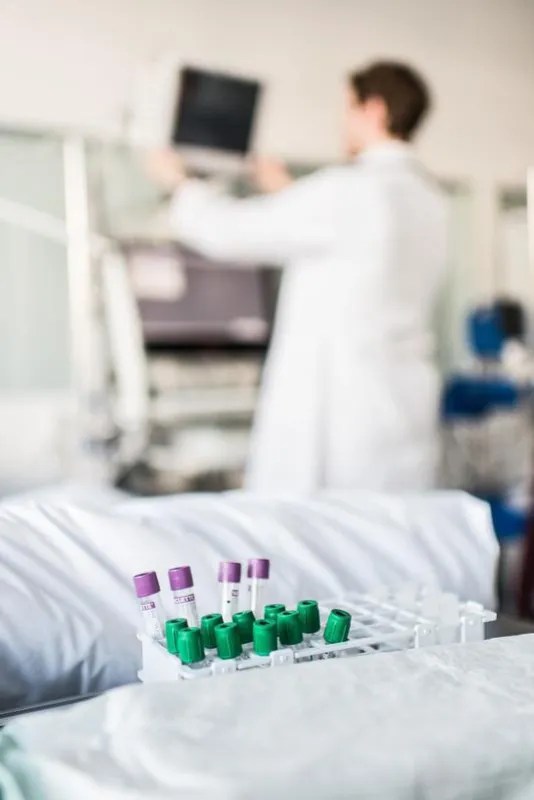
(openPR) (Hannover/Germany) The 40 million euro European project eTRANSAFE, to be kicked off at the end of September 2017, is aimed at speeding up the development of better and safer medicines for patients. Coordinated by the Fundació Institut Mar d'Investigacions Mèdiques (IMIM) and led by the pharmaceutical company Novartis, the project consortium is a public-private partnership of eight academic institutions, six SMEs, and twelve pharmaceutical companies. One of the project partners is Fraunhofer ITEM.
---
The five-year project “Enhancing Translational Safety Assessment through Integrative Knowledge Management” (eTRANSAFE) is aimed at developing an advanced data integration infrastructure together with innovative computational methods to improve safety assessment across the drug discovery and development process. To this end, bioinformatic approaches shall be applied to shared preclinical and clinical data and the translatability of observed effects shall be systematically analyzed, thus enabling optimization of resources and development of safer medicines.
Fraunhofer ITEM’s assignment in the eTRANSAFE project is to evaluate whether and to what extent toxicological findings from preclinical data can be used to predict clinical findings. For this purpose, Fraunhofer ITEM toxicologists and physicians will work hand in hand. They will first analyze in detail the available preclinical data from existing databases such as eToxSys. The aim is to gather insights, for example, into the time dependence of toxicological effects or possibilities of substance grouping. In the next stage, the predictivity of preclinical data for human clinical effects will be analyzed. Depending on the availability and type of clinical data and a database (yet to be established), the investigations will be performed by analyzing individual case studies or by using statistical models. This development work is part of the project. Fraunhofer ITEM has many years of experience in analyzing preclinical data and querying databases such as the RepDose database (www.fraunhofer-repdose.de).
“The safety of new drug candidates in first clinical trials is extrapolated based on preclinical animal data. These extrapolations are made using solely the data generated for the project at hand, since a global and systematic analysis of predictivity of the entire collective historical data pool has never been made," says project leader François Pognan from Novartis. "It is often poorly known to what extent and frequency an observed effect in an animal species may translate into a human effect,” adds deputy leader Thomas Steger-Hartmann from Bayer.
Based on the experience gained in the previous eTOX project, the eTRANSAFE project will carry out key efforts in the field of data standardization and quality control. This will promote the development and implementation of relevant data sharing policies and procedures and at the same time will catalyze transformation of the existing concepts for drug safety modeling – from monolithic applications and isolated data repositories to an open, innovative system based on open standards, modular components, and data integration services.
Professor Ferran Sanz from Fundació IMIM, coordinator of the project, said: “eTRANSAFE will improve translational safety assessment and contribute to the key scientific policies, such as the reduce, replace, refine (3Rs) one and the FAIR principles for data sharing.”
eTRANSAFE is funded through the Innovative Medicines Initiative 2 Joint Undertaking (IMI 2), a public-private partnership between the European Union, represented by the European Commission, and the (bio)pharmaceutical industry, represented by the European Federation of Pharmaceutical Industries Associations (EFPIA), supporting collaborative research projects.
Press contact
Fraunhofer ITEM
Dr. Cathrin Nastevska
Phone +49 511 5350-225

Scientific contact:
Fraunhofer ITEM
Dr. Sylvia Escher
Phone +49 511 5350-330

Weitere Informationen:
- http://www.item.fraunhofer.de/en.html
- http://www.etransafe.eu/
Quelle: idw