openPR Recherche & Suche
Presseinformation

Trigger for Fatty Liver in Obesity

07.09.201712:00 UhrWissenschaft, Forschung, Bildung
Bild: Trigger for Fatty Liver in Obesity
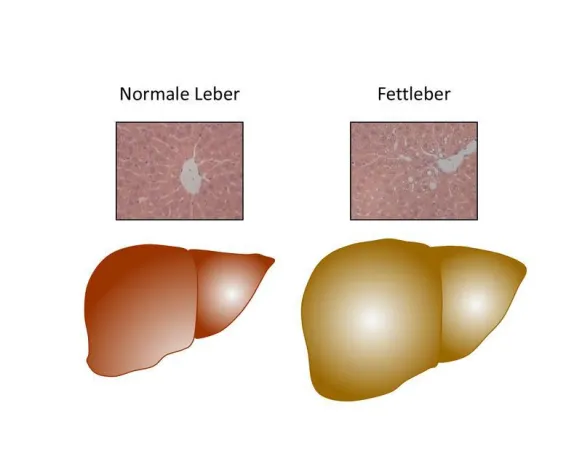
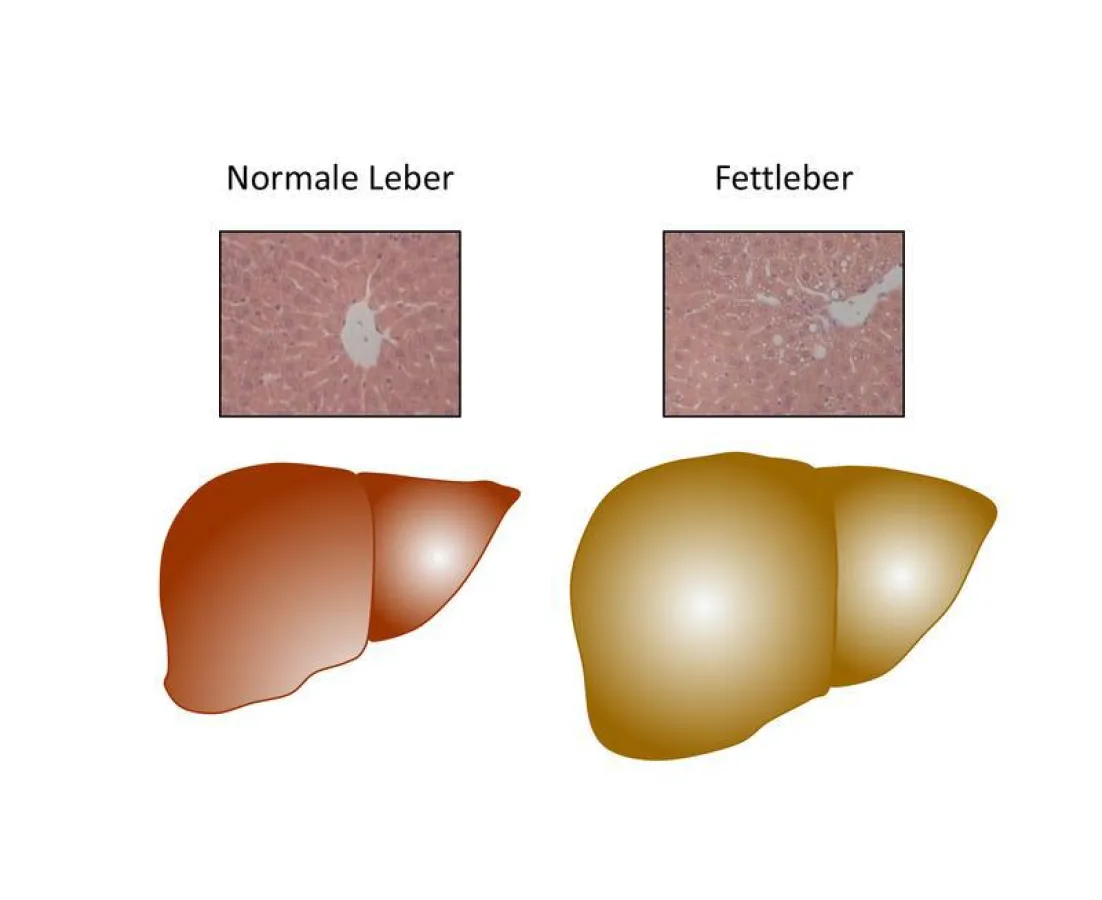
A healthy liver (left) can develo a steatosis (right).  (Image UZH)
A healthy liver (left) can develo a steatosis (right). (Image UZH)

(openPR) Morbid obesity affects the liver: Almost one-third of all adults suffer from chronic fatty liver disease, which can lead to infections and even trigger cancer. Researchers at the University Children's Hospital Zurich and the University of Zurich have now found a signaling pathway in cells that play an important role in the development of fatty liver disease.


---
In Switzerland, about every tenth adult suffers from morbid obesity. Such corpulence can not only lead to diabetes or cardiovascular disease, but also to fat accumulation in the liver. Worldwide, about 25 to 30 percent of all adults and increasingly children are affected by such steatosis – becoming the most frequent liver disease in recent years. Some patients suffer from inflammation that could lead to a scarred shrinkage of the liver (cirrhosis) or even cancer.

Receptor for programmed cell death activated

Despite the increasing frequency of obesity-related liver steatosis, there is currently insufficient knowledge about the origin of this disease. At the University Children's Hospital Zurich, researchers from the University of Zurich have identified a signaling pathway in liver cells that may contribute to the development of steatosis. In the process, the plasma membrane receptor Fas (CD95) is key; this cell receptor occurs in almost all human cells and is involved in programmed cell death (apoptosis). This self-destruction program is activated when cells are no longer functional or are even developing malignantly. Activation of the Fas receptor then induces apoptosis in these cells. A low-threshold activation of Fas, however, can trigger cell reproduction or an inflammatory response without cell death occurring.

Lack of Fas receptor protects against a fatty liver

“In our study, we were able to demonstrate in mouse models that Fas is activated within the scope of obesity and can therefore lead to the development of liver steatosis,” says Prof. Dr. med. Daniel Konrad, professor for endocrinology and diabetology from the University of Zurich and physician at the University Children's Hospital Zurich. “Mice missing Fas in their liver cells were protected against the development of obesity-induced fatty liver for the most part.” The animals are also considerably less insulin resistant. “Conversely, our study shows that an increased Fas content in the liver can lead to liver steatosis and insulin resistance, even in case of a normal body weight,” Konrad explains.

Permeable mitochondria inhibit lipid oxidation

The team of researchers found indications that an activation of Fas affects the mitochondria: Their capacity to oxidize fatty acids is limited and therefore leads to the accumulation of lipids in liver cells. In the process, the protein-coded gene “BID” plays an important role. This gene is also involved in programmed cell death, leading to an increased permeability of the mitochondrial membrane. The researchers were able to demonstrate that mice with increased Fas content but simultaneously low BID content in the liver were protected against the development of fatty liver.

New therapy approach possible

The study therefore shows how both factors, Fas and BID, interact in case of obesity contributing to fatty liver disease. “The described signaling pathway of Fas and BID could serve as a novel target for a better treatment of fatty liver disease associated with obesity,” Daniel Konrad explains.

Literature:
Flurin Item, Stephan Wueest, Vera Lemos, Sokrates Stein, Fabrizio C. Lucchini, Rémy Denzler, Muri-el C. Fisser, Tenagne D. Challa, Eija Pirinen, Youngsoo Kim, Silvio Hemmi, Erich Gulbins, Atan Gross, Lorraine A. O’Reilly, Markus Stoffel, Johan Auwerx, Daniel Konrad. Fas Cell Surface Death Receptor controls hepatic lipid metabolism by regulating mitochondrial function. Nature Communica-tions. 7. September, 2017.DOI: 10.1038/s41467-017-00566-9

Contact:
Prof. Dr. med. Daniel Konrad
Endocrinology / Diabetology
University Children's Hospital Zurich
Phone: +41 44 266 73 85
E-mail: E-Mail

Weitere Informationen:
- http://www.media.uzh.ch/en/Press-Releases/2017/Fatty-Liver-in-Obesity.html

Quelle: idw

Diese Pressemeldung wurde auf openPR veröffentlicht.

Verantwortlich für diese Pressemeldung:

News-ID: 967448
 183

Kostenlose Online PR für alle

Jetzt Ihren Pressetext mit einem Klick auf openPR veröffentlichen

Jetzt gratis starten

Pressebericht „Trigger for Fatty Liver in Obesity“ bearbeiten oder mit dem "Super-PR-Sparpaket" stark hervorheben, zielgerichtet an Journalisten & Top50 Online-Portale verbreiten:

PM löschen PM ändern
Disclaimer: Für den obigen Pressetext inkl. etwaiger Bilder/ Videos ist ausschließlich der im Text angegebene Kontakt verantwortlich. Der Webseitenanbieter distanziert sich ausdrücklich von den Inhalten Dritter und macht sich diese nicht zu eigen. Wenn Sie die obigen Informationen redaktionell nutzen möchten, so wenden Sie sich bitte an den obigen Pressekontakt. Bei einer Veröffentlichung bitten wir um ein Belegexemplar oder Quellenennung der URL.

Pressemitteilungen KOSTENLOS veröffentlichen und verbreiten mit openPR

Stellen Sie Ihre Medienmitteilung jetzt hier ein!

Jetzt gratis starten

Weitere Mitteilungen von Universität Zürich

Neue Biomarker sagen Erfolg von Immuntherapie gegen Krebs  voraus
Neue Biomarker sagen Erfolg von Immuntherapie gegen Krebs voraus
Ob Krebspatienten auf eine Immuntherapie positiv ansprechen werden, lässt sich bereits vorgängig im Blut nachweisen. Forschende der Universität Zürich haben entsprechende Biomarker identifiziert. Patienten, bei denen die Therapie nicht wirkt, können frühzeitig mit anderen Methoden behandelt werden. --- Mit einer Immuntherapie kann bereits heute der schwarze Hautkrebs (Melanom) und der Lungen-krebs erfolgreich bekämpft werden. Dabei wird die normale Funktion des Immunsystems, das re-gelmässig alle Gewebe im Körper auf Krankheitserreger und St…
Bild: Universität Zürich und Karls-Universität Prag spannen zusammenBild: Universität Zürich und Karls-Universität Prag spannen zusammen
Universität Zürich und Karls-Universität Prag spannen zusammen
Die Universität Zürich und die Karls-Universität Prag gehen eine strategische Partnerschaft ein. Die grössten Universitäten Tschechiens und der Schweiz stärken die Zusammenarbeit in Forschung und Lehre sowie den Austausch von Studentinnen und Studenten. --- Die dritte strategische Partnerschaft geht die Universität Zürich mit der ältesten Universität Mitteleuropas ein. In Prag haben Rektor Michael Hengartner und Tomas Zima, Rektor der Karls-Universität, am 19. Dezember 2017 den Vertrag unterzeichnet. Die Universität ist im Jahre 1348 gegründ…

Das könnte Sie auch interessieren:

Optimizing therapy planning for cancers of the liver
Fraunhofer MEVIS algorithms enhance the application of radioactive microspheres in cancer treatment. --- Radioembolization is a therapy method used for liver tumors that are uncurable with surgery or chemotherapy. Thorough development of an individual planning is important for successful treatment. Within the SIRTOP project, the Fraunhofer Institute …
Bild: Enzyme produced in the liver promotes obesity, fatty liver disease and insulin resistanceBild: Enzyme produced in the liver promotes obesity, fatty liver disease and insulin resistance
Enzyme produced in the liver promotes obesity, fatty liver disease and insulin resistance
… type 2 diabetes. *** Non-alcoholic fatty liver disease (NAFLD) has become the most common chronic liver disease in Europe and the United States and a frequent side effect of obesity and type 2 diabetes. Depending on the country, around 25 to 45 percent of adults are affected. Left untreated, a fatty liver can develop into liver cirrhosis with life-threatening …
Bild: Novel histone modifications couple metabolism to gene activityBild: Novel histone modifications couple metabolism to gene activity
Novel histone modifications couple metabolism to gene activity
… of the reader proteins changes the signature of chromatin and thus it’s functional state. “These results are especially significant with regard to metabolic diseases, like diabetes and obesity” said Schneider. “Our aim now is to study the role of these new gene switches in disease models.” The results suggest a possible role for histone propionylation …
Bild: How Obesity Promotes Breast CancerBild: How Obesity Promotes Breast Cancer
How Obesity Promotes Breast Cancer
Obesity leads to the release of cytokines into the bloodstream which impact the metabolism of breast cancer cells, making them more aggressive as a result. Scientists from Helmholtz Zentrum München, Technische Universität München (TUM), and Heidelberg University Hospital report on this in ‘Cell Metabolism’. The team has already been able to halt this …
Bild: Organ Crosstalk: Fatty Liver Can Cause Damage to Other OrgansBild: Organ Crosstalk: Fatty Liver Can Cause Damage to Other Organs
Organ Crosstalk: Fatty Liver Can Cause Damage to Other Organs
… unfavorable fats and proteins, such as the hepatokine fetuin-A, all of which it releases into the bloodstream. Thus, the secreted substances of the fatty liver enter other organs and trigger reactions there. So far, however, it is not known exactly which effects this "organ crosstalk" has, which organs are most affected, and which "damage" can be caused by …
Bild: Treatment of Overweight: Is Metabolically Healthy Obesity a Worthwhile Initial Goal?Bild: Treatment of Overweight: Is Metabolically Healthy Obesity a Worthwhile Initial Goal?
Treatment of Overweight: Is Metabolically Healthy Obesity a Worthwhile Initial Goal?
… in Tübingen and Potsdam now report in the journal “The Lancet Diabetes & Endocrinology“” on the basis of already published and new data that metabolically healthy obesity could be a worthwhile initial goal in the therapy of obesity. --- “Being overweight causes serious health problems. You should lose weight.” Doctors repeatedly point this out to …
Slim Origin Keto - Reviews (Free Trial Offer)
… suffer from the foremost at the present is that the fat problem within the males. This problem has made the people get a covering of fat everywhere their physique and thus be a fatty and bulging out person. The fat that gets stored within the physique of the people makes them suffer tons of problems and thus is required to offer the proper remedy for it. …
Bild: Labordiagnostik: Leber-Diagnostik mit Immunoblot-TestsystemBild: Labordiagnostik: Leber-Diagnostik mit Immunoblot-Testsystem
Labordiagnostik: Leber-Diagnostik mit Immunoblot-Testsystem
Die Mainzer ORGENTEC Diagnostika GmbH hat einen neuen Immunoblot für die serologische Diagnostik autoimmuner Lebererkrankungen entwickelt.Liver-9-Line unterstützt die schnelle und kostengünstige Diagnostik der autoimmunen Hepatitiden (AIH Typ 1 und Typ 2) und der primär biliären Zirrhose (PBC) in einem einzigen Arbeitsschritt. Das Testsystem erlaubt …
New treatment options for non-alcoholic fatty liver disease
… disease (NAFLD) is one of the most frequent liver diseases worldwide and an estimated 20 million people in Germany are affected. The underlying causes involve obesity and decreased physical activity leading to accompanying metabolic and cardiovascular diseases. Currently no approved pharmacotherapy is available. Therefore, the aim of the joint research …
DEFINIENS PLACES 1st IN MICCAI GRAND CHALLENGE 2008
Fully Automated CAD Application Proves Successful in Onsite Liver Tumor Segmentation Competition Munich / Morristown, NJ – September 10, 2008 – Definiens, the number one Enterprise Image Intelligence™ company, has placed 1st in the 2008 Liver Tumor Segmentation Grand Challenge’s live contest, organized by the International Society of Medical Image Computing …
Sie lesen gerade: Trigger for Fatty Liver in Obesity