openPR Recherche & Suche
Presseinformation

How Obesity Promotes Breast Cancer

20.10.201709:00 UhrWissenschaft, Forschung, Bildung
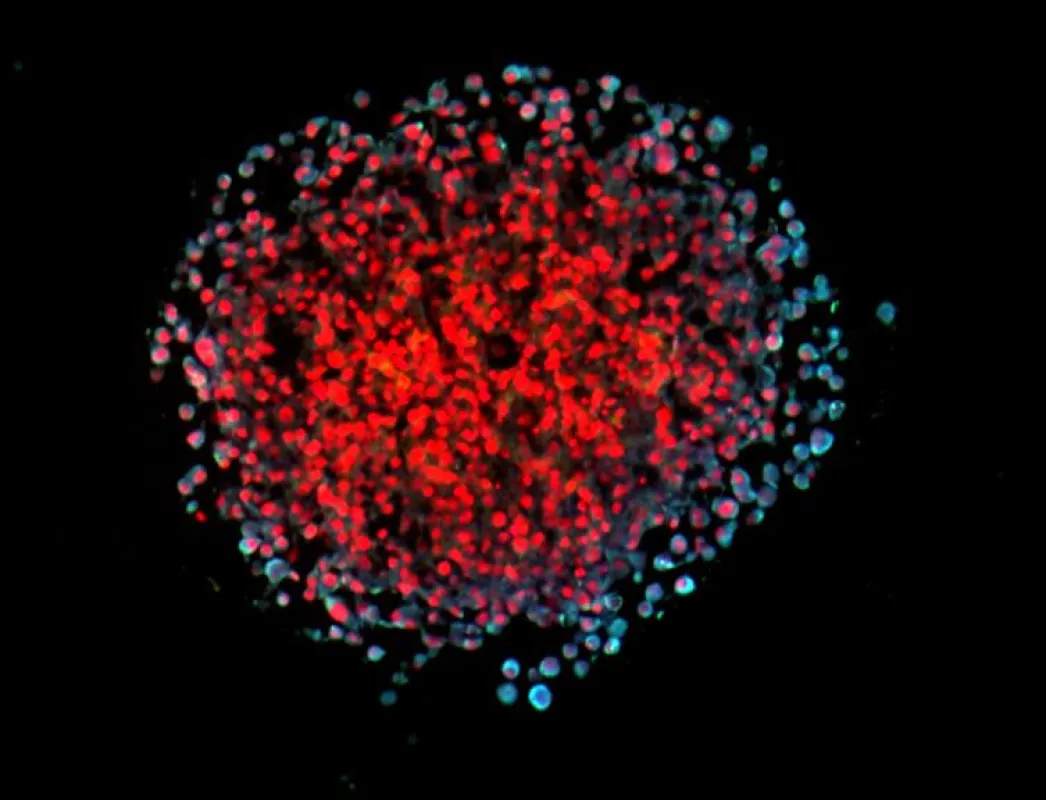
Bild: How Obesity Promotes Breast Cancer
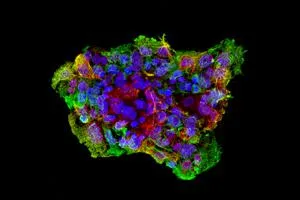
3D spheroid of cultivated breast cancer cells. Invasive cells show a light blue co-staining for the leptin receptor and a marker of the ability of cells to metastasize. Cell nuclei are stained in red.

(openPR) Obesity leads to the release of cytokines into the bloodstream which impact the metabolism of breast cancer cells, making them more aggressive as a result. Scientists from Helmholtz Zentrum München, Technische Universität München (TUM), and Heidelberg University Hospital report on this in ‘Cell Metabolism’. The team has already been able to halt this mechanism with an antibody treatment.


---
The number of people with obesity is increasing rapidly worldwide. The German Cancer Research Center (DKFZ) recently reported that according to the WHO the number of children and adolescents with obesity increased tenfold between 1975 and 2016. Severe overweight can lead to various health impairments. Besides inducing cardiovascular diseases, obesity for example also promotes the development of cancer and metastases.

The current study elucidates an as yet unknown mechanism making breast cancer more aggressive. The enzyme ACC1* plays a central role in this process," said Dr. Mauricio Berriel Diaz, deputy director of the Institute for Diabetes and Cancer (IDC) at Helmholtz Zentrum München. He led the study together with Stephan Herzig, director of the IDC and professor for Molecular Metabolic Control at TUM and Heidelberg University Hospital. “ACC1 is a key component of fatty acid synthesis," said Berriel Diaz. “However, its function is impaired by the cytokines leptin and TGF-?.“ The levels of these cytokines are increased particularly in the blood of severely overweight subjects.

Fatty acid precursors promote metastases

The scientists demonstrated that the described inhibition of ACC1 leads to the accumulation of the fatty acid precursor acetyl-CoA. This precursor is transferred to certain gene “switches” that in turn increase the metastatic capacity of cancer cells by activating a specific gene program.

“Using human tissue from breast cancer metastases, we were able to show that ACC1 was significantly less active there," said Marcos Rios Garcia, first author of the study. When the scientists blocked the as yet unknown signaling pathway with an antibody (directed against the leptin receptor), this led to a significantly reduced metastatic spread of breast cancer tumors in an experimental model.

In the future, the researchers want to substantiate the data on the newly discovered mechanism in further studies. In addition, they are also considering related intervention points that could possibly be exploited therapeutically. “Blocking the signaling pathways and switching off the metastasis-related genes could be a therapeutic target," Herzig said. “As part of the so-called neoadjuvant therapy, the risk of metastases or the recurrence of tumors could be reduced prior to the surgical removal of the tumor.”

Further Information

* ACC1 stands for acetyl-CoA-carboxylase 1, a central component of fatty acid synthesis. ACC1 mediates the chemical addition of carbon dioxide to acetyl-CoA, which results in malonyl-CoA. This reaction is the first and speed determining step in the fatty acid synthesis of all living organisms.

Background:
Metastasis of breast cancer or recurrence after surgical removal of the primary tumor is the main cause of cancer-related deaths in women. In addition, epidemiological studies show that obesity is associated with aggressive forms of breast cancer and that postmenopausal women in particular are at a higher risk of developing metastatic breast cancer.

The role of fatty acid synthesis for the altered energy metabolism of cancer cells is only incompletely understood. Various studies suggest that activation of fatty acid synthesis makes cancer cells independent from the supply with extracellular lipids. The present study reveals a new mechanism that is independent of fatty acid synthesis, in which the inactivation of ACC1 leads to the accumulation of acetyl-CoA, since it is no longer used for fatty acid synthesis but rather for the modification (acetylation) of regulatory proteins (transcription factors, e.g. SMAD2). The regulatory proteins modified in this way in turn switch on genes that contribute to increased aggressiveness of cancer cells.

Original Publication:
Rios Garcia, M. et al. (2017): Acetyl-CoA Carboxylase 1-Dependent Protein Acetylation Controls Breast Cancer Metastasis and Recurrence. Cell Metabolism, DOI: 10.1016/j.cmet.2017.09.018

The Helmholtz Zentrum München, the German Research Center for Environmental Health, pursues the goal of developing personalized medical approaches for the prevention and therapy of major common diseases such as diabetes and lung diseases. To achieve this, it investigates the interaction of genetics, environmental factors and lifestyle. The Helmholtz Zentrum München is headquartered in Neuherberg in the north of Munich and has about 2,300 staff members. It is a member of the Helmholtz Association, a community of 18 scientific-technical and medical-biological research centers with a total of about 37,000 staff members.

The Institute for Diabetes and Cancer (IDC) is a member of the Helmholtz Diabetes Center (HDC) at the Helmholtz Zentrum München and a partner in the joint Heidelberg-IDC Translational Diabetes Program. The Institute for Diabetes and Cancer is tightly integrated into the German Center for Diabetes Research (DZD) and into the special research area "Reactive Metabolites and Diabetic Complications" at the Heidelberg University Medical School. The IDC conducts research on the molecular basis of severe metabolic disorders, including metabolic syndrome and type 2 diabetes, as well as their roles in tumor initiation and progression.

Technical University of Munich (TUM) is one of Europe’s leading research universities, with more than 500 professors, around 10,000 academic and non-academic staff, and 40,000 students. Its focus areas are the engineering sciences, natural sciences, life sciences and medicine, reinforced by schools of management and education. TUM acts as an entrepreneurial university that promotes talents and creates value for society. In that it profits from having strong partners in science and industry. It is represented worldwide with a campus in Singapore as well as offices in Beijing, Brussels, Cairo, Mumbai, San Francisco, and São Paulo. Nobel Prize winners and inventors such as Rudolf Diesel, Carl von Linde, and Rudolf Mößbauer have done research at TUM. In 2006 and 2012 it won recognition as a German "Excellence University." In international rankings, TUM regularly places among the best universities in Germany.

Heidelberg University Hospital is one of the largest and most prestigious medical centers in Germany. The Medical Faculty of Heidelberg University belongs to the internationally most renowned biomedical research institutions in Europe. Both institutions have the common goal of developing new therapies and implementing them rapidly for patients. With about 13,000 employees, training and qualification is an important issue. Every year, around 65,000 patients are treated on an inpatient basis, 56,000 cases on a day patient basis and more than 1,000,000 cases on an outpatient basis in more than 50 clinics and departments with almost 2,000 beds. Jointly with the German Cancer Research Center (DKFZ) and German Cancer Aid, Heidelberg University Hospital has established the National Center for Tumor Diseases (NCT) Heidelberg, where promising approaches from cancer research are translated into the clinic. Currently, about 3,700 future physicians are studying in Heidelberg; the reform Heidelberg Curriculum Medicinale (HeiCuMed) is one of the top medical training programs in Germany.

Contact for the media:
Department of Communication, Helmholtz Zentrum München - German Research Center for Environmental Health, Ingolstädter Landstr. 1, 85764 Neuherberg - Tel. +49 89 3187 2238 - Fax: +49 89 3187 3324 - E-mail:

Scientific Contact at Helmholtz Zentrum München:
Prof. Dr. Stephan Herzig, Helmholtz Zentrum München - German Research Center for Environmental Health, Institute for Diabetes and Cancer, Ingolstädter Landstr. 1, 85764 Neuherberg - Tel. +49 89 3187 1045, E-mail:

Quelle: idw
Diese Pressemeldung wurde auf openPR veröffentlicht.

Verantwortlich für diese Pressemeldung:

News-ID: 975417
 415

Kostenlose Online PR für alle

Jetzt Ihren Pressetext mit einem Klick auf openPR veröffentlichen

Jetzt gratis starten

Pressebericht „How Obesity Promotes Breast Cancer“ bearbeiten oder mit dem "Super-PR-Sparpaket" stark hervorheben, zielgerichtet an Journalisten & Top50 Online-Portale verbreiten:

PM löschen PM ändern
Disclaimer: Für den obigen Pressetext inkl. etwaiger Bilder/ Videos ist ausschließlich der im Text angegebene Kontakt verantwortlich. Der Webseitenanbieter distanziert sich ausdrücklich von den Inhalten Dritter und macht sich diese nicht zu eigen. Wenn Sie die obigen Informationen redaktionell nutzen möchten, so wenden Sie sich bitte an den obigen Pressekontakt. Bei einer Veröffentlichung bitten wir um ein Belegexemplar oder Quellenennung der URL.

Pressemitteilungen KOSTENLOS veröffentlichen und verbreiten mit openPR

Stellen Sie Ihre Medienmitteilung jetzt hier ein!

Jetzt gratis starten

Weitere Mitteilungen von Helmholtz Zentrum München - Deutsches Forschungszentrum für Gesundheit und Umwelt

Bild: Wie ein Enzym die Abschrift unserer Gene reguliertBild: Wie ein Enzym die Abschrift unserer Gene reguliert
Wie ein Enzym die Abschrift unserer Gene reguliert
Ein Wissenschaftlerteam des Helmholtz Zentrums München hat gemeinsamen mit Kollegen der Ludwig-Maximilians-Universität München und einer Forschergruppe der Universität Montpellier, Frankreich, die Strukturen der RNA Polymerase II identifiziert, die für die Termination der Transkription (das Beenden der Abschrift eines Genabschnittes) benötigt werden. Die hierzu durchgeführte genetische Analyse wurde jetzt im Fachjournal ‚Molecular Cell‘ publiziert. --- Das Enzym RNA Polymerase II, kurz Pol II, ist verantwortlich für die Transkription (Abschr…
Bild: Selen schützt Nervenzellen im GehirnBild: Selen schützt Nervenzellen im Gehirn
Selen schützt Nervenzellen im Gehirn
Genau 200 Jahre nach der Entdeckung des Spurenelements Selen zeigen Forschende am Helmholtz Zentrum München zum ersten Mal, warum dieses chemische Element essenziell für das Überleben von Säugetieren ist. Als Bestandteil des Enzyms GPX4 schützt Selen bestimmte Nervenzellen im Laufe der Entwicklung vor dem Zelltod, berichten die Wissenschaftler im Fachmagazin ‚Cell‘. --- Vor genau 200 Jahren entdeckte der schwedische Wissenschaftler Jöns Jacob Berzelius das Spurenelement Selen, das er nach der Mondgöttin Selene benannte. Neben seiner industri…

Das könnte Sie auch interessieren:

Preisverdächtig: Quadia mit Breast Cancer TV für Health Media Award 2013 nominiert
Düsseldorf, 11. Juni 2013 – Der Online-Video-Spezialist Quadia ist für den renommierten Health Media Award 2013 nominiert worden. Mit dem kostenlosen Online-Video-Kanal Breast Cancer TV gelang dem Unternehmen in der Kategorie Wissenschaftskommunikation der Einzug auf die Shortlist. Das Web-Angebot adressiert Mediziner und informiert sie über neueste …
Bild: Koncept Analytics untersuchen den weltweiten Markt für Brustkrebs-Therapie bei markt-studie.deBild: Koncept Analytics untersuchen den weltweiten Markt für Brustkrebs-Therapie bei markt-studie.de
Koncept Analytics untersuchen den weltweiten Markt für Brustkrebs-Therapie bei markt-studie.de
… neuer Märkte und Forschungs- sowie Entwicklungsinitiativen, die dabei helfen sollen, eine effektivere Diagnose und Behandlung des Brustkrebses zu ermöglichen. Die aktuelle Koncept Analytics-Studie Breast Cancer Market – An Analysis Der Markt für Brustkrebstherapie – Eine Analyse liefert einen Überblick über die Brustkrebserkrankung, ihre verschiedenen …
Cardiovascular TV: Quadia entwickelt Online-Videokanal über neueste Entwicklungen der Herz-Kreislauf-Forschung
… Hematology (ASH) Annual Meetings in New Orleans. Neueste Erkenntnisse mit einem Klick Technische und medizinische Expertise konnte Quadia bereits unter Beweis stellen: Mit Breast Cancer TV etablierte der Online-Video-Spezialist ein Webportal, das sich dem Thema Brustkrebsforschung und -behandlung widmet. Mediziner verfolgten hier live unter anderem das San …
Bild: TriMark Publications: Veränderungen in der BrustkrebstherapieBild: TriMark Publications: Veränderungen in der Brustkrebstherapie
TriMark Publications: Veränderungen in der Brustkrebstherapie
… ersten Biosimilarwirkstoff und das elektronische Post-Marketing-Monitoring. Zum TriMark Publications Bericht Game Changers in Breast Cancer Therapies:http://www.markt-studie.de/studien/game-changers-breast-cancer-therapies-p-285131.html Weiter Studien und Berichte von TriMark Publications:http://www.markt-studie.de/studien/trimark-publications-m-259.html
Quadia realisiert Breast Cancer TV zur Unterstützung der Brustkrebsforschung
Düsseldorf, 6. Februar 2013 – Mit Breast Cancer TV ruft Quadia, ein führender Online-Video-Spezialist, einen kostenlosen Online-Videokanal ins Leben, der über neueste Entwicklungen und Erkenntnisse auf dem Gebiet der Brustkrebsforschung informiert. Das Online-Angebot adressiert Mediziner und gibt ihnen die Möglichkeit, Fachwissen orts- und zeitunabhängig …
Bild: Firing up Cancer: Hyperthermie auf dem Weg zum mainstream treatmentBild: Firing up Cancer: Hyperthermie auf dem Weg zum mainstream treatment
Firing up Cancer: Hyperthermie auf dem Weg zum mainstream treatment
… Clinical indications for superficial and deep hyperthermia, Molecular insight of combined hyperthermia and radio-/chemotherapy, Hyperthermia and immunomodulation, Reirradiation and hyperthermia in breast cancer; Hyperthermia in rectal cancer, Hyperthermia (in pediatric oncology. Einer zentralen Frage dürfte einer der Vorträge nachgehen. Er trägt den …
Prostatakrebs: Schlechtere Prognose bei Übergewicht - Überschüssige Pfunde fördern Tumorwachstum
… adiposity and weight change in relation to prostate cancer incidence and mortality. Cancer. 2007 Feb 15;109(4):675-84. 2Gong Z, Agalliu I, Lin DW, Stanford JL, Kristal AR.: Obesity is associated with increased risks of prostate cancer metastasis and death after initial cancer diagnosis in middle-aged men. Cancer. 2007 Mar 15;109(6):1192-202. 3Daten aus der …
Bild: Trigger for Fatty Liver in ObesityBild: Trigger for Fatty Liver in Obesity
Trigger for Fatty Liver in Obesity
Morbid obesity affects the liver: Almost one-third of all adults suffer from chronic fatty liver disease, which can lead to infections and even trigger cancer. Researchers at the University Children's Hospital Zurich and the University of Zurich have now found a signaling pathway in cells that play an important role in the development of fatty liver …
Oben-Ohne Models verhüllen alles für Wohltätigkeitskalende
… Mänteln, Pullovern, mit Hüten, Schals, Strumpfhosen und Handschuhen zeigen, werden nicht nur ihre hartgesottenen Fans in Erstaunen versetzen. "Calendar Girls Get Dressed For Breakthrough Breast Cancer" ist eine liebevolle Anspielung auf die im Laufe der letzten Jahre erschienenen Kalender, in denen zumeist Amateure nackt für eine gute Sache posierten …
Bild: New Inhibitor Brings New HopeBild: New Inhibitor Brings New Hope
New Inhibitor Brings New Hope
Researchers found a possible new treatment for aggressive triple receptor-negative breast cancer --- Scientists from the cluster of excellence BIOSS Centre for Biological Signalling Studies at the University of Freiburg and the Freiburg University Medical Center have shown that inhibiting the epigenetic regulator KDM4 might offer a potential novel treatment …
Sie lesen gerade: How Obesity Promotes Breast Cancer