openPR Recherche & Suche
Presseinformation

Patient information: What happens when evidence-based facts contradict doctors' advice?

25.08.201711:02 UhrWissenschaft, Forschung, Bildung

(openPR) Balanced and evidence-based patient information on cancer screening can protect patients from inadequate medical advice. This was shown in a representative study by the Harding Center for Risk Literacy at the Max Planck Institute for Human Development, recently published in the journal PLoS ONE.


---
When it comes to their own health or that of a loved one, many people are apprehensive and rely fully on doctors' recommendations. Yet in the case of cancer screening, numerous studies have shown that doctors themselves often do not know or understand the medical evidence for such tests, i.e., their scientifically established benefits and harms, and inadequately counsel symptom-free patients or give them advice that goes against existing medical guidelines. Researchers at the Harding Center for Risk Literacy at the Max Plank Institute for Human Development and the German Institute for Economic Research (DIW Berlin) therefore investigated how evidence-based versus non-evidence-based patient information on cancer screening affects people's decision for or against screening tests when this information contradicts doctors' advice.

For the study, 897 persons in the context of the German Socio-Economic Panel (SOEP) were interviewed—a representative multi-cohort survey panel at DIW Berlin that regularly provides information about personal and political views, income, employment, education, and health. In a personal interview, those participating in the survey were given either evidence-based or non-evidence-based information on the benefits and harms of a cancer screening test. Because not all screening tests are covered by German health insurance companies, participants were also informed about whether the tests were covered or had to be paid individually. They were then asked to make a decision for or against the test. Subsequently, they were confronted with a non-evidence-based recommendation from a fictional doctor. This recommendation was based on actual recommendations by real doctors and was biased insofar as it focused solely on either the benefits or the harms of the screening test. Moreover, it provided no numerical information on the magnitude of benefits or harms. In conclusion, participants were asked to reconsider their decision in light of the doctor's recommendation.

Approximately one third of the participants who had received non-evidence-based patient information altered their initial decision in favor of the doctor's non-evidence-based recommendation, if these differed. Those who had received evidence-based information were not as easily influenced: Only 16 percent—around half as many as those who had not been fully informed—altered their initial decision. Whether the test was covered by health insurance or not played no role. "Our results show that understandable, evidence-based patient information can facilitate informed and preference-sensitive decisions, even when a doctor provides inadequate counseling," says lead author Odette Wegwarth from the Harding Center for Risk Literacy.

Nevertheless, she and her co-authors, Gerd Gigerenzer and Gert G. Wagner, do not want the results of their study to be interpreted as a general call to mistrust doctors' recommendations. A doctor–patient relationship built on trust is important. At the same time, it needs to be based on transparent, evidence-based advice on benefits and harms. As the authors note, in order for doctors to meet this prerequisite, statistical risk competency needs to be integrated more fully into medical education and CME.

----

Background Information

Original Publication
Wegwarth, O., Gigerenzer, G. & Wagner, G. G. (2017). Can facts trump unconditional trust? Evidence-based information halves the influence of physicians’ non-evidence-based cancer screening recommendations. PLoS ONE 12(8):e0183024. doi:10.1371/journal.pone.0183024

Harding Center for Risk Literacy
The center envisions a society of informed citizens who are competent enough to deal with the risks of a modern technological world. Established through a gift from the London-based global investment manager David Harding, the Center is affiliated with the Max Planck Institute for Human Development and funds research conducted by Prof. Dr. Gerd Gigerenzer and his team. www.harding-center.mpg.de/en

Max Planck Institute for Human Development
The Max Planck Institute for Human Development in Berlin was founded in 1963. It is an interdisciplinary research institution dedicated to the study of human development and education. The Institute belongs to the Max Planck Society for the Advancement of Science, one of the leading organizations for basic research in Europe.

Weitere Informationen:
- https://www.mpib-berlin.mpg.de/en/media/2017/08/patient-information-what-happens-when-evidence-based-facts-contradict-doctors-advice

Quelle: idw

Diese Pressemeldung wurde auf openPR veröffentlicht.

Verantwortlich für diese Pressemeldung:

News-ID: 965181
 214

Kostenlose Online PR für alle

Jetzt Ihren Pressetext mit einem Klick auf openPR veröffentlichen

Jetzt gratis starten

Pressebericht „Patient information: What happens when evidence-based facts contradict doctors' advice?“ bearbeiten oder mit dem "Super-PR-Sparpaket" stark hervorheben, zielgerichtet an Journalisten & Top50 Online-Portale verbreiten:

PM löschen PM ändern
Disclaimer: Für den obigen Pressetext inkl. etwaiger Bilder/ Videos ist ausschließlich der im Text angegebene Kontakt verantwortlich. Der Webseitenanbieter distanziert sich ausdrücklich von den Inhalten Dritter und macht sich diese nicht zu eigen. Wenn Sie die obigen Informationen redaktionell nutzen möchten, so wenden Sie sich bitte an den obigen Pressekontakt. Bei einer Veröffentlichung bitten wir um ein Belegexemplar oder Quellenennung der URL.

Pressemitteilungen KOSTENLOS veröffentlichen und verbreiten mit openPR

Stellen Sie Ihre Medienmitteilung jetzt hier ein!

Jetzt gratis starten

Weitere Mitteilungen von Max-Planck-Institut für Bildungsforschung

Wie unser Gehirn entscheidet
Blau oder grün, Anzug oder Kostüm, München oder Berlin: Jeden Tag stehen wir vor hunderten von Entscheidungen - trivialen, wie auch komplexen. Unser Gehirn greift dazu auf frühere Erfahrungen zurück und lernt gleichzeitig mit jeder neuen Entscheidung hinzu. Wie das funktioniert, untersucht der Psychologe und Neurowissenschaftler Nicolas Schuck mit seiner neuen Forschungsgruppe „NeuroCode“ am Max-Planck-Institut für Bildungsforschung --- Im September 2017 hat Nicolas Schuck seine Forschungsarbeit am Max-Planck-Institut für Bildungsforschung (…
Das Gehirn veranstaltet eine Casting-Show für verschiedene Zellen
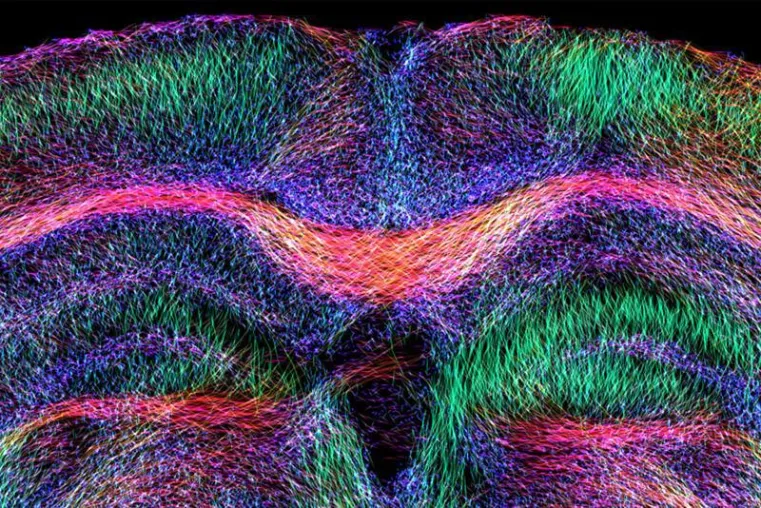
Seit Jahrzehnten fragen sich Neurowissenschaftler, wie das Gehirn immer wieder neue Aufgaben erlernen kann, ohne im Laufe des Lebens ständig wachsen zu müssen. Es gibt Hinweise, dass die Anzahl der Hirnzellen – zum Beispiel der Nervenzellen und Gliazellen – anfänglich zunimmt, wenn wir lernen, aber viele später verworfen oder anderen Rollen zugeordnet werden. Wissenschaftler aus Deutschland und Schweden stellen diese Theorie in der Fachzeitschrift Trends in Cognitive Sciences vor. --- „Das Volumen des Gehirns nimmt in den ersten Phasen des L…

Das könnte Sie auch interessieren:

Bild: What you are looking for, at, or to? bab.la startet neue FormulierungshilfeBild: What you are looking for, at, or to? bab.la startet neue Formulierungshilfe
What you are looking for, at, or to? bab.la startet neue Formulierungshilfe
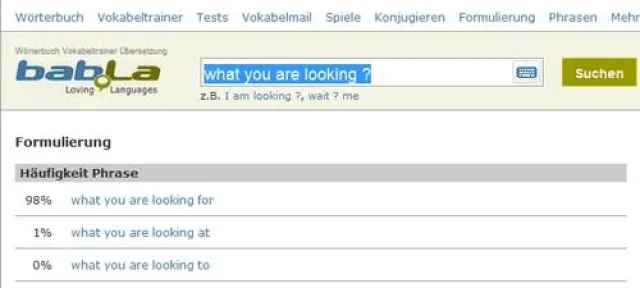
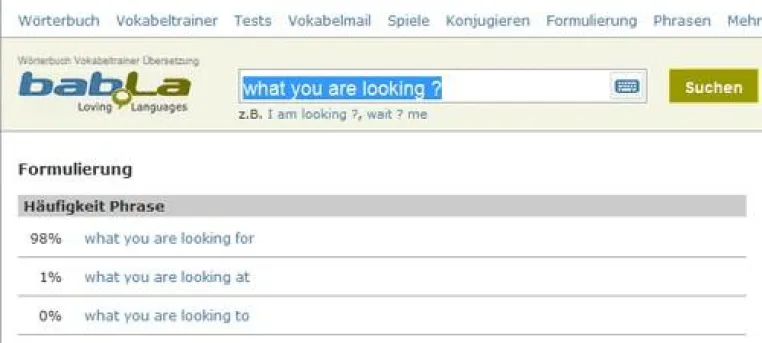
… richtigen Wort hilft. bab.la hat hierzu eine Datenbank mit Milliarden Phrasen aufgebaut, die dem Nutzer bei der Identifizierung der richtigen Wortwahl unterstützt. Wenn man z.B. nach "what you are looking ?" sucht, erscheint folgendes Ergebnis: 98% "what you are looking for" 2% "what you are looking at" unter 1% "what you are looking to" Die Prozentzahlen …
Zum vierten Mal auf der ICPIC in Genf vertreten
… dem 12. September von 16.30 Uhr bis 18.00 Uhr in Raum 4 im Erdgeschoss moderiert wird. Unter dem Motto „Sporicidal and virucidal efficacy in the near patient area. What is really necessary?” („Sporizide und viruzide Wirksamkeit im patientennahen Bereich. Was ist wirklich notwendig?“) werden folgende Vorträge gehalten: Der erste Vortrag „Current and future …
Smart Infusion Pumps Get Smarter by Getting Connected
(Amherst, NH) - Infusion is one of the most common therapeutic procedures that patients in a hospital setting are likely to receive. Yet the lack of standardization among the various components, elements and steps that a caregiver must navigate to successfully execute a drug infusion have – according to several recent studies – contributed to medication …
Bild: Michel Montecrossa's CD What Can We Do To Change The Climate Change? ausgelöst durch Mega-Taifun und TornadosBild: Michel Montecrossa's CD What Can We Do To Change The Climate Change? ausgelöst durch Mega-Taifun und Tornados
Michel Montecrossa's CD What Can We Do To Change The Climate Change? ausgelöst durch Mega-Taifun und Tornados
Mit der Audio-CD und DVD ‘What Can We Do To Change The Climate Change?‘ veröffentlicht Mira Sound Germany Michel Montecrossa’s New-Topical-Song, der allen Opfern des Klimawandels gewidmet ist: von den Philippinen bis zu den U.S.A. und überall. Michel Montecrossa ist der New-Topical-Songwriter, der Mirapuri gegründet hat - die Stadt des Friedens und des …
PRESS POINT - HEALTH IN ALL POLITICS Wednesday 4 October 2017
… broader vision that helps tackle some of the big challenges of the moment. Among these are making health systems sustainable and deploying technologies for the benefit of patient-centred care. We have been looking for ways to move away from hospital-based care and to enhance patient engagement.” “Technology has now reached the stage that allows us to …
Bild: Michel Montecrossa's Single 'Russia and America Rock' ist den Großmächten und ihren Konfliktzonen gewidmetBild: Michel Montecrossa's Single 'Russia and America Rock' ist den Großmächten und ihren Konfliktzonen gewidmet
Michel Montecrossa's Single 'Russia and America Rock' ist den Großmächten und ihren Konfliktzonen gewidmet
… einfach: entweder eine Welt der Liebe, der Wärme und des Glücks oder eine Welt von Gewalt, Folter und Leid. Es ist unsere Entscheidung.” Songtext RUSSIA AND AMERICA ROCK Hey, Russia! Proud of what? / Hey, Russia! Show what you can! Hey, America! Proud of what? / Hey, America! Show what you can! Yeah, it’s high time to bring this mess, / this mess to …
Bild: WHAT ABOUT INTERIOR - die erste Plattform welche lokal hergestelltes Möbeldesign vorstellt mit neuer WebsiteBild: WHAT ABOUT INTERIOR - die erste Plattform welche lokal hergestelltes Möbeldesign vorstellt mit neuer Website
WHAT ABOUT INTERIOR - die erste Plattform welche lokal hergestelltes Möbeldesign vorstellt mit neuer Website
WHAT ABOUT INTERIOR präsentiert sich mit seinen inzwischen 38 aufstrebenden Designern aus den Städten Berlin, London, Barcelona, Zagreb, Frankfurt, Glasgow, Porto und Bologna mit neuem Online-Auftritt und einem weiteren, einzigartigen Design-Service. Nachdem Launch des WHAT ABOUT INTERIOR-Konzepts (what-about-interior.com) Mitte März 2012 stellt das …
Bild: Michel Montecrossa's CD 'What Can We Do To Change The Climate Change?' für die UN Klimakonferenz 2015 in ParisBild: Michel Montecrossa's CD 'What Can We Do To Change The Climate Change?' für die UN Klimakonferenz 2015 in Paris
Michel Montecrossa's CD 'What Can We Do To Change The Climate Change?' für die UN Klimakonferenz 2015 in Paris
Mit der Audio-CD und DVD ‘What Can We Do To Change The Climate Change?‘ veröffentlicht Mira Sound Germany Michel Montecrossa’s New-Topical-Song, den er der Klimakonferenz der Vereinten Nationen in Paris sowie alle Opfer des Klimawandels widmet. Michel Montecrossa ist der New-Topical-Songwriter, der Mirapuri gegründet hat - die Stadt des Friedens und …
Bild: In the test tube instead of under the knifeBild: In the test tube instead of under the knife
In the test tube instead of under the knife
… BrainLinks-BrainTools and the Federal Ministry for Education and Research (BMBF). Temporal lobe epilepsy affects millions of people worldwide. In many cases drugs offer insufficient improvement to patients' quality of life. In these cases, an operation to remove the affected brain tissue often appears to be the only solution. Most cases of epilepsy …
Bild: Michel Montecrossa widmet ‘What Can We Do To Change The Climate Change?’ Fridays for Future & Greta ThunbergBild: Michel Montecrossa widmet ‘What Can We Do To Change The Climate Change?’ Fridays for Future & Greta Thunberg
Michel Montecrossa widmet ‘What Can We Do To Change The Climate Change?’ Fridays for Future & Greta Thunberg
Michel Montecrossa’s New-Topical-Song ‘What Can We Do To Change The Climate Change?’, veröffentlicht von Mira Sound Germany auf Audio-CD, DVD sowie als Download, ist Fridays for Future und Greta Thunberg gewidmet sowie allen Opfern des Klimawandels. Michel Montecrossa ist der New-Topical-Songwriter, der Mirapuri gegründet hat - die Stadt des Friedens …
Sie lesen gerade: Patient information: What happens when evidence-based facts contradict doctors' advice?