openPR Recherche & Suche
Presseinformation

Scientists shine new light on the “other high temperature superconductor”

09.08.201717:00 UhrWissenschaft, Forschung, Bildung
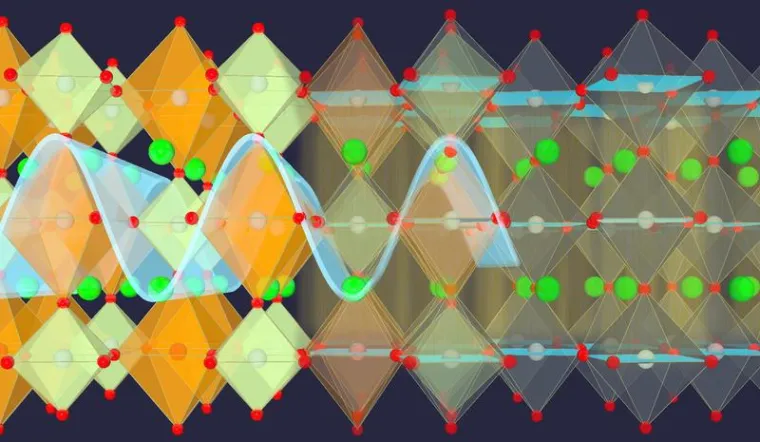
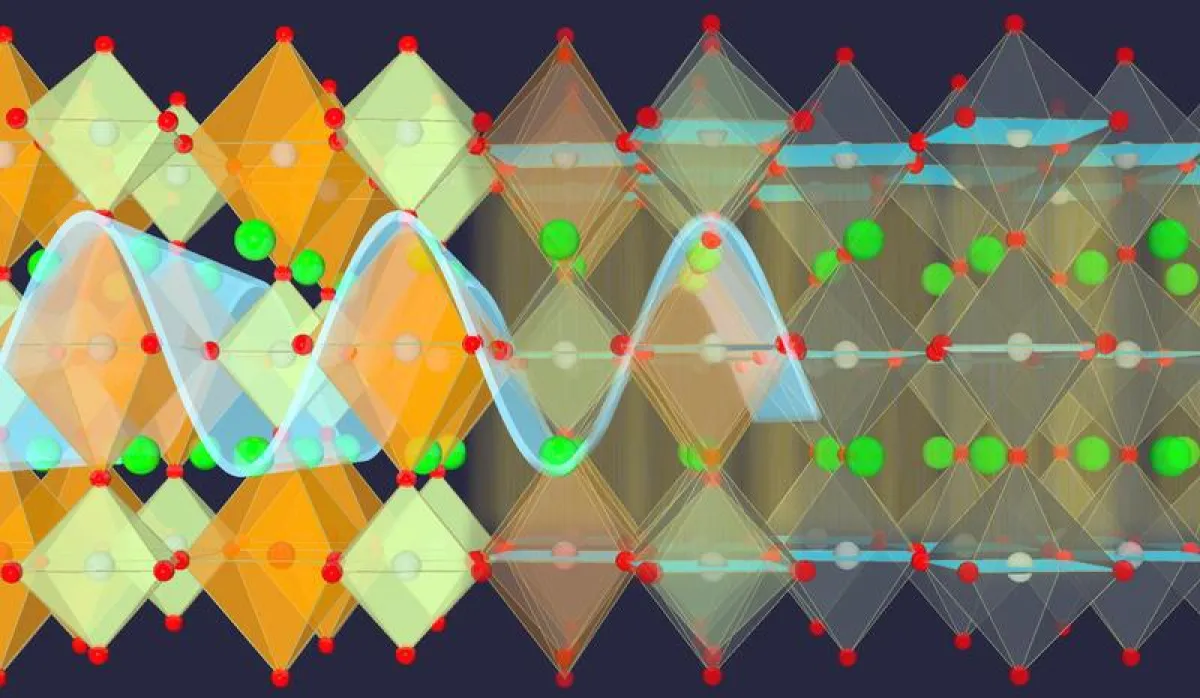
Bild: Scientists shine new light on the “other high temperature superconductor”
Intense laser pulses were used to photo-excite bismuthate compounds, in which  “charge-density-waves” (left side) coexist with superconductivity (right side). (Image: Joerg M. Harms, MPSD)
Intense laser pulses were used to photo-excite bismuthate compounds, in which “charge-density-waves” (left side) coexist with superconductivity (right side). (Image: Joerg M. Harms, MPSD)

(openPR) A study led by scientists of the Max Planck Institute for the Structure and Dynamics of Matter (MPSD) at the Center for Free-Electron Laser Science in Hamburg presents evidence of the coexistence of superconductivity and “charge-density-waves” in compounds of the poorly-studied family of bismuthates. This observation opens up new perspectives for a deeper understanding of the phenomenon of high-temperature superconductivity, a topic which is at the core of condensed matter research since more than 30 years. The paper by Nicoletti et al has been published in the PNAS.


---
Since the beginning of the 20th century, superconductivity had been observed in some metals at temperatures only a few degrees above the absolute zero (minus 273 degrees Celsius). Only in the 1980s, physicists managed to synthetize new classes of compounds, based on ceramic materials, which were able to conduct electricity without any losses at temperatures as high as 138 K (minus 135 degrees Celsius). These were named “high temperature superconductors”.

The best known and heavily studied family of high temperature superconductor is that of cuprates, which display by far the highest critical temperatures (i.e. the temperature below which superconductivity occurs), and are therefore the most promising for applications. However, a wide variety of other compounds exists, which also manifest superconductivity at fairly high temperatures, among them the recently discovered iron pnictides.

A universal picture able to describe the physics behind the phenomenon of high temperature superconductivity is still missing. However, an important commonality between almost all high temperature superconductors is the emergence of superconductivity in proximity of other exotic phases of matter, such as the “charge-density-waves”. All these materials can be typically tuned from one phase to another, possibly achieving superconductivity, by chemical doping, external pressure, or magnetic fields. However, the subtle inter-relation of these phases remains poorly understood, and in some case, there are evidences that charge-density-waves and superconductivity can even coexist microscopically in the very same compound.

In such circumstances, experiments performed by stimulating materials with ultrashort, intense laser pulses (as short as few hundreds of femtoseconds) have been shown in the past to provide new insights in the physics of these systems. For example, the group of Andrea Cavalleri at the MPSD in Hamburg has already successfully demonstrated that, in some cuprates compounds, such pulses can be used to remove charge-density-waves and promote superconductivity at higher temperatures, possibly even up to room temperature (see links below: W. Hu, Nature Materials, 13, 705–711 and R. Mankowsky, Nature 516 , 71–73).

In the present work, Nicoletti, Cavalleri and coworkers focused on different compounds, belonging to the poorly studied family of bismuthates. These superconductors were discovered in the 1970s, even before the cuprates, but they attracted less attention due to their far lower critical temperatures (about 30 K). They share many commonalities, but also some differences with their better-known relatives. In particular, the so-called “parent compound”, BaBiO(3), has a robust charge-density-wave phase, from which superconductivity emerges by chemical substitution.

High quality crystals of BaPb(1-x)BixO(3), with different Pb concentrations “x”, were synthetized and characterized by Ian R. Fisher and P. Giraldo-Gallo at Stanford University, California. The Hamburg team performed a series of experiments on these crystals, in which they photo-excited the materials with very short and intense laser pulses and measured how their conductivity was transiently modified and relaxed back to the initial value within few picoseconds. By analysing the dependence of such signal on frequency, temperature, and Pb concentration, they could uniquely assign it to a modification of the charge-density-wave phase induced by the laser field.

“Strikingly”, says Nicoletti, “we were able to measure this response not only in the parent compound BaBiO(3), for which a charge-density-wave is well known to exist, but also in a Pb-doped superconducting compound. This observation is an indirect demonstration of the coexistence of charge-density-waves and superconductivity in the very same material, something that has been discussed previously, but never definitely established in this class of materials”.

The scientists were also able to exactly determine the energy scales associated with the modification of the charge-density-waves, thus providing new information on their dynamical interplay with superconductivity in bismuthates.

These results are especially timely given that charge-density-waves have recently been found in several cuprate superconductors, pointing towards a surprising commonality between some aspects of these materials. The present experiment is an additional example of how light can be employed to investigate, control, and manipulate complex materials. One of the ultimate goals of this line of research is to provide guidance for material engineering to develop new functionalities at increasingly higher temperatures.

This work was supported by the ERC Synergy Grant “Frontiers in Quantum Materials’ Control” (Q-MAC), the Hamburg Centre for Ultrafast Imaging (CUI), and the priority program SFB925 of the Deutsche Forschungsgemeinschaft. The experiments were performed in the laboratories of the Center for Free-Electron Laser Science (CFEL), a joint enterprise of DESY, the Max Planck Society, and the University of Hamburg. The research was carried out in close collaboration with scientists of Stanford University, California, USA.

Contact: Dr. Daniele Nicoletti, corresponding author, +49 (0)40 8998-6208, E-Mail

Weitere Informationen:
- https://dx.doi.org/10.1073/pnas.1707079114 - Original publication
- http://www.mpsd.mpg.de/116013/1412-vibes-for-superc-cavalleri - Superconductivity without cooling (2014)
- http://www.mpsd.mpg.de/84292/2014-05-hint-for-sc-at-room-temperature - A first hint for superconductivity at room temperature (2014)

Quelle: idw
Diese Pressemeldung wurde auf openPR veröffentlicht.

Verantwortlich für diese Pressemeldung:

News-ID: 962895
 653

Kostenlose Online PR für alle

Jetzt Ihren Pressetext mit einem Klick auf openPR veröffentlichen

Jetzt gratis starten

Pressebericht „Scientists shine new light on the “other high temperature superconductor”“ bearbeiten oder mit dem "Super-PR-Sparpaket" stark hervorheben, zielgerichtet an Journalisten & Top50 Online-Portale verbreiten:

PM löschen PM ändern
Disclaimer: Für den obigen Pressetext inkl. etwaiger Bilder/ Videos ist ausschließlich der im Text angegebene Kontakt verantwortlich. Der Webseitenanbieter distanziert sich ausdrücklich von den Inhalten Dritter und macht sich diese nicht zu eigen. Wenn Sie die obigen Informationen redaktionell nutzen möchten, so wenden Sie sich bitte an den obigen Pressekontakt. Bei einer Veröffentlichung bitten wir um ein Belegexemplar oder Quellenennung der URL.

Pressemitteilungen KOSTENLOS veröffentlichen und verbreiten mit openPR

Stellen Sie Ihre Medienmitteilung jetzt hier ein!

Jetzt gratis starten

Weitere Mitteilungen von Max-Planck-Institut für Struktur und Dynamik der Materie

Bild: Max-Born-Preis 2018 für MPSD-Direktor Angel RubioBild: Max-Born-Preis 2018 für MPSD-Direktor Angel Rubio
Max-Born-Preis 2018 für MPSD-Direktor Angel Rubio
Der geschäftsführende Direktor des MPSD, Prof. Angel Rubio, wird von der Deutschen Physikalischen Gesellschaft (DPG) mit dem renommierten Max-Born-Preis 2018 ausgezeichnet. --- Hiermit ehrt die Gesellschaft Prof. Rubio, der die Abteilung Theorie am MPSD leitet, für seine „nachhaltige Führungsrolle in der computergestützten Festkörperphysik und für seine Vorhersagen von Materialeigenschaften bei Nanometer-Längenskalen und in niedrigen Dimensionen.“ Die DPG beschreibt Prof. Rubios Arbeit im Nanometer-Bereich und an Nanoröhren aus Kohlenstoff …
Bild: Ehrendoktorwürde für Max-Planck-Direktor Prof. R.J. Dwayne MillerBild: Ehrendoktorwürde für Max-Planck-Direktor Prof. R.J. Dwayne Miller
Ehrendoktorwürde für Max-Planck-Direktor Prof. R.J. Dwayne Miller
Professor R.J. Dwayne Miller ist von der University of Waterloo in Kanada mit einer Ehrendoktorwürde ausgezeichnet worden. Er ist ein Direktor des Max-Planck-Instituts für Struktur und Dynamik der Materie (MPSD) in Hamburg, wo er die Abteilung Dynamik in atomarer Auflösung leitet. --- Die Universität ehrt hiermit Professor Millers Erfolge in der Entwicklung einer Kamera, mit der die Bewegungen von Atomen während eines Strukturwandels als sogenannter Film eines molekularen Prozesses beobachtet werden können. Mit dieser neuartigen Kamera werde…

Das könnte Sie auch interessieren:

Bild: NewSpace-Startup „Part-Time Scientists“ errichtet mit Vodafone LTE-Netz auf dem MondBild: NewSpace-Startup „Part-Time Scientists“ errichtet mit Vodafone LTE-Netz auf dem Mond
NewSpace-Startup „Part-Time Scientists“ errichtet mit Vodafone LTE-Netz auf dem Mond
Berlin, 20.03.2017. Das Berliner NewSpace-Startup Part-Time Scientists (PTS) arbeitet bei seiner für 2018 geplanten „Mission to the Moon“ mit dem Kommunikationskonzern Vodafone zusammen, um auf dem Erdtrabanten die Kommunikation via LTE zu ermöglichen. Für die Mission wird der von den Part-Time Scientists konstruierte Lander „ALINA“ zum Einsatz kommen: …
Bild: Berliner Start-up „Part-Time Scientists“ stellt auf der ILA 2016 ersten kommerziellen Lander vorBild: Berliner Start-up „Part-Time Scientists“ stellt auf der ILA 2016 ersten kommerziellen Lander vor
Berliner Start-up „Part-Time Scientists“ stellt auf der ILA 2016 ersten kommerziellen Lander vor
Berlin, 01.06.2016. Bereits zum dritten Mal ist der deutsche Google-Lunar-XPRIZE-Teilnehmer „Part-Time Scientists“ mit einem Stand auf der Internationalen Luft-und Raumfahrtausstellung vertreten. Im Mittelpunkt steht dieses Jahr „ALINA“: Das „Autonomous Landing and Navigation Module“ wird nicht nur der erste kommerzielle Lander auf dem Markt sein, sondern …
Bild: BIH holds the “Excellence Award for Sex and Gender Aspects in Health Research” for the first timeBild: BIH holds the “Excellence Award for Sex and Gender Aspects in Health Research” for the first time
BIH holds the “Excellence Award for Sex and Gender Aspects in Health Research” for the first time
In cooperation with the Institute of Gender in Medicine at Charité – Universitätsmedizin Berlin, the Berlin Institute of Health (BIH) acknowledges the scientific excellence of renowned scientists with the BIH Excellence Award for Sex and Gender Aspects in Health Research. It recognizes research excellence among scientists working in the field of basic …
Bild: Cancer detection with sugar moleculesBild: Cancer detection with sugar molecules
Cancer detection with sugar molecules
Scientists from the University of Würzburg have synthesized a complex sugar molecule which specifically binds to the tumor protein Galectin-1. This could help to recognize tumors at an early stage and to combat them in a targeted manner. --- Galectins are a family of proteins that have become a promising source of cancer research in recent years. A representative …
Bild: TIBCO übernimmt Alpine für kollaboratives Projektmanagement im Advanced-Analytics-BereichBild: TIBCO übernimmt Alpine für kollaboratives Projektmanagement im Advanced-Analytics-Bereich
TIBCO übernimmt Alpine für kollaboratives Projektmanagement im Advanced-Analytics-Bereich
… TIBCO Spotfire® und TIBCO StreamBase® um attraktive Features, die noch schnellere datengestützte Einblicke und Aktionen ermöglichen. Alpine Data bietet Data Scientists eine webnative Social-Collaboration-Oberfläche, mit der sie die Mitglieder der breiteren Analytics-Community wie Dateningenieure, Geschäftsanwender, Analysten, IT-Fachleute, Entwickler und …
Bild: Homöopathie: Verwunderung über Prof. Edzard ErnstBild: Homöopathie: Verwunderung über Prof. Edzard Ernst
Homöopathie: Verwunderung über Prof. Edzard Ernst
… Informationsdienst H.Blog nimmt einen aktuellen Artikel von Prof. Edzard Ernst im Magazin stern zum Anlass, auf die fragwürdige Rolle so genannter „Visible Scientists“ aufmerksam zu machen. Prof. Edzard Ernst, »Visible Scientists« und politisches Strippenziehen:http://www.psychophysik.com/h-blog/?p=79 Nach Rae Goodell ist der „Visible Scientist“ ein neuer Typ von …
Bild: IUFRO 125th Anniversary Congress, 18.-22. September in Freiburg, GermanyBild: IUFRO 125th Anniversary Congress, 18.-22. September in Freiburg, Germany
IUFRO 125th Anniversary Congress, 18.-22. September in Freiburg, Germany
… international scientific congress is held in Freiburg, Germany, 18. – 22. September 2017. Under the motto “Interconnecting Forests, Science and People”, more than 2,000 scientists from about 90 countries will attend the congress. --- Presentations are allocated to ten congress segments and address various aspects of forests and forestry. The official …
Bild: Twelve tenure-track professorships for the University of FreiburgBild: Twelve tenure-track professorships for the University of Freiburg
Twelve tenure-track professorships for the University of Freiburg
Successful application for the “Federal and State Program for the Advancement of Young Scientists” --- The University of Freiburg received twelve new tenure-track professorships from the “Federal and State Program for the Advancement of Young Scientists”. They are directed toward post-doctoral scientists and earmark a direct transition toward a life-long …
Bild: Highly precise wiring in the Cerebral CortexBild: Highly precise wiring in the Cerebral Cortex
Highly precise wiring in the Cerebral Cortex
… vision, thoughts or spatial orientation are being computed. Here the rules by which nerve cells are connected to each other are only partly understood. A team of scientists around Moritz Helmstaedter at the Frankfiurt Max Planck Institute for Brain Research and Helene Schmidt (Humboldt University in Berlin) have now discovered a surprisingly precise nerve …
Bild: Gauging the ElusiveBild: Gauging the Elusive
Gauging the Elusive
Scientists at the Leibniz Institute of Plant Biochemistry in collaboration with their peers from the Martin Luther University Halle-Wittenberg developed a program for gauging the sizes and shapes of plant cells. They named their program PaCeQuant (from Pavement Cell Quantification). In a single pass, the program automatically measures and records specific …
Sie lesen gerade: Scientists shine new light on the “other high temperature superconductor”