openPR Recherche & Suche
Presseinformation

Scientists take step towards more accurate predictions of tree drought mortality

07.08.201718:00 UhrWissenschaft, Forschung, Bildung
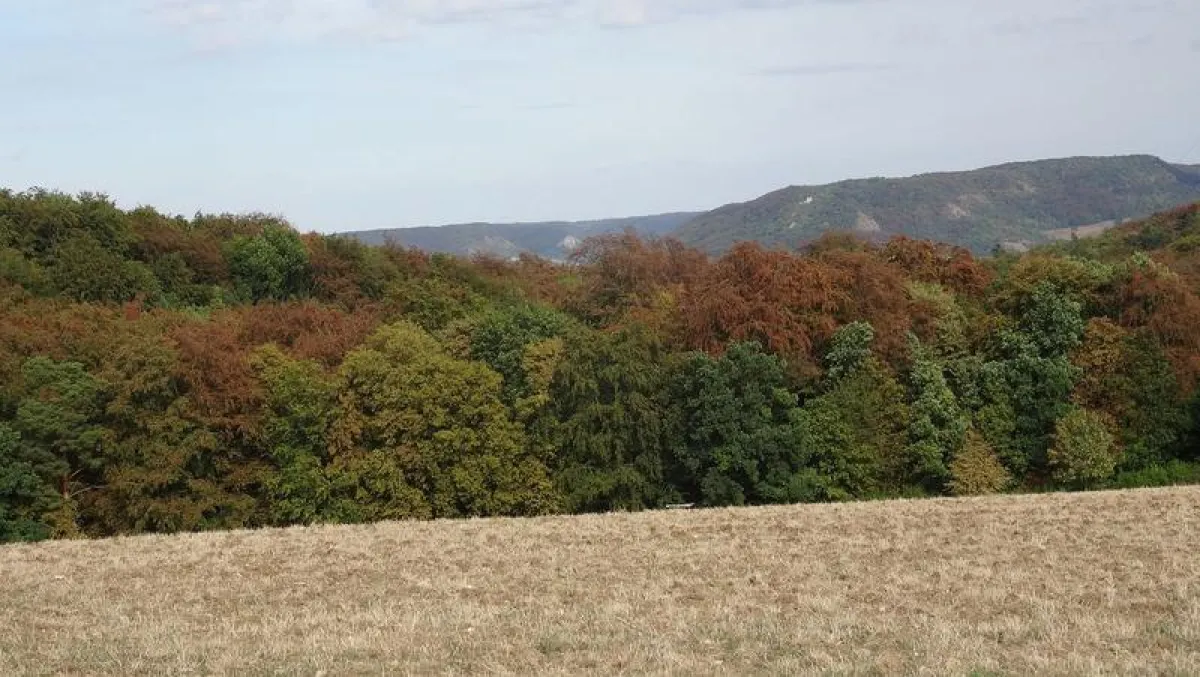
Bild: Scientists take step towards more accurate predictions of tree drought mortality
Heat and drought stress on deciduous forest in 2016 in Thuringia, Germany.  (MPI-BGC, photo by Susann Héjja)
Heat and drought stress on deciduous forest in 2016 in Thuringia, Germany. (MPI-BGC, photo by Susann Héjja)

(openPR) A meta-analysis on observational and drought manipulation studies reveals that hydraulic failure is a universal factor when water deficiency kills trees. The finding, persistent across 26 different species globally analyzed, addressed a contentious hypothesis on drought-induced tree mortality.


---
As the number of hot droughts increases worldwide, scientists try to solve the difficulty of making consistent predictions about what will happen to plants and vegetation in the future. This is of importance for land-surface models used to predict climate change because plants take up about half of the CO2 emissions that humans put in the atmosphere. Therefore, the effect of sudden shifts in plant populations at large scales, such as tree die-off observed globally in recent decades, could affect the rate at which the climate changes. Current global vegetation models have a hard time producing consistent estimates of plant CO2 uptake, and their predictions vary widely based on the assumptions they use about how plants respond to environmental stress.

“Droughts are simultaneously happening over large regions of the globe, affecting forests with very different trees,” says Liz Blood, director of NSF’s Macrosystems Biology program. “The discovery of how droughts cause mortality in trees, regardless of the type of tree, allows us to make better regional-scale predictions of droughts’ effects on forests.”

Trees and forests are particularly important in this process because they take up and store a lot of carbon, and they also affect their environment in other ways. One idea for improving these models is to base forest responses on how trees die in response to heat, drought, and other climate stresses. But progress on this has been limited by disagreement over whether carbon starvation or hydraulic failure, the inability of a plant to move water from roots to leaves, is the true cause of death in trees.

Plants transpire large amounts of water for transporting nutrients and for cooling but also to carry out photosynthesis. Transpiration is facilitated by stomata, small pores in the leaves that also let in CO2. Trees respond to the stress of drought by closing those pores and hence reduce both water loss and photosynthesis. At that point, they need to rely on their stored sugars and starches to stay alive, and could die from carbon starvation if they run out before the drought is over.

Also as the soil dries out, trees have to suck harder to get water out of the soil, thereby increasing the risk of gas bubbles forming in their vessels. The bubbles, or embolisms, interrupt the transport of water from the roots upwards to the leaves, a process we call hydraulic failure and which may become lethal as the whole tree dries out.

A new study published in Nature Ecology and Evolution, led by Henry Adams at Oklahoma State University, brought together 62 scientists from across the globe to synthesize all known research from drought manipulation studies that killed trees. They found that hydraulic failure was universal when trees died, whereas carbon starvation was a contributing factor roughly half of the time.

"This study makes a substantial scientific contribution because it combines results from many different experiments in a consistent way. We can now draw general conclusions that we couldn’t make from the individual case studies" states Henrik Hartmann, scientist at the Max Planck Institute for Biogeochemistry in Jena, who conducted two of the drought stress experiments included in the meta-analysis and is one of the main authors.

The new study documents that both carbon starvation and hydraulic failure appeared to occur as trees died. "This makes sense, because stored sugars and starches are also im-portant for preventing hydraulic failure by acting as “osmoprotectants,” increasing the tree’s ability to hold on to its water. " says Henrik Hartmann. The study’s results help link together the theories of carbon starvation and hydraulic failure, and provide a strong suggestion for how to go about improving vegetation models and overall predictions of climate change.

The interdisciplinary approach served the purpose of the NSF’s “macrosystems biology” grant program. Funding from this project supports, “predictive understanding of large-scale biological responses to climate [and] land-use change.” By forging a unified theory of the most basic question – what actually kills a tree in a drought? – scientists may now focus on effective solutions.
“These findings zing in to help us improve our understanding of how trees die, which is critical to understand in the context of climate change,” says collaborator David Breshears, professor of natural resources at the University of Arizona.

Original publication
Adams et al. (61 co-authors). A multi-species synthesis of physiological mechanisms in drought-induced mortality. Nature Ecology and Evolution, DOI: 10.1038/s41559-017-0248-x

Contact at Max Planck Institute for Biogeochemistry
Dr. Henrik Hartmann

E-Mail
Phone: +49.3641.576294
Mobile: +49.171.8188273

Contact at Oklahoma State University
Henry Adams, PhD
Assistant Professor – Environmental Ecology Lab
Department of Plant Biology, Ecology, & Evolution

E-Mail
Mobile: +1 303 819 6715

Quelle: idw
Diese Pressemeldung wurde auf openPR veröffentlicht.

Verantwortlich für diese Pressemeldung:

News-ID: 962503
 569

Kostenlose Online PR für alle

Jetzt Ihren Pressetext mit einem Klick auf openPR veröffentlichen

Jetzt gratis starten

Pressebericht „Scientists take step towards more accurate predictions of tree drought mortality“ bearbeiten oder mit dem "Super-PR-Sparpaket" stark hervorheben, zielgerichtet an Journalisten & Top50 Online-Portale verbreiten:

PM löschen PM ändern
Disclaimer: Für den obigen Pressetext inkl. etwaiger Bilder/ Videos ist ausschließlich der im Text angegebene Kontakt verantwortlich. Der Webseitenanbieter distanziert sich ausdrücklich von den Inhalten Dritter und macht sich diese nicht zu eigen. Wenn Sie die obigen Informationen redaktionell nutzen möchten, so wenden Sie sich bitte an den obigen Pressekontakt. Bei einer Veröffentlichung bitten wir um ein Belegexemplar oder Quellenennung der URL.

Pressemitteilungen KOSTENLOS veröffentlichen und verbreiten mit openPR

Stellen Sie Ihre Medienmitteilung jetzt hier ein!

Jetzt gratis starten

Weitere Mitteilungen von Max-Planck-Institut für Biogeochemie

Bild: Bewirtschaftung von Bergwiesen beeinflusst Belastbarkeit gegenüber KlimaextremenBild: Bewirtschaftung von Bergwiesen beeinflusst Belastbarkeit gegenüber Klimaextremen
Bewirtschaftung von Bergwiesen beeinflusst Belastbarkeit gegenüber Klimaextremen
Die artenreichen Bergwiesen der Alpen sind einem kontinuierlichen Nutzungswandel und häufiger werdenden Klimaextremen ausgesetzt. Anhaltende Dürreperioden werden als größte Gefahr für die Wiesenökosysteme angesehen. Um herauszufinden, wie eine veränderte Bewirtschaftung die Dürre-Reaktion von Bergwiesen beeinflusst, hat ein Forscherteam des Max-Planck-Instituts für Biogeochemie in Jena zusammen mit internationalen Kooperationspartnern Feldexperimente im Tiroler Stubaital durchgeführt. --- Die Ergebnisse der kürzlich im Journal of Ecology ver…
Bild: Max-Planck-Fellowship für Prof. Christian Wirth am Max-Planck-Institut für Biogeochemie verlängertBild: Max-Planck-Fellowship für Prof. Christian Wirth am Max-Planck-Institut für Biogeochemie verlängert
Max-Planck-Fellowship für Prof. Christian Wirth am Max-Planck-Institut für Biogeochemie verlängert
Die Max-Planck-Gesellschaft zur Förderung der Wissenschaften (MPG) hat das renommierte Max-Planck-Fellow-Programm für den Leipziger Biologen Prof. Dr. Christian Wirth anerkennend beurteilt und um weitere fünf Jahre verlängert. Damit honoriert die MPG dessen herausragende wissenschaftliche Leistungen, die er in Zusammenarbeit mit Kollegen vom Max-Planck-Institut für Biogeochemie in Jena erbrachte. --- Prof. Wirth, geschäftsführender Direktor des Deutschen Zentrums für integrative Biodiversitätsforschung (iDiv) Halle-Jena-Leipzig, Professor fü…

Das könnte Sie auch interessieren:

Bild: Berliner Start-up „Part-Time Scientists“ stellt auf der ILA 2016 ersten kommerziellen Lander vorBild: Berliner Start-up „Part-Time Scientists“ stellt auf der ILA 2016 ersten kommerziellen Lander vor
Berliner Start-up „Part-Time Scientists“ stellt auf der ILA 2016 ersten kommerziellen Lander vor
Berlin, 01.06.2016. Bereits zum dritten Mal ist der deutsche Google-Lunar-XPRIZE-Teilnehmer „Part-Time Scientists“ mit einem Stand auf der Internationalen Luft-und Raumfahrtausstellung vertreten. Im Mittelpunkt steht dieses Jahr „ALINA“: Das „Autonomous Landing and Navigation Module“ wird nicht nur der erste kommerzielle Lander auf dem Markt sein, sondern …
Bild: Twelve tenure-track professorships for the University of FreiburgBild: Twelve tenure-track professorships for the University of Freiburg
Twelve tenure-track professorships for the University of Freiburg
Successful application for the “Federal and State Program for the Advancement of Young Scientists” --- The University of Freiburg received twelve new tenure-track professorships from the “Federal and State Program for the Advancement of Young Scientists”. They are directed toward post-doctoral scientists and earmark a direct transition toward a life-long …
Bild: BIH holds the “Excellence Award for Sex and Gender Aspects in Health Research” for the first timeBild: BIH holds the “Excellence Award for Sex and Gender Aspects in Health Research” for the first time
BIH holds the “Excellence Award for Sex and Gender Aspects in Health Research” for the first time
In cooperation with the Institute of Gender in Medicine at Charité – Universitätsmedizin Berlin, the Berlin Institute of Health (BIH) acknowledges the scientific excellence of renowned scientists with the BIH Excellence Award for Sex and Gender Aspects in Health Research. It recognizes research excellence among scientists working in the field of basic …
Bild: NewSpace-Startup „Part-Time Scientists“ errichtet mit Vodafone LTE-Netz auf dem MondBild: NewSpace-Startup „Part-Time Scientists“ errichtet mit Vodafone LTE-Netz auf dem Mond
NewSpace-Startup „Part-Time Scientists“ errichtet mit Vodafone LTE-Netz auf dem Mond
Berlin, 20.03.2017. Das Berliner NewSpace-Startup Part-Time Scientists (PTS) arbeitet bei seiner für 2018 geplanten „Mission to the Moon“ mit dem Kommunikationskonzern Vodafone zusammen, um auf dem Erdtrabanten die Kommunikation via LTE zu ermöglichen. Für die Mission wird der von den Part-Time Scientists konstruierte Lander „ALINA“ zum Einsatz kommen: …
Bild: Cancer detection with sugar moleculesBild: Cancer detection with sugar molecules
Cancer detection with sugar molecules
Scientists from the University of Würzburg have synthesized a complex sugar molecule which specifically binds to the tumor protein Galectin-1. This could help to recognize tumors at an early stage and to combat them in a targeted manner. --- Galectins are a family of proteins that have become a promising source of cancer research in recent years. A representative …
Bild: TIBCO übernimmt Alpine für kollaboratives Projektmanagement im Advanced-Analytics-BereichBild: TIBCO übernimmt Alpine für kollaboratives Projektmanagement im Advanced-Analytics-Bereich
TIBCO übernimmt Alpine für kollaboratives Projektmanagement im Advanced-Analytics-Bereich
… TIBCO Spotfire® und TIBCO StreamBase® um attraktive Features, die noch schnellere datengestützte Einblicke und Aktionen ermöglichen. Alpine Data bietet Data Scientists eine webnative Social-Collaboration-Oberfläche, mit der sie die Mitglieder der breiteren Analytics-Community wie Dateningenieure, Geschäftsanwender, Analysten, IT-Fachleute, Entwickler und …
Bild: Highly precise wiring in the Cerebral CortexBild: Highly precise wiring in the Cerebral Cortex
Highly precise wiring in the Cerebral Cortex
… vision, thoughts or spatial orientation are being computed. Here the rules by which nerve cells are connected to each other are only partly understood. A team of scientists around Moritz Helmstaedter at the Frankfiurt Max Planck Institute for Brain Research and Helene Schmidt (Humboldt University in Berlin) have now discovered a surprisingly precise nerve …
Bild: IUFRO 125th Anniversary Congress, 18.-22. September in Freiburg, GermanyBild: IUFRO 125th Anniversary Congress, 18.-22. September in Freiburg, Germany
IUFRO 125th Anniversary Congress, 18.-22. September in Freiburg, Germany
… international scientific congress is held in Freiburg, Germany, 18. – 22. September 2017. Under the motto “Interconnecting Forests, Science and People”, more than 2,000 scientists from about 90 countries will attend the congress. --- Presentations are allocated to ten congress segments and address various aspects of forests and forestry. The official …
Bild: Gauging the ElusiveBild: Gauging the Elusive
Gauging the Elusive
Scientists at the Leibniz Institute of Plant Biochemistry in collaboration with their peers from the Martin Luther University Halle-Wittenberg developed a program for gauging the sizes and shapes of plant cells. They named their program PaCeQuant (from Pavement Cell Quantification). In a single pass, the program automatically measures and records specific …
Bild: Homöopathie: Verwunderung über Prof. Edzard ErnstBild: Homöopathie: Verwunderung über Prof. Edzard Ernst
Homöopathie: Verwunderung über Prof. Edzard Ernst
… Informationsdienst H.Blog nimmt einen aktuellen Artikel von Prof. Edzard Ernst im Magazin stern zum Anlass, auf die fragwürdige Rolle so genannter „Visible Scientists“ aufmerksam zu machen. Prof. Edzard Ernst, »Visible Scientists« und politisches Strippenziehen:http://www.psychophysik.com/h-blog/?p=79 Nach Rae Goodell ist der „Visible Scientist“ ein neuer Typ von …
Sie lesen gerade: Scientists take step towards more accurate predictions of tree drought mortality