(openPR) Defective DNA repair mechanisms can lead to diseases like Fanconi anemia. Utilizing a
concept called “synthetic viability”, researchers at CeMM, in international collaboration,
found additional gene disruptions that rescue the phenotype of this disease in cell culture
and identified the responsible protein complex. The study, published in Nature
Communications, intriguingly demonstrates the potential of synthetic viability screens to
identify genetic interactions rescuing cells with defects in the DNA damage response.
---
Sunlight, cellular metabolism or simply faulty DNA replication: DNA damage occurs tens of thousands of times per day in every cell of the body. Hence, a whole arsenal of molecular machineries stand by to repair various forms of damage and maintain cellular function. If those repair mechanisms fail, it can lead to serious diseases, as in the case of the Fanconi anemia pathway: named after the disease, it´s failure leads to impaired repair of DNA interstrand crosslink damage.
The research group of Joanna Loizou at CeMM, in international collaboration, showed with a so-called “synthetic viability” screen that cells with defects in the Fanconia anemia pathway can be rescued by introducing additional genetic defects, targeting genes of the BLM helicase complex. The study was published in Nature Communications (DOI: 10.1038/s41467-017-01439-x).
Using CRISPR/Cas9, the scientists produced a library of viruses able to disrupt almost all of the genes in the human genome individually. Millions of cells with Fanconi anemia defect were infected with those viruses, introducing a single additional gene defect in each cell. Subsequently, DNA interstrand crosslink damage was generated – the kind of DNA damage that should kill the diseased cells. With a high throughput assay, the researchers searched for cells that survived better after disrupting additional genes and found that upon loss of a functional BLM helicase complex, cellular survival of Fanconi anemia cells was increased and the cells behaved more like healthy ones.
This work demonstrates that genome-wide CRISPR/Cas9 screens are suitable to identify genetic “synthetic viable” interaction partners that increase the survival of cells with defective DNA damage repair mechanisms. Above that, the now published study clearly shows that the loss of both components (BLM & Fanconi anemia pathway) is less detrimental for cells than a deficiency of only the Fanconi anemia pathway – an important contribution to the elucidation of this rare genetic disease.
Publication
Martin Moder*, Georgia Velimezi*, Michel Owusu, Abdelghani Mazouzi, Marc Wiedner, Joana Ferreira da Silva, Lydia Robinson-Garcia, Fiorella Schischlik, Rastislav Slavkovsky, Robert Kralovics, Michael Schuster, Christoph Bock, Trey Ideker, Stephen P. Jackson, Jörg Menche and Joanna I. Loizou. Parallel genome-wide screens identify synthetic viable interactions 3 between the BLM helicase complex and Fanconi anemia. Nature Communications, November 1st, 2017. DOI: 10.1038/s41467-017-01439-x.
Funding
This study was supported by the European Molecular Biology Organization (EMBO) and the Austrian Science Fund (FWF).
Joanna Loizou received her Ph.D. at the University of Manchester and Sussex with Keith Caldecott, and carried out post-doctoral research at the International Agency for Research on Cancer, Lyon, France with Zhao-Qi Wang and Zdenko Herceg and later at the London Research Institute, CRUK, England with Axel Behrens. She joined CeMM in 2011.
http://cemm.at/research/groups/joanna-i-loizou-group/
The mission of CeMM Research Center for Molecular Medicine of the Austrian Academy of Sciences is to achieve maximum scientific innovation in molecular medicine to improve healthcare. At CeMM, an international and creative team of scientists and medical doctors pursues free minded basic life science research in a large and vibrant hospital environment of outstanding medical tradition and practice. CeMM’s research is based on post-genomic technologies and focuses on societally important diseases, such as immune disorders and infections, cancer and metabolic disorders. CeMM operates in a unique mode of super-cooperation, connecting biology with medicine, experiments with computation, discovery with translation, and science with society and the arts. The goal of CeMM is to pioneer the science that nurtures the precise, personalized, predictive and preventive medicine of the future. CeMM trains a modern blend of biomedical scientists and is located at the campus of the General Hospital and the Medical University of Vienna. www.cemm.at
Contact Details
_________________________________
Eva Schweng, MAS
Public Relations Manager
_________________________________
CeMM
Research Center for Molecular Medicine
of the Austrian Academy of Sciences
Lazarettgasse 14, AKH BT 25.3
1090 Vienna, Austria
Phone +43-1/40160-70 051
Fax +43-1/40160-970 000

www.cemm.at
Weitere Informationen:
- http://cemm.at/news/
Quelle: idw
Presseinformation
When two wrongs make a right: Artificial CRISPR gene disruptions could rescue genetic disease
Diese Pressemeldung wurde auf openPR veröffentlicht.
Verantwortlich für diese Pressemeldung:CeMM Forschungszentrum für Molekulare Medizin der Österreichischen Akademie der Wissenschaften / MAS Eva Schweng
Über das Unternehmen
-
Pressebericht „When two wrongs make a right: Artificial CRISPR gene disruptions could rescue genetic disease“ bearbeiten oder mit dem "Super-PR-Sparpaket" stark hervorheben, zielgerichtet an Journalisten & Top50 Online-Portale verbreiten:
Disclaimer: Für den obigen Pressetext inkl. etwaiger Bilder/ Videos ist ausschließlich der im Text angegebene Kontakt verantwortlich. Der Webseitenanbieter distanziert sich ausdrücklich von den Inhalten Dritter und macht sich diese nicht zu eigen. Wenn Sie die obigen Informationen redaktionell nutzen möchten, so wenden Sie sich bitte an den obigen Pressekontakt. Bei einer Veröffentlichung bitten wir um ein Belegexemplar oder Quellenennung der URL.
Weitere Mitteilungen von CeMM Forschungszentrum für Molekulare Medizin der Österreichischen Akademie der Wissenschaften
Wie der Stoffwechsel im Zellkern (Krebs-)Gene kontrolliert
+++ERC Consolidator Grant an CeMM-Forscher vergeben+++
Welchen Einfluss hat der Stoffwechsel auf die Gene? Und wie wirkt sich die Verteilung von Stoffwechselmolekülen im Zellkern auf die Entstehung von Krebs aus? Um diese Kernfragen zu beantworten, wurde ein „Consolidator Grant“ des Europäischen Forschungsrates an Stefan Kubicek, Forschungsgruppenleiter am CeMM, vergeben.
---
(Wien, der 28.11.2017) Gene brauchen Kontrolle. Dieses wichtigste Prinzip für eine funktionierende Zelle, und damit für einen gesunden Organismus, wird seit langem erf…
Wirkstoff hilft „Mondschein-Zellen“ bei DNA-Reparatur
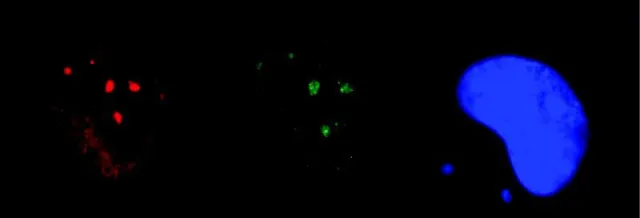
Bei der „Mondscheinkrankheit“ Xeroderma pigmentosum verhindert ein Gendefekt die Reparatur der DNA nach UV-Schäden. In der Zellkultur haben WissenschaftlerInnen des CeMM nun eine Substanz gefunden, die diesen Defekt aufhebt – und dabei wichtige Erkenntnisse über die molekularen Mechanismen der DNA-Reparatur gewonnen. Die Studie wurde in der Fachzeitschrift Molecular Cell veröffentlicht.
---
Welch verheerende Wirkung der UV-Anteil des Sonnenlichts auf die DNA-Moleküle der Hautzellen haben kann, wird sichtbar, wenn die Reparaturmechanismen ver…
Das könnte Sie auch interessieren:

Flexible proximity sensor creates smart surfaces
… 1.5 m% and an area of 36cm² are needed.”
Seeking partners for application
The proximity sensor could be used for a variety of applications. It could conceivably be used as an artificial skin for robots. “For instance, service robots could reach out a hand if they sense a person nearby,” Bodny says. There are plenty of application areas in the “smart …

World CRISPR in Agriculture Marktforschungsbericht 2025
Ricerca Alfa bietet einen kürzlich veröffentlichten Forschungsbericht zum CRISPR im Agrarmarkt an, der eine eingehende Analyse der Schlüsselfaktoren enthält, die den Markt beeinflussen. Es bietet auch wichtige quantitative und qualitative Marktinformationen, die Kunden dabei helfen, Faktoren zu finden, die zum weltweiten Marktwachstum beitragen. Ein …

RNA: a vicious pathway to cancer ?
… his hypothesis that RNA has also the function to serve as blueprint for the repair of DNA errors and that this is a vicious pathway to cancer. The CRISPR/Cas technology, which has made it much easier to alter genes experimentally, will play an important role in this work.
Further information: Prof. Dr. Rolf Marschalek, Institute for Pharmaceutical Biology …
Erste Ergebnisse lassen hoffen: Gentherapie CRISPR/Cas9 erfolgreich
Am Universitätsklinikum Regensburg (UKR) wurde die erste Beta-Thalassämie-Patientin mit dem CRISPR/Cas9-Verfahren behandelt. Eine weitere Studie läuft im Bereich der Sichelzellerkrankungen. Nun wurde in einer ersten Zwischenbilanz ein positives Resümee gezogen.
Die Patientin, die weltweit erstmalig mit der sogenannten Genschere CRISPR/Cas9 behandelt …

From small to not so pixel-perfect large
Scientists at the Max Planck Institute for Intelligent Systems in Tübingen utilize the Artificial Intelligence of a software to create a high definition version of a low resolution image. While the pixel-perfectness is being sacrificed, the reward is a better result.
Paper presented at ICCV 2017, Venice:http://webdav.tuebingen.mpg.de/pixel/enhancenet/
---
Everyone …
Drones can almost see in the dark
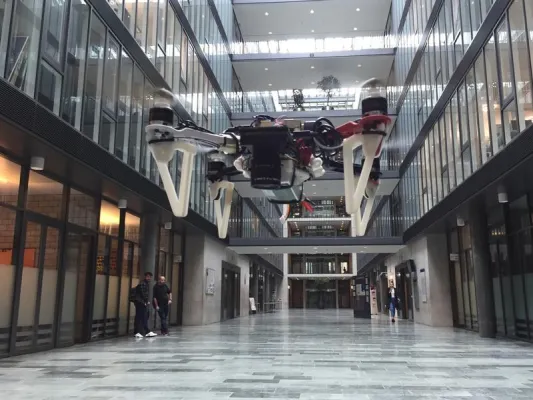
… by computer vision algorithms. To solve this problem, professional drones use sensors that are elaborate, expensive, and bulky, such as laser scanners.
First combination of artificial intelligence and robotics
A group of researchers from the University of Zurich and the Swiss research consortium NCCR Robotics has now developed an innovative alternative …
CRISPR/Cas9 in 4 Minuten erklärt
Die explain it GmbH stellt kostenlos ein vierminütiges Erklärvideo zur Unterstützung der Berichterstattung zum Thema „CRISPR“ zur Verfügung.
Mit CRISPR/Cas9 lässt sich die DNA verändern und reparieren. Doch wie funktioniert CRISPR überhaupt und welche Chancen und Risiken birgt diese neue Art der Genveränderung? Die explain-it GmbH hat hierzu einen vierminütigen …

Tres 24 Titan – the 24-hour titanium watch from Botta-Design
… 12 at the top. At 6 in the morning and at 6 in the evening, when the sun is on the horizon, the hand of the TRES 24 models can also be found at the dial’s “artificial horizon”. Finally, at midnight, when the sun is “under the Earth”, the hour hand also points to the number 0 at the bottom of the dial. At the same time, the hand passes the date line that …
VDI-Publikation: Chancen neuer Biotech-Werkzeuge
Biotechnologische Durchbrüche wie die CRISPR/Cas-Methode verheißen völlig neuartige und vielversprechende Anwendungen in Medizin, Landwirtschaft und Industrie. Der VDI gibt in seiner neuen Publikation „CRISPR/Cas & Co – Neue Biotech-Werkzeuge“ aus Ingenieurperspektive einen Überblick über die Chancen dieser Technologien, beleuchtet aber auch mögliche …
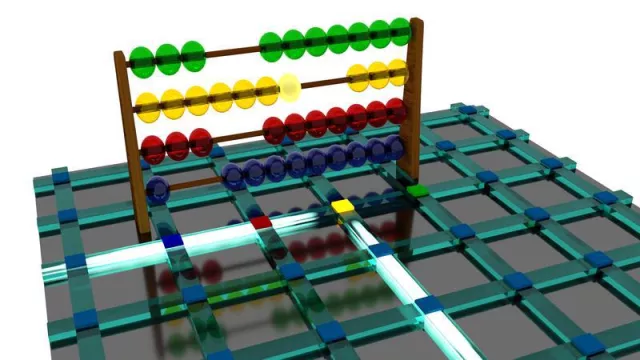
Researchers develop chip-scale optical abacus
… that we can develop much faster systems which can be connected using integrated optical waveguides.”
To this end, the researchers need a variety of components, including artificial neuron type cells and artificial synapses, i.e. the “connection points” between neurons. The researchers already created the artificial synapses just recently as part of another …
Sie lesen gerade: When two wrongs make a right: Artificial CRISPR gene disruptions could rescue genetic disease