openPR Recherche & Suche
Presseinformation

“European Muslims perceive the EU more positively than other Europeans”

27.10.201712:00 UhrWissenschaft, Forschung, Bildung
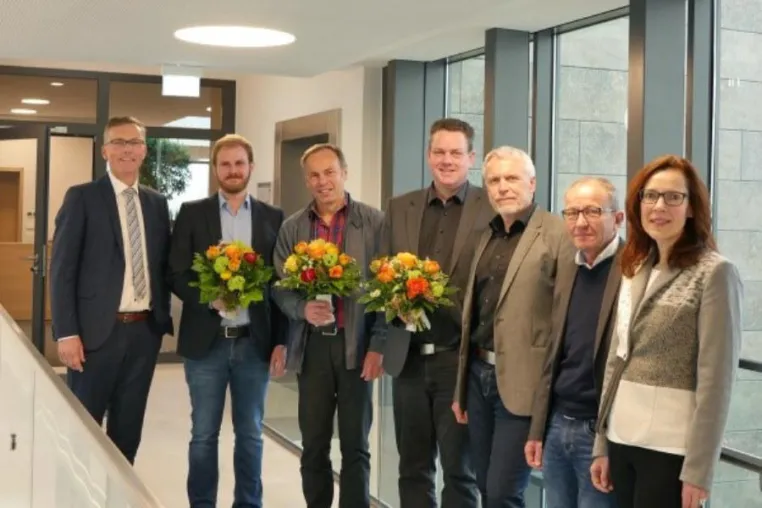
Bild: “European Muslims perceive the EU more positively than other Europeans”
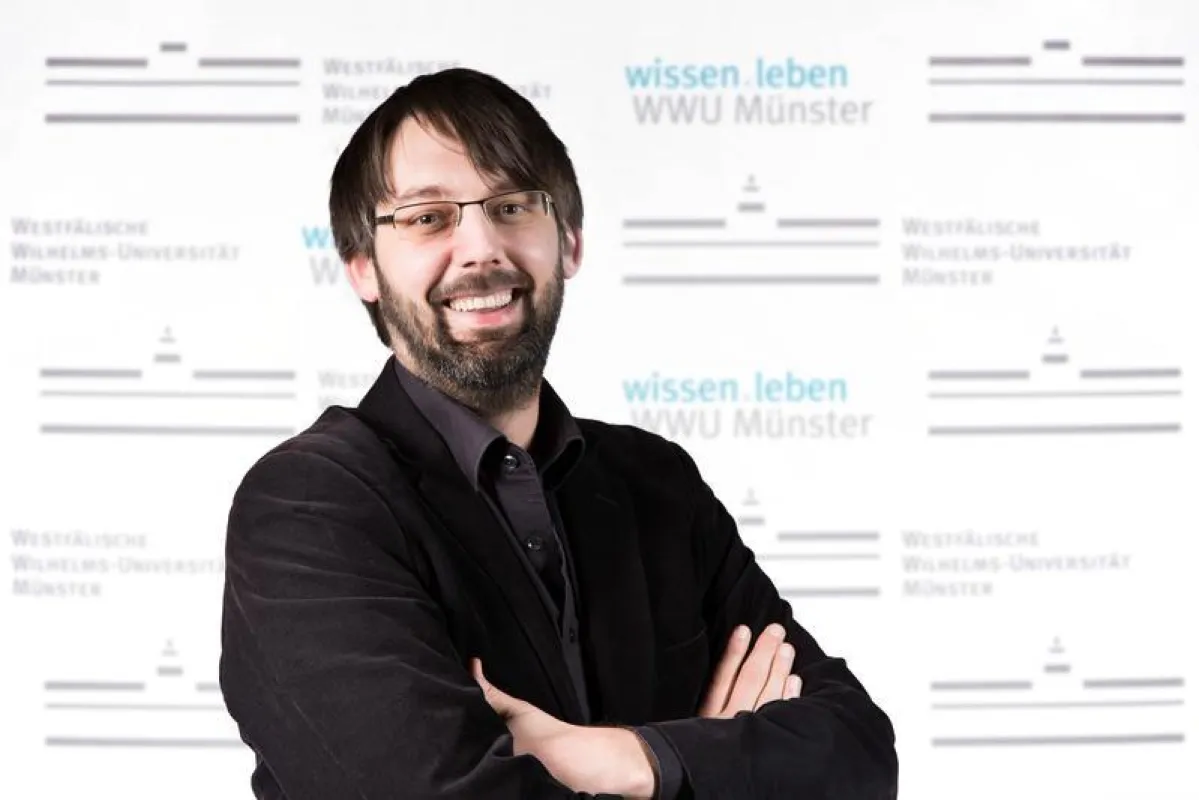
Prof. Dr. Bernd Schlipphak (Photo: Benedikt Weischer)

(openPR) For the first time, the Cluster of Excellence analyses the attitudes of European Muslims towards the EU – Far less sceptical than other groups such as Christians and those without religious affiliation – Reason probably lies with their relatively higher life satisfaction in their host country – Religiosity does not seem to influence the attitudes of Muslims towards the EU – Experiencing discrimination however threatens positive attitudes


---
According to a study of the Cluster of Excellence “Religion and Politics”, Muslims in Europe have a more positive view of the European Union (EU) compared to all other groups of the European population. “On average, Muslims have a higher level of trust in EU institutions than members of other religious or non-religious groups such as Christians and those unaffiliated with any religion,” says Prof. Dr. Bernd Schlipphak, political scientist at the Cluster of Excellence. “Of all the groups analysed from 16 European countries, Muslims are the only ones who, for example, rate their trust in the European Parliament higher than 5, on a scale from 1 to 10. Currently, there is a lot of discussion about the lack of acceptance of the EU among many sections of the population – yet the majority of the Muslim immigrants from the first and second generation do not belong to this group of critics.” At the same time, the results are in contrast to EU attitudes of Muslims in Arab countries: “We were able to demonstrate in earlier studies that only a minority of the Arab population has a positive opinion of the EU.”

According to the new study, one of the most important reasons for the favourable attitudes of the majority of European Muslims is that they are more satisfied with their living situation in the EU than other groups: “Approximately 95 per cent of the Muslims interviewed are first or second generation migrants who compare their new living situation with that in their country of origin: they have a higher appreciation for their economic situation, provision of healthcare and the political system in the host country than those who did not immigrate”, explains Prof. Schlipphak. “This satisfaction leads to a higher level of trust in domestic institutions such as the parliament of the host country which, in return, is transferred onto the EU level.” In addition to being satisfied with democracy, economy and health, a higher political interest has a positive effect on trust in EU institutions, according to the study. “Religiosity, in contrast, does not have an influence on attitudes towards the EU, contrary to what we assumed.”

“Religiosity has no influence on attitudes towards the EU”

“European Muslims do consider themselves to be more religious than other Europeans”, explains political scientist Mujtaba Isani, co-author of the study. “This religiosity, however, has neither a negative nor a positive influence on their trust in political institutions on the domestic and the EU level.” With this study, the researchers also provide a link to the debate that discusses whether the incompatibility of European and Islamic values and religiosity impedes integration. Like religiosity, neither education nor age nor gender have an influence on EU attitudes, as Prof. Schlipphak remarks. “Our study shows: Successful integration leads to higher levels of trust in political institutions on a domestic and European level. Long-term integration efforts are indispensable if we want to keep up the high level of trust among European Muslims in the EU.”

The study is the first systematic empirical analysis of EU attitudes among European Muslims. The researchers evaluated data from the European Social Survey (ESS) from 2002 until 2014; more recent data on the topic of the study is not available. The academics compared the statements of 3,601 European Muslims with those of other religious and non-religious groups. Among the Muslims interviewed, 95 per cent immigrated into the EU; 71 per cent of these were first generation migrants.

“Second Generation Immigrants More Critical – Strengthen Integration”

According to political scientist Schlipphak, the study reveals social threats for the future: “The more distant the migration experience, the lower are the levels of satisfaction.” Second generation European Muslim immigrants show less trust in the political institutions of the host country and the EU than first generation European Muslim immigrants. Discrimination is demonstrated to have a negative effect on the EU attitudes: “European Muslims, who feel discriminated against, trust the institutions of the European community to a lesser degree. This is all the more problematic since the feeling of being discriminated against is more widespread among second generation European Muslim immigrants, as shown by our analyses.” Against this background, the political science scholar recommends “to strengthen the integration of European Muslims in the long term and take a look at the problems of the second generation in particular, in order to maintain the current positive attitude of the majority.”

Political scientists Bernd Schlipphak and Mujtaba Isani have recently published their research results under the title “In the European Union we trust: European Muslim attitudes toward the European Union” in the renowned peer-reviewed journal “European Union Politics”. Every two years, European citizens are interviewed concerning a wide range of social and political topics for the underlying European Social Survey (ESS). The country analysis includes Austria, Belgium, Denmark, Finland, France, Germany, Greece, Ireland, the Netherlands, Norway, Portugal, Slovenia, Spain, Sweden, Switzerland and the United Kingdom. (dak/vvm)

Note:
Isani, Mujtaba/ Schlipphak, Bernd (2017): In the European Union we trust: European Muslim attitudes toward the European Union. European Union Politics. https://doi.org/10.1177/1465116517725831.
The article may be downloaded at http://journals.sagepub.com/doi/full/10.1177/1465116517725831

Weitere Informationen:
- http://www.uni-muenster.de/Religion-und-Politik/en/aktuelles/2017/okt/PM_Europaeische_Muslime_sehen_EU_positiver_als_andere_Europaer.html

Quelle: idw
Diese Pressemeldung wurde auf openPR veröffentlicht.

Verantwortlich für diese Pressemeldung:

News-ID: 977038
 446

Kostenlose Online PR für alle

Jetzt Ihren Pressetext mit einem Klick auf openPR veröffentlichen

Jetzt gratis starten

Pressebericht „“European Muslims perceive the EU more positively than other Europeans”“ bearbeiten oder mit dem "Super-PR-Sparpaket" stark hervorheben, zielgerichtet an Journalisten & Top50 Online-Portale verbreiten:

PM löschen PM ändern
Disclaimer: Für den obigen Pressetext inkl. etwaiger Bilder/ Videos ist ausschließlich der im Text angegebene Kontakt verantwortlich. Der Webseitenanbieter distanziert sich ausdrücklich von den Inhalten Dritter und macht sich diese nicht zu eigen. Wenn Sie die obigen Informationen redaktionell nutzen möchten, so wenden Sie sich bitte an den obigen Pressekontakt. Bei einer Veröffentlichung bitten wir um ein Belegexemplar oder Quellenennung der URL.

Pressemitteilungen KOSTENLOS veröffentlichen und verbreiten mit openPR

Stellen Sie Ihre Medienmitteilung jetzt hier ein!

Jetzt gratis starten

Weitere Mitteilungen von Exzellenzcluster „Religion und Politik“ an der Westfälischen Wilhelms-Universität Münster

Bild: Mehr als 1.000 antike Siegelabdrücke entdecktBild: Mehr als 1.000 antike Siegelabdrücke entdeckt
Mehr als 1.000 antike Siegelabdrücke entdeckt
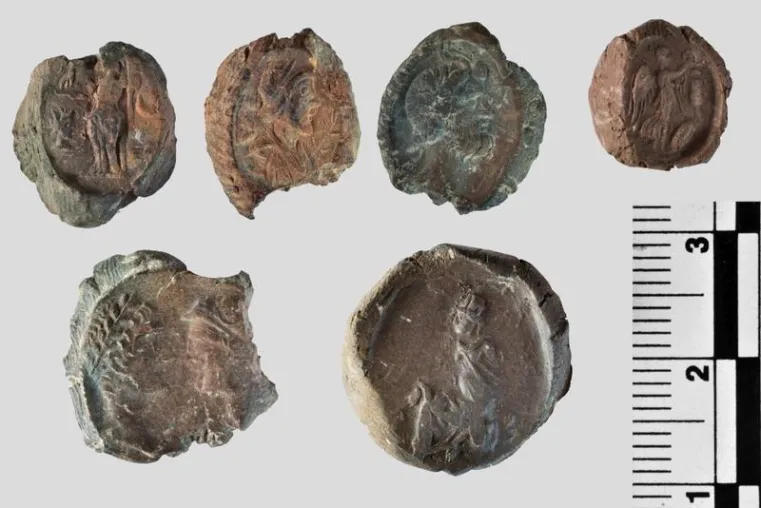
Altertumswissenschaftler des Exzellenzclusters machen großen Fund an Siegelabdrücken in der Südosttürkei – Mehr als 1.000 Siegel geben neue Einblicke in die griechisch-römische Götterwelt – Funde in einem spätantiken Gebäudekomplex deuten auf eine bislang unbekannte Kirche hin --- Altertumswissenschaftler des Exzellenzclusters „Religion und Politik“ der Uni Münster haben in der Südosttürkei einen großen Fund an Siegelabdrücken gemacht. „Die einzigartige Artefaktgruppe aus mehr als 1.000 Stücken, die aus dem städtischen Archiv der antiken Sta…
Martin Luther als deutsch-nationaler Held im Stummfilm
Neue Reihe „Luther – Ein Film der deutschen Reformation“ am Exzellenzcluster in Münster – Stummfilmkonzert mit Stephan Graf von Bothmer am 14. November – Historische Luther-Filme zeigen den Reformator im zeitgenössischen Spiegel --- Im Jahr des Reformationsjubiläums lädt der Exzellenzcluster „Religion und Politik“ zu einer Reihe mit Stummfilmkonzert und Vortrag zum Historienfilm „Luther – Ein Film der deutschen Reformation“ ein. Der Film des Regisseurs Hans Kyser aus dem Jahre 1927, der lange Zeit als verschollen galt, ist erst seit diesem J…

Das könnte Sie auch interessieren:

Junge Liberale entsetzt über Landtagsabgeordneten Irmer
… Winter ist Irmer mit anti-muslimischen Äußerungen und seinem Anzeigenblatt „Wetzlarer Kurier“ aufgefallen. Diesmal schlägt MdL Irmer dem Fass den Boden aus. Gläubigen Muslims und dem Islam als Religion Weltherr-schaftsansprüche zu unterstellen, ist eine Frechheit“, so der JuLi-Landeschef Hendrik Silken. „Der Vorsitzende der CDU im Lahn-Dill-Kreis Irmer …
The Other Europeans – Der Yiddish Summer Weimar startet in Krakau mit einer außergewöhnlichen Eigenproduktion
Am 26. Juni beginnt das vom Yiddish Summer Weimar initiierte Projekt The Other Europeans in Krakau. Das Projekt bildet den Auftakt eines Festival-Sommers, der in Krakau, Wien und Weimar den Austausch zwischen den Kulturen der Juden und der Roma sichtbar und den interkulturellen Dialog in seinen vielen Facetten erlebbar machen möchte. In London, Berlin, …
Bild: Hamburger Designer sahnen abBild: Hamburger Designer sahnen ab
Hamburger Designer sahnen ab
… für Kommunikationsdesign und Art Direction, in diesem Jahr internationale Lorbeeren. Er wurde von der internationalen Jury mit der Verleihung des Award of Awards des Europeans Young Creative Award, der dieses Jahr vom Art Directors Club Europe für hervorragende Leistungen veranstaltet wird, ausgezeichnet. Simon Rose und Jonathan Schupp, den Machern der …
Bild: STOP Happy Muslims erobern die Welt STOP Happy Muslims tanzen auf der StraßeBild: STOP Happy Muslims erobern die Welt STOP Happy Muslims tanzen auf der Straße
STOP Happy Muslims erobern die Welt STOP Happy Muslims tanzen auf der Straße
… Williams Ohrwurm HAPPY sorgte in den letzten Wochen in der islamischen Welt für Aufruhr. Muslime auf der Straße sangen, tanzten oder malten zum Song. Das Video HAPPY BRITISH MUSLIMS wurde binnen weniger Tage bereits mehr als eine halbe Million mal angeklickt. Bald darauf gab es den ersten deutschen Nachfolger mit HAPPY GERMAN MUSLIMS Innerhalb der Jugend …
Bild: Dr. Brian Fergus Barrett übernimmt weitere Aufgaben als ChefarztBild: Dr. Brian Fergus Barrett übernimmt weitere Aufgaben als Chefarzt
Dr. Brian Fergus Barrett übernimmt weitere Aufgaben als Chefarzt
… geistiger Behinderung und psychischen Erkrankungen. „Er hat insbesondere den sozio-emotionalen Entwicklungsansatz (SEO) durch die Gründung des Forschungsnetzwerks NEED (Network of Europeans on Emotional Development) vorangebracht“, würdigt Geschäftsführerin Irmgard Möhrle-Schmäh seine Leistungen. Engagiert auf vielen Ebenen „Es ist mir seit langem ein …
European Health Forum Gastein 2017 - Three scenarios for health in Europe in 2037
… In this scenario, achieving better quality of life is more important than economic growth. Health is tackled on the basis of a holistic approach, aimed at helping Europeans achieve overall ‘life satisfaction’. The second scenario, “Your Health, Your Responsibility,” was brought about by a shrinking labour force in the wake of declining birth rates and …
Clear Progress for Integration of Muslims in Western Europe
… everyday lives in parallel rather than in the community. The Religion Monitor 2017 has identified three core strategies for advancing integration and cohesion in Western European societies: First, improve opportunities for participation, especially in the employment and educational systems. Second, accord Islam the same legal status as other institutional …
20th edition of European Health Forum Gastein 2017 opens its doors tomorrow
… “Health in all Politics”. • Celebrations to mark the 20 years of the Forum will include discussions on the future of health in 2037. --- Bad Hofgastein, Austria, 3 October 2017. The European Health Forum Gastein 2017 (EHFG 2017) opens its doors tomorrow with a programme exploring the theme “Health in All Politics”. Once more, the Forum will debate the …
Germans are more optimistic about their future than their European neighbours
… to be fostering the need for stability. The new "eupinions" study by the Bertelsmann Stiftung shows that the Germans are much more optimistic and satisfied than other Europeans. --- Gütersloh (Germany), 6 September 2017. Unity and satisfaction at a time of upheaval – this, in a nutshell, describes the prevailing mood in Germany, according to the latest …
Bild: Ein Funsport erobert EuropaBild: Ein Funsport erobert Europa
Ein Funsport erobert Europa
Cable Wakeboard EUROPEAN CHAMPIONSHIPS 2007 Almere / Netherlands Cable Wakeboarding heißt der Virus der nach seinem Entstehen vor 10 Jahren nun immer schneller neue Fans in ganz Europa für sich gewinnen kann. 3,1 Millionen Wakeboarder sind es bereits die diesen Sport aktiv betreiben. Das zur diesjährigen Wakeboard Europameisterschaft vom 17-19.08 2007 …
Sie lesen gerade: “European Muslims perceive the EU more positively than other Europeans”