openPR Recherche & Suche
Presseinformation

Describing the behaviour of electrons under extreme conditions for the first time

02.10.201715:00 UhrWissenschaft, Forschung, Bildung
Bild: Describing the behaviour of electrons under extreme conditions for the first time
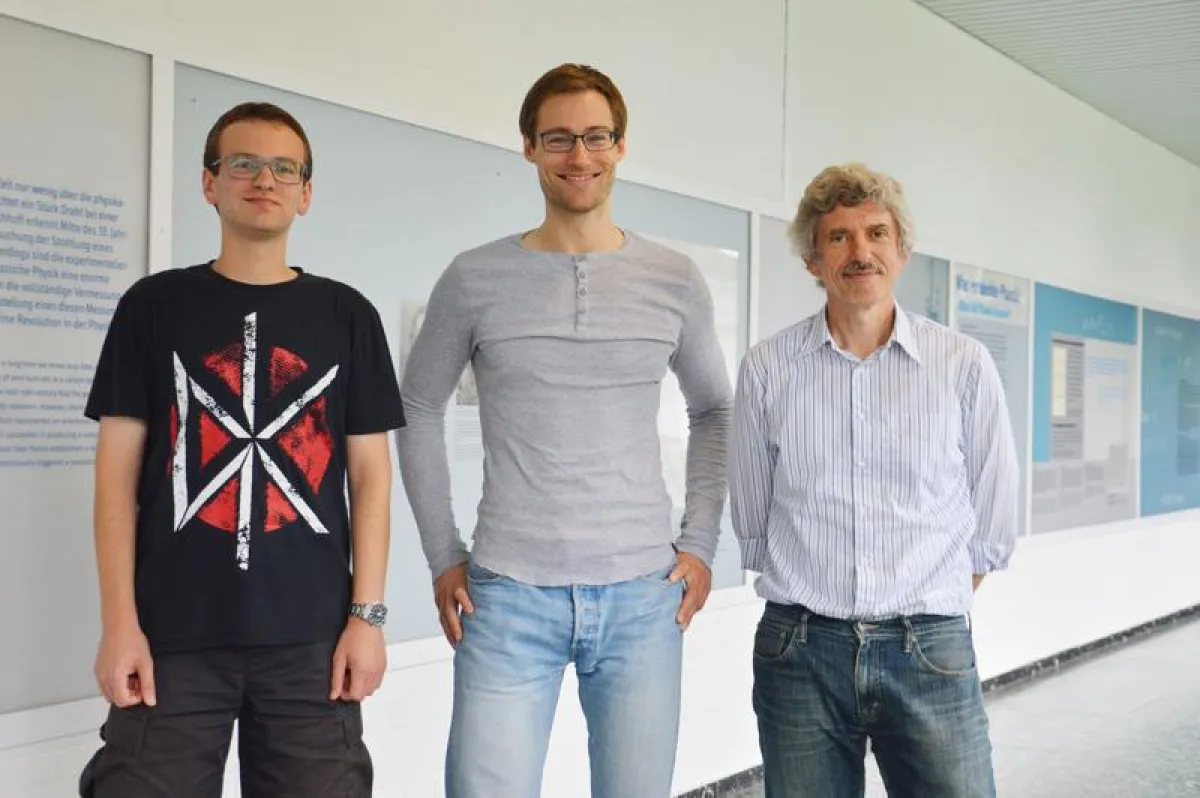
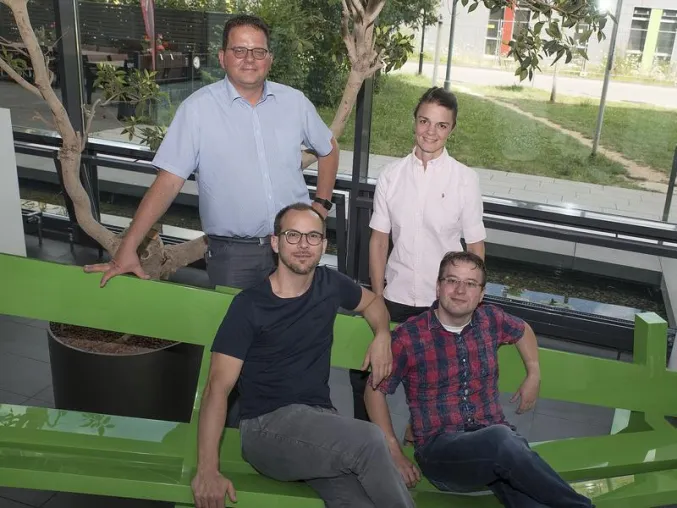
The Kiel physicists Tobias Dornheim, Simon Groth and Professor Michael Bonitz. (Photo: Julia Siekmann )

(openPR) Electrons are an elementary component of our world: they surround the core of all atoms, are essential to the formation of molecules, and primarily determine the properties of solids and liquids. They are also the charge carriers of electrical current, without which our high-tech environment with smartphones, computers and even the traditional light bulb would not be conceivable. In spite of their omnipresence in everyday life, we have not yet been able to accurately describe the behaviour of interacting electrons - only approximate it in models - especially at extreme temperatures and densities, such as inside planets or in stars.


---
These are precisely the conditions of interest for a team of physics researchers from Kiel University (CAU). In collaboration with researchers from the USA and Great Britain, they have succeeded in describing the behaviour of electrons under these extreme conditions by means of accurate simulations. The scientists have thereby solved a problem that has confronted physics for decades. Their research findings are published in the current edition of the journal Physical Review Letters.

How electrons behave on a “large scale” - for example the relation between electrical voltage, resistance and current - is often easy to describe. However, on a microscopic level their behaviour is subject to the laws of quantum mechanics, which requires solving complex mathematical equations. The uniform electron gas is of particular physical significance in this context. It is not a gas in the literal sense, but rather a scientific model that describes important characteristics of electrons. Amongst other things, the electron gas is important to understand phenomena such as superconductivity, i.e. electrical current flow without resistance, or conduction electrons in solids. In addition, the model is the basis for the so-called density functional theory. The latter is currently the most widely-used simulation method in physics and chemistry, and is also used for investigating material properties in industry.

In the past, electron gas simulations were limited to electrons at very low temperature. In recent times, however, there has been growing interest in matter under extreme conditions - ten thousand times warmer than room temperature and up to a hundred times denser than conventional solids. "Accurately describing the behaviour of electrons at elevated temperatures is a previously-unsolved problem, which science has focussed on for decades," said Professor Michael Bonitz, professor of theoretical physics and head of the Kiel research team. In nature, this “warm dense matter” occurs inside planets, as well as in the Earth’s core, amongst other places. It can also be created experimentally in a laboratory, for example by targeted shooting of solid matter with a high-intensity laser, or with a free electron laser such as the new European XFEL in Hamburg. Warm dense matter is also relevant for inertial confinement fusion, which could provide a virtually unlimited source of clean energy in the future.

In order to describe the behaviour of electrons in the range of warm dense matter, the Kiel physicists combined new simulation methods that were developed at the CAU. Earlier results were based on various models, some of which contained approximations that are difficult to verify. However, using sophisticated computer simulations, the Kiel physicists were able to precisely solve the complex equations that describe the electron gas. In cooperation with colleagues from the Los Alamos National Laboratory (USA) and Imperial College London, the researchers thereby achieved the first complete and final description of the thermodynamic properties of interacting electrons in the range of warm dense matter. "These results are the first exact data in this area, and will take our understanding of matter at extreme temperatures to a new level," explained Bonitz. "Amongst other things, now the partly 40-year-old existing models can be reviewed and improved for the first time. We have already been able to prove deviations of 10 to 15 percent." At the end of the Kiel-based scientists’ years of hard work, they now have extensive data sets and formulas which they hope will be important for comparison with experiments, and will provide input into further theories, thus also helping other scientists in their research.

Original publication:
Ab initio Exchange-Correlation Free Energy of the Uniform Electron Gas at Warm Dense Matter Conditions, Simon Groth, Tobias Dornheim, Travis Sjostrom, Fionn D. Malone, W. M. C. Foulkes, and Michael Bonitz
Physical Review Letters 119, 135001, DOI: 10.1103/PhysRevLett.119.135001, https://journals.aps.org/prl/abstract/10.1103/PhysRevLett.119.135001

Photos are available for download:
http://www.uni-kiel.de/download/pm/2017/2017-293-1.jpg
Bildunterschrift: The Kiel physicists Tobias Dornheim, Simon Groth and Professor Michael Bonitz have developed a simulation procedure, with which the properties of electrons at extreme temperatures can be calculated exactly for the first time.
Photo: Julia Siekmann

http://www.uni-kiel.de/download/pm/2017/2017-293-2.jpg
Caption: In nature, the hot, dense matter of electron gas occurs inside planets, such as here in Jupiter. On Earth, they can only be created in a laboratory, for example with a free electron laser such as at the European XFEL in Hamburg.
Photo: NASA/JPL-Caltech/SwRI/MSSS/Gabriel Fiset

Contact:
Professor Michael Bonitz
Institute of Theoretical Physics and Astrophysics,
Kiel University
Tel.: +49 (0)431-880-4122
E-mail: E-Mail

Web: www.theo-physik.uni-kiel.de/~bonitz

Details, which are only a millionth of a millimetre in size: This is what the priority research area "Kiel Nano, Surface and Interface Science – KiNSIS" at Kiel University has been working on. In the nano-cosmos, different laws prevail than in the macroscopic world - those of quantum physics. Through intensive, interdisciplinary cooperation between materials science, chemistry, physics, biology, electrical engineering, computer science, food technology and various branches of medicine, the priority research area aims to understand the systems in this dimension and to implement the findings in an application-oriented manner. Molecular machines, innovative sensors, bionic materials, quantum computers, advanced therapies and much more could be the result. More information: www.kinsis.uni-kiel.de

Kiel University
Press, Communication and Marketing, Dr Boris Pawlowski,
Postal address: D-24098 Kiel, Germany,
Telephone: +49 (0)431 880-2104, Fax: +49 (0)431 880-1355
E-mail: E-Mail, Internet: www.uni-kiel.de, Twitter: www.twitter.com/kieluni Facebook: www.facebook.com/kieluni, Instagram: instagram.com/kieluni

Weitere Informationen:
- http://www.uni-kiel.de/pressemeldungen/index.php?pmid=2017-293-elektronen&lang=en

Quelle: idw
Diese Pressemeldung wurde auf openPR veröffentlicht.

Verantwortlich für diese Pressemeldung:

News-ID: 971998
 542

Kostenlose Online PR für alle

Jetzt Ihren Pressetext mit einem Klick auf openPR veröffentlichen

Jetzt gratis starten

Pressebericht „Describing the behaviour of electrons under extreme conditions for the first time“ bearbeiten oder mit dem "Super-PR-Sparpaket" stark hervorheben, zielgerichtet an Journalisten & Top50 Online-Portale verbreiten:

PM löschen PM ändern
Disclaimer: Für den obigen Pressetext inkl. etwaiger Bilder/ Videos ist ausschließlich der im Text angegebene Kontakt verantwortlich. Der Webseitenanbieter distanziert sich ausdrücklich von den Inhalten Dritter und macht sich diese nicht zu eigen. Wenn Sie die obigen Informationen redaktionell nutzen möchten, so wenden Sie sich bitte an den obigen Pressekontakt. Bei einer Veröffentlichung bitten wir um ein Belegexemplar oder Quellenennung der URL.

Pressemitteilungen KOSTENLOS veröffentlichen und verbreiten mit openPR

Stellen Sie Ihre Medienmitteilung jetzt hier ein!

Jetzt gratis starten

Weitere Mitteilungen von Christian-Albrechts-Universität zu Kiel

Bild: Bürgerschaftliches Engagement für die Energiewende im Ostseeraum stärkenBild: Bürgerschaftliches Engagement für die Energiewende im Ostseeraum stärken
Bürgerschaftliches Engagement für die Energiewende im Ostseeraum stärken
Ein neues Projekt an der Christian-Albrechts-Universität zu Kiel (CAU) stärkt die partnerschaftliche Zusammenarbeit für erneuerbare Energien. „Co2mmunity“ möchte Bürgerinnen und Bürger im Ostseeraum unterstützen, erneuerbare Energieanlagen zu errichten und von Erfahrungen aus anderen Ländern zu lernen. Das von der Europäischen Union im Rahmen des INTERREG-Ostseeraum-Programms geförderte Projekt startete am 1. Oktober 2017. Es hat eine Laufzeit von drei Jahren und ist mit einem Budget von knapp 3,15 Millionen Euro ausgestattet. 496.000 Euro da…
Bild: 2 Millionen Euro für die Forschung zur technischen Nachbildung von GehirnprozessenBild: 2 Millionen Euro für die Forschung zur technischen Nachbildung von Gehirnprozessen
2 Millionen Euro für die Forschung zur technischen Nachbildung von Gehirnprozessen
DFG verlängert Verbundprojekt der Universitäten Kiel, Bochum, Hamburg-Harburg, Brandenburg und dem Leibniz-Institut Frankfurt (Oder). Die an der Christian-Albrechts-Universität zu Kiel (CAU) angesiedelte Forschergruppe 2093 „Memristive Bauelemente für neuronale Systeme“ wird von der Deutschen Forschungsgemeinschaft (DFG) mit 2 Millionen Euro für drei weitere Jahre gefördert. In dem interdisziplinären Verbundprojekt erforschen seit 2014 Wissenschaftlerinnen und Wissenschaftler aus der Neurologie, Systemtheorie, Materialwissenschaft, Nanoelekt…

Das könnte Sie auch interessieren:

Bild: Songwriter Pop aus den USA und englischer Gitarrenfolk! Das erwartet Sie im "SONGS & WHISPERS" CIRCUIT 01/2014Bild: Songwriter Pop aus den USA und englischer Gitarrenfolk! Das erwartet Sie im "SONGS & WHISPERS" CIRCUIT 01/2014
Songwriter Pop aus den USA und englischer Gitarrenfolk! Das erwartet Sie im "SONGS & WHISPERS" CIRCUIT 01/2014
… „SONGS & WHISPERS“-Tour live präsentiert werden. Einflüsse: John Butler, Ben Harper, Otis Redding, James Taylor ´A love child of James Taylor and Ben Harper' - Timeout London When describing Turn To Me - 'haunting and effortless' - Nigel Colley (London based music journalist and PR executive) 'A very powerful voice' - Kenny Young (composer of Under …
Bild: Artificial Enzymes for Hydrogen ConversionBild: Artificial Enzymes for Hydrogen Conversion
Artificial Enzymes for Hydrogen Conversion
… the study of these enzymes, and describe the impact of these findings on energy research in the future (1). James Prescott Joule, eponym of this new journal, could have been describing the hydrogenases when he stated “The animal frame … is as a machine more perfect than the best contrived steam-engine—that is, is capable of more work with the same expenditure …
Bild: Wien-Premiere: GARTEN - Film von Peter Schreiner im TOP-KINOBild: Wien-Premiere: GARTEN - Film von Peter Schreiner im TOP-KINO
Wien-Premiere: GARTEN - Film von Peter Schreiner im TOP-KINO
… conventionally as “real” in the cinema, but it feels like a direct transmission from these three and from Schreiner to us, something laid exposed and sore before the audience. When describing his film project, Awad says that “unseen images should become visible.” He’s talking of the metaphysics of cinema, yes, but also very practically too: we see him, Julia and …
DNV Petroleum Services introduces Catalyst Fine Particle Size Distribution Screening
… not operating at an efficiency required to reduce the catalyst fines to safe levels before the fuel is consumed, the risk of increased engine wear and damage is very real.”Describing how the damage may be inflicted, Mr Wetterhus says catalyst fine particles in the fuel may be forced into the running surfaces of cylinder liners and piston rings. These …
Bild: Mikhail Lemeshko of IST Austria wins Ludwig Boltzmann PrizeBild: Mikhail Lemeshko of IST Austria wins Ludwig Boltzmann Prize
Mikhail Lemeshko of IST Austria wins Ludwig Boltzmann Prize
… last 20 years. The prize was awarded to him on August 22, 2017, at the joint annual meeting of the Swiss and Austrian Physical Societies in Geneva.Describing and predicting the behavior of molecules rotating in a solvent are extremely challenging tasks, and simulations often require time-consuming computations. A tool that greatly simplifies these calculations …
Bild: New Book on Bible Prophecy connects the Past with our FutureBild: New Book on Bible Prophecy connects the Past with our Future
New Book on Bible Prophecy connects the Past with our Future
… Instead, it reminds Christians of their values and gives readers of other faiths insight into these. By analysing predictions that have already come to pass and precisely describing prophecies that have not been fulfilled yet, the reader himself may develop a sense of being able to predict future world-events. Meet the Prophets - A Journey through …
Bild: PRESSEMITTEILUNG: Partnerschaft mit IdiligoBild: PRESSEMITTEILUNG: Partnerschaft mit Idiligo
PRESSEMITTEILUNG: Partnerschaft mit Idiligo
… services to the market via the online channel, with an unprecedented level of homogeneity, structuring and quality", says Michael Wiedemann, Managing Partner of msw_Consulting Services, describing the advantages of the partnership. “For our customers it is often very valuable to get assistance with the implementation of their algorithm-based sales calls. We …
Bild: Belo Horizonte celebrates Comida di Buteco, the festival of traditional bar snacksBild: Belo Horizonte celebrates Comida di Buteco, the festival of traditional bar snacks
Belo Horizonte celebrates Comida di Buteco, the festival of traditional bar snacks
… Rio de Janeiro and Salvador. The importance and the enormous popularity of the Comida di Buteco has its roots in the Brazilian tradition of botequins, an almost untranslatable word describing a small bar, or tavern. Botequins are a favourite meeting point for rich and poor alike, over rustic and tasty dishes made from simple ingredients washed down with …
Bild: Oxytocin and social norms reduce xenophobiaBild: Oxytocin and social norms reduce xenophobia
Oxytocin and social norms reduce xenophobia
… Psychiatry, University of Bonn Medical Center. However, this is diametrically opposed to the parable of the Good Samaritan, which serves as an example of selfless altruism by describing a Samaritan who incurs personal costs to help a stranger in need. “From a neurobiological perspective, the basis of xenophobia and altruism is not yet precisely understood,” …
Bild: Inselspital: First deep brain stimulation against depressionBild: Inselspital: First deep brain stimulation against depression
Inselspital: First deep brain stimulation against depression
… am implanting the electrodes in the area of the nucleus accumbens, a region of the brain connected with mood disorders and motivation”, says neurosurgeon Claudio Pollo, describing his task. Although the procedure is similar, deep brain stimulation for psychiatric illnesses is still at a very early stage. “Worldwide, around 150 cases have been published …
Sie lesen gerade: Describing the behaviour of electrons under extreme conditions for the first time