openPR Recherche & Suche
Presseinformation

Safe and effective energy storage media of the future: lithium-sulphur technology

28.09.201711:02 UhrWissenschaft, Forschung, Bildung
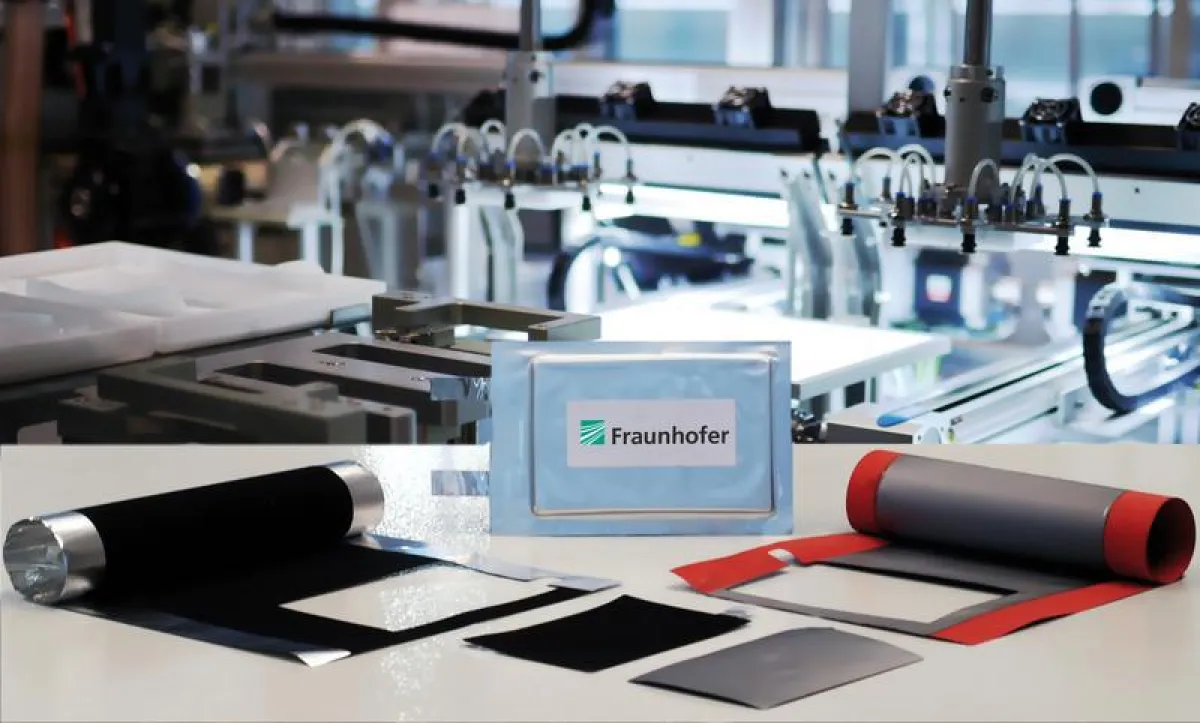
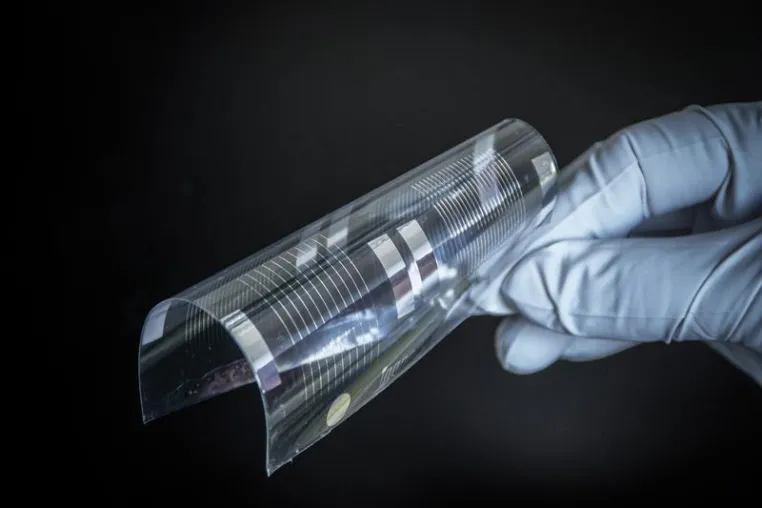
Bild: Safe and effective energy storage media of the future: lithium-sulphur technology
Lithium-sulphur cell electrodes with silicon-alloy anodes (© Fraunhofer IWS, Picture in printable resolution: www.fep.fraunhofer.de/press)

(openPR) The Fraunhofer-Gesellschaft in-house LiScell joint project was successfully concluded in May 2017. Lithium-sulphur technology was studied because it might offer an attractive energy-storage solution for future mobility thanks to its low cost of materials and high energy density.


---
Efficient storage of electrical energy is the bottleneck for all mobile electronic applications.
The weight and cost per kWh of battery storage capacity decisively limit the areas of application in which a product can be employed. For example, energy storage represents the majority of total costs for electric vehicles while simultaneously being the cause of the limited 150-km operating range of fully electric automobiles employing lithium-ion technology. Accordingly, the requirement for new storage media with higher energy densities yet low costs is correspondingly large.

The solution to this can be novel lithium-sulphur batteries, for which future energy densities of up to 500 Wh/kg are expected. Simultaneously, this technology replaces the expensive cathode material of Li-ion cells by the cost-efective and non-toxic sulphur with its nearly unlimited availability.

Research has been carried out over the last three years on advanced development of lithium-sulphur battery cells using new cathodes, electrolytes, and anodes under the Fraunhofer LiScell joint project.

Besides their involvement with materials development, the four participating Fraunhofer Institutes – the Institute for Material and Beam Technology IWS (Dresden), Institute for Organic Electronics, Electron Beam and Plasma Technology FEP (Dresden), Institute for Transportation and Infrastructure Systems IVI (Dresden), and Institute for Chemical Technology ICT (Pfinztal) – were also working on scalable fabrication processes for anodes and cathodes in the form of roll-to-roll foils and on the construction of battery modules. The goal is to advance the state of lithium-sulphur technology for electromobility.

Lithium-sulphur distinguishes itself with its very low material cost and high energy density. As a result, it might represent an attractive energy storage solution for future mobility applications. At up to 400 Wh/kg, these cells already achieve up to 40% higher energy densities than the best lithium ion cells today. However, the greatest challenge with Li-S cells is to improve their poor cycling ability: they can only be discharged and re-charged 50 to 100 times. The reason for this is a chemical reaction in which the electrolyte attacks the anode surface, consisting of metallic lithium. The scientists focused on this challenge and developed a cell design based around an anode made of a silicon alloy as a
substitute for metallic lithium.

This new anode and cell design was implemented and demonstrated in Li-S and Li-ion prototype cells at the Fraunhofer IWS. New solutions were also found for the fabrication of sulphur cathodes. Dr. Holger Althues, head of the consortium and Department of Chemical Surfaces and Barrier Engineering at the Fraunhofer IWS, explains: “Powdered
active materials were processed without solvents by using a dry-film procedure at the Fraunhofer IWS to produce high-performanceelectrodes.”

The advantages of the Si anode technique were determined in safety tests carried out by the Fraunhofer ICT. Li-S cells have a performance edge over conventional energy storage media thanks to their high tolerance to overcharging and thermal stress.

Acquiring precise knowledge about the batteries charging and health state is essential
to achieve reliable battery operation. Conventional methods for characterizing the aging process do not work well with this new cell technology, though. “The key for practical application of the technology was using a sophisticated combination of data- and model-based methods to determine the state of charge and state of aging”, added Dr. Ulrich Potthoff, responsible for this development at Fraunhofer IVI. Finally, suitable economical and efficient fabrication processes needed to be worked out and tested. “Silicon layers with a specialized micro-scale structure were able to be deposited on both sides of thin charge-collector film made of copper using a new vacuum coating technology in a roll-to-roll process”, as Dr. Nicolas Schiller, director of the Flat and Flexible Products Division, summed up the results at the Fraunhofer FEP. “The layers proved themselves to be suitable anode material for Li-S cells as well as for Li-ion cells. They possess considerable potential for increasing the volumetric energy density compared to conventional solutions.”

Conclusion: following three years of energetic research work, large strides were made
in lithium-sulphur technology for energy storage. Among other things, the ability to re-charge the batteries was considerably improved and manufacturing costs were reduced by the application of cost-effective roll-to-roll fabrication processes. Another step towards employing this energy storage system for electromobility and wearables has been taken.

These and other results on the subject of energy storage will be presented in booths and conference talks, and at the 6th Fraunhofer Li-S Workshop during the industrial trade fair and workshop week on vacuum coating technology and plasma surface engineering entitled “V2017” (24 – 26 Oct. in Dresden) (www.iws.fraunhofer.de/de/ veranstaltungen/lithium-schwefel-batterien_2017.html).

About the LiScell Project

The following participated in the research work on LiScell (an internal Group Project of the Fraunhofer-Gesellschaft) under the MAVO Program for market-oriented preliminary research:

- Fraunhofer Institute for Material and Beam Technology IWS
Dr. Holger Althues

- Fraunhofer Institute for Chemical Technology ICT
Dr. Markus Hagen

- Fraunhofer Institute for Organic Electronics, Electron Beam and Plasma Technology FEP
Dipl.-Ing. Steffen Straach

- Fraunhofer Institute for Transportation and Infrastructure Systems IVI
Dr. Ulrich Potthoff

Project duration: 1 June 2014 – 31 May 2017
Website: www.liscell.fraunhofer.de
Funding: 3.45 Mio EUR

Press contact:

Mrs. Annett Arnold

Fraunhofer Institute for Organic Electronics, Electron Beam and Plasma Technology FEP
Phone +49 351 2586 333 | E-Mail

Winterbergstraße 28 | 01277 Dresden | Germany | www.fep.fraunhofer.de

Weitere Informationen:
- http://s.fhg.de/J2U

Quelle: idw
Diese Pressemeldung wurde auf openPR veröffentlicht.

Verantwortlich für diese Pressemeldung:

News-ID: 971307
 176

Kostenlose Online PR für alle

Jetzt Ihren Pressetext mit einem Klick auf openPR veröffentlichen

Jetzt gratis starten

Pressebericht „Safe and effective energy storage media of the future: lithium-sulphur technology“ bearbeiten oder mit dem "Super-PR-Sparpaket" stark hervorheben, zielgerichtet an Journalisten & Top50 Online-Portale verbreiten:

PM löschen PM ändern
Disclaimer: Für den obigen Pressetext inkl. etwaiger Bilder/ Videos ist ausschließlich der im Text angegebene Kontakt verantwortlich. Der Webseitenanbieter distanziert sich ausdrücklich von den Inhalten Dritter und macht sich diese nicht zu eigen. Wenn Sie die obigen Informationen redaktionell nutzen möchten, so wenden Sie sich bitte an den obigen Pressekontakt. Bei einer Veröffentlichung bitten wir um ein Belegexemplar oder Quellenennung der URL.

Pressemitteilungen KOSTENLOS veröffentlichen und verbreiten mit openPR

Stellen Sie Ihre Medienmitteilung jetzt hier ein!

Jetzt gratis starten

Weitere Mitteilungen von Fraunhofer-Institut für Organische Elektronik, Elektronenstrahl- und Plasmatechnik FEP

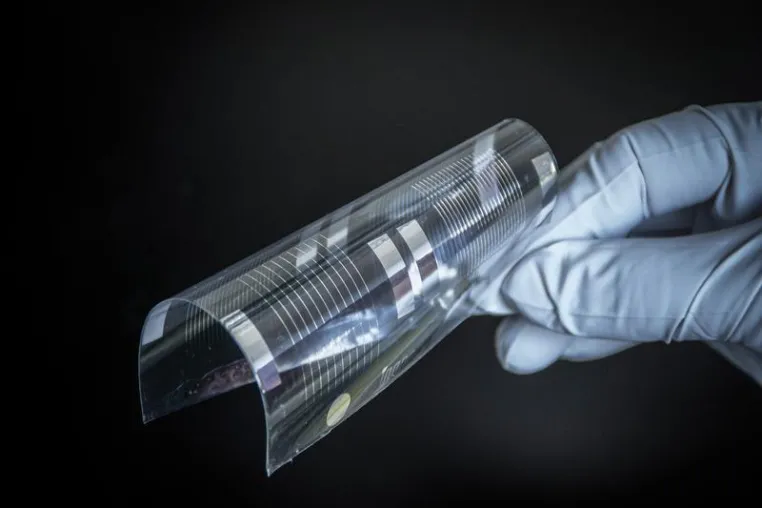
Bild: Biodegradierbare ElektronikBild: Biodegradierbare Elektronik
Biodegradierbare Elektronik
Unter der Federführung des Fraunhofer FEP wurde im vergangenen Jahr ein Fraunhofer internes Projekt zur Entwicklung biodegradierbarer Elektronik gestartet, an dem auch die Fraunhofer-Institute ENAS, IBMT, ISC und die Fraunhofer-Projektgruppe IWKS arbeiten. Erste Ergebnisse des Fraunhofer FEP werden auf der Semicon Europe 2017 als Teil der productronica 2017, vom 14.-17.11.2017 in München, auf dem Silicon-Saxony-Gemeinschaftsstand, in der Halle B1, Stand Nr. B1-416 vorgestellt. --- Elektronische Bauteile, die nach einer definierten Funktionsz…
Bild: Biodegradable electronicsBild: Biodegradable electronics
Biodegradable electronics
Under the direction of the Fraunhofer FEP, an in-house Fraunhofer project for development of biodegradable electronics was begun last year. The Fraunhofer Institutes ENAS, IBMT, ISC, and the Fraunhofer Project Group IWKS are working together on the project. First results of the Fraunhofer FEP will be presented during Semicon Europe 2017 as part of productronica 2017 in Munich at the Silicon-Saxony joint booth in Hall B, Booth No. B1-416, November 14-17, 2017. --- Electronic devices that are completely broken down in a biological environment …

Das könnte Sie auch interessieren:

Bild: Clean & Safe Siegel für hygienisch sichere Veranstaltungen – die dfv Mediengruppe setzt ein wichtiges ZeichenBild: Clean & Safe Siegel für hygienisch sichere Veranstaltungen – die dfv Mediengruppe setzt ein wichtiges Zeichen
Clean & Safe Siegel für hygienisch sichere Veranstaltungen – die dfv Mediengruppe setzt ein wichtiges Zeichen
… bis jetzt nicht zu denken. InfraCert GmbH, Zertifizierer des Nachhaltigkeitssiegels GreenSign, schenkt der MICE-Branche Hoffnung: Das neu entwickelte Zertifikat „Clean & Safe“ ermöglicht hygienisch einwandfreie und sichere Veranstaltungen! Mit knapp 50 Maßnahmen deckt der Zertifizierungskatalog jegliche Gefahrenpunkte vor, während und nach einer …
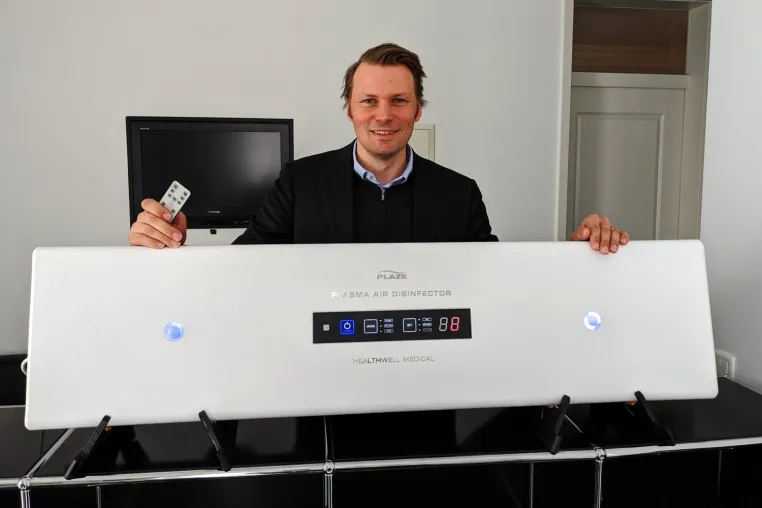
Bild: Weltneuheit PLAZE SAFE W: Professionelle Luft- & Raumdesinfektion mit 7 Technologien erstmals in einem GerätBild: Weltneuheit PLAZE SAFE W: Professionelle Luft- & Raumdesinfektion mit 7 Technologien erstmals in einem Gerät
Weltneuheit PLAZE SAFE W: Professionelle Luft- & Raumdesinfektion mit 7 Technologien erstmals in einem Gerät
… erfolgt unter anderem durch Aerosole. Mit einer umfassenden Luft-, Raum- und Oberflächendesinfektion können Viren zuverlässig und umweltfreundlich in geschlossenen Räumen bekämpft werden. PLAZE SAFE W ist das weltweit einzigartige Produkt, das sieben bewährte Technologien aus Luft-, Raum- und Oberflächendesinfektion in einem Gerät vereint. Hightech aus …
F5: Neue KI-basierte Lösung wehrt Betrugsversuche ab
Shape AI Fraud Engine schützt Unternehmen und Konsumenten München, 19. Oktober 2020 – F5 hat die neue SaaS-Lösung Shape AI Fraud Engine (SAFE) herausgebracht. Sie verhindert betrügerische Online-Transaktionen, die bestehende Security-Lösungen nicht entdecken. Basierend auf dem branchenführenden Know-how von Shape nutzt SAFE eine bewährte KI-Engine, um …
Bild: Parken ab 3 Euro pro Tag. Park-Safe Flughafen KölnBild: Parken ab 3 Euro pro Tag. Park-Safe Flughafen Köln
Parken ab 3 Euro pro Tag. Park-Safe Flughafen Köln
Jedes der Terminals (1 und 2) am Flughafen Köln-Bonn ist über eine überdachte Fußgängerbrücke mit einem Parkhaus verbunden. Park-Safe Parkplatz bietet Langzeit- (ab 3 Euro pro Tag), Kurzzeit- und Valetservice. Mehrere andere Unternehmen bieten auch Parkplätze außerhalb des Flughafens. Zum Beispiel, kostet Valet Park-Safe (ab 4 Euro pro Tag) das beste …
DataInherit lanciert kostenlosen, hochsicheren Online Passwort-Safe
Zürich, 4. Februar - DataInherit, der weltweit führende Daten-Safe mit integrierter Datenvererbung, gab heute die Einführung zweier neuer, hochsicherer Passwort-Safe Dienste bekannt. Die neuen Internet Online Dienste – Password Safe Free und Password Safe Premium - stehen unter datainherit.com zur Verfügung und bieten dem Benutzer ein Höchstmass an Sicherheit …
Bild: Jetzt auch als APP: Passwörter sicher und mobil in Password Safe and RepositoryBild: Jetzt auch als APP: Passwörter sicher und mobil in Password Safe and Repository
Jetzt auch als APP: Passwörter sicher und mobil in Password Safe and Repository
Im April veröffentlicht MATESO Version 7 von Password Safe and Repository – Anwender haben ihre Passwörter ab sofort überall zur Verfügung, in Web und native Apps. Augsburg, 03. April 2013 – Jeder, der sich viel im Internet bewegt, verschiedene Konten besitzt oder sich unzählige Zugangsdaten merken muss, braucht irgendwann Unterstützung in Sachen Passwort- …
Bild: Umfassendste Implementierung von SAFe im ALM-System codeBeamerBild: Umfassendste Implementierung von SAFe im ALM-System codeBeamer
Umfassendste Implementierung von SAFe im ALM-System codeBeamer
Stuttgart, 22. November 2013 - Die Umsetzung agiler Methoden im gesamten Unternehmen setzt den Einsatz einer kollaborativen ALM-Software voraus, die das Scaled Agile Framework (SAFe) unterstützt. Das neueste Release der ALM-Plattform codeBeamer stellt essentielle Module bereit, die Teams, Projekten und Anwendungen ein agiles Arbeiten auf allen drei Ebenen des …
Cybertrust erhält Cross-Zertifzierung mit SAFE-Standard zur digitalen Identifizierung
Cybertrust erhält als erster Security-Anbieter die Cross-Zertifizierung – enge Zusammenarbeit mit SAFE BioPharma Association Ratingen, 18. April 2006 – Die SAFE (Signatures and Authentication for Everyone) BioPharma Association erteilte Cybertrust, dem Spezialisten für Informationssicherheit, die offizielle Cross-Zertifizierung mit der SAFE Bridge Certificate …
TC TrustCenter weltweit erstes Trustcenter für EU-konforme SAFE-BioPharma-Zertifikate
Integrierte Sicherheitslösung für die Biopharma-Industrie: TC TrustCenter bietet qualifizierte Zertifikate gemäß digitalem SAFE-BioPharma-Standard an TC TrustCenter weltweit erstes Trustcenter für EU-konforme SAFE-BioPharma-Zertifikate Hamburg, 11. Juni 2008 – TC TrustCenter bietet ab sofort digitale Zertifikate gemäß des SAFE-BioPharma-Standards für …
Bild: Cybertrust bietet Herausgabe SAFE-konformer Identitätsnachweise für Ärzte, Zulassungs- und AufsichtsbehördenBild: Cybertrust bietet Herausgabe SAFE-konformer Identitätsnachweise für Ärzte, Zulassungs- und Aufsichtsbehörden
Cybertrust bietet Herausgabe SAFE-konformer Identitätsnachweise für Ärzte, Zulassungs- und Aufsichtsbehörden
AxiCom-PR, Cybertrust Nr. 02/05, Mai 2005 Abkommen mit SAFE Bio-Pharma zur Herausgabe rechtlich bindender elektronischer Signaturen Cybertrust bietet Herausgabe SAFE-konformer Identitätsnachweise für Ärzte, Zulassungs- und Aufsichtsbehörden Hamburg, 19. Mai 2005 – Cybertrust, internationaler Anbieter von Sicherheitslösungen, hat mit SAFE Bio-Pharma …
Sie lesen gerade: Safe and effective energy storage media of the future: lithium-sulphur technology