openPR Recherche & Suche
Presseinformation

Mixing Artificial Sweeteners Inhibits Bitter Taste Receptors

14.09.201719:00 UhrWissenschaft, Forschung, Bildung
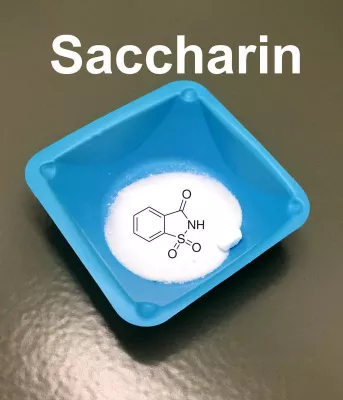
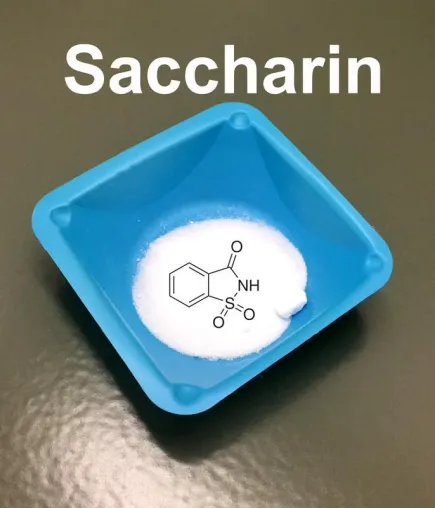
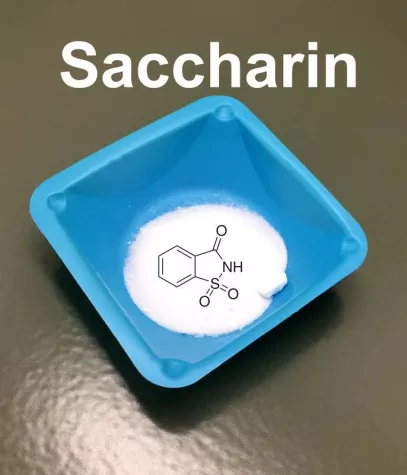
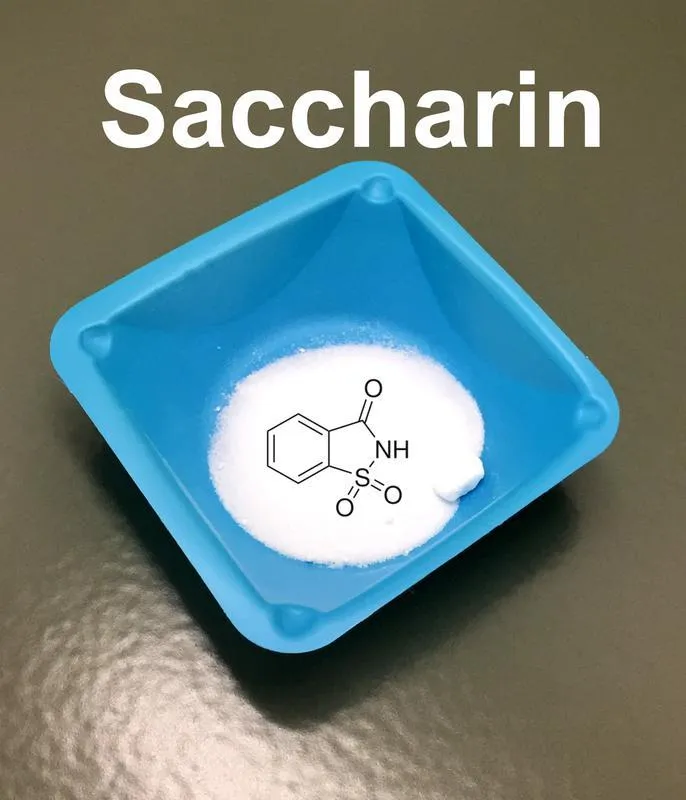
Bild: Mixing Artificial Sweeteners Inhibits Bitter Taste Receptors
Artificial Sweetener: Saccharin ()

(openPR) EMBARGOED RELEASE
Media Contact:
Joseph Caputo | Press Office | Cell Press
617-397-2802 | E-Mail | E-Mail



Blends of artificial sweeteners such as saccharin and cyclamate produce less of a bitter off-taste than each of the individual components, but the explanation for this puzzling phenomenon has been elusive ever since its discovery more than 60 years ago. A study published September 14th in the journal Cell Chemical Biology solves this long-standing mystery, revealing that saccharin inhibits the activity of bitter taste receptors stimulated by cyclamate and, conversely, that cyclamate reduces the off-taste elicited by saccharin.

---
“Numerous sweeteners exhibit undesirable off-tastes, limiting their use in food products and beverages,” says lead author Maik Behrens of the German Institute of Human Nutrition Potsdam-Rehbruecke. “Our findings in this study provide us with the tools and knowledge to find ways leading to superior sweetener blends.”

High-potency sweeteners are widely used to replace energy-rich, tooth-decay-inducing sugars in food items to meet the requirements of health-conscious consumers. But in addition to stimulating sweet taste receptors, sugar substitutes also activate bitter taste receptors (known as TAS2Rs) at high concentrations, resulting in an undesired off-taste. To overcome this problem, the food industry is constantly searching for novel sugar substitutes and frequently resorts to using blends combining non-caloric sweeteners in a single formulation.

The earliest blend allowing higher sweetness levels with reduced bitter off-taste combined saccharin with cyclamate. But since this discovery 62 years ago, the mechanism by which sweetener blends become superior to single compounds has remained obscure. A clue to this mystery came when Behrens and his team discovered that some bitter compounds not only activate a subset of the 25 human bitter taste receptors, but also can inhibit different bitter taste receptors. “Knowing that mixtures of saccharin and cyclamate exert reduced bitterness compared to the single compounds raised the question [of] whether this might be due to mutual inhibition of bitter taste receptor responses,” Behrens says.

To explore this possibility, Behrens and senior author Wolfgang Meyerhof of the German Institute of Human Nutrition Potsdam-Rehbruecke expressed various human taste receptors in human cells and tested their responses to different concentrations of saccharin and cyclamate. Using this cell-based system, they discovered that cyclamate strongly inhibits the saccharin-induced activation of two bitter taste receptors called TAS2R31 and TAS2R43. This effect occurred at concentrations where cyclamate itself does not elicit a side taste. Similarly, saccharin blocked the cyclamate-induced responses of a bitter taste receptor called TAS2R1.

“Saccharin and cyclamate belong to the oldest-known high-potency synthetic sweeteners, and we were able to discover with our cell assay completely novel features of these molecules, namely their bitter-blocking ability,” Behrens says.

For the time being, it remains unclear whether the components of other sweetener blends also show mutual inhibition of bitter taste receptors. “Once the activation and inhibition profiles of the 25 human bitter taste receptors have been investigated in great detail, it will be possible to tailor the composition of mixtures to develop novel sweetener formulations and to improve the taste of medicine,” Meyerhof says.

###

Funding was provided by the European Union’s Seventh Framework Programme.
Cell Chemical Biology, Behrens et al.: “Blends of Non-caloric Sweeteners Saccharin and Cyclamate Show Reduced Off-Taste due to TAS2R Bitter Receptor Inhibition”

Cell Chemical Biology (@CellChemBiol), published by Cell Press, is a monthly journal publishing research and review content of exceptional interest for the chemical biology community. The journal's mission is to support and promote chemical biology and drive conversation and collaboration between chemical and life sciences. Visit: http://www.cell.com/chemistry-biology. To receive Cell Press media alerts, contact E-Mail.

• • •

Author Contact:

Dr. Maik Behrens
German Institute of Human Nutrition Potsdam-Rehbruecke
Dept. Molecular Genetics
Arthur-Scheunert-Allee 114-116
14558 Nuthetal, Germany
phone: +49 (0)33200 88 2545
e-mail: E-Mail

Prof. Dr. Wolfgang Meyerhof
German Institute of Human Nutrition Potsdam-Rehbruecke
Dept. Molecular Genetics
Arthur-Scheunert-Allee 114-116
14558 Nuthetal, Germany
phone: +49 (0)33200 88 2282
e-mail: E-Mail

Media Contact:

Dr. Gisela Olias
Press and Public Relations Coordinator
German Institute of Human Nutrition
Potsdam-Rehbruecke (DIfE)
phone: +49 (0)33200 88-2278/-2335
e-mail: E-Mail
or E-Mail

Weitere Informationen:
- Department of Molecular Genetics at the German Intistute of Human Nutrition

Quelle: idw

Diese Pressemeldung wurde auf openPR veröffentlicht.

Verantwortlich für diese Pressemeldung:

News-ID: 968881
 648

Kostenlose Online PR für alle

Jetzt Ihren Pressetext mit einem Klick auf openPR veröffentlichen

Jetzt gratis starten

Pressebericht „Mixing Artificial Sweeteners Inhibits Bitter Taste Receptors“ bearbeiten oder mit dem "Super-PR-Sparpaket" stark hervorheben, zielgerichtet an Journalisten & Top50 Online-Portale verbreiten:

PM löschen PM ändern
Disclaimer: Für den obigen Pressetext inkl. etwaiger Bilder/ Videos ist ausschließlich der im Text angegebene Kontakt verantwortlich. Der Webseitenanbieter distanziert sich ausdrücklich von den Inhalten Dritter und macht sich diese nicht zu eigen. Wenn Sie die obigen Informationen redaktionell nutzen möchten, so wenden Sie sich bitte an den obigen Pressekontakt. Bei einer Veröffentlichung bitten wir um ein Belegexemplar oder Quellenennung der URL.

Pressemitteilungen KOSTENLOS veröffentlichen und verbreiten mit openPR

Stellen Sie Ihre Medienmitteilung jetzt hier ein!

Jetzt gratis starten

Weitere Mitteilungen von Deutsches Institut für Ernährungsforschung Potsdam-Rehbrücke

Deutsches Institut für Ernährungsforschung zum dritten Mal als familienbewusst ausgezeichnet
Potsdam-Rehbrücke - Das Kuratorium der berufundfamilie Service GmbH hat das Deutsche Institut für Ernährungsforschung Potsdam-Rehbrücke (DIfE) am 31. Oktober 2017 zum dritten Mal für seine familien- und lebensphasenbewusste Personalpolitik ausgezeichnet. Die offizielle Verleihung der Zertifikatsurkunde audit berufundfamilie erfolgt voraussichtlich im zweiten Quartal 2018. Das zur Leibniz-Gemeinschaft gehörende Institut trägt die Auszeichnung bereits seit 2011. --- „Die erneute Bestätigung zeigt, dass wir mit unserer Strategie erfolgreich s…
Bild: Helfen Sie, die Diabetesprävention in Deutschland zu verbessern!Bild: Helfen Sie, die Diabetesprävention in Deutschland zu verbessern!
Helfen Sie, die Diabetesprävention in Deutschland zu verbessern!
Potsdam-Rehbrücke – Wissenschaftler des Deutschen Instituts für Ernährungsforschung (DIfE) rufen alle Erwachsenen dazu auf, bei dem Citizen Science-Projekt DIRIKO* mitzumachen. Ziel des Projekts ist es, die Diabetes-Risikokommunikation des DIfE – DEUTSCHER DIABETES-RISIKO-TEST® und damit die Diabetesprävention in der Bevölkerung zu verbessern. Das DIfE ist ein Partner des Deutschen Zentrums für Diabetesforschung und hat den im Internet frei verfügbaren Diabetes-Risiko-Test (http://drs.dife.de) basierend auf den Daten einer großen Potsdamer La…

Das könnte Sie auch interessieren:

Bild: Mixing Seminar mit David BrowneBild: Mixing Seminar mit David Browne
Mixing Seminar mit David Browne
Am 12 und 13. November 2016 findet ein Mixing Seminar Wochenende in Schwanewede, bei Bremen, statt. Dozent ist Tontechniker David Browne, der in der Szene als freier Fachautor sowie Autor der Bücher Praxis-Leitfaden EFFEKTE, Praxis-Leitfaden MIXING und Praxis-Leitfaden MASTERING bekannt ist. Das Mixing Seminar findet in einer kleinen Gruppe von maximal …
Bild: Angostura: The Taste that changed the WorldBild: Angostura: The Taste that changed the World
Angostura: The Taste that changed the World
Angostura Aromatic Bitters und Angostura Orange sind die perfekten Bar- und Küchenhelfer. Sie verfeinern mit natürlichen Aromen jeden Cocktail und eine Vielzahl an Speisen. Angostura ist ein verführerischer Mix aus Kräutern und Gewürzen, dessen Zusammensetzung bis heute geheim gehalten wird. Seit 1824 wird Angostura in Trinidad nach ein- und demselben …
Bild: Individual Receptors Caught at WorkBild: Individual Receptors Caught at Work
Individual Receptors Caught at Work
Using a revolutionary live-cell microscopy technique, an international team of scientist has observed for the first time individual receptors for hormones and widely used drugs at work in intact cells. --- G protein-coupled receptors (GPCRs) are among the "hottest” targets for the therapy of diseases such as hypertension, asthma or Parkinson´s. These …
Pro und Kontra Süßstoff
… la Hunty et al.: A review of the effectiveness of aspartame in helping with weight control. British Nutrition Foundation Nutrition Bulletin 31 (2006): 115-128. Gallus et al.: Artificial sweeteners and cancer risk in a network of case – control studies. Annals of Oncology 18 (2007): 40-44. Ludwig et al.: Relation between consumption of sugar-sweetened …
Bild: How protein islands formBild: How protein islands form
How protein islands form
… group has identified the elementary function of Caveolin-1 in the plasma membrane of B-cells, the immune system cells that produce antibodies. B cells recognize substances via B cell antigen receptors (BCR). These protrude from the surface of the cell and, like a type of antenna, ensure that the B cells recognize all sorts of intruders – such as bacteria …
Bild: How receptors for medicines work inside cellsBild: How receptors for medicines work inside cells
How receptors for medicines work inside cells
G protein-coupled receptors are the key target of a large number of drugs. Würzburg scientists have now been able to show more precisely how these receptors act in the cell interior. --- The human genome encodes hundreds of G protein-coupled receptors (GPCRs). These form the largest group of receptors through which hormones and neurotransmitters exert …
Weltdiabetestag: Diabetiker dürfen ein genussvolles, süßes Leben führen
… wie immer am Wochenende nach dem eigentlichen Weltdiabetestag statt. Von 10 bis 15:30 Uhr, der Eintritt ist frei. Literatur/Quellenangaben: (1)Tongzhi Wu, Michelle J. Bound, et al.,Artificial Sweeteners Have No Effect on Gastric Emptying, Glucagon-Like Peptide-1, or Glycemia After Oral Glucose in Healthy Humans. Diabetes Care December 2013 vol. 36 no. …
Bitter: Bitterstoffe könn(t)en Übergewicht wirksam bekämpfen
… Bauters D, Steensels S, Vancleef L, Laermans J, Lesuisse J, Buyse J, Lijnen HR, Tack J, Depoortere I: The Gustatory Signaling Pathway and Bitter Taste Receptors Affect the Development of Obesity and Adipocyte Metabolism in Mice. PLoS One. 2015 Dec 21;10(12):e0145538 (DOI: 10.1371/journal.pone.0145538; PMID: 26692363). [2] Nowak V, Neesen B: Förderung …
Bild: Wissenschaftler lüften 62 Jahre altes Geschmacksgeheimnis einer SüßstoffmixturBild: Wissenschaftler lüften 62 Jahre altes Geschmacksgeheimnis einer Süßstoffmixtur
Wissenschaftler lüften 62 Jahre altes Geschmacksgeheimnis einer Süßstoffmixtur
… besser vermeiden lassen, als dies heute bereits möglich ist.“ Studie: Maik Behrens, Kristina Blank, and Wolfgang Meyerhof: Blends of non-caloric sweeteners saccharin and cyclamate show reduced off-taste due to TAS2R bitter receptor inhibition. Cell Chemical Biology (2017); http:dx.doi.org/10.1016/j.chembiol.2017.08.004 Hintergrundinformationen: Bereits …
Bild: Markenentwicklung 'Goldberg & Sons' durch Florian GerdtsBild: Markenentwicklung 'Goldberg & Sons' durch Florian Gerdts
Markenentwicklung 'Goldberg & Sons' durch Florian Gerdts
Hamburg, 12. April 2013. Im Auftrag von MBG International Premium Brands entwickelt Florian Gerdts, G-DN die Bittermarke Goldberg & Sons. Der Auftrag umfasste die Entwicklung einer Dachmarke, das Brand Design, die Namensentwicklung und die Markenarchitektur. Auf Grundlage der Positionierung 'einzigartig-intensiver Geschmack' wurde der Claim 'Taste …
Sie lesen gerade: Mixing Artificial Sweeteners Inhibits Bitter Taste Receptors