 openPR bei Google bevorzugen.
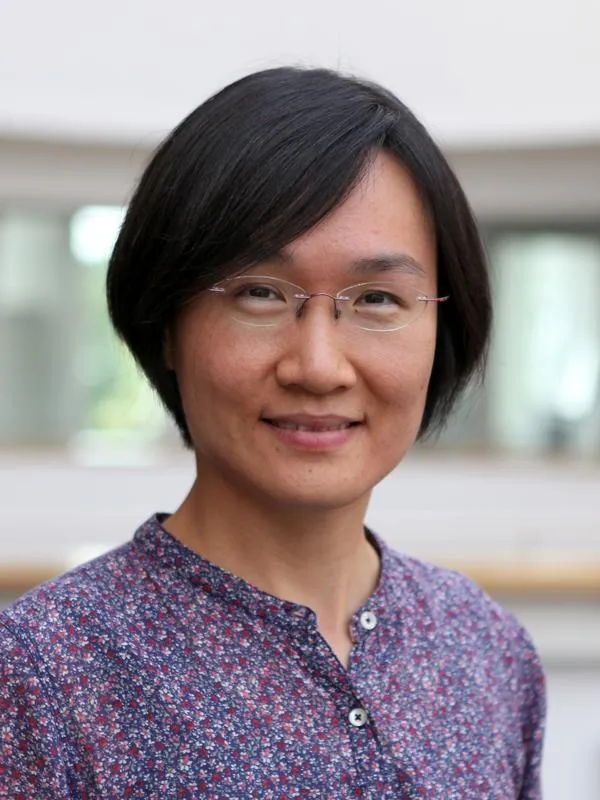
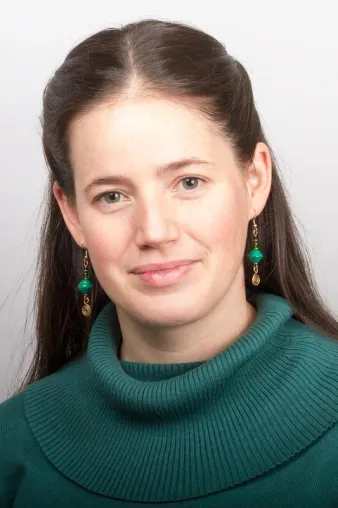
(openPR) Wanzheng Hu, a scientist at the Max Planck Institute for the Structure and Dynamics of Matter (MPSD) in Hamburg, has been awarded a prestigious Starting Grant worth up to €1.79 million by the European Research Council (ERC). She is investigating the collective quantum behavior of two-dimensional materials, which are just one atomic layer thick.
---
Her project, titled Dynamical Materials Control in Low Dimensions, sets out to optically access atomically thin materials under ultra-high vacuum conditions, and optically control their quantum behaviour at ultrafast speed. A new time-domain spectroscopic technique will be developed for optically detecting the air-sensitive ultra-thin films and interfaces.
Ms Hu will be using laser pulses to investigate the properties of superconductive materials and to temporarily change the materials’ properties. The range of lasers at the MPSD is a key reason why she wants to base her ERC-funded project at the Institute.
“I can grow the material on site and characterize it here,” she says. “We have many different ultrafast light sources. The MPSD is quite unique in that and other groups simply cannot compete with its facilities.”
Her project is proposed to run for five years at the MPSD - one of 83 Institutes of the Max Planck Society. Scientists at the MPSD study the properties and behavior of materials over extremely short time spans, using some of the world’s brightest laser and X-ray sources.
Wanzheng Hu is one of 406 applicants who received a grant in the current round. This year, some 40 per cent of the grantees are women - the largest share ever in an ERC competition. The funding allows researchers to build their own teams and thus helps to shape a new generation of top researchers in Europe.
ERC grants are awarded to researchers of any nationality whose scientific track record shows great promise. Every year, the ERC selects and funds the very best, creative researchers of any nationality and age to run projects based in Europe. To date, the ERC has funded some 7,000 top researchers at various stages of their careers.
For further information please contact Jenny Witt, Press and PR Officer at the Max Planck Institute for the Structure and Dynamics of Matter, on +49 40 8998 6593 or 
Weitere Informationen:
- https://erc.europa.eu/news/erc-2017-starting-grants-results
- http://www.mpsd.mpg.de
Quelle: idw
Presseinformation
ERC grant for scientist from Max Planck Institute for the Structure and Dynamics of Matter

Diese Pressemeldung wurde auf openPR veröffentlicht.
Verantwortlich für diese Pressemeldung:Pressebericht „ERC grant for scientist from Max Planck Institute for the Structure and Dynamics of Matter“ bearbeiten oder mit dem "Super-PR-Sparpaket" stark hervorheben, zielgerichtet an Journalisten & Top50 Online-Portale verbreiten:
Disclaimer: Für den obigen Pressetext inkl. etwaiger Bilder/ Videos ist ausschließlich der im Text angegebene Kontakt verantwortlich. Der Webseitenanbieter distanziert sich ausdrücklich von den Inhalten Dritter und macht sich diese nicht zu eigen. Wenn Sie die obigen Informationen redaktionell nutzen möchten, so wenden Sie sich bitte an den obigen Pressekontakt. Bei einer Veröffentlichung bitten wir um ein Belegexemplar oder Quellenennung der URL.
Weitere Mitteilungen von Max-Planck-Institut für Struktur und Dynamik der Materie
Max-Born-Preis 2018 für MPSD-Direktor Angel Rubio
Der geschäftsführende Direktor des MPSD, Prof. Angel Rubio, wird von der Deutschen Physikalischen Gesellschaft (DPG) mit dem renommierten Max-Born-Preis 2018 ausgezeichnet.
---
Hiermit ehrt die Gesellschaft Prof. Rubio, der die Abteilung Theorie am MPSD leitet, für seine „nachhaltige Führungsrolle in der computergestützten Festkörperphysik und für seine Vorhersagen von Materialeigenschaften bei Nanometer-Längenskalen und in niedrigen Dimensionen.“
Die DPG beschreibt Prof. Rubios Arbeit im Nanometer-Bereich und an Nanoröhren aus Kohlenstoff …

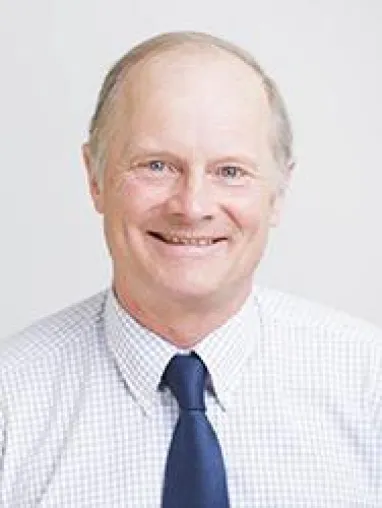
Ehrendoktorwürde für Max-Planck-Direktor Prof. R.J. Dwayne Miller
Professor R.J. Dwayne Miller ist von der University of Waterloo in Kanada mit einer Ehrendoktorwürde ausgezeichnet worden. Er ist ein Direktor des Max-Planck-Instituts für Struktur und Dynamik der Materie (MPSD) in Hamburg, wo er die Abteilung Dynamik in atomarer Auflösung leitet.
---
Die Universität ehrt hiermit Professor Millers Erfolge in der Entwicklung einer Kamera, mit der die Bewegungen von Atomen während eines Strukturwandels als sogenannter Film eines molekularen Prozesses beobachtet werden können. Mit dieser neuartigen Kamera werde…
Das könnte Sie auch interessieren:
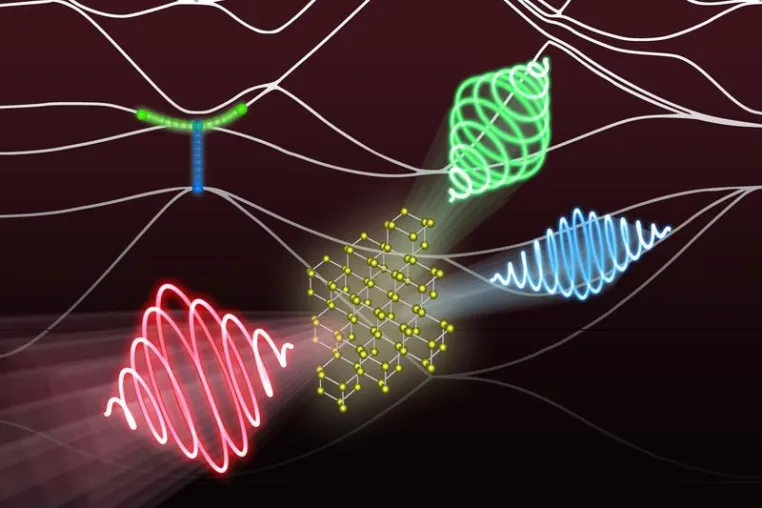
A new knob to control and create higher harmonics in solids
… interest in this phenomenon in solids, the mechanism behind the conversion of light is still under debate for solid materials.
Scientists from the MPSD (Max Planck Institute for the Structure and Dynamics of Matter) and CFEL* (Center for Free-Electron Laser Science) in Hamburg used state-of-the-art theoretical simulation tools to advance the fundamental …
From brain function and communication networks to power grids
… TU Dresden (TUD) has extended the Center of Excellence Center for Advancing Electronics Dresden (cfaed) by a fifth Strategic Professorship. Prof. Marc Timme from the Max Planck Institute for Dynamics and Self-Organization in Göttingen moved to the Elbe river in July 2017 and will continue his internationally successful research in the field of network …
Christiane Nüsslein-Volhard - Kreativität, Elan und unbefristete Hingabe an die Biologie
… 601- 489
E-Mail:
Sarah Hailer (Pressereferentin)
Tel.: 07071 601- 444
E-Mail:
Über uns:
Der Max-Planck-Campus Tübingen beherbergt vier Max-Planck-Institute: die Max-Planck-Institute für Entwicklungsbiologie, biologische Kybernetik und Intelligente Systeme/Standort Tübingen sowie das Friedrich-Miescher-Laboratorium. Insgesamt arbeiten und forschen …

ERC Starting Grant ARTIST for Seraphine Wegner at the Max Planck Institute for Polymer Research
The European Research Council (ERC) awarded Dr. Seraphine Wegner at the Max Planck Institute for Polymer Research (MPI-P) an ERC Starting Grant of 1.9 million euros for her project ARTIST. This project on bottom-up tissue engineering wants to control cell-cell interactions with visible light to assemble cells into functional tissues.
---
The bottom-up …
Ultrafast snapshots of relaxing electrons in solids
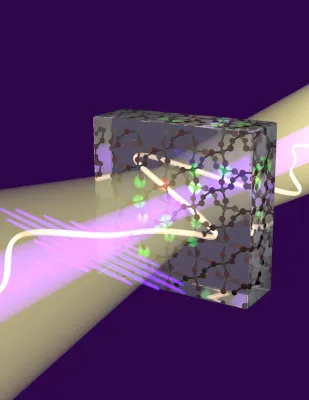
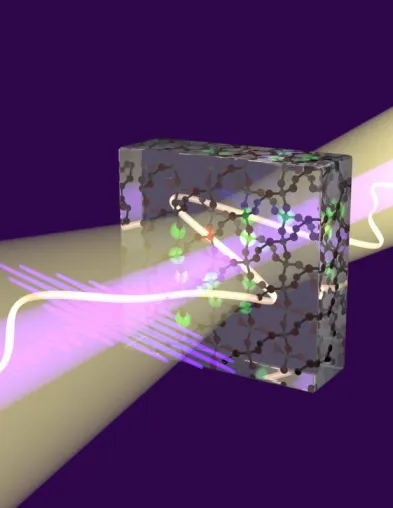
Using ultrafast flashes of laser and x-ray radiation, scientists at the Max Planck Institute of Quantum Optics (Garching, Germany) took snapshots of the briefest electron motion inside a solid material to date. The electron motion lasted only 750 billionths of the billionth of a second before it fainted, setting a new record of human capability to capture …
Scientists shine new light on the “other high temperature superconductor”
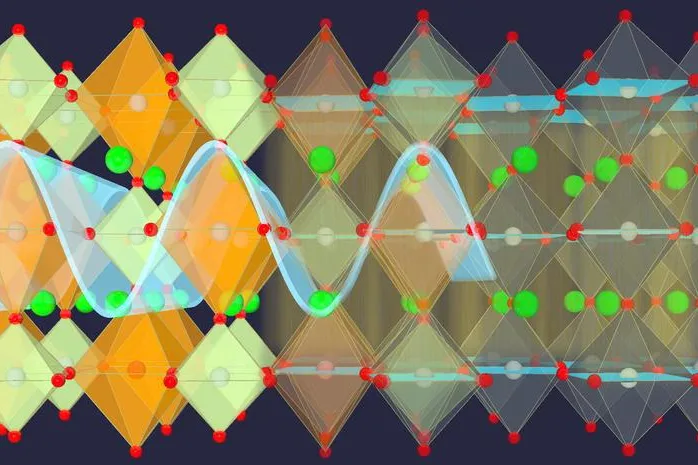
A study led by scientists of the Max Planck Institute for the Structure and Dynamics of Matter (MPSD) at the Center for Free-Electron Laser Science in Hamburg presents evidence of the coexistence of superconductivity and “charge-density-waves” in compounds of the poorly-studied family of bismuthates. This observation opens up new perspectives for a deeper …
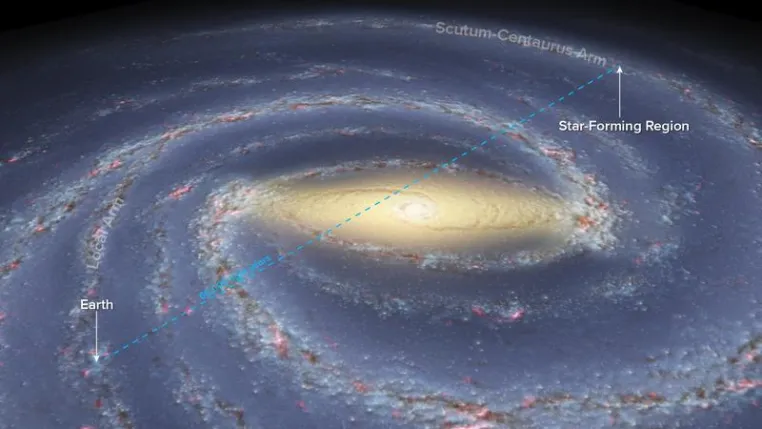
The Far Side of the Milky Way
Astronomers from the Max Planck Institute for Radio Astronomy in Bonn, Germany, and the Harvard-Smithsonian Center for Astrophysics have directly measured the distance to a star-forming region on the opposite side of our Milky Way Galaxy from the Sun, using the Very Long Baseline Array. Their achievement reaches deep into the Milky Way’s terra incognita …
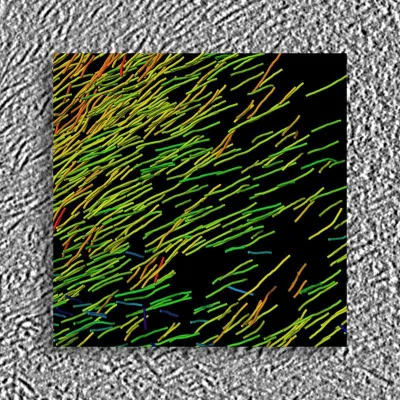
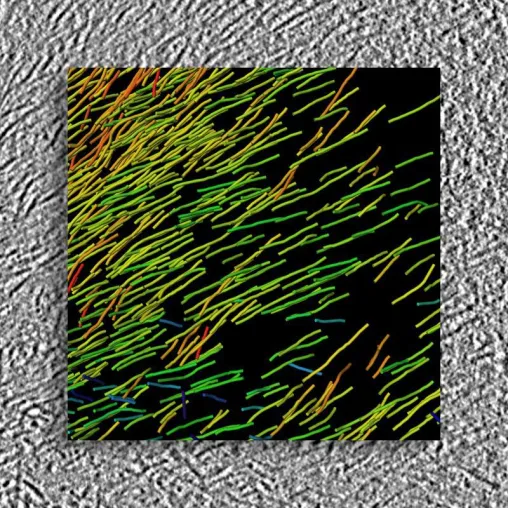
Weeds in the brain
… three-dimensional structure of the protein aggregates should help researchers to solve this puzzle. Now, using cryo-electron tomography, scientists at the Max Planck Institute of Biochemistry have succeeded in generating a high-resolution, three-dimensional model of the aggregates responsible for Huntington’s disease.
---
Rampant weed growth – the nightmare …
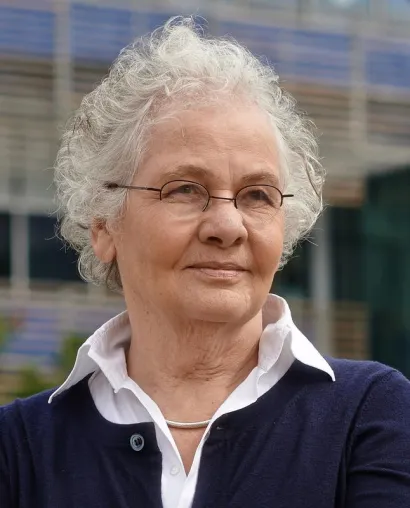
Christiane Nüsslein-Volhard - passion, creativity and verve for biological research
… currently works on the molecular and genetic background of colour pattern formation in animals and is the leader of an Emeritus-research group at the Max Planck Institute for Developmental Biology in Tübingen, Germany. In 2016 Christiane Nüsslein-Volhard received one of the coveted Advanced Grants of the European Research Council (ERC). The ERC supports …

Life in the city: Living near a forest keeps your amygdala healthier
A study conducted at the Max Planck Institute for Human Development has investigated the relationship between the availability of nature near city dwellers’ homes and their brain health. Its findings are relevant for urban planners among others.
---
Noise, pollution, and many people in a confined space: Life in a city can cause chronic stress. City dwellers …
Sie lesen gerade: ERC grant for scientist from Max Planck Institute for the Structure and Dynamics of Matter