openPR Recherche & Suche
Presseinformation

ERC Starting Grant ARTIST for Seraphine Wegner at the Max Planck Institute for Polymer Research

27.09.201713:00 UhrWissenschaft, Forschung, Bildung
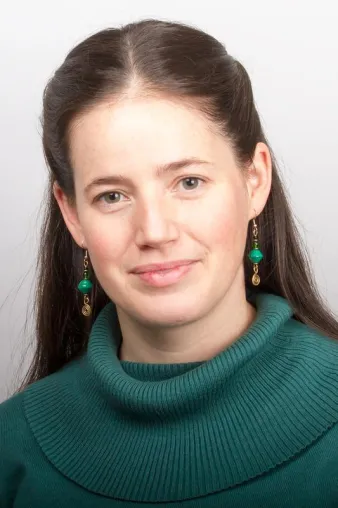
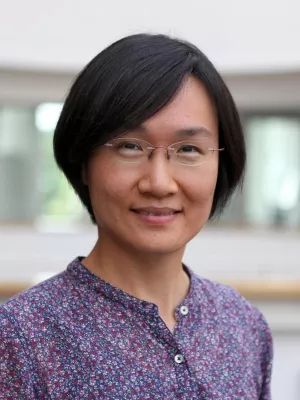
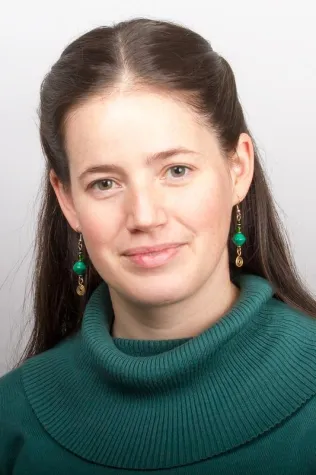
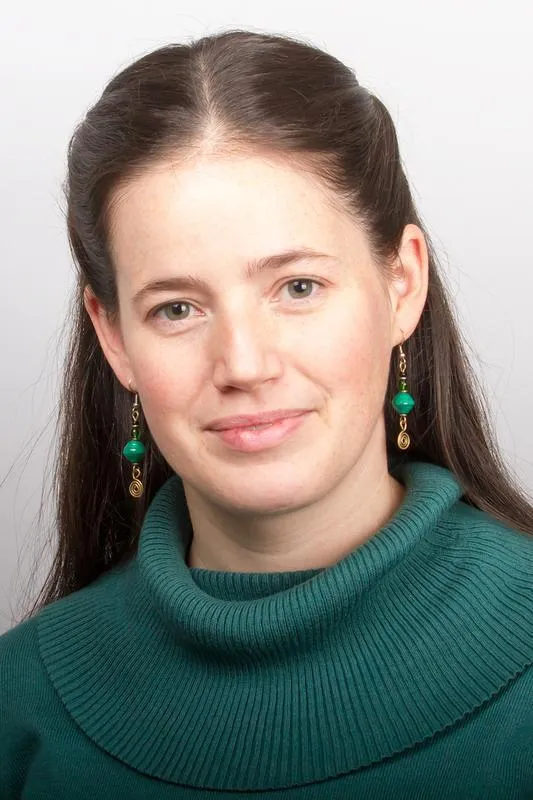
Bild: ERC Starting Grant ARTIST for Seraphine Wegner at the Max Planck Institute for Polymer Research
Dr. Seraphine Wegner (© MPI-P)

(openPR) The European Research Council (ERC) awarded Dr. Seraphine Wegner at the Max Planck Institute for Polymer Research (MPI-P) an ERC Starting Grant of 1.9 million euros for her project ARTIST. This project on bottom-up tissue engineering wants to control cell-cell interactions with visible light to assemble cells into functional tissues.


---
The bottom-up self-assembly of a tissue from cellular building blocks is the ultimate goal in tissue engineering. “If our approach ARTIST is successful, it will provide new ways of studying cell-cell interactions and assembling cells into tissues,” emphasizes Seraphine Wegner and continues: “The dynamic and asymmetric structures that we will create in our project with unmatched flexibility should give rise to functional tissues.”

In general, a tissue is built from different cells that form multicellular architectures and work together. Nature assembles tissues reproducibly and produces complex tissues. This happens by generating interactions between cells of different types from the bottom-up. In tissue engineering it does not suffice to simply mix together the right composition of cells to successfully build-up a functional multicellular tissue. Instead, the correct structural organization of the cellular building blocks must be ensured. The challenge is to accurately control when and where cells interact with each other to assemble them into the desired structure so that they can function as a tissue.

In ARTIST, controlling specific cell-cell interactions with visible light allows Wegner to precisely generate these interactions only when the light is on and only in locations where light shines through a mask. In order to mediate cell-cell-interactions, proteins that respond to visible light will be used. The cell-cell interactions, which will be developed in ARTIST, provide high spatial and temporal control and the visible light used to induce them does not affect other processes in the cell. The aim is to generate complex tissues like structures which resemble the ones observed in real tissues.

Prof. Paul Blom, Managing Director of the MPI-P, says: “The ERC Starting Grant is a great honor for Seraphine Wegner and recognition of her innovative ideas.” The ERC Starting Grants are destined to promote independent research of top scientists in Europe at the beginning of their scientific career by giving them the opportunity to lead an ambitious research project with their own team for five years.

About Seraphine Wegner:
Since 2016, Dr. Seraphine Wegner has been leading at the Max Planck Institute for Polymer Research the independent MaxSynBio research group on light-controlled systems, which is funded by the German Federal Ministry of Education and Research (BMBF). Wegner studied chemistry at the Middle East Technical University (METU) in Ankara, Turkey, and obtained her PhD in 2010 at the University of Chicago, USA, focusing on metal ion sensors for in vivo imaging using metalloregulatory proteins. After that, she worked as a postdoctoral researcher at the University of Heidelberg and at the Max Planck Institute for Intelligent Systems, Stuttgart, where she developed various surface functionalization techniques and protein immobilization techniques to study cell-material interaction.
For further information about Dr. Seraphine Wegner and MaxSynBio please visit:
http://www.mpip-mainz.mpg.de/4436512/MaxSynBio_Research_Group_Wegner

About the Max Planck Institute for Polymer Research (MPI-P):
The Max Planck Institute for Polymer Research (MPI-P) ranks among the top research centers in the field of polymer science worldwide. The focus on soft materials and macro-molecular materials has resulted in the worldwide unique position of the Max Planck Institute for Polymer Research and its research focus. The institute combines all the necessary specialized expertise - from the creative design of new materials, from their synthesis in the lab to their physical characterization as well as the theoretical understanding of polymer characteristics.
The institute was founded in 1983. More than 500 international people are working at the MPI-P.
For further information please visit: http://www.mpip-mainz.mpg.de

Scientific Contact:
Dr. Seraphine Wegner
Max Planck Institute for Polymer Research
Ackermannweg 10
55128 Mainz, Germany
Phone: +49-6131-379135
Email: E-Mail

Quelle: idw

Diese Pressemeldung wurde auf openPR veröffentlicht.

Verantwortlich für diese Pressemeldung:

News-ID: 971101
 308

Kostenlose Online PR für alle

Jetzt Ihren Pressetext mit einem Klick auf openPR veröffentlichen

Jetzt gratis starten

Pressebericht „ERC Starting Grant ARTIST for Seraphine Wegner at the Max Planck Institute for Polymer Research“ bearbeiten oder mit dem "Super-PR-Sparpaket" stark hervorheben, zielgerichtet an Journalisten & Top50 Online-Portale verbreiten:

PM löschen PM ändern
Disclaimer: Für den obigen Pressetext inkl. etwaiger Bilder/ Videos ist ausschließlich der im Text angegebene Kontakt verantwortlich. Der Webseitenanbieter distanziert sich ausdrücklich von den Inhalten Dritter und macht sich diese nicht zu eigen. Wenn Sie die obigen Informationen redaktionell nutzen möchten, so wenden Sie sich bitte an den obigen Pressekontakt. Bei einer Veröffentlichung bitten wir um ein Belegexemplar oder Quellenennung der URL.

Pressemitteilungen KOSTENLOS veröffentlichen und verbreiten mit openPR

Stellen Sie Ihre Medienmitteilung jetzt hier ein!

Jetzt gratis starten

Weitere Mitteilungen von Max-Planck-Institut für Polymerforschung

Bild: ERC Starting Grant ARTIST für Seraphine Wegner am Max-Planck-Institut für PolymerforschungBild: ERC Starting Grant ARTIST für Seraphine Wegner am Max-Planck-Institut für Polymerforschung
ERC Starting Grant ARTIST für Seraphine Wegner am Max-Planck-Institut für Polymerforschung
Der Europäische Forschungsrat (ERC) fördert Dr. Seraphine Wegner am Max-Planck-Institut für Polymerforschung (MPI-P) mit einem ERC Starting Grant in Höhe von 1,9 Millionen Euro für ihr Projekt ARTIST. Dieses Projekt zum Tissue Engineering (Gewebezüchtung) nach dem Bottom-up-Prinzip will Zell-Zell-Wechselwirkungen mit sichtbarem Licht kontrollieren, um Zellen zu funktionellem Gewebe zusammenzusetzen. --- Der Selbstaufbau eines Gewebes nach dem Bottom-up-Prinzip aus zellulären Bausteinen ist das oberste Ziel im Tissue Engineering. „Wenn unser …

Das könnte Sie auch interessieren:

U15-Universitäten unverändert stark auf der europäischen Bühne
Ein Drittel der nach Deutschland vergebenen ERC Starting Grants geht 2017 an U15-Mitgliedsuniversitäten --- Die U15-Universitäten haben ihre starke Stellung bei der Vergabe der Starting Grants des European Research Council (ERC) gehalten: Mit 23 von insgesamt 67 Starting Grants, die an Wissenschaftlerinnen und Wissenschaftler an deutschen Forschungseinrichtungen …
Bild: ERC grant for scientist from Max Planck Institute for the Structure and Dynamics of MatterBild: ERC grant for scientist from Max Planck Institute for the Structure and Dynamics of Matter
ERC grant for scientist from Max Planck Institute for the Structure and Dynamics of Matter
Wanzheng Hu, a scientist at the Max Planck Institute for the Structure and Dynamics of Matter (MPSD) in Hamburg, has been awarded a prestigious Starting Grant worth up to €1.79 million by the European Research Council (ERC). She is investigating the collective quantum behavior of two-dimensional materials, which are just one atomic layer thick. --- Her …
EU fördert exzellente Nachwuchsforschung: Zehn Auszeichnungen gehen nach Nordrhein-Westfalen
… - Forschungszentrum Jülich besonders erfolgreich --- Zehn herausragende Forscherinnen und Forscher aus Nordrhein-Westfalen haben sich gegen große Konkurrenz durchgesetzt und die begehrten Starting Grants des Europäischen Forschungsrats (ERC) eingeworben. Ihre Forschungsvorhaben werden jeweils mit bis zu 1,5 Millionen Euro gefördert. Über 3.000 europäische …
Bild: ERC Synergy Grant für MPI-Direktor Kai Johnsson
ERC Synergy Grant für MPI-Direktor Kai Johnsson
… Pionierforschung. Er finanziert kreative Forscher jeder Nationalität und jeden Alters, um Projekte in ganz Europa durchzuführen. Der ERC bietet vier zentrale Förderprogramme an: Starting Grants, Consolidator Grants, Advanced Grants und Synergy Grants. Mit seinem zusätzlichen Proof of Concept Grant-Programm hilft der ERC den Stipendiaten, die Lücke zwischen …
Bild: Neuronale Schaltkreise der Angst
Neuronale Schaltkreise der Angst
… und ihr Team am Max-Planck-Institut für Neurobiologie in Martinsried bei München genauer untersuchen. Ein Vorhaben, das vom Europäischen Forschungsrat (ERC) nun mit einem Starting Grant unterstützt wird. Der Wissenschaftlerin stehen damit 1,5 Millionen Euro in den nächsten fünf Jahren für die Umsetzung ihres Forschungsvorhabens zur Verfügung. --- Angst …
Bild: World´s smallest jet engine invented in Stuttgart
World´s smallest jet engine invented in Stuttgart
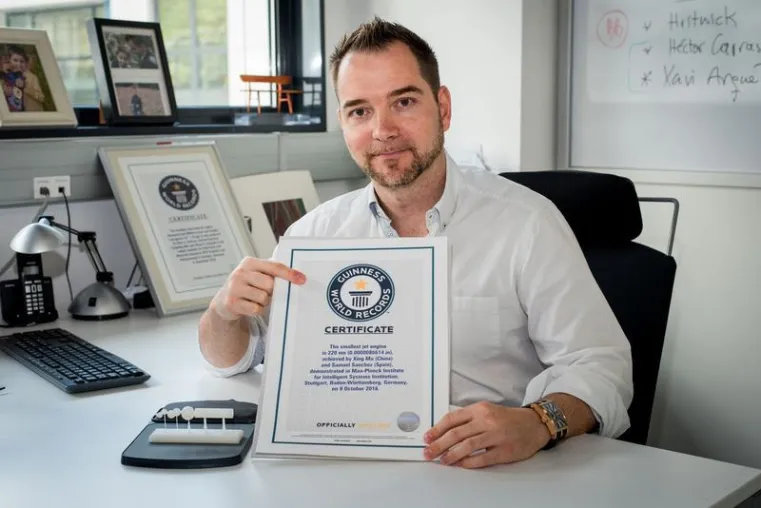
For the second time, Dr. Samuel Sánchez from the Max Planck Institute for Intelligent Systems in Stuttgart receives the Guinness World Record for the smallest nanotube travelling through fluid like a jet engine. --- Stuttgart (lb) - Dr. Samuel Sánchez is thrilled, just like last time he received a Guinness World Record for the smallest jet engine ever …
Bild: ERC-Grant für Wissenschaftlerin am Max-Planck-Institut für Struktur und Dynamik der MaterieBild: ERC-Grant für Wissenschaftlerin am Max-Planck-Institut für Struktur und Dynamik der Materie
ERC-Grant für Wissenschaftlerin am Max-Planck-Institut für Struktur und Dynamik der Materie
… nur den millionsten Teil einer Milliardstel Sekunde andauern. Sie nutzen einige der hellsten Laser- und Röntgenstrahlen der Welt für ihre Forschung. Das MPSD ist eins von 83 Instituten der Max-Planck-Gesellschaft. Mit dem ERC Starting Grant wird das Projekt fünf Jahre lang am MPSD finanziert. Wanzheng Hu ist eine von 406 Bewerberinnen und Bewerbern, …
Bild: Patrick Müller receives the „EMBO Young Investigator” Award
Patrick Müller receives the „EMBO Young Investigator” Award
… and theoretical approaches. From 1999 to 2004, Müller studied molecular biology in Göttingen, Berkeley, and New York. In 2007, he received his PhD from the Max Planck Institute for Biophysical Chemistry and worked as a postdoc and research associate at Harvard University until 2013. Müller has already received several awards for his work, including an …
Bild: ERC Starting Grant ARTIST für Seraphine Wegner am Max-Planck-Institut für PolymerforschungBild: ERC Starting Grant ARTIST für Seraphine Wegner am Max-Planck-Institut für Polymerforschung
ERC Starting Grant ARTIST für Seraphine Wegner am Max-Planck-Institut für Polymerforschung
Der Europäische Forschungsrat (ERC) fördert Dr. Seraphine Wegner am Max-Planck-Institut für Polymerforschung (MPI-P) mit einem ERC Starting Grant in Höhe von 1,9 Millionen Euro für ihr Projekt ARTIST. Dieses Projekt zum Tissue Engineering (Gewebezüchtung) nach dem Bottom-up-Prinzip will Zell-Zell-Wechselwirkungen mit sichtbarem Licht kontrollieren, um …
Sie lesen gerade: ERC Starting Grant ARTIST for Seraphine Wegner at the Max Planck Institute for Polymer Research