openPR Recherche & Suche
Presseinformation

New study: Why European winters were so cold during the Little Ice Age

30.08.201712:00 UhrWissenschaft, Forschung, Bildung
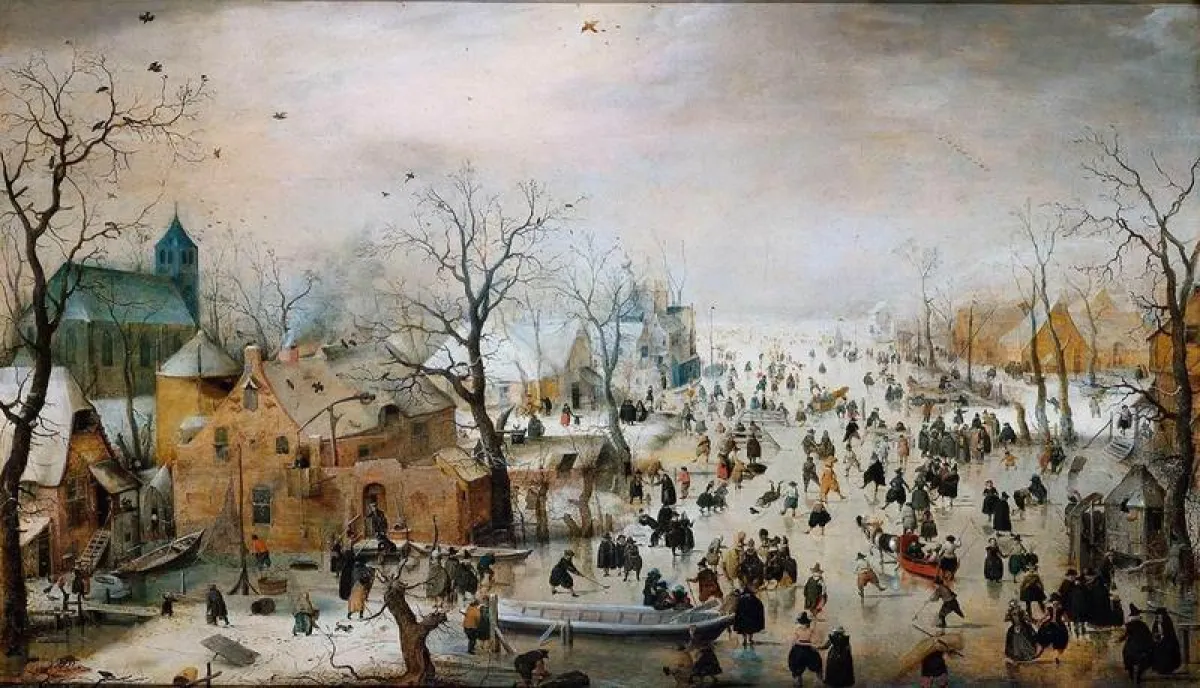
Bild: New study: Why European winters were so cold during the Little Ice Age
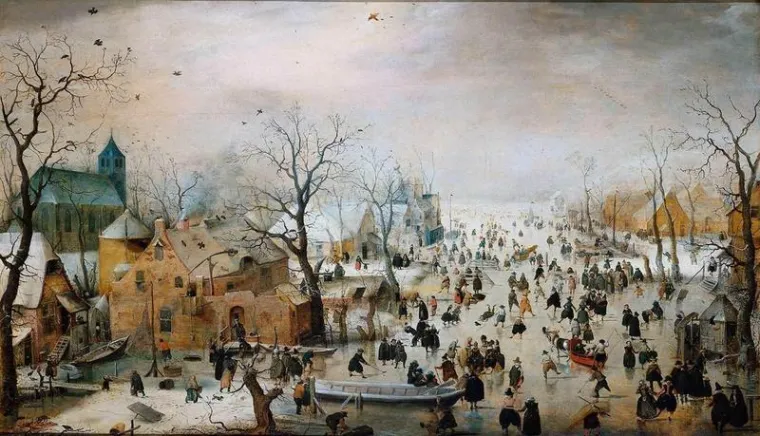
Hendrick Avercamp: Winterlandschap met schaatsers (Hendrick Avercamp:
Hendrick Avercamp: Winterlandschap met schaatsers (Hendrick Avercamp: "Winterlandschap met schaatsers (Winter landscape with skaters)", circa 1608, 77.3 x 131.9 cm, Rijksmuseum Amsterdam)

(openPR) In a new study, scientists propose a mechanism to explain the winter amplification of the Little Ice Age cooling in Europe by connecting it to the changes in the oceanic circulation of the subpolar North Atlantic.

---
Our common conception of the Little Ice Age (LIA), the relatively cold climate period that climaxed in the 16th–18th centuries, is strongly influenced by painters like Brueghel the Elder or Avercamp and their famous genre scenes of winter hardships and pleasures in icy landscapes. These idealized representations of daily life are nonetheless consistent with documentary evidence and climate reconstructions that present the LIA as a largely winter phenomenon in Europe. In a new study [1], published in Scientific Reports, an open-access journal of the Nature Publishing Group, Drs. Eduardo Moreno-Chamarro, Katja Lohmann, and Johann Jungclaus from the Max Planck Institute for Meteorology, Dr. Davide Zanchetin from the University of Venice, and Prof. Juerg Luterbacher from the University of Giessen propose a new mechanism to explain the winter amplification of the LIA cooling in Europe by connecting it to the changes in the oceanic circulation of the subpolar North Atlantic.


Similar to (now quite rare) exceptionally cold winters in present times, the LIA winters were typically characterized by persistent high-pressure systems, or atmospheric blockings, over Scandinavia. These blockings not only carry colder air from the Eurasian continent to Europe via their associated easterly winds; they also “block off” the paths of the low-pressure systems that normally bring moisture and relatively warm air from the Atlantic to western Europe. But, how could these large-scale atmospheric circulation patterns be so prevailing and determining for winters throughout two centuries?

As part of his PhD project, Eduardo Moreno-Chamarro analysed climate model simulations covering the entire pre-industrial millennium in search for an explanation for those anomalous winter conditions. In agreement with reconstructions from climate archives, these simulations revealed not only that the LIA was characterized specifically by colder winter temperatures, but also that these were directly linked to a weaker-than-normal large-scale ocean circulation in the North Atlantic, in particular the Subpolar Gyre (SPG). The SPG is a counter-clockwise rotating basin-wide eddy that regulates the northward heat transport from the Atlantic Ocean to the Nordic Seas and the Arctic Ocean. Thus during the LIA, a weakened SPG caused a long-lasting cooling of the surface ocean in high northern latitudes that favoured the increase of the sea-ice covered area, especially in the Barents Sea. The changes in sea-ice cover in turn modified the exchange of heat between ocean and atmosphere effectively in winter, and so led to the persistent blocking weather regime over Europe.

“There were earlier speculations that the ocean could have played some role in these long-term changes,” points out Johann Jungclaus, project leader at the MPI-M. “However, the prevailing explanation was too simplified: it just said that the Gulf Stream, as a sort of warm-water-heating system for Europe, failed or weakened during the LIA, causing the cooling. Our investigations show that a general weakening of the Atlantic meridional overturning circulation was probably not involved, and that we need to look in detail at regional dynamical features, such as the SPG and the localized ocean–atmosphere feedbacks. This can only be done with complex climate models,” he adds. “Moreover, the mechanism we propose explains the particular seasonal characteristics of the LIA in Europe.”

The authors identified a number of volcanic eruptions at the end of the 16th century as the most likely cause of the changes in the SPG. “These events were much weaker than, for example, the prominent Tambora eruption in 1815, which led to the famous “year-without-summer” in 1816,” explains Eduardo Moreno-Chamarro. “However, in a previous study [2] that focused on the mechanisms behind the SPG changes in more detail, we found that the accumulative effect of these smaller eruptions initiated the relatively abrupt weakening of the gyre circulation”.

Publications:

[1] Moreno-Chamarro, E., D. Zanchettin, K. Lohmann, J. Luterbacher, and J. H. Jungclaus, 2017: Winter amplification of the European Little Ice Age cooling by the subpolar gyre. Sci. Rep., doi:10.1038/s41598-017-07969-0.

[2] Moreno-Chamarro, E., D. Zanchettin, K. Lohmann, and J. H. Jungclaus, 2017: An abrupt weakening of the subpolar gyre as trigger of Little Ice Age-type episodes. Clim. Dyn., 48, 727-744.

Contact:

Dr. Johann Jungclaus
Max Planck Institute for Meteorology
Department The Ocean in the Earth System
Phone: +49 40 41173 109
Email: E-Mail

Dr. Eduardo Moreno-Chamarro
Now at: Massachusetts Institute of Technology
Department of Earth, Atmospheric and Planetary Science
phone: +1 (617) 253 5458
e-mail: E-Mail

Prof. Jürg Luterbacher
Institut für Geographie
Justus Liebig Universität Giessen
Tel.: 0641 99-36210
Email: E-Mail

Weitere Informationen:
- https://mpimet.mpg.de/en/home/

Quelle: idw
Diese Pressemeldung wurde auf openPR veröffentlicht.

Verantwortlich für diese Pressemeldung:

News-ID: 965937
 607

Kostenlose Online PR für alle

Jetzt Ihren Pressetext mit einem Klick auf openPR veröffentlichen

Jetzt gratis starten

Pressebericht „New study: Why European winters were so cold during the Little Ice Age“ bearbeiten oder mit dem "Super-PR-Sparpaket" stark hervorheben, zielgerichtet an Journalisten & Top50 Online-Portale verbreiten:

PM löschen PM ändern
Disclaimer: Für den obigen Pressetext inkl. etwaiger Bilder/ Videos ist ausschließlich der im Text angegebene Kontakt verantwortlich. Der Webseitenanbieter distanziert sich ausdrücklich von den Inhalten Dritter und macht sich diese nicht zu eigen. Wenn Sie die obigen Informationen redaktionell nutzen möchten, so wenden Sie sich bitte an den obigen Pressekontakt. Bei einer Veröffentlichung bitten wir um ein Belegexemplar oder Quellenennung der URL.

Pressemitteilungen KOSTENLOS veröffentlichen und verbreiten mit openPR

Stellen Sie Ihre Medienmitteilung jetzt hier ein!

Jetzt gratis starten

Weitere Mitteilungen von Max-Planck-Institut für Meteorologie

Bild: Neue Studie: Warum die europäischen Winter während der Kleinen Eiszeit so kalt warenBild: Neue Studie: Warum die europäischen Winter während der Kleinen Eiszeit so kalt waren
Neue Studie: Warum die europäischen Winter während der Kleinen Eiszeit so kalt waren
In einer neuen Studie schlagen die Autoren einen Mechanismus vor, der die winterliche Verstärkung der Abkühlung während der Kleinen Eiszeit in Europa erklärt, in dem sie diese mit Änderungen in der Ozeanzirkulation des subpolaren Nordatlantiks in Verbindung bringen. --- Es sind die Winterlandschaften der holländischen und flämischen Genremaler wie Pieter Breugel, dem Älteren, und Hendrick Averkamp, die unser Bild der Kleinen Eiszeit (KE), der relativ kalten Klimaperiode in den drei Jahrhunderten vor der industriellen Revolution prägen. Nicht…

Das könnte Sie auch interessieren:

Danish study: New insights allow better adjustment of rehabilitation after hip fractures in elderly
… and patients cannot be discharged to their homes at the end of their primary hospitalisation. A Danish study, presented today at the 12th Congress of the European Federation of National Associations of Orthopaedics and Traumatology (EFORT) in Copenhagen, suggests criteria for determining in advance which patients are in danger of remaining immobilised. …
Bild: As parents are transformed into criminalsBild: As parents are transformed into criminals
As parents are transformed into criminals
… a new house, and someone that tomorrow will join its offshore. Tension builds. Managing holding company pays attention to every detail. He must take the only right decision, every little thing right now is incredible value. Senior partner suited to a huge screen and starts the presentation. All eyes turned to him alone. Time stops for a moment. Suddenly …
Bild: ICE AGE ICE AG entwickelt innovative ProduktneuheitBild: ICE AGE ICE AG entwickelt innovative Produktneuheit
ICE AGE ICE AG entwickelt innovative Produktneuheit
Durch den Einsatz von Hochtechnologie bietet der Maintaler Nutzeishersteller ab Herbst 2008 seinen Kunden noch mehr Service Maintal, im Mai 2007 – Aktuell entwickelt der Nutzeishersteller ICE AGE ICE AG gemeinsam mit zwei kompetenten Technologiepartnern aus Berlin und dem Rhein-Main Gebiet ein integriertes lieferantengestütztes Warenbestandsmanagement-System. …
Coole VARTA Ice Age Leuchten für Kids
Sie heißen Scrat, Sid, Manny und Co. und geraten von einem Abenteuer in das nächste. Die gefeierten Helden der Ice Age Saga kommen aber in diesem Sommer nicht nur zurück auf die Kinoleinwände, sondern auch in die Kinderzimmer. Mit der neuen Ice Age Leuchte von VARTA. Die Taschenlampe mit Bildern der tierischen Akteure sieht aber nicht nur cool aus. Sie …
Bild: Light Vehicles Forecast 2050 for Europe: Driven by 48VBild: Light Vehicles Forecast 2050 for Europe: Driven by 48V
Light Vehicles Forecast 2050 for Europe: Driven by 48V
… vehicle production will be based on highly efficient ICE traction combined with different stages of electrification. Total production 2050 Considering recent demographic and socio-economic factors, European light vehicle production will further increase over the coming decade, reaching a volume of 26 M units in 2030. Age structure, agglomerative saturation …
Bild: MindMatics und 20th Century Fox bringen „Ice Age 2 – Jetzt taut’s“ vor Kinostart aufs Handy – Erfolgreiche Promotion mit Bluetooth® Technologie findet FortsetzungBild: MindMatics und 20th Century Fox bringen „Ice Age 2 – Jetzt taut’s“ vor Kinostart aufs Handy – Erfolgreiche Promotion mit Bluetooth® Technologie findet Fortsetzung
MindMatics und 20th Century Fox bringen „Ice Age 2 – Jetzt taut’s“ vor Kinostart aufs Handy – Erfolgreiche Promotion mit Bluetooth® Technologie findet Fortsetzung
Services mit MindMatics. Zu den Kunden gehören unter anderem Unilever, T-Mobile, Coca-Cola, Procter & Gamble, ProSieben, Budweiser, McDonald´s oder Ferrero. Die MindMatics AG wurde im März 2000 gegründet und beschäftigt mehr als 130 Mitarbeiter an den Standorten München, Köln, Wien, London und New York.
Bild: Neue Studie: Warum die europäischen Winter während der Kleinen Eiszeit so kalt warenBild: Neue Studie: Warum die europäischen Winter während der Kleinen Eiszeit so kalt waren
Neue Studie: Warum die europäischen Winter während der Kleinen Eiszeit so kalt waren
… subpolaren Nordatlantik hervorgerufen hat“. Originalveröffentlichungen: [1] Moreno-Chamarro, E., D. Zanchettin, K. Lohmann, J. Luterbacher, and J. H. Jungclaus, 2017: Winter amplification of the European Little Ice Age cooling by the subpolar gyre. Sci. Rep., 7, doi:10.1038/s41598-017-07969-0. [2] Moreno-Chamarro, E., D. Zanchettin, K. Lohmann, and J. …
Bild: Otto Waalkes bestätigt auf Pressekonferenz: Megastar Sid erfüllt sich mit ICE AGE LIVE! einen LebenstraumBild: Otto Waalkes bestätigt auf Pressekonferenz: Megastar Sid erfüllt sich mit ICE AGE LIVE! einen Lebenstraum
Otto Waalkes bestätigt auf Pressekonferenz: Megastar Sid erfüllt sich mit ICE AGE LIVE! einen Lebenstraum
Otto und Sid präsentierten auf tierisch charmanter Presseveranstaltung brandneue Live-Arena-Show – Sid und seine Freunde erstmals in Deutschland auf großer Tournee – ICE AGE LIVE! in 14 Städten – Deutschland-Auftakt Anfang November in Düsseldorf (ddp direct) Hamburg, 06. September 2012 – Singen, Tanzen, Späßchen machen: Auf dem wohl lautesten Presse-Event …
Bild: Find of Human Bones in South Mexico: Stalagmite Reveals Their Age as 13,000Bild: Find of Human Bones in South Mexico: Stalagmite Reveals Their Age as 13,000
Find of Human Bones in South Mexico: Stalagmite Reveals Their Age as 13,000
… North American glaciers, via the ice-age Bering Land Bridge between Siberia and Alaska. In recent years, however, this theory is being increasingly called into question by new finds from North and South America. They indicate that people arrived there earlier, explains Prof. Stinnesbeck. However, these finds were mostly artifacts or open hearths, their …
Bild: TCC GmbH entwickelt erstmals in Deutschland ein Prämienprogramm mit gratis Ice Age 4 DominosteinenBild: TCC GmbH entwickelt erstmals in Deutschland ein Prämienprogramm mit gratis Ice Age 4 Dominosteinen
TCC GmbH entwickelt erstmals in Deutschland ein Prämienprogramm mit gratis Ice Age 4 Dominosteinen
Die Ice Age 4 Domino-Fieber Kampagne, die ab dem 2. Juli deutschlandweit in rund 320 real,- Märkten anläuft, setzt zum Start des „Ice Age 4 - Voll Verschoben“ Kinofilms das klassische Dominospiel modern in Szene. Bei jedem vollen 15 Euro Einkaufswert bekommen Kunden bei real,- bis zum 18. August einen von insgesamt 28 Ice Age 4 Dominosteinen gratis zum …
Sie lesen gerade: New study: Why European winters were so cold during the Little Ice Age