openPR Recherche & Suche
Presseinformation

Cell aging in lung epithelial cells

04.08.201712:00 UhrWissenschaft, Forschung, Bildung
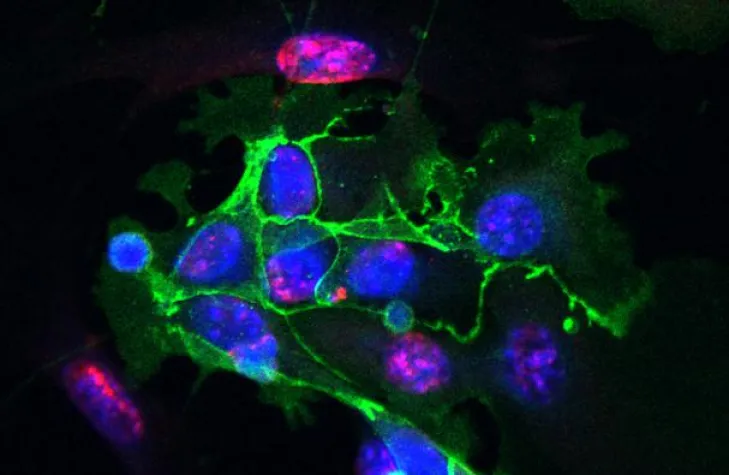
Bild: Cell aging in lung epithelial cells
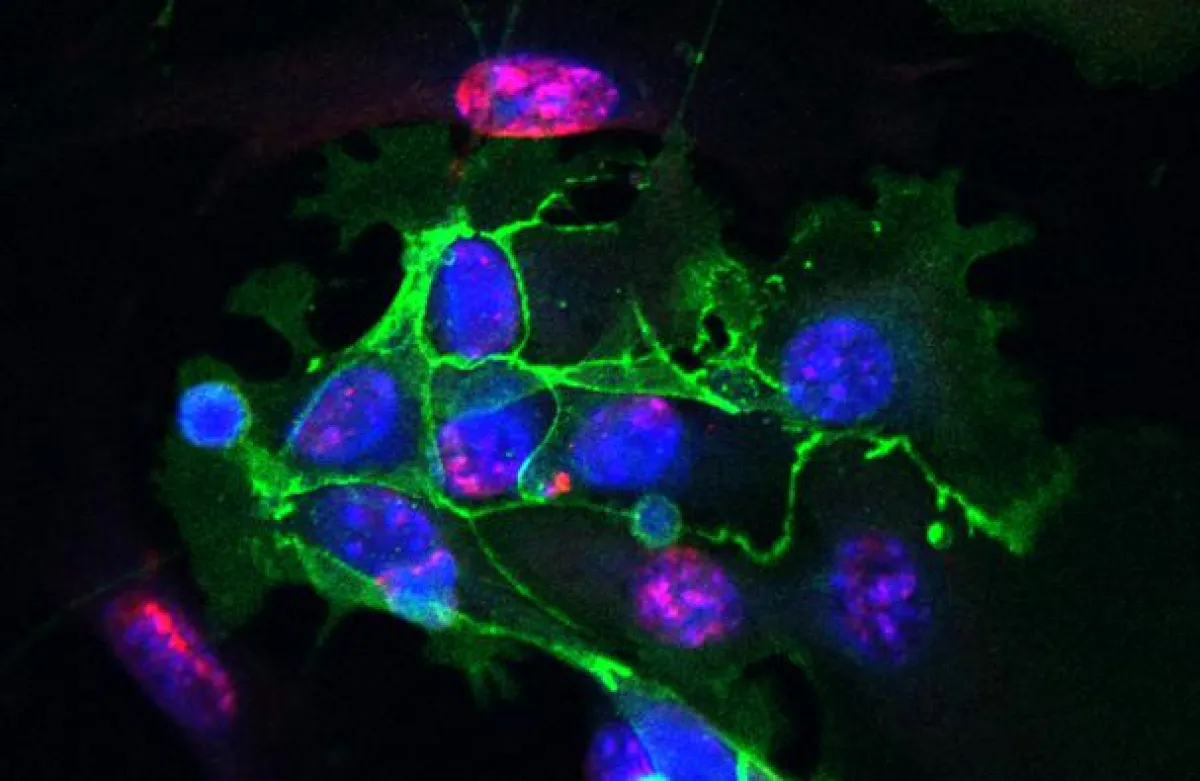
Sample of lung fibrosis: Green cells show markers of the lung epithelium, red cells are undergoing senescence. The nuclei are stained in blue. (Source: Helmholtz Zentrum München)

(openPR) Pulmonary fibrosis can possibly be attributed to a kind of cellular aging process, which is called senescence. This has been shown by researchers from the Helmholtz Zentrum München, partner in the German Center for Lung Research (DZL). As they report in the ‘European Respiratory Journal’, they have already successfully counteracted this mechanism in the cell culture with the help of drugs.


---
Pulmonary fibrosis causes the patient’s lung tissue to scar, resulting in progressive pulmonary function deterioration. In particular, the surface of the alveoli (called the alveolar epithelium) is often affected. If the disease’s origin is unknown, the condition is called idiopathic pulmonary fibrosis, or IPF for short. “The treatment options for IPF have been few and far between,” explains Dr. Mareike Lehmann, scientisit in the Lung Repair and Regeneration Research Unit (LRR) at the Helmholtz Zentrum München. “We are therefore attempting to understand how the disease comes about so that we can facilitate targeted treatment.”

In the current work, Lehmann and additional researchers, headed by department head Prof. Dr. Dr. Melanie Königshoff, have now succeeded in solving another piece of the puzzle. “In both the experimental model and in the lungs of IPF patients, we were able to show that some cells in the alveolar epithelium have markers for senescence*,” explains study leader Königshoff. “Because the occurrence of IPF increases with age, this was already suspected. We have now succeeded in proving this hypothesis.”

Senescence promotes pulmonary fibrosis in two ways

Senescence impairs lung function in two ways: It prevents lung cells from dividing when they need to be replaced. And senescent cells secrete mediators that further promote fibrosis. Since this effect also plays a role in cancer, the scientists were able to access an already existing group of medicines, the so-called senolytic drugs that selectively kill off senescent cells.

Pulmonary fibrosis stopped in the cell culture

In order to test possible treatment strategies, the scientists placed the affected cells into a three-dimensional cell culture and examined the drugs’s effect ex vivo, so to speak. Mareike Lehmann: “We observed that this caused a decline in the quantity of secreted mediators and additionally a reduction in the mass of connective tissue proteins, which are greatly increased in the disease.”

Altogether, the study shows that senescence in the cells of the alveolar epithelium can contribute to the development and worsening of IPF. This finding is new and constitutes a possible starting point for the development of new treatments.

Further information

* Cellular senescence describes a type of arrested growth during which the cells no longer divide. There are various causes of senescence: Damage to the DNA is just as possible as is the attainment of a maximum number of divisions (limited by the so-called telomeres). There are a number of markers that indicate senescence. In the current test, these were the molecules p16, p21 and a positive test for beta-galactosidase activity.

Background:
Just recently, scientists at Helmholtz Zentrum München have shown that autoimmune reactions may be a causal factor of IPF.

Melanie Königshoff's research unit is a part of the German Center for Lung Research (DZL). Since the end of last year, she is also been setting up a new laboratory at the University of Colorado, Denver, where she will further expand her research program on lung regeneration. The co-authors Rita Costa, Wioletta Skronska-Wasek und Stephan Klee are members of the CPC Research School “Lung Biology and Disease” and participants in the Helmholtz Graduate School for Environmental Health (HELENA).

Original-Publikation:
Lehmann, M. et al. (2017): Senolytic drugs target alveolar epithelial cell function and attenuate experimental lung fibrosis ex vivo. European Respiratory Journal, DOI: 10.1183/13993003.02367-2016

The Helmholtz Zentrum München, the German Research Center for Environmental Health, pursues the goal of developing personalized medical approaches for the prevention and therapy of major common diseases such as diabetes and lung diseases. To achieve this, it investigates the interaction of genetics, environmental factors and lifestyle. The Helmholtz Zentrum München is headquartered in Neuherberg in the north of Munich and has about 2,300 staff members. It is a member of the Helmholtz Association, a community of 18 scientific-technical and medical-biological research centers with a total of about 37,000 staff members.

The Lung Repair and Regeneration Research Unit is part of the Comprehensive Pneumology Center (CPC), which is a joint undertaking of the Helmholtz Zentrum München, Ludwig Maximilian University Munich with its University Hospital, and the Asklepios Specialist Clinics Munich-Gauting. The CPC's objective is to conduct research on chronic lung diseases in order to develop new diagnostic tools and therapies. The LRR Research Unit examines new mechanisms and repair processes in the lungs for a better understanding that will allow the development of new therapeutic approaches. The unit also focuses on developing new methods in order to reduce the gap between pre-clinical research and its application on patients. The CPC is a facility of the German Center for Lung Research (Deutsches Zentrum für Lungenforschung - DZL).

The German Center for Lung Research (DZL) pools German expertise in the field of pulmonology research and clinical pulmonology. The association’s head office is in Giessen. The aim of the DZL is to find answers to open questions in research into lung diseases by adopting an innovative, integrated approach and thus to make a sizeable contribution to improving the prevention, diagnosis and individualized treatment of lung disease and to ensure optimum patient care.

Contact for the media:
Department of Communication, Helmholtz Zentrum München - German Research Center for Environmental Health, Ingolstädter Landstr. 1, 85764 Neuherberg - Tel. +49 89 3187 2238 - Fax: +49 89 3187 3324 - E-mail:

Scientific contact:
Dr. Dr. Melanie Königshoff, Helmholtz Zentrum München - German Research Center for Environmental Health, Comprehensive Pneumology Center, Max-Lebsche-Platz 31, 81377 München, Germany - Tel. +49 89 3187 4668 - E-mail:

Weitere Informationen:
- - please find this news online

Quelle: idw
Diese Pressemeldung wurde auf openPR veröffentlicht.

Verantwortlich für diese Pressemeldung:

News-ID: 962201
 597

Kostenlose Online PR für alle

Jetzt Ihren Pressetext mit einem Klick auf openPR veröffentlichen

Jetzt gratis starten

Pressebericht „Cell aging in lung epithelial cells“ bearbeiten oder mit dem "Super-PR-Sparpaket" stark hervorheben, zielgerichtet an Journalisten & Top50 Online-Portale verbreiten:

PM löschen PM ändern
Disclaimer: Für den obigen Pressetext inkl. etwaiger Bilder/ Videos ist ausschließlich der im Text angegebene Kontakt verantwortlich. Der Webseitenanbieter distanziert sich ausdrücklich von den Inhalten Dritter und macht sich diese nicht zu eigen. Wenn Sie die obigen Informationen redaktionell nutzen möchten, so wenden Sie sich bitte an den obigen Pressekontakt. Bei einer Veröffentlichung bitten wir um ein Belegexemplar oder Quellenennung der URL.

Pressemitteilungen KOSTENLOS veröffentlichen und verbreiten mit openPR

Stellen Sie Ihre Medienmitteilung jetzt hier ein!

Jetzt gratis starten

Weitere Mitteilungen von Helmholtz Zentrum München - Deutsches Forschungszentrum für Gesundheit und Umwelt

Bild: Wie ein Enzym die Abschrift unserer Gene reguliertBild: Wie ein Enzym die Abschrift unserer Gene reguliert
Wie ein Enzym die Abschrift unserer Gene reguliert
Ein Wissenschaftlerteam des Helmholtz Zentrums München hat gemeinsamen mit Kollegen der Ludwig-Maximilians-Universität München und einer Forschergruppe der Universität Montpellier, Frankreich, die Strukturen der RNA Polymerase II identifiziert, die für die Termination der Transkription (das Beenden der Abschrift eines Genabschnittes) benötigt werden. Die hierzu durchgeführte genetische Analyse wurde jetzt im Fachjournal ‚Molecular Cell‘ publiziert. --- Das Enzym RNA Polymerase II, kurz Pol II, ist verantwortlich für die Transkription (Abschr…
Bild: Selen schützt Nervenzellen im GehirnBild: Selen schützt Nervenzellen im Gehirn
Selen schützt Nervenzellen im Gehirn
Genau 200 Jahre nach der Entdeckung des Spurenelements Selen zeigen Forschende am Helmholtz Zentrum München zum ersten Mal, warum dieses chemische Element essenziell für das Überleben von Säugetieren ist. Als Bestandteil des Enzyms GPX4 schützt Selen bestimmte Nervenzellen im Laufe der Entwicklung vor dem Zelltod, berichten die Wissenschaftler im Fachmagazin ‚Cell‘. --- Vor genau 200 Jahren entdeckte der schwedische Wissenschaftler Jöns Jacob Berzelius das Spurenelement Selen, das er nach der Mondgöttin Selene benannte. Neben seiner industri…

Das könnte Sie auch interessieren:

think-cell Software ist das wachstumsstärkste deutsche Technologie-Startup
862% Wachstum sichern der think-cell Software GmbH die Top-Platzierung in der Liste der Deloitte Technology Fast 50 Rising Stars Berlin/Frankfurt, 11.10.2007 - Die think-cell Software GmbH ist das wachstumsstärkste Technologie-Startup 2007 in Deutschland. Dies ist das Ergebnis eines heute erschienenen Rankings der Wirtschaftsprüfer von Deloitte. In nur …
Bild: „f-cell vision“ eröffnet Blick in die Brennstoffzellen-ZukunftBild: „f-cell vision“ eröffnet Blick in die Brennstoffzellen-Zukunft
„f-cell vision“ eröffnet Blick in die Brennstoffzellen-Zukunft
Neue Konzepte, neue Materialien, neue Verfahren, neue Anwendungen: Die Posterausstellung „f-cell vision“ zeigt während des internationalen Fachforums „f-cell“ am 29. und 30. September in Stuttgart innovative Zukunftsideen für Technologie und Anwendung der Brennstoffzelle. Die Innovationsbörse soll Visionäre und Praktiker zusammen bringen. Eine Experten-Jury …
Der Cell Reloader von Body Attack mit der speziellen Transportmatrix
Hamburg, 17.7.2009. Das innovative Hamburger Unternehmen Body Attack hat mit dem Cell Reloader ein weiteres Produkt in seinem Sortiment, welches durch eine besonders lang anhaltende Energiezufuhr ausgezeichnet ist. Das Unternehmen Body Attack steht schon lange für innovative Nahrungsergänzungsmittel, die den Körper des Leistungssportlers im täglichen …
„Article of the Future”-Format von Elsevier ist nun für alle Cell Press-Journale verfügbar
… weltweit führenden Verlage für naturwissenschaftliche, technische und medizinische Informationsprodukte und -dienstleistungen gab bekannt, dass alle Forschungsartikel in seiner Flaggschiffkollektion der Cell Press-Journale im neuen Format „Article of the Future“ („Artikel der Zukunft“) auf der Website www.cell.com online publiziert werden. Zuvor wurde …
Bild: Dr. Grandel - Neue Anti-Aging-Produktserie basiert auf Erfolgen der StammzellenforschungBild: Dr. Grandel - Neue Anti-Aging-Produktserie basiert auf Erfolgen der Stammzellenforschung
Dr. Grandel - Neue Anti-Aging-Produktserie basiert auf Erfolgen der Stammzellenforschung
… 2009: Die Produktlinie Perfect Age von Dr. Grandel setzt auf die Erkenntnisse der modernen Stammzellenforschung. Dr. Grandel präsentiert gleich drei neue 24-Stunden-Cremes mit Cell Control, Cell Lift und Cell Refill, deren Wirkung auf Phyto-Stammzellen aus den Blütenknospen des Wildapfels basiert. Geeignet sind die Produktneuheiten der Serie Perfect …
Bild: Brennstoffzellen in den Markt – Japan macht's vorBild: Brennstoffzellen in den Markt – Japan macht's vor
Brennstoffzellen in den Markt – Japan macht's vor
Das neunte Forum für Produzenten und Anwender von Brennstoffzellen, „f-cell“, am 28. und 29. September 2009 in Stuttgart präsentiert die ganze Bandbreite der Brennstoffzellenanwendungen im stationären, mobilen und portablen Bereich. Themen-Schwerpunkte 2009: „Brennstoffzellen in Fahrzeugen“. Außerdem: „Wie Japan den Markteintritt von Brennstoffzellen …
Bild: Cell contacts in embryonic development determine cellular fateBild: Cell contacts in embryonic development determine cellular fate
Cell contacts in embryonic development determine cellular fate
Feedback loop between contact formation and cell fate specification discovered – Paper published today in Developmental Cell --- The average human consists of about 37.2 trillion cells. But not all cells are created equal: while muscle cells contain the molecular machinery to contract and relax your muscles, some neurons send meter-long axons from the …
Bild: Poster-Ausstellung „f-cell vision“ - Ideen für die Zukunft der Brennstoffzelle gesuchtBild: Poster-Ausstellung „f-cell vision“ - Ideen für die Zukunft der Brennstoffzelle gesucht
Poster-Ausstellung „f-cell vision“ - Ideen für die Zukunft der Brennstoffzelle gesucht
Im Rahmen des Brennstoffzellen-Fachforums „f-cell“ am 28./29. September in Stuttgart findet 2009 zum zweiten Mal die Posterausstellung „f-cell vision“ statt, die neue Ideen für die Weiterentwicklung oder den Einsatz von Brennstoffzellen publik macht. Interessierte können sich mit einer Zusammen¬fassung ihrer Idee bis 15. Juli um eine Teilnahme an der …
Bild: How receptors for medicines work inside cellsBild: How receptors for medicines work inside cells
How receptors for medicines work inside cells
… receptors are the key target of a large number of drugs. Würzburg scientists have now been able to show more precisely how these receptors act in the cell interior. --- The human genome encodes hundreds of G protein-coupled receptors (GPCRs). These form the largest group of receptors through which hormones and neurotransmitters exert their functions on …
Bild: Mechanically stacked GaInP/GGaInP/GaAs- and Si Solar Cell Reaches 35.4% EfficiencyBild: Mechanically stacked GaInP/GGaInP/GaAs- and Si Solar Cell Reaches 35.4% Efficiency
Mechanically stacked GaInP/GGaInP/GaAs- and Si Solar Cell Reaches 35.4% Efficiency
A mechanically stacked GaInP/GaAs//Si triple-junction solar cell reaches a certified one-sun energy conversion efficiency of 35.4%. While the Si bottom cell with POLO (poly-silicon on oxide) passivating contacts was fabricated at ISFH the monolithic GaInP/GaAs top cell was fabricated at NREL. --- A cooperation of the Institute for Solar Energy Research …
Sie lesen gerade: Cell aging in lung epithelial cells