openPR Recherche & Suche
Presseinformation

Physicists Design Ultrafocused Pulses

27.07.201710:18 UhrWissenschaft, Forschung, Bildung
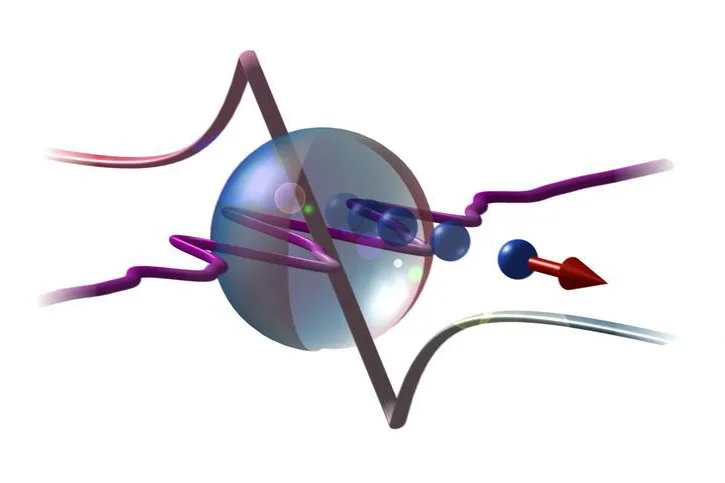
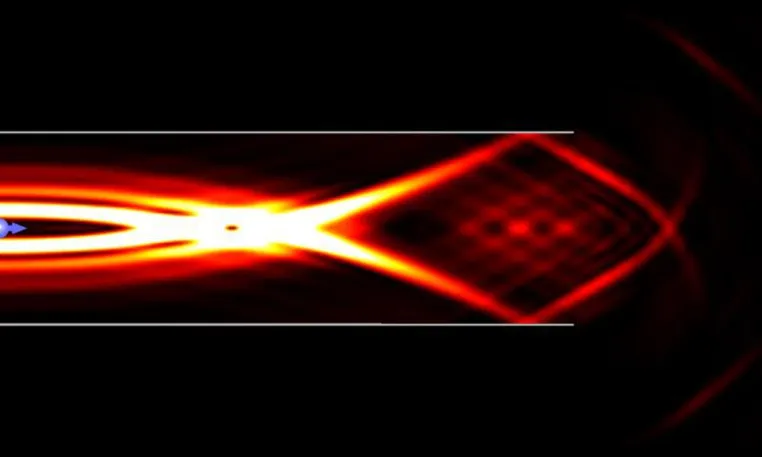
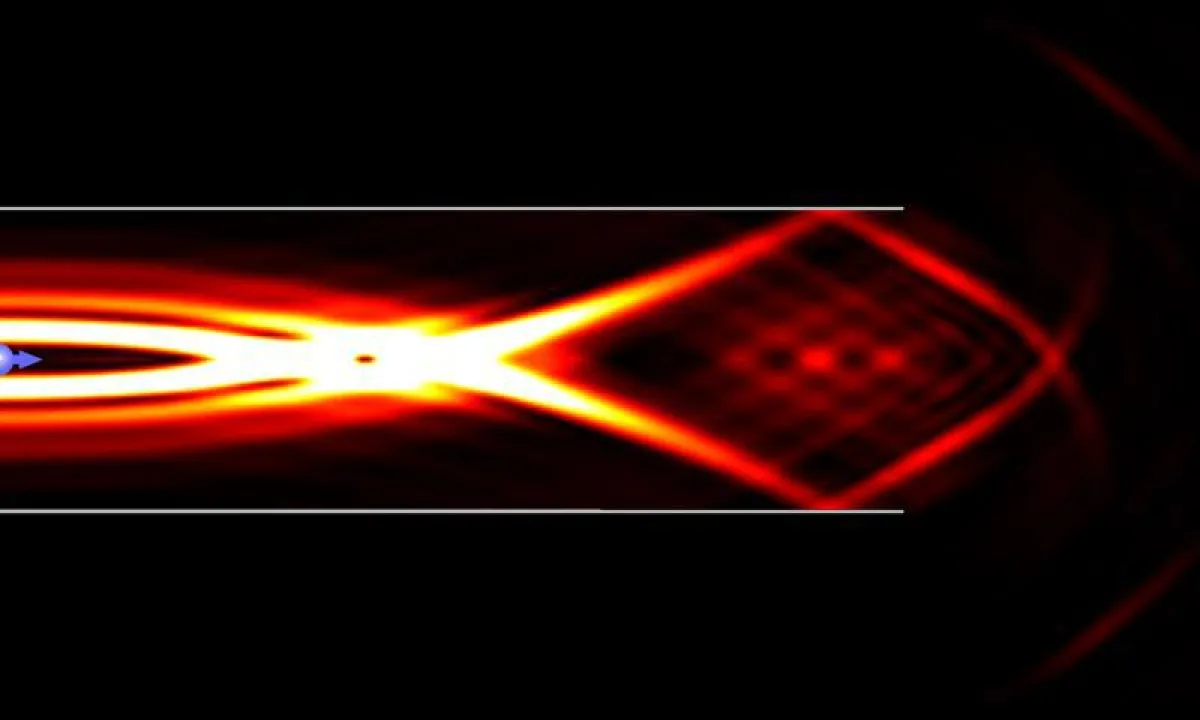
Bild: Physicists Design Ultrafocused Pulses
With this setup arbitrarily focused pulses could be generated (IQOQI Innsbruck)

(openPR) Physicists working with researcher Oriol Romero-Isart devised a new simple scheme to theoretically generate arbitrarily short and focused electromagnetic fields. This new tool could be used for precise sensing and in microscopy.

---
Microwaves, heat radiation, light and X-radiation are examples for electromagnetic waves. Many applications require to focus the electromagnetic fields to small spatiotemporal dimensions. Engineers may use different methods to achieve this. In the journal Physical Review Letters, researchers in Oriol Romero-Isart’s group at the Institute of Quantum Optics and Quantum Information (IQOQI) and the Institute for Theoretical Physics at the University of Innsbruck together with Ignacio Cirac and Theodor Hänsch at the Max Planck Institute of Quantum Optics, Munich, have published a new scheme for generating ultrafocused electromagnetic fields.


Surprising behavior

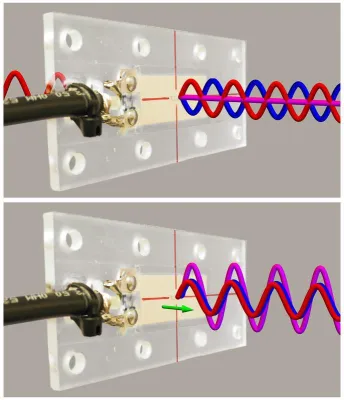
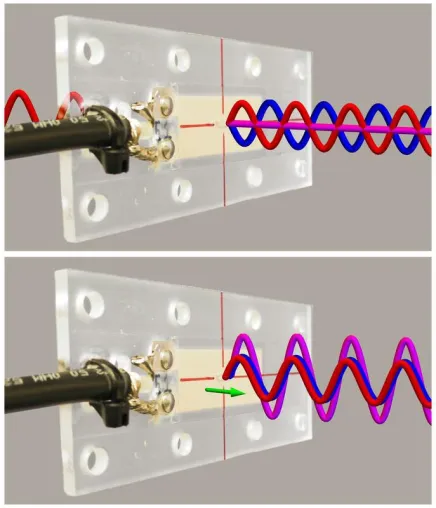
When electric current flows through a coil, it produces electromagnetic waves that propagate in all directions. When the coil is placed inside a cylinder that reflects the waves perfectly a surprising phenomenon happens. “With this setup arbitrarily focused pulses and quasi-equidistant pulses could be generated,” says junior scientist Patrick Maurer. “The more waveguide modes are excited, the more focused the electromagnetic fields become.” The theoretical physicists analytically characterized the system to such a degree that, based on the reflections of the electromagnetic waves on the inside of the cylinder, they were able to design a current pulse that excites a clearly defined number of modes. “Because of the specific properties of the system, the current pulse needs to be adjusted only slightly in order to change the number of modes or, in other words, to focus the field more strongly. The average frequency of the pulse basically remains the same,” explains Jordi Prat-Camps, Postdoc in Romero-Isart’s research team. The spectrum of the generated field is determined by the radius of the cylinder. For example, focused microwave pulses can be generated by using a cylinder that is several centimeters thick.

Technological challenges

The physicists in Innsbruck were able to confirm their analytical calculations with numerical simulations. They showed that the fields kept their unique properties for some time after they exited the cylinder through one of the openings. This new concept is of interest for technological applications that require ultrafocused fields to work. For example, in the field of microscopy this new scheme could facilitate the development of even more precise devices. To implement their scheme, the physicists point out two requirements: “First, we need to find a material that perfectly reflects in a broad frequency range,” says Prat-Camps. “In addition, we have to precisely generate the calculated current pulse. The better these requirements are met, the clearer the visibility of the desired effect will be.”

This work is supported by the European Research Council and the Austrian Federal Ministry of Science, Research, and Economy (BMWFW).

Publication: Ultrafocused Electromagnetic Field Pulses with a Hollow Cylindrical Waveguide P. Maurer, J. Prat-Camps, J. I. Cirac, T. W. Hänsch, O. Romero-Isart. Phys. Rev. Lett. 119, 043904 DOI: 10.1103/PhysRevLett.119.043904 (Preprint: https://arxiv.org/abs/1705.03231)

Contact:
Patrick Maurer
Institute of Quantum Optics and Quantum Information
Austrian Academy of Sciences
phone: +43 512 507 4731
email: E-Mail

web: https://iqoqi.at/en/group-page-romero-isart

Christian Flatz
Public Relations
Phone: +43 676 872532022
Email: E-Mail

Weitere Informationen:
- http://dx.doi.org/10.1103/PhysRevLett.119.043904 - Ultrafocused Electromagnetic Field Pulses with a Hollow Cylindrical Waveguide P. Maurer, J. Prat-Camps, J. I. Cirac, T. W. Hänsch, O. Romero-Isart. Phys. Rev. Lett. 119, 043904
- http://iqoqi.at/en/group-page-romero-isart - Quantum Nanophysics, Optics and Information

Quelle: idw

Diese Pressemeldung wurde auf openPR veröffentlicht.

Verantwortlich für diese Pressemeldung:

News-ID: 960792
 367

Kostenlose Online PR für alle

Jetzt Ihren Pressetext mit einem Klick auf openPR veröffentlichen

Jetzt gratis starten

Pressebericht „Physicists Design Ultrafocused Pulses“ bearbeiten oder mit dem "Super-PR-Sparpaket" stark hervorheben, zielgerichtet an Journalisten & Top50 Online-Portale verbreiten:

PM löschen PM ändern
Disclaimer: Für den obigen Pressetext inkl. etwaiger Bilder/ Videos ist ausschließlich der im Text angegebene Kontakt verantwortlich. Der Webseitenanbieter distanziert sich ausdrücklich von den Inhalten Dritter und macht sich diese nicht zu eigen. Wenn Sie die obigen Informationen redaktionell nutzen möchten, so wenden Sie sich bitte an den obigen Pressekontakt. Bei einer Veröffentlichung bitten wir um ein Belegexemplar oder Quellenennung der URL.

Pressemitteilungen KOSTENLOS veröffentlichen und verbreiten mit openPR

Stellen Sie Ihre Medienmitteilung jetzt hier ein!

Jetzt gratis starten

Weitere Mitteilungen von Universität Innsbruck

Bild: Peter Zoller erhält Lamb-AwardBild: Peter Zoller erhält Lamb-Award
Peter Zoller erhält Lamb-Award
In dieser Woche wird Quanten-Vordenker Peter Zoller in den USA mit den 2018 Willis Lamb Award for Laser Physics and Quantum Optics ausgezeichnet. Die Verleihung findet am Mittwoch im Rahmen des Winterkolloquiums der Physics-of-Quantum-Electronics-Konferenz in Snowbird, Utah, statt. Neben Zoller werden auch der Chinese Jian-Wei Pan und der Deutsche Ernst Rasel ausgezeichnet. --- Die Auszeichnung ist nach dem amerikanischen Physik-Nobelpreisträger Willis Eugene Lamb, Jr. benannt, der auf zahlreichen Gebieten der Physik und Technologie wesentli…
Bild: Mit nachgebauten Naturstoffen gegen BakterienBild: Mit nachgebauten Naturstoffen gegen Bakterien
Mit nachgebauten Naturstoffen gegen Bakterien
Mit chemisch nachgebauten Naturstoffen will Thomas Magauer von der Universität Innsbruck Mittel gegen die weltweit zunehmenden Antibiotikaresistenzen finden. Biologische Analysen einer Gruppe von erstmals systematisch hergestellten Molekülen zeigen eine vielversprechende Wirkung zum Beispiel gegen die multiresistenten MRSA-Keime. Die synthetisch erzeugten Wirkstoffe lassen sich zudem chemisch weiter optimieren. --- Durch den ungehemmten Einsatz von Antibiotika entwickeln Krankheitskeime immer häufiger Resistenzen. Seit der Entdeckung von Pen…

Das könnte Sie auch interessieren:

Bild: An international team of physicists a coherent amplification effect in laser excited dielectricsBild: An international team of physicists a coherent amplification effect in laser excited dielectrics
An international team of physicists a coherent amplification effect in laser excited dielectrics
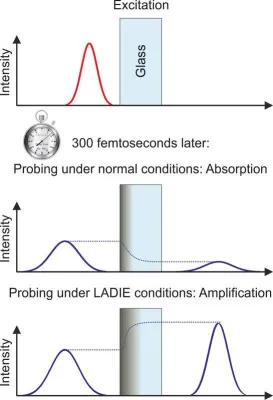
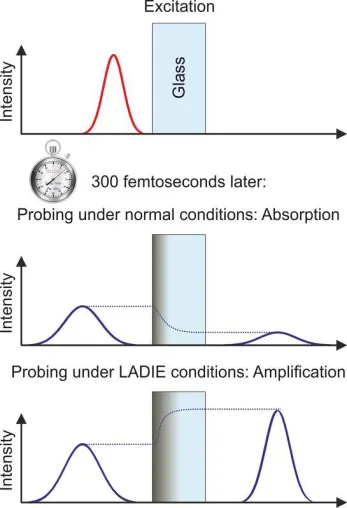
An international team of physicists from the University of Kassel, led by Prof. Thomas Baumert, and the University of Aarhus, led by Prof. Peter Balling, discovered that ultra-short laser pulses are amplified in a laser excited piece of glass. This amplification, similar to a classical laser, is directed and of coherent nature. By utilizing theoretical …
Bild: Abrupt motion sharpens x-ray pulsesBild: Abrupt motion sharpens x-ray pulses
Abrupt motion sharpens x-ray pulses
Spectrally narrow x-ray pulses may be “sharpened” by purely mechanical means. This sounds surprisingly, but a team of theoretical and experimental physicists developed and realized such a method. It is based on fast motions, precisely synchronized with the pulses, of a target interacting with the x-ray light. Thereby, photons are redistributed within …
Bild: Physiker designen ultrascharfe PulseBild: Physiker designen ultrascharfe Pulse
Physiker designen ultrascharfe Pulse
… Effekt zu sehen sein.” Gefördert wurde die Arbeit unter anderem vom Europäischen Forschungsfonds ERC und dem österreichischen Bundesministerium für Wissenschaft, Forschung und Wirtschaft. Publikation: Ultrafocused Electromagnetic Field Pulses with a Hollow Cylindrical Waveguide P. Maurer, J. Prat-Camps, J. I. Cirac, T. W. Hänsch, O. Romero-Isart. Phys. …
Bild: Nanomagnets Levitate Thanks to Quantum PhysicsBild: Nanomagnets Levitate Thanks to Quantum Physics
Nanomagnets Levitate Thanks to Quantum Physics
Quantum physicists in Oriol Romero-Isart’s research group in Innsbruck show in two current publications that, despite Earnshaw’s theorem, nanomagnets can be stably levitated in an external static magnetic field owing to quantum mechanical principles. The quantum angular momentum of electrons, which also causes magnetism, is accountable for this mechanism. --- Already …
Bild: High resolution without particle acceleratorBild: High resolution without particle accelerator
High resolution without particle accelerator
A first for physics – University of Jena physicists are first to achieve optical coherence tomography with XUV radiation at laboratory scale. --- A visit to the optometrist often involves optical coherence tomography. This imaging process uses infrared radiation to penetrate the layers of the retina and examine it more closely in three dimensions, without …
Bild: High-speed Quantum Memory for PhotonsBild: High-speed Quantum Memory for Photons
High-speed Quantum Memory for Photons
Physicists from the University of Basel have developed a memory that can store photons. These quantum particles travel at the speed of light and are thus suitable for high-speed data transfer. The researchers were able to store them in an atomic vapor and read them out again later without altering their quantum mechanical properties too much. This memory …
Bild: Scientists shine new light on the “other high temperature superconductor”Bild: Scientists shine new light on the “other high temperature superconductor”
Scientists shine new light on the “other high temperature superconductor”
… the 20th century, superconductivity had been observed in some metals at temperatures only a few degrees above the absolute zero (minus 273 degrees Celsius). Only in the 1980s, physicists managed to synthetize new classes of compounds, based on ceramic materials, which were able to conduct electricity without any losses at temperatures as high as 138 K …
Bild: Noisy cell membranesBild: Noisy cell membranes
Noisy cell membranes
Rapid information transfer is vital for the inner workings of body tissues. With computer simulations, researchers from Colombia and Germany found that mechanical pulses travel through membranes for biologically relevant distances at the speed of sound. The researchers think that membranes could serve as a tin can telephone for the cell. --- Biological …
Bild: The fastest light-driven current sourceBild: The fastest light-driven current source
The fastest light-driven current source
… principle, to control current. However, this concept has not yet been applied to metals as light cannot usually penetrate the material to control the electrons inside. To avoid this effect, physicists in the working groups of Prof. Dr. Peter Hommelhoff and Prof. Dr. Heiko Weber used graphene – a semimetal consisting of only a single layer of carbon …
Bild: Lightwave controlled nanoscale electron acceleration sets the paceBild: Lightwave controlled nanoscale electron acceleration sets the pace
Lightwave controlled nanoscale electron acceleration sets the pace
Extremely short electron bunches are key to many new applications including ultrafast electron microscopy and table-top free-electron lasers. A german team of physicists from Rostock University, the Max Born Institute in Berlin, the Ludwig-Maxmilians-Universität Munich, and the Max Planck Institute of Quantum Optics in Garching has now shown how electrons …
Sie lesen gerade: Physicists Design Ultrafocused Pulses