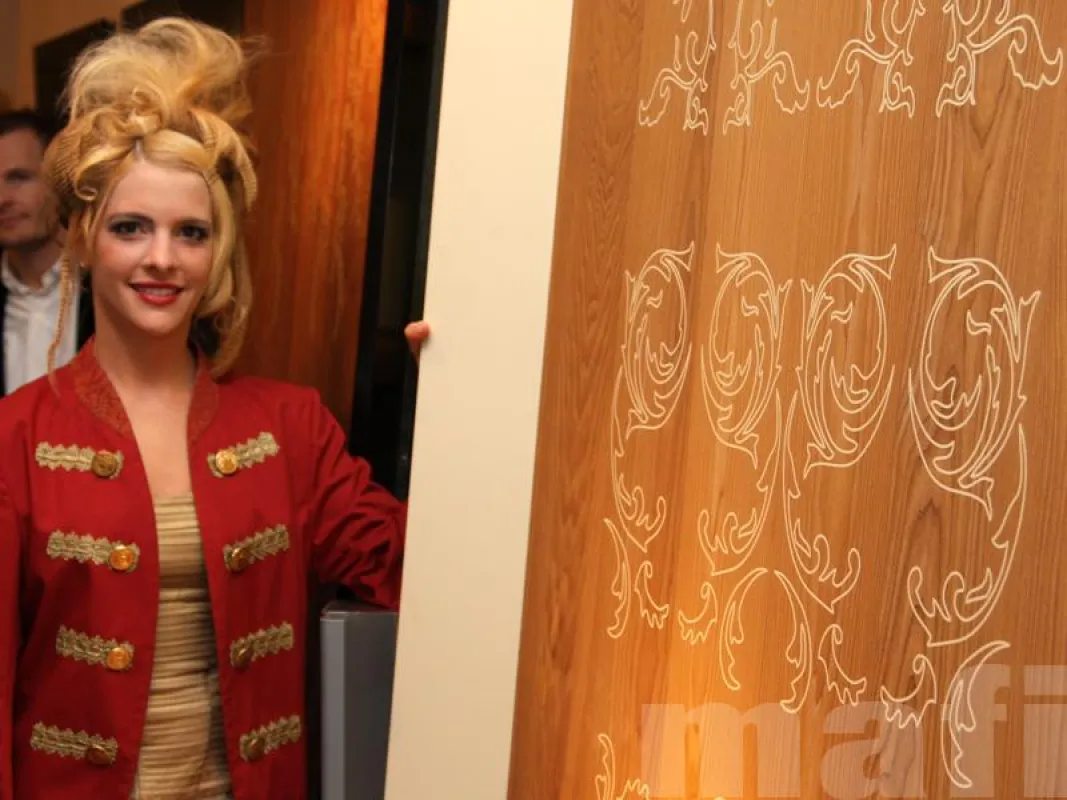
(openPR) Mafi Natural Wood Floors in magnificent baroque design.
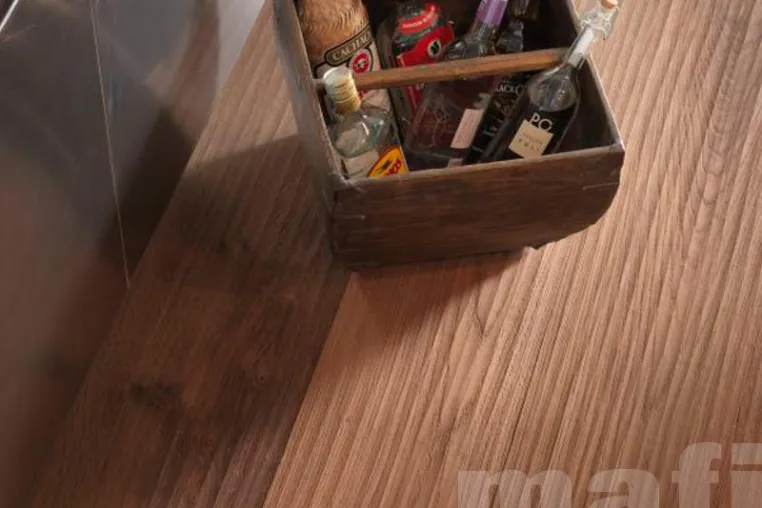
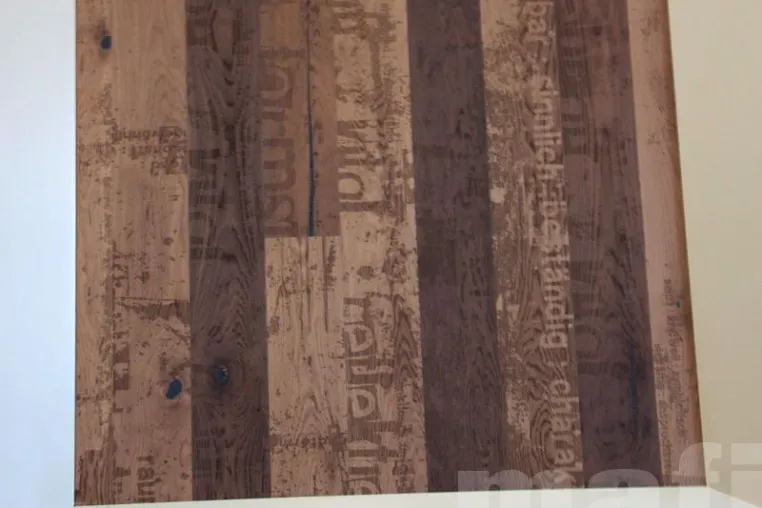
With its product line Mafi Fresco Barock the Upper Austrian manufacturer of quality oiled natural wood floors, already famous on the international life style sector, is expanding its richly varied range by yet another attractive facet. “Fresco Barock is a floor in the style of the French baroque garden, combining grand extravagance with natural elegance,” Christiane Lindner, Mafi’s Junior partner and Marketing Manager puts the characteristics of the family-run company’s new creation into a nutshell. The elaborate appearance is achieved by artful treatment of the plank’s surface using special milling programs. “The result is artistically playful patterns of curves and lines based on the model of the magnificent French castle gardens”, Lindner explains.
French gardens as a model
“The first baroque gardens were laid out in France during the Baroque period, which is where the name comes from. Since the Renaissance the garden has served rulers as a place of pleasure as well as representation of power and wealth”, Lindner tells us and continues: “The castle garden of Vaux-le-Vicomte counts as a milestone in the art of the baroque garden with André Le Nôtre as landscape gardener, the founder of the French style of garden and the most significant landscape gardener during the baroque period. His art served as model for Mafi Barock.” The visionary, who lived and worked in Paris from 1613 until 1700, used what were at the time the latest scientific discoveries of optic and perspective for his garden landscapes. “We are still fascinated today by the optical illusions that arose from baroque art and the impression of eternity associated with them”, Lindner relates, “and this fascination for new and unexpected aspects in old things is also reflected by our customers.”
Renaissance of Baroque
Mafi’s creative masterminds were also inspired by Tricia Guild, baroque icon of the 20th and 21st century, who has gained international success in various spheres of luxury interior decoration with her company, Designers Guild, founded in 1970. Mafi’s innovation Fresco Barock, which is suitable for professional use not only as decoration and accentuation on walls, for example in the form of borders, was presented at Mafi’s flagship store in Salzburg on July 23rd 2008.
In harmony with nature
Individual and extravagant designs are characteristic for Mafi floors. Besides optical diversity, Mafi floors have a number of other advantages, such as longevity, high resistance to wear and tear and dimensional stability. The principle of 'harmony with nature’ is the first priority in Mafi’s business strategy. At the heart of Mafi’s philosophy is lacquer-free, purely natural surface treatment of its floors with renewable raw materials. “This is the only method that allows the wood used to maintain its natural appearance as well as its velvety warmth”, the branch expert is convinced.
Baroque as an era
The era between renaissance and classicism is referred to as the age of baroque, which was between 1575 and 1770 and is divided into early baroque (around 1600–1650), high baroque (around 1650–1720) and late baroque or rococo (approx. 1720–1770). As an art form of absolutism and of counter-reformation the baroque period is characterized by its opulent display of splendour. Commencing in Italy, it first spread to the European Catholic countries before also gaining acceptance in a milder form in Protestant regions. The term 'baroque’ originates from the Portuguese language in which irregularly formed pearls are described as 'barocco’, meaning. 'imperfect’ or 'curious’. In 1855 the word was first used in a positive sense by the prominent Swiss cultural historian Jacob Christoph Burckhardt and at the end of the 19th century it was introduced into everyday usage as a scientific definition of time. (source: wikipedia.org)