openPR Recherche & Suche
Presseinformation

Newly Discovered microRNA Regulates Mobility of Tumor Cells

27.10.201715:00 UhrWissenschaft, Forschung, Bildung
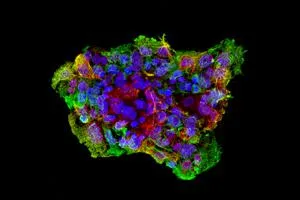
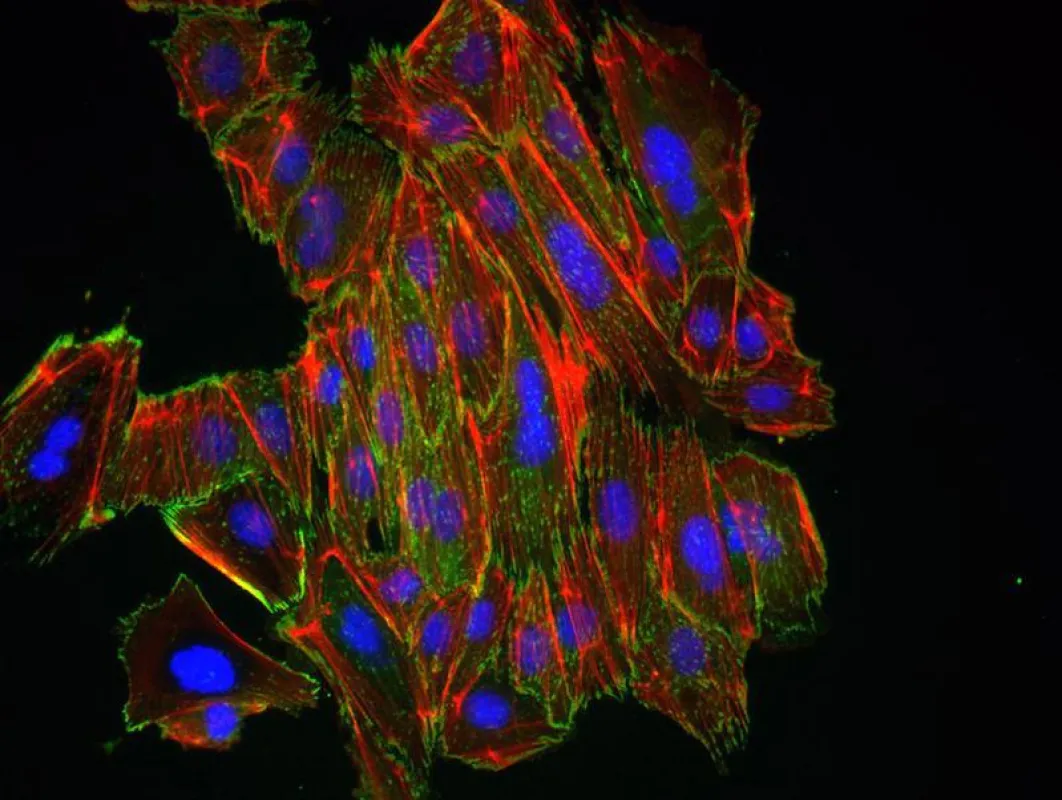
Bild: Newly Discovered microRNA Regulates Mobility of Tumor Cells
Epithelial breast cancer cells following treatment with an EMT activator. (University of Basel, Department of Biomedicine)

(openPR) Cancer cells can reactivate a cellular process that is an essential part of embryonic development. This allows them to leave the primary tumor, penetrate the surrounding tissue and form metastases in peripheral organs. In the journal Nature Communications, researchers from the University of Basel’s Department of Biomedicine provide an insight into the molecular networks that regulate this process.


---
During an embryo’s development, epithelial cells can break away from the cell cluster, modify their cell type-specific properties, and migrate into other regions to form the desired structures there. This process, which is known as an epithelial–mesenchymal transition (EMT), is reversible and can also proceed in the direction from mesenchymal cells to epithelial cells (MET). It is repeated multiple times during embryonic development and ultimately paves the way for the formation of organs in the human body.

Tumor cells can reactivate the program

Although this is a completely normal process during embryogenesis, it also plays an important role in the spread of tumor cells within the body and in the formation of metastases. As a result, this cellular program has also attracted greater attention in the field of tumor research in recent years.

Tumor cells are able to reactivate the EMT/MET program. By doing so, they obtain characteristics of stem cells and develop increased resistance to not only classical but also state-of-the-art targeted cancer therapies.

An EMT also makes it easier for cancer cells to break away from the primary tumor, to penetrate into surrounding tissue and into blood vessels, to spread throughout the body and to form metastases in distant organs, which is ultimately responsible for the death of most cancer patients.

The research group, led by Professor Gerhard Christofori from the University of Basel’s Department of Biomedicine, researches the molecular processes that regulate the cellular EMT program. By doing so, they aim to demonstrate new intervention strategies to combat the development of malignant tumors and the formation of metastases – such as in the case of breast cancer, one of the most common and malicious diseases in women.

Newly discovered microRNA inhibits EMT

In a study published in the latest edition of Nature Communications, the researchers focused specifically on microRNAs (miRNAs), a class of very short non-coding RNAs with a considerable effect on gene regulation. They identified a hitherto unknown microRNA, miR-1199-5p, that induces epithelial cell behavior and impedes the malignancy of tumor cells, as well as their potential to form secondary tumors.

In concrete terms, the newly discovered microRNA prevents the synthesis of a specific protein, the transcription factor Zeb1, which activates EMT/MET – but if it is missing, the EMT process is prevented. Zeb1 also suppresses the expression of miR1199-5p in what is known as a negative feedback loop, whereby the two molecules regulate one another reciprocally.

More and more often, molecular switches of this kind are being found within processes that cause cells to alter or lose their cell type-specific properties. They appear to be responsible for a rapid, reversible cellular response to extracellular stimuli.

In the future, these insights into the molecular networks for regulating EMT/MET plasticity may allow the development of new strategies for the treatment of breast cancer.

Original source

Maren Diepenbruck, Stefanie Tiede, Meera Saxena, Robert Ivanek, Ravi Kiran Reddy Kalathur, Fabiana Luönd, Nathalie Meyer-Schaller und Gerhard Christofori
miR-1199-5p and Zeb1 function in a double-negative feedback loop potentially coordinating EMT and tumour metastasis
Nature Communications (2017), doi: 10.1038/s41467-017-01197-w

Further information

Prof. Dr. Gerhard Christofori, University of Basel, Department of Biomedicine, Tel. +41 61 207 35 62, email: E-Mail

Weitere Informationen:
- https://www.unibas.ch/en/News-Events/News/Uni-Research/Newly-Discovered-microRNA-Regulates-Mobility-of-Tumor-Cells.html

Quelle: idw

Diese Pressemeldung wurde auf openPR veröffentlicht.

Verantwortlich für diese Pressemeldung:

News-ID: 977109
 516

Kostenlose Online PR für alle

Jetzt Ihren Pressetext mit einem Klick auf openPR veröffentlichen

Jetzt gratis starten

Pressebericht „Newly Discovered microRNA Regulates Mobility of Tumor Cells“ bearbeiten oder mit dem "Super-PR-Sparpaket" stark hervorheben, zielgerichtet an Journalisten & Top50 Online-Portale verbreiten:

PM löschen PM ändern
Disclaimer: Für den obigen Pressetext inkl. etwaiger Bilder/ Videos ist ausschließlich der im Text angegebene Kontakt verantwortlich. Der Webseitenanbieter distanziert sich ausdrücklich von den Inhalten Dritter und macht sich diese nicht zu eigen. Wenn Sie die obigen Informationen redaktionell nutzen möchten, so wenden Sie sich bitte an den obigen Pressekontakt. Bei einer Veröffentlichung bitten wir um ein Belegexemplar oder Quellenennung der URL.

Pressemitteilungen KOSTENLOS veröffentlichen und verbreiten mit openPR

Stellen Sie Ihre Medienmitteilung jetzt hier ein!

Jetzt gratis starten

Weitere Mitteilungen von Universität Basel

Bild: Bei Zuckermangel in der Zelle leben Boten-RNAs längerBild: Bei Zuckermangel in der Zelle leben Boten-RNAs länger
Bei Zuckermangel in der Zelle leben Boten-RNAs länger
Leidet eine Zelle unter Zuckermangel, speichert sie bestimmte Boten-RNAs, um so ihr Leben zu verlängern. Wie eine Forschungsgruppe am Biozentrum der Universität Basel nun herausfand, entscheidet das Protein Puf5p bei Zuckermangel in der Zelle darüber, ob eine Boten-RNA aufbewahrt oder abgebaut wird. Wie die in eLife veröffentlichte Studie zeigt, schickt das Protein die Boten-RNAs dazu in eine Zellorganelle, wo ihr Schicksal besiegelt wird. --- Ist eine Zelle Stress ausgesetzt, sei es durch Mangel an Nährstoffen oder einem Zuviel an Spurenele…
Akshay Venkatesh erhält Ostrowski-Preis für höhere Mathematik
Der US-Mathematiker Akshay Venkatesh erhält den mit 100'000 Franken dotierten internationalen Ostrowski-Preis für höhere Mathematik 2017. Die Auszeichnung geht auf den Mathematikprofessor Alexander M. Ostrowski zurück, der an der Universität Basel gelehrt hat. --- Akshay Venkatesh, Professor an der Stanford University, erhält die Auszeichnung für seine bahnbrechenden Leistungen auf den Gebieten der Zahlentheorie, der Theorie der automorphen Formen, der Repräsentationstheorie, der homogenen Dynamik und der arithmetischen Geometrie. Ein wicht…

Das könnte Sie auch interessieren:

How Blood Vessels Are Formed
New insights into the development of the vascular system: researchers in the team of Dr Carmen Ruiz de Almodóvar of the Heidelberg University Biochemistry Center have discovered a crucial biological step that regulates the formation of blood vessels. They were able to show that the proteins YAP and TAZ play an important role in this process. The new …
Bild: New approach for treatment of contact allergyBild: New approach for treatment of contact allergy
New approach for treatment of contact allergy
… in other inflammatory diseases such as arthritis or arteriosclerosis. The results will soon be published in the journal Molecular Therapy, but are already available online. --- The newly discovered substance is a so-called RNA aptamer. Aptamers are molecules that are related to DNA, the carrier of the genetic information in our cells. They can specifically …
Bild: New Inhibitor Brings New HopeBild: New Inhibitor Brings New Hope
New Inhibitor Brings New Hope
… a huge role in the development and progression of cancer. Schüle and his team have already conducted well-known studies on the epigenetic regulator LSD1. Now, they have discovered that an inhibitor of the epigenetic regulator KDM4 shows great promise in modulating breast cancer stem cell pathology. They were able to block proliferation of several cancer …
Bild: How protein islands formBild: How protein islands form
How protein islands form
… Instead, they are bundled together in organized protein islands that coalesce as soon as a foreign substance is bound to a B cell receptor. Minguet and her team have discovered that the protein Caveolin-1 regulates this organization, making it the key to activation of the B cells and the triggering of an immune response. Without Caveolin-1, the binding …
Oestrogen regulates pathological changes of bones via bone lining cells
… certain cell type as a “mediator” for its beneficial effects on bone. When oestrogen binds to these so-called “bone lining cells”, which cover the bone surfaces, it regulates the expression of a protein called RANKL in these cells. Oestrogen deficiency leads to uncontrolled expression of RANKL, which can trigger pathological changes in the bones. Published …
Bild: A Protein that Extends Life of Yeast CellsBild: A Protein that Extends Life of Yeast Cells
A Protein that Extends Life of Yeast Cells
To understand and control aging is the aspiration of many scientists. Researchers at the Biozentrum of the University of Basel have now discovered that the protein Gcn4 decreases protein synthesis and extends the life of yeast cells. Understanding how individual genes affect lifespan opens new ways to control the aging process and the occurrence of aging-related …
From Dr. Jekyll to Mr. Hyde of cancer immunotherapy
… also frequently fail. The underlying mechanisms are incompletely understood. An international research team led by the University Hospitals of Magdeburg and Bonn has now discovered a previously unrecognized braking mechanism that limits the efficacy of cancer immunotherapies. The results are published in the renowned journal ‘Immunity’ and provide a …
Bild: How Obesity Promotes Breast CancerBild: How Obesity Promotes Breast Cancer
How Obesity Promotes Breast Cancer
… significantly reduced metastatic spread of breast cancer tumors in an experimental model. In the future, the researchers want to substantiate the data on the newly discovered mechanism in further studies. In addition, they are also considering related intervention points that could possibly be exploited therapeutically. “Blocking the signaling pathways and …
Shedding Light on Cause of Resistance to Tumor Immunotherapy
… is that with time cancer cells become resistant to the triggered immune responses. Now researchers of the University of Zurich and the University Hospital Zurich have discovered a mechanism that plays a central role in the development of this resistance. Immune cells do not detect resistant cancer cells Cancer cells develop resistance by downregulating …
Distant Relatives: TOR Protein Regulates Cell Growth in Plants and Animals
… TOR protein. In human and animal cells, TOR acts as a signal generator that controls both survival and cell growth. The Heidelberg researchers have now discovered how this protein also functions as a growth regulator in plants. --- Press Release Heidelberg, 27 October 2017 Distant Relatives: TOR Protein Regulates Cell Growth in Plants and Animals Plant …
Sie lesen gerade: Newly Discovered microRNA Regulates Mobility of Tumor Cells