openPR Recherche & Suche
Presseinformation

Climate policy underestimates moral responsibility of polluters

23.10.201711:02 UhrWissenschaft, Forschung, Bildung

(openPR) Environmental and climate policy tends to overlook a phenomenon that has long since been recognized in behavioral economics: that people are driven not only by effectively reaching a goal but also by their moral responsibility. This was shown in a new study by researchers from the Mercator Research Institute on Global Commons and Climate Change (MCC) and the Wissenschaftszentrum Berlin für Sozialforschung (WZB), published in the renowned Journal of Public Economics.


---
In an experiment performed as part of the study, most participants preferred to clean up a “mess” which they caused themselves rather than having this task done by a partner—even if that would have been much more profitable for both of them. The behavioral economics behind such phenomena is increasingly gaining recognition. It was only recently that Richard H. Thaler was honored with the Nobel Prize in Economics for having expanded economic theory to include psychological approaches that describe human behavior.

The results from the MCC and the WZB are highly relevant for the design of climate policy instruments, such as a possible reform of the EU Emissions Trading System (EU ETS). The system envisages that CO2 emissions be limited by the allocation of a fixed quantity of tradable allowances. Through this trade, emissions can be saved where this is economically most efficient. At the same time, companies with high mitigation costs are able to buy certificates and thereby compensate their emissions instead of adapting their behavior towards reducing emissions.

The possibility to buy oneself out of the obligation to reduce emissions sometimes faces moral criticism by researchers, politicians and also by the Catholic Church. “Emissions trading is sometimes labeled as a kind of indulgence trade,” says WZB researcher Roel van Veldhuizen. “This points to a tension between economic efficiency and moral values.”

In order to answer the underlying questions, the researchers from the MCC and the WZB divided a group of 60 students from the Technical University of Berlin into pairs of two. One person from each pair was then asked to throw chickpeas into a bowl, whereby most missed the target and “polluted” the environment. Afterwards, that person had to take responsibility for his or her action and clean up. However, the person was also given the option of leaving that task to the team partner. In that case, both would have earned twice as much as if the polluter would have cleaned up. Yet, although both understood to gain from this option, 60 percent of the “chickpea throwers” decided against it. In a subsequent survey, many of them agreed with the sentence: “Individual responsibility plays a very important role in the fight against climate change.”

In order to determine the influence of individual responsibility, the researchers also examined a control group. With all other factors being equal, the chickpeas were already scattered on the ground at the beginning of the experiment, such that there was no “polluter.” Here, only 30 percent of the participants decided to clean up themselves. The statistically significant difference between this result and the 60 percent of participants who assumed responsibility for picking up the chickpeas from the floor can thus be attributed to the influence of individual responsibility.

The researchers, however, warn against playing out moral responsibility and economics against each other. “The lessons from this experiment should certainly not be that we should throw our morals overboard because they aren’t economically efficient,” says Jan Steckel of the MCC. “Rather, policy makers should incorporate moral values into their choice of policy instruments. This could mean that under certain circumstances a carbon tax might be easier to communicate than emissions trading.”

Against this backdrop, the researchers advocate that the relationship between individual responsibility on the one hand and collective responsibility on the other be taken more into account when designing climate policy. “In the face of long-term and extremely complex problems such as climate change, we are obviously transferring moral concepts acquired at the individual level,” says WZB researcher Dorothea Kübler. To which Michael Jakob from the MCC adds: “However, there are moral standards that even hinder the implementation of economically efficient solutions, instead of fomenting them. Here we need to expand the adequate concepts of ethical accountability for global and intergenerational problems such as climate change.”

Reference of the cited article:
Jakob, Michael; Kübler, Dorothea; Steckel, Jan Christoph; van Veldhuizen, Roel (2017): Clean up your own mess: An experimental study of moral responsibility and efficiency. Journal of Public Economics. 10.1016/j.jpubeco.2017.09.010

Weitere Informationen:
- http://www.mcc-berlin.net
- http://www.sciencedirect.com/science/article/pii/S0047272717301536?via%3Dihub

Quelle: idw

Diese Pressemeldung wurde auf openPR veröffentlicht.

Verantwortlich für diese Pressemeldung:

News-ID: 975780
 351

Kostenlose Online PR für alle

Jetzt Ihren Pressetext mit einem Klick auf openPR veröffentlichen

Jetzt gratis starten

Pressebericht „Climate policy underestimates moral responsibility of polluters“ bearbeiten oder mit dem "Super-PR-Sparpaket" stark hervorheben, zielgerichtet an Journalisten & Top50 Online-Portale verbreiten:

PM löschen PM ändern
Disclaimer: Für den obigen Pressetext inkl. etwaiger Bilder/ Videos ist ausschließlich der im Text angegebene Kontakt verantwortlich. Der Webseitenanbieter distanziert sich ausdrücklich von den Inhalten Dritter und macht sich diese nicht zu eigen. Wenn Sie die obigen Informationen redaktionell nutzen möchten, so wenden Sie sich bitte an den obigen Pressekontakt. Bei einer Veröffentlichung bitten wir um ein Belegexemplar oder Quellenennung der URL.

Pressemitteilungen KOSTENLOS veröffentlichen und verbreiten mit openPR

Stellen Sie Ihre Medienmitteilung jetzt hier ein!

Jetzt gratis starten

Weitere Mitteilungen von Mercator Research Institute on Global Commons and Climate Change (MCC) gGmbH

Stiftung Mercator fördert Klimainstitut MCC mit weiteren zwölf Mio. Euro bis 2024
Die Wissenschaftliche Exzellenz, die thematische Fokussierung auf die globalen Gemeinschaftsgüter sowie die Politikberatung durch Assessment-Prozesse haben sich ausgezahlt: Das Mercator Research Institute on Global Commons and Climate Change (MCC) wird bis einschließlich 2024 mit weiteren 12,15 Millionen Euro finanziert. Die Stiftung Mercator hat jüngst beschlossen, das Institut ab 2019 mit etwa zwei Millionen Euro pro Jahr weiter zu fördern. 2012 war das MCC gemeinsam durch die Stiftung Mercator und das Potsdam-Institut für Klimafolgenforsch…
Stiftung Mercator funds climate institute MCC with a further €12 million until 2024
Scientific excellence, the thematic focus on global commons and the policy advice through assessment processes have paid off: The Mercator Research Institute on Global Commons and Climate Change (MCC) will be financed up to and including 2024 with a further €12.15 million. Stiftung Mercator (foundation) decided to continue to fund the institute from 2019, with around €2 million per year. The MCC was jointly founded in 2012 by Stiftung Mercator and the Potsdam Institute for Climate Impact Research (PIK). --- The decision is based on an evalua…

Das könnte Sie auch interessieren:

Bild: Das erste Climate Tech Magazin (Technologien gegen den Klimawandel) ist erschienenBild: Das erste Climate Tech Magazin (Technologien gegen den Klimawandel) ist erschienen
Das erste Climate Tech Magazin (Technologien gegen den Klimawandel) ist erschienen
Die erste Ausgabe des nun regelmäßig erscheinenden Climate Tech Magazins (Print & Online) ist da. Die Themen dieser Ausgabe sind der stark wachsende Climate Tech Markt und Climate Tech Venture Capital (Übermorgen Ventures), Climate Tech Lösungen (Climeworks, Kraftblock, Delicious Data, Easy Smart Grid, Planted, Lumenaza und neustark) und Beiträge …
The IASS at the World Climate Conference in Bonn
From 6 to 17 November, delegates at the 23rd United Nations Climate Change Conference (COP23) will be working on the rulebook for the implementation of the Paris climate goals. A team of experts from the Institute for Advanced Sustainability Studies (IASS) is at the conference to encourage discussion on the following central questions: What role does …
Bild: Neues Informationsportal zu Climate Tech, Technologien gegen den Klimawandel, geht onlineBild: Neues Informationsportal zu Climate Tech, Technologien gegen den Klimawandel, geht online
Neues Informationsportal zu Climate Tech, Technologien gegen den Klimawandel, geht online
07.12.2020 - Climate-Tech.de, ein neues Informationsportal zu Technologien gegen den Klimawandel, geht online. Climate Tech, das sind Technologien, die sich explizit auf die Reduzierung von Treibhausgas-Emissionen (u.a. CO2, Methan) und auf die Auswirkungen des Klimawandels beziehen. Auf Climate-Tech.de findet man erstmalig Climate Tech Start-Ups und …
Bild: Michel Montecrossa's CD 'What Can We Do To Change The Climate Change?' für die UN Klimakonferenz 2015 in ParisBild: Michel Montecrossa's CD 'What Can We Do To Change The Climate Change?' für die UN Klimakonferenz 2015 in Paris
Michel Montecrossa's CD 'What Can We Do To Change The Climate Change?' für die UN Klimakonferenz 2015 in Paris
Mit der Audio-CD und DVD ‘What Can We Do To Change The Climate Change?‘ veröffentlicht Mira Sound Germany Michel Montecrossa’s New-Topical-Song, den er der Klimakonferenz der Vereinten Nationen in Paris sowie alle Opfer des Klimawandels widmet. Michel Montecrossa ist der New-Topical-Songwriter, der Mirapuri gegründet hat - die Stadt des Friedens und …
Bild: Jan Minx appointed professor in LeedsBild: Jan Minx appointed professor in Leeds
Jan Minx appointed professor in Leeds
Jan Christoph Minx, head of the working group “Applied Sustainability Science” at the Mercator Research Institute on Global Commons and Climate Change (MCC), has been appointed a professorship at the Priestley International Centre for Climate. The centre was founded in 2015 by the University of Leeds to bring together world leading expertise in the field …
Bild: Climate Engineering: A Tool for Climate Protection?Bild: Climate Engineering: A Tool for Climate Protection?
Climate Engineering: A Tool for Climate Protection?
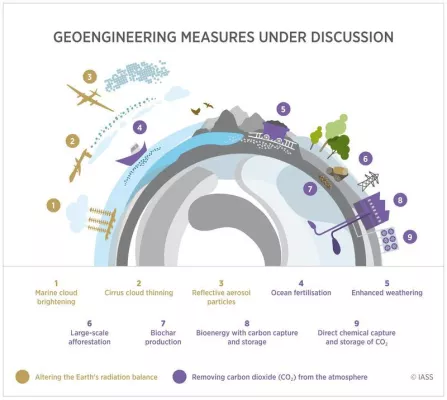
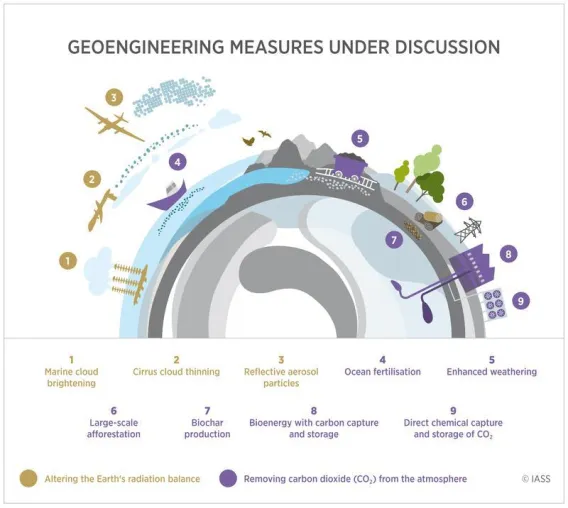
International experts will debate controversial interventions in the Earth System at the Climate Engineering Conference 2017 in October Is climate engineering necessary in order to protect the climate and successfully implement the Paris Agreement? What are the potential risks and side effects of climate engineering, and who would govern its use? International …
Bild: Climate Art Design WettbewerbBild: Climate Art Design Wettbewerb
Climate Art Design Wettbewerb
Die Design Contest Plattform "A better tomorrow" und Climate Art rufen zum gemeinsamen Wettbewerb. Gesucht wird ein T-Shirt Design für Climate Art. Was ist Climate Art? Climate Art setzt sich für Klimaveränderung und Klimaschutz im doppelten Sinne ein. Zum nachhaltigen Erhalt der Gesellschaft und unserer Natur. Wertschöpfung durch Wertschätzung ist ein …
Bild: imug rating tritt ausgewähltem Kreis an Climate Bonds Approved Verifiers beiBild: imug rating tritt ausgewähltem Kreis an Climate Bonds Approved Verifiers bei
imug rating tritt ausgewähltem Kreis an Climate Bonds Approved Verifiers bei
Hannover/London 13.10.2022imug rating, der führende deutsche Anbieter für Strategie und Umsetzung von ESG-Investments sowie für Nachhaltigkeitsbewertungen, wurde vom Climate Bonds Standard Board für die Erbringung von Verifizierungsdienstleistungen im Rahmen des Climate Bonds Standard zugelassen. Der Status „Approved Verified“ wurde am 8. Juli 2022 verliehen. …
Bild: Michel Montecrossa widmet ‘What Can We Do To Change The Climate Change?’ Fridays for Future & Greta ThunbergBild: Michel Montecrossa widmet ‘What Can We Do To Change The Climate Change?’ Fridays for Future & Greta Thunberg
Michel Montecrossa widmet ‘What Can We Do To Change The Climate Change?’ Fridays for Future & Greta Thunberg
Michel Montecrossa’s New-Topical-Song ‘What Can We Do To Change The Climate Change?’, veröffentlicht von Mira Sound Germany auf Audio-CD, DVD sowie als Download, ist Fridays for Future und Greta Thunberg gewidmet sowie allen Opfern des Klimawandels. Michel Montecrossa ist der New-Topical-Songwriter, der Mirapuri gegründet hat - die Stadt des Friedens …
Bild: Michel Montecrossa's CD What Can We Do To Change The Climate Change? ausgelöst durch Mega-Taifun und TornadosBild: Michel Montecrossa's CD What Can We Do To Change The Climate Change? ausgelöst durch Mega-Taifun und Tornados
Michel Montecrossa's CD What Can We Do To Change The Climate Change? ausgelöst durch Mega-Taifun und Tornados
Mit der Audio-CD und DVD ‘What Can We Do To Change The Climate Change?‘ veröffentlicht Mira Sound Germany Michel Montecrossa’s New-Topical-Song, der allen Opfern des Klimawandels gewidmet ist: von den Philippinen bis zu den U.S.A. und überall. Michel Montecrossa ist der New-Topical-Songwriter, der Mirapuri gegründet hat - die Stadt des Friedens und des …
Sie lesen gerade: Climate policy underestimates moral responsibility of polluters