 openPR bei Google bevorzugen.
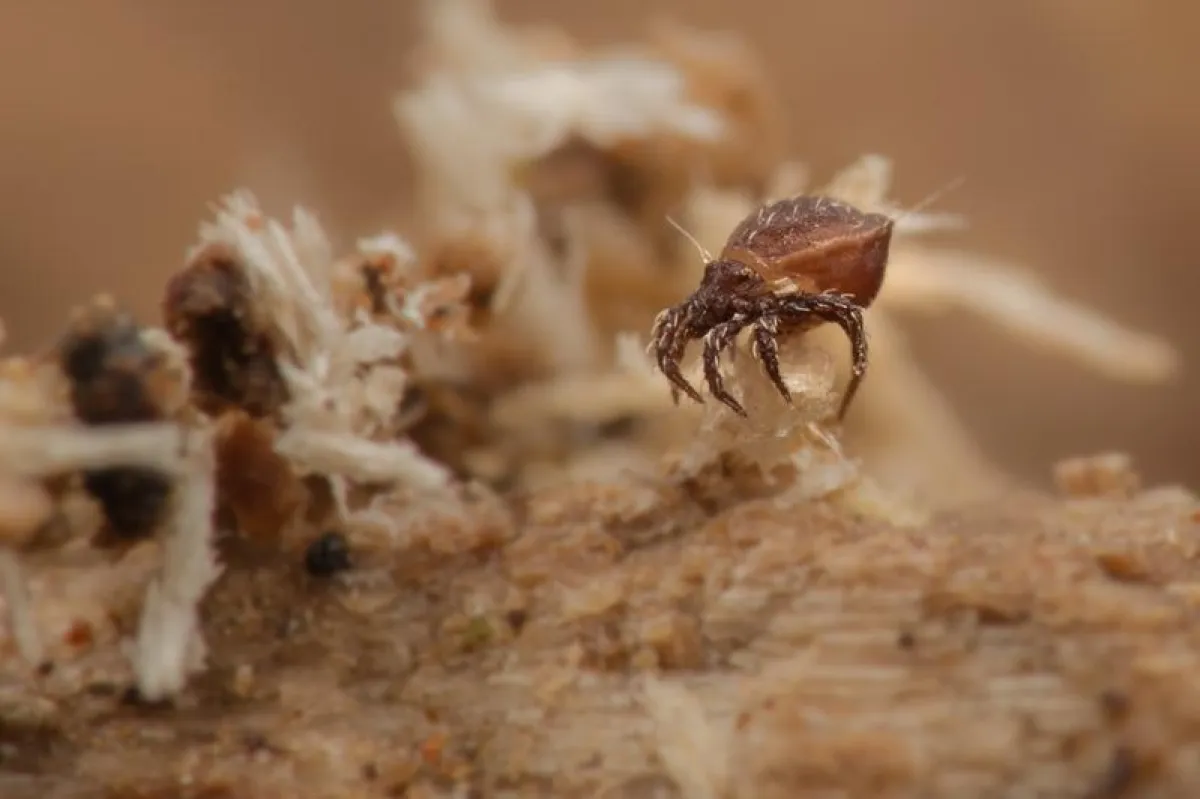
(openPR) Sexual reproduction is linked to various benefits for the survival of a species. Amongst others, sex counters the accumulation of accidentally occurring deleterious mutations by allowing for exchange of genetic material. According to the scientific consensus, loss of sex in favour of clonal reproduction leads to a stepwise accumulation of deleterious mutations, which eventually causes extinction of a species. Now scientists of the Universities of Göttingen and Lausanne found out, that ancient asexual oribatid mites are more effective in purging deleterious mutations as compared to their sexual relatives. The results are reported in the current issue of Nature Communications.
---
Pressemitteilung
Nr. 200/2017
No sex, no problem!
Biologists from Goettingen analyse how loss of sex affects the genetic makeup of oribatid mites
(pug) Sexual reproduction is linked to various benefits for the survival of a species. Amongst others, sex counters the accumulation of accidentally occurring deleterious mutations by allowing for exchange of genetic material. According to the scientific consensus, loss of sex in favour of clonal reproduction leads to a stepwise accumulation of deleterious mutations, which eventually causes extinction of a species. Now scientists of the Universities of Göttingen and Lausanne found out, that ancient asexual oribatid mites are more effective in purging deleterious mutations as compared to their sexual relatives. The results are reported in the current issue of Nature Communications.
“Up to now, experimental evidence is scarce and restricted to species that lost sex in recent times”, says Alexander Brandt, first author of the study, who works in the animal ecology group at the Johann-Friedrich-Blumenbach Institute of Zoology and Anthropology of Göttingen University. To unravel the consequences of loss of sex in the long term, the scientists have sequenced and analysed the genetic makeup of various sexual and ancient asexual oribatid mites. The findings are surprising: ancient asexual oribatid mites are more effective in purging deleterious mutations as compared to their sexual relatives.
“Oribatid mites are well suited for analysing the long-term consequences of asexual reproduction, as within this animal group, sex was lost millions of years ago several times independently”, explains Dr. Jens Bast, research fellow at the University of Lausanne and senior author of the study. “The discovery of asexual oribatid mites purging deleterious mutations more effectively as compared to their sexual relatives indicates the existence of a certain peculiarity in oribatid mites which enables them to survive without sex in evolutionary time scales”, adds Brandt.
So far, scientists can only speculate about the nature of the peculiarity: the population sizes of oribatid mites may play a role. The number of animals that make a population has, just like mixing up the genomic makeup, a strong influence on how effective natural selection counters the accumulation of deleterious mutations. The fact that populations of asexual oribatid mites are on average substantially larger as compared to sexual species indicates that the observed effective natural selection might indeed be due to their especially large populations. This allowed at least some species of oribatid mites to survive without sex for millions of years.
Original Publication: Brandt et al., Effective purifying selection in ancient asexual oribatid mites, Nature Communications 2017
doi: 10.1038/s41467-017-01002-8
Contact:
Alexander Brandt
University of Göttingen
Johann-Friedrich-Blumenbach Institute of Zoology and Anthropology
Untere Karspüle 2, 37073 Göttingen
Telefon (0551) 39-26041
E-Mail: 
Internet: www.uni-goettingen.de
Quelle: idw
Presseinformation
No sex, no problem!
Diese Pressemeldung wurde auf openPR veröffentlicht.
Verantwortlich für diese Pressemeldung:Pressebericht „No sex, no problem!“ bearbeiten oder mit dem "Super-PR-Sparpaket" stark hervorheben, zielgerichtet an Journalisten & Top50 Online-Portale verbreiten:
Disclaimer: Für den obigen Pressetext inkl. etwaiger Bilder/ Videos ist ausschließlich der im Text angegebene Kontakt verantwortlich. Der Webseitenanbieter distanziert sich ausdrücklich von den Inhalten Dritter und macht sich diese nicht zu eigen. Wenn Sie die obigen Informationen redaktionell nutzen möchten, so wenden Sie sich bitte an den obigen Pressekontakt. Bei einer Veröffentlichung bitten wir um ein Belegexemplar oder Quellenennung der URL.
Weitere Mitteilungen von Georg-August-Universität Göttingen

Virtueller Stall der Zukunft
Die anhaltende gesellschaftliche Kritik an der Nutztierhaltung setzt die gesamte Branche der landwirtschaftlichen Nutztierhaltung massiv unter Druck. Tierhaltungssysteme müssen deshalb heutzutage nicht nur wirtschaftliche, sondern auch ethische und gesellschaftliche Kriterien erfüllen. Wie sich die verschiedenen Erwartungen miteinander vereinbaren lassen, erforschen Wissenschaftlerinnen und Wissenschaftler unter der Leitung der Universität Göttingen im Verbundprojekt „Virtueller Stall der Zukunft“.
---
Pressemitteilung Nr. 3/2018
Virtueller…

Innovative Promotionsprogramme mit georgischen Hochschulen geplant
Die Universität Göttingen hat Fördermittel in Höhe von rund 1,8 Millionen Euro für zwei geplante gemeinsame Promotionsprogramme mit Hochschulen in Georgien eingeworben. Mit der Förderung baut die Universität Göttingen in den kommenden Jahren ein multidisziplinäres Promotionsprogramm mit der Ilia State University Tbilisi (ISU) und ein mathematisches Promotionsprogramm mit der Ivane Javakhishvili Tbilisi State University (TSU) auf.
---
Pressemitteilung Nr. 2/2018
Innovative Promotionsprogramme mit georgischen Hochschulen geplant
Universität G…
Das könnte Sie auch interessieren:
Sie lesen gerade: No sex, no problem!