openPR Recherche & Suche
Presseinformation

Nerves control the body’s bacterial community

26.09.201714:00 UhrWissenschaft, Forschung, Bildung
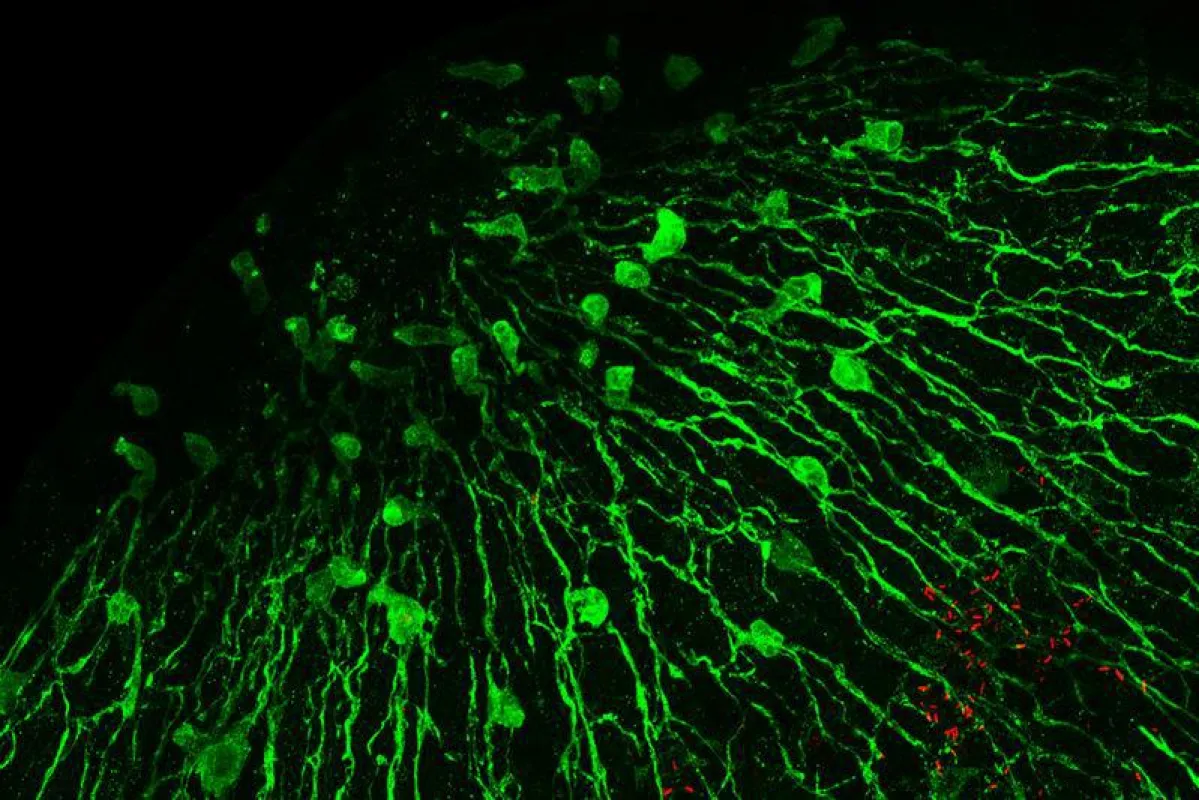
Bild: Nerves control the body’s bacterial community
Nerve cells (in green) of the freshwater polyp Hydra produce antimicrobial peptides and thus shape the animal’s microbiome. Rod-shaped bacteria can be seen at the base of the tentacles marked in red.

(openPR) CAU research team proves, for the first time, that there is close cooperation between the nervous system and the microbial population of the body

A central aspect of life sciences is to explore the symbiotic cohabitation of animals, plants and humans with their specific bacterial communities. Scientists refer to the full set of microorganisms living on and inside a host organism as the microbiome. Over the past years, evidence has accumulated that the composition and balance of this microbiome contributes to the organism’s health.


---
For instance, alterations in the composition of the bacterial community are implicated in the origin of various so-called environmental diseases. However, it is still largely unknown just how the cooperation between organism and bacteria works at the molecular level and how the microbiome and body exactly act as a functional unit.

An important breakthrough in deciphering these highly complex relationships has now been achieved by a research team from Kiel University’s Zoological Institute. Using the freshwater polyp Hydra as a model organism, the Kiel-based researchers and their international colleagues investigated how the simple nervous system of these animals interacts with the microbiome. They were able to demonstrate, for the first time, that small molecules secreted by nerve cells help to regulate the composition and colonisation of specific types of beneficial bacteria along the Hydra’s body column. “Up to now, neuronal factors that influence the body’s bacterial colonisation were largely unknown. We have been able to prove that the nervous system plays an important regulatory role here,” emphasises Professor Thomas Bosch, evolutionary developmental biologist and spokesperson of the Collaborative Research Centre 1182 "Origin and Function of Metaorganisms", funded by the German Science Foundation (DFG).The scientists published their new findings in Nature Communications this Tuesday.

The research team, led by Bosch, use the freshwater polyp Hydra as the model organism to elucidate the fundamental principles of nervous system structure and function. Hydra represent an evolutionary ancient branch of the animal kingdom; they have a simple body plan with a nerve net of only about 3000 neurons. Applying modern experimental technology to these organisms that, despite their simplicity, still share a large molecular similarity with the nervous systems of vertebrates, enabled identification of ancient and therefore fundamental principles of nervous system structure and function.

Using this model organism, the researchers from Kiel University addressed the question of how messenger substances produced by the nervous system, known as neuropeptides, control the cooperation and communication between host and microbes. They collected cellular, molecular and genetic evidence to show that neuropeptides have antibacterial activity which affects both the composition and the spatial distribution of the colonizing microbes.

In order to reveal the connections between neuropeptides and bacterial communities, the Kiel-based researchers first concentrated on the development of the freshwater polyp’s nervous system, from the egg stage through to an adult animal. Cnidarians develop a complete nervous system within about three weeks. During this developmental time, the bacterial communities covering the animal’s surface change radically, until a stable composition of the microbiome finally forms. Under the influence of the antimicrobial effect of the neuropeptides, the concentration of so-called Gram-positive bacteria, a subgroup of bacteria, decreases sharply over a period of roughly four weeks. At the end of the maturing process, a typical composition of the microbiome prevails, particularly dominated by Gram-negative Curvibacter bacteria. Since the neuropeptides are particularly produced in certain areas of the body only, they also control the spatial localisation of the bacteria along the body column. Thus, in the head region, for example, there is a strong concentration of antimicrobial peptides, resulting in six times fewer Curvibacter bacteria than on the tentacles.

Based on these observations, the scientists concluded that throughout the course of evolution the nervous system also participated in a controlling role for the microbiome, in addition to its sensory and motor tasks. “The findings are also important in an evolutionary context. Since the ancestors of these animals have invented the nervous system, it seems that the interaction between the nervous system and the microbiome is an ancient feature of multicellular animals. Since the simple design of Hydra has great basic and translational relevance and promises to reveal new and unexpected basic features of nervous systems, further research into the interaction between body and bacteria will therefore concentrate more on the neuronal aspects,” said Bosch, to summarise the significance of the work.

Original publication:
René Augustin, Katja Schröder, Andrea P. Murillo Rincón, Sebastian Fraune, Friederike Anton-Erxleben, Ava-Maria Herbst, Jörg Wittlieb, Martin Schwentner, Joachim Grötzinger, Trudy M. Wassenaar, Thomas C.G. Bosch (2017): “A secreted antibacterial neuropeptide shapes the microbiome of Hydra”. Nature Communications, Published on September 26, 2017, https://www.nature.com/articles/s41467-017-00625-1

Photos/material is available for download:

https://youtu.be/b44VPDhZKTQ
The simple structures of the freshwater polyp Hydra make it easier to research the interaction between the nervous system and the bacterial community.
Video: Priority research area "Kiel Life Science“, Kiel University

http://www.uni-kiel.de/download/pm/2017/2017-294-1.jpg
Caption: Nerve cells (in green) of the freshwater polyp Hydra produce antimicrobial peptides and thus shape the animal’s microbiome. Rod-shaped bacteria can be seen at the base of the tentacles, marked in red.
Image: Christoph Giez, Dr. Alexander Klimovich

http://www.uni-kiel.de/download/pm/2017/2017-294-2.jpg
Caption: Fibres of intestinal tissue (in red) surround the nerve cells (in green) of the freshwater polyp Hydra.
Image: Christoph Giez, Dr. Alexander Klimovich

Contact:
Prof. Thomas Bosch,
Zoological Institute, Kiel University
Tel.: 0431-880-4170
E-Mail: E-Mail

More information:
Priority research area “Kiel Life Science”, Kiel University
http://www.kls.uni-kiel.de

Collaborative Research Centre (CRC) 1182 "Origin and Function of Metaorganisms", Kiel University:
http://www.metaorganism-research.com

Cell and Developmental Biology (Bosch group), Zoological Institute, Kiel University
http://www.bosch.zoologie.uni-kiel.de

Kiel University
Press, Communication and Marketing, Dr. Boris Pawlowski
Address: D-24098 Kiel, phone: +49 (0431) 880-2104, fax: +49 (0431) 880-1355
E-Mail: E-Mail, Internet: www.uni-kiel.de

Twitter: www.twitter.com/kieluni, Facebook: www.facebook.com/kieluni, Instagram: www.instagram.com/kieluni Text / Redaktion: Christian Urban

Link to Kiel University Press Release:
http://www.uni-kiel.de/pressemeldungen/index.php?pmid=2017-294-nerven-bakterien&lang=en

Quelle: idw
Diese Pressemeldung wurde auf openPR veröffentlicht.

Verantwortlich für diese Pressemeldung:

News-ID: 970868
 458

Kostenlose Online PR für alle

Jetzt Ihren Pressetext mit einem Klick auf openPR veröffentlichen

Jetzt gratis starten

Pressebericht „Nerves control the body’s bacterial community“ bearbeiten oder mit dem "Super-PR-Sparpaket" stark hervorheben, zielgerichtet an Journalisten & Top50 Online-Portale verbreiten:

PM löschen PM ändern
Disclaimer: Für den obigen Pressetext inkl. etwaiger Bilder/ Videos ist ausschließlich der im Text angegebene Kontakt verantwortlich. Der Webseitenanbieter distanziert sich ausdrücklich von den Inhalten Dritter und macht sich diese nicht zu eigen. Wenn Sie die obigen Informationen redaktionell nutzen möchten, so wenden Sie sich bitte an den obigen Pressekontakt. Bei einer Veröffentlichung bitten wir um ein Belegexemplar oder Quellenennung der URL.

Pressemitteilungen KOSTENLOS veröffentlichen und verbreiten mit openPR

Stellen Sie Ihre Medienmitteilung jetzt hier ein!

Jetzt gratis starten

Weitere Mitteilungen von Christian-Albrechts-Universität zu Kiel

Bild: Bürgerschaftliches Engagement für die Energiewende im Ostseeraum stärkenBild: Bürgerschaftliches Engagement für die Energiewende im Ostseeraum stärken
Bürgerschaftliches Engagement für die Energiewende im Ostseeraum stärken
Ein neues Projekt an der Christian-Albrechts-Universität zu Kiel (CAU) stärkt die partnerschaftliche Zusammenarbeit für erneuerbare Energien. „Co2mmunity“ möchte Bürgerinnen und Bürger im Ostseeraum unterstützen, erneuerbare Energieanlagen zu errichten und von Erfahrungen aus anderen Ländern zu lernen. Das von der Europäischen Union im Rahmen des INTERREG-Ostseeraum-Programms geförderte Projekt startete am 1. Oktober 2017. Es hat eine Laufzeit von drei Jahren und ist mit einem Budget von knapp 3,15 Millionen Euro ausgestattet. 496.000 Euro da…
Bild: 2 Millionen Euro für die Forschung zur technischen Nachbildung von GehirnprozessenBild: 2 Millionen Euro für die Forschung zur technischen Nachbildung von Gehirnprozessen
2 Millionen Euro für die Forschung zur technischen Nachbildung von Gehirnprozessen
DFG verlängert Verbundprojekt der Universitäten Kiel, Bochum, Hamburg-Harburg, Brandenburg und dem Leibniz-Institut Frankfurt (Oder). Die an der Christian-Albrechts-Universität zu Kiel (CAU) angesiedelte Forschergruppe 2093 „Memristive Bauelemente für neuronale Systeme“ wird von der Deutschen Forschungsgemeinschaft (DFG) mit 2 Millionen Euro für drei weitere Jahre gefördert. In dem interdisziplinären Verbundprojekt erforschen seit 2014 Wissenschaftlerinnen und Wissenschaftler aus der Neurologie, Systemtheorie, Materialwissenschaft, Nanoelekt…

Das könnte Sie auch interessieren:

Kreuzfahrt Crews stranden weltweit!
… werde weiter Nerven und möchte wissen was passiert und wenn Sie Crew an Bord sind, oder inzwischen zu Hause, dann schreiben Sie uns hier wie es Ihnen ergangen ist. Yes, I’m getting on my nerves and would like to know what happens and if you are a crew on board, or meanwhile at home, then write to us here how you fared. Und am Schluss noch ein kleiner …
direct/ BVDW: 37 Nominierungen zum Deutschen Multimedia Award 2007
… GmbH&Co.KG/Landeshauptstadt Magdeburg, Dezernat für Wirtschaft), T-World Cebit 2006 (people interactive GmbH/Deutsche Telekom AG, T-Com), Mercedes-Benz »bionic car« (jangled nerves GmbH/DaimlerChrysler AG) Kategorie 9. E-Mail Römerquelle EmotionMail (Jung von Matt AG/Römerquelle Ges.m.b.H.), Sommer-Gewinnspiel (mission-one eRelations AG/neckermann.de), Merkzettel-Kampagne …
Bild: 18 Gold Medals für Deutschlands Kreative beim Golden Award of Montreux 2018.Bild: 18 Gold Medals für Deutschlands Kreative beim Golden Award of Montreux 2018.
18 Gold Medals für Deutschlands Kreative beim Golden Award of Montreux 2018.
… „Audi Summit“ und Tisch13 mit Caterpillar für „Night Of The Challenger“. In Kommunikation im Raum gab es zweimal Gold. Schmidhuber/Blackspace für Siemens IFA 2017 und jangled nerves, für VW „Driven by German Design“. Beim internationalen Talent Award punktete Deutschlands Nachwuchs mit vier Gold Medals. In der Kategorie Film gewann eine Arbeit der Filmakademie …
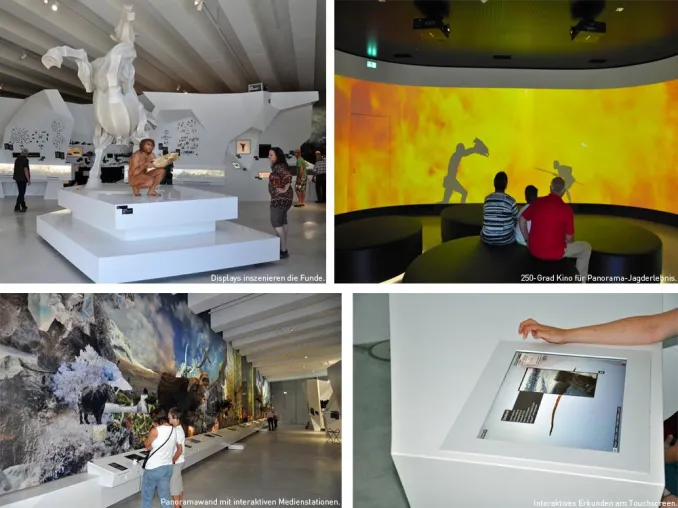
Bild: paläon – Forschungs- und Erlebniszentrum Schöninger Speere: Urgeschichte multimedial erlebenBild: paläon – Forschungs- und Erlebniszentrum Schöninger Speere: Urgeschichte multimedial erleben
paläon – Forschungs- und Erlebniszentrum Schöninger Speere: Urgeschichte multimedial erleben
… der Stadt Schöningen realisierte die ICT Innovative Communication Technologies AG (Kohlberg) im paläon sämtliche medientechnischen Installationen, die von der jangled nerves gmbh (Stuttgart) medientechnisch geplant wurden. Umfangreiche Projektions- und Displaytechnik sowie interaktionstechnisches Equipment zur Gesten- und Touchsteuerung wurden vom ICT …
Bild: Wiener Multimediaagentur NOUS erklärt die EUBild: Wiener Multimediaagentur NOUS erklärt die EU
Wiener Multimediaagentur NOUS erklärt die EU
… Entwurf und Gestaltung des parlamentariums zeichnet ATELIER BRÜCKNER aus Stuttgart verantwortlich. Mediengestaltung: ATELIER BRÜCKNER in Zusammenarbeit mit jangled nerves; Medienproduktion:Markenfilm Crossing. Mehr Interaktion – vertiefte Information Das parlamentarium informiert seine Besucher und Besucherinnen über die historische Entwicklung der Europäischen …
Bild: Seit vier Jahren unangefochten die Nummer 1Bild: Seit vier Jahren unangefochten die Nummer 1
Seit vier Jahren unangefochten die Nummer 1
… werden.“ Top 5 Deutsches Event-Kreativranking 2019 1) insglück Gesellschaft für Markeninszenierung mbH, Berlin 2) Cheil Germany GmbH, Schwalbach am Taunus 3) jangled nerves GmbH, Stuttgart 4) Stagg & Friends GmbH, Düsseldorf 5) Jung von Matt Aktiengesellschaft, Hamburg Hier geht es zum vollständigen Ranking: https://www.blachreport.de/nachrichten/aktuell/16488-deutsches-event-kreativranking-2019.html Bild: Komposition …
Bild: Cerbomed at the INS 10th World CongressBild: Cerbomed at the INS 10th World Congress
Cerbomed at the INS 10th World Congress
… in clinical studies. Cerbomed’s t-VNS therapy uses the fact that a branch of the vagus nerve is located directly under the skin in areas of the outer ear and that nerves can be stimulated through the skin (transcutaneously) with electrical impulses. NEMOS consists of a stimulation unit and an ear electrode which the patient wears in the ear like an …
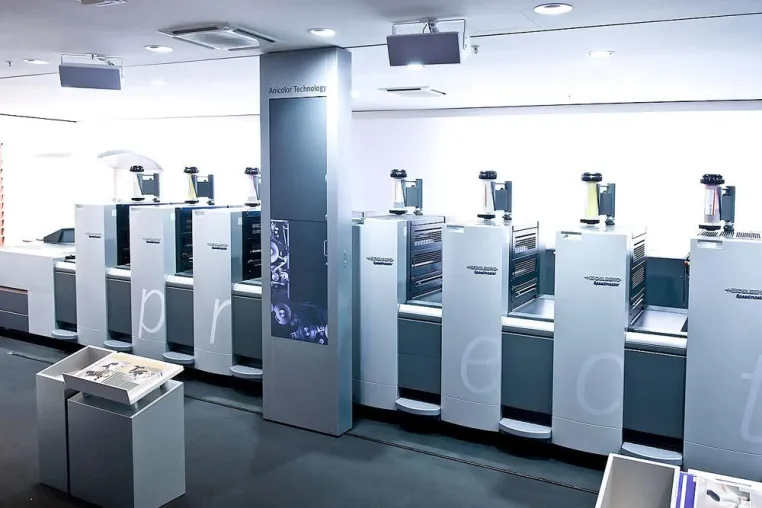
Bild: drupa 2008, Düsseldorf - Erlebniswelt „Druck“Bild: drupa 2008, Düsseldorf - Erlebniswelt „Druck“
drupa 2008, Düsseldorf - Erlebniswelt „Druck“
… abspielen. Für den Heidelberg-Messestand arbeitete ict eng mit folgenden Projektpartnern zusammen: KMS TEAM (Konzept und Kommunikation), Schmidhuber+Partner (Architektur), jangled nerves (Animation), B+S Exhibition (Messebau), Four to one/Showtec (Licht/Ton), Schüttenberg (Graphik). Über 100 weitere Displays, tennagels curveLED sowie Tontechnik wurden …
Synaptic disorder
Synaptic disorder
A Würzburg research team describes a hitherto unknown pathogenic mechanism of motor neuron disorders. This should lead to a rethinking in drug development. --- Motor neurons are the nerves that send impulses to the muscles to generate movement. Damage of these neurons can cause very diverse diseases, for example spinal muscular atrophy in children or …
Bild: Humorvoll und mit Gewinnspiel: Jabra sensibilisiert für chronische ErkrankungBild: Humorvoll und mit Gewinnspiel: Jabra sensibilisiert für chronische Erkrankung
Humorvoll und mit Gewinnspiel: Jabra sensibilisiert für chronische Erkrankung
… Handynutzer humorvoll für eine chronische Erkrankung, die häufiges Telefonieren mit dem Mobiltelefon hervorrufen kann: Die Kubitaltunnel-Syndrom genannte chronische Entzündung des Ulnar Nerves, des so genannten Musikantenkochens, ist eine Form von RSI (Repetitive Strain Injury). Hierunter fallen chronische Entzündungen von Nerven in Gliedmaßen, deren …
Sie lesen gerade: Nerves control the body’s bacterial community