openPR Recherche & Suche
Presseinformation

Immune cells help fat deal with environmental challenges

08.09.201711:02 UhrWissenschaft, Forschung, Bildung
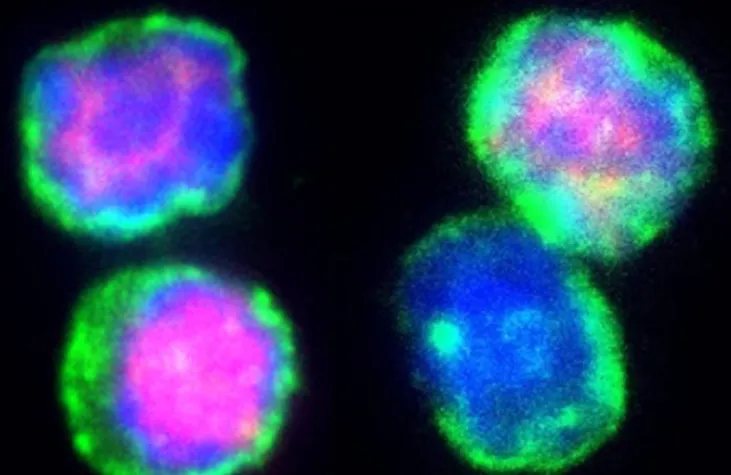
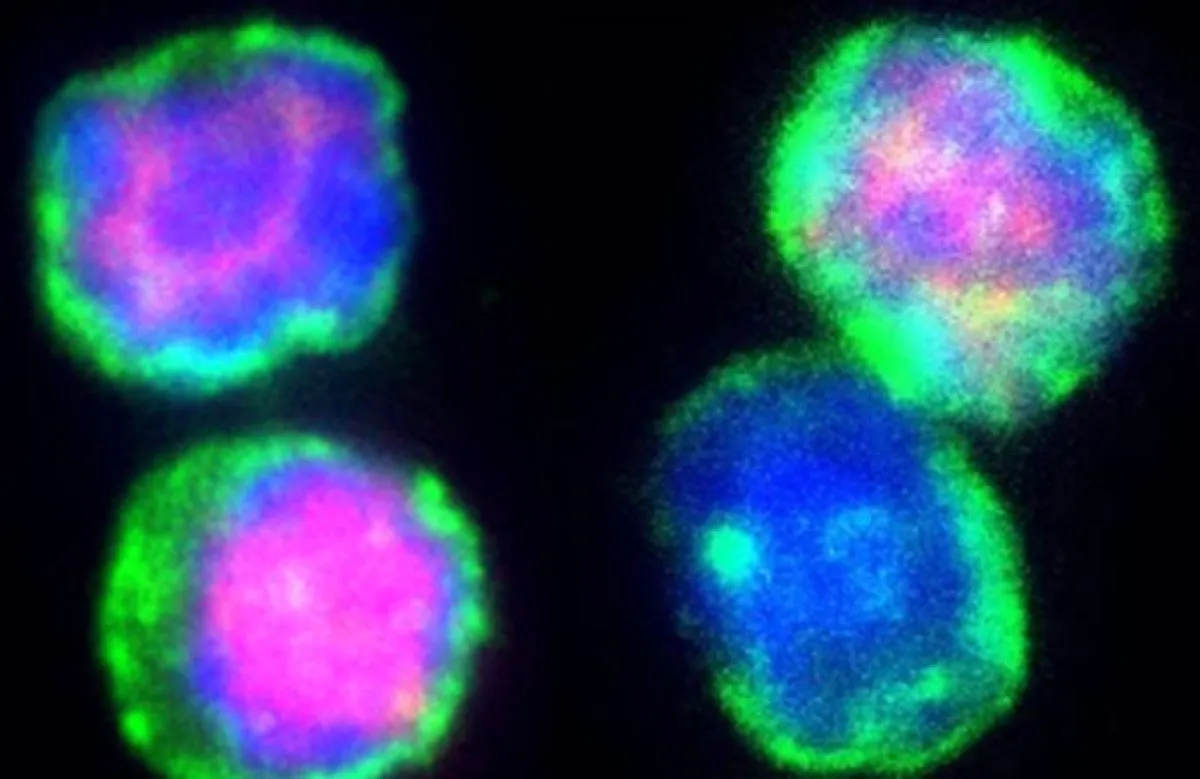
Bild: Immune cells help fat deal with environmental challenges
T cells after a short-term cold treatment (left) and under control conditions (right). Immunofluorescent staining of the T cell marker CD3 (green), the Treg marker Foxp3 (red) and the nucleus (blue).

(openPR) Immunosuppressive regulatory T-cells play an important role in the functioning of adipose tissue. This is the discovery of scientists from the Helmholtz Diabetes Center (HDC) at Helmholtz Zentrum München and the Technical University of Munich (TUM). Their findings are published in the journal ‘Cell Metabolism’.


---
The number of obese people as well as those suffering from type 2 diabetes is increasing worldwide. Both disorders are associated with metabolic changes including amplified inflammatory responses in adipose tissue. “Previous studies have indicated that immunosuppressive regulatory T-cells – or Tregs for short – play an important role in these processes”, explains the leader of the study Dr. Carolin Daniel, group leader at the Institute for Diabetes Research (IDF) of the Helmholtz Zentrum München and a scientist in the German Center for Diabetes Research (DZD).* “We now wanted to examine how these immune cells might support adipose function in more detail.”

In an experimental model, Daniel, together with co-first authors Dr. Stefanie Kälin and Maike Becker and colleagues, determined that the number of Tregs in adipose tissue increases in response to different environmental stimuli. These stimuli included a short-term cold treatment, stimulation of the sympathetic nervous system (?3-adrenoreceptors) or short-term high-caloric exposure. “All these stimuli supported those immunosuppressive cells directly in the adipose tissue”, says Becker.

Fat burning activated

The magnitude of the increase in Tregs differed depending on the type of adipose tissue: it was particularly pronounced in brown fat**, somewhat weaker in subcutaneous fat and weakest in visceral fat. To investigate the specific function of Tregs, the researchers determined how gene expression changes in adipose tissue. Especially in brown fat, genes were activated that promote heat production (thermogenesis) as well as those that are used for the breakdown (lipolysis) and burning (oxidation) of fatty acids. Subsequent experiments revealed that the signalling molecules Stat6 und Pten play a vital role in this process.

“A better understanding of the immunological mechanisms involved in the target tissue will be critical for the development of personalized interventions in order to improve adipose tissue function during obesity and diabetes”, says the leader of the study Carolin Daniel. “Our experiments show for the first time that Tregs can support fat depots in dealing with environmental challenges.”

“Our findings highlight the complex interactions between our body and the environment. We have known for a while that hormones play a key role here – but now have to accept that immune cells may be just as important for a balanced metabolism”, comments Prof. Dr. Matthias Tschöp. He is the scientific director of the HDC at Helmholtz Zentrum München and holds the chair for metabolic diseases at the TUM. “These insights therefore help us tremendously with designing more efficient ways to therapeutically optimize when and how to store calories.”

Prof. Dr. Matthias Mann from the Max Planck Institute of Biochemistry in Martinsried as well as the group of PD Dr. Benno Weigmann from Universitätsklinikum Erlangen also made significant contributions to the study.

Further Information

* Regulatory T-cells suppress unwanted immune reactions and thereby prevent autoimmune diseases, for instance. The transcription factor Foxp3, which was determined by the scientists, is characteristic for this cell type.

** Brown adipose tissue is found in almost all mammals, including humans. Its cells produce heat by oxidizing sugars and fatty acids. This makes them an interesting target for pharmacological treatment of obesity.

Background:
The doctoral students Maike Becker, Victoria Flynn, Verena Ott, Isabelle Serr, Markus Hippich and Martin Scherm are participants in the Helmholtz Graduate School for Environmental Health (HELENA).

Original Publication:
Kälin, S. & Becker, M. et al. (2017): A Stat6/Pten axis links regulatory T cells with adipose tissue function. Cell Metabolism, DOI: 10.1016/j.cmet.2017.08.008

The Helmholtz Zentrum München, the German Research Center for Environmental Health, pursues the goal of developing personalized medical approaches for the prevention and therapy of major common diseases such as diabetes and lung diseases. To achieve this, it investigates the interaction of genetics, environmental factors and lifestyle. The Helmholtz Zentrum München is headquartered in Neuherberg in the north of Munich and has about 2,300 staff members. It is a member of the Helmholtz Association, a community of 18 scientific-technical and medical-biological research centers with a total of about 37,000 staff members.

Technical University of Munich (TUM) is one of Europe’s leading research universities, with more than 500 professors, around 10,000 academic and non-academic staff, and 40,000 students. Its focus areas are the engineering sciences, natural sciences, life sciences and medicine, com-bined with economic and social sciences. TUM acts as an entrepreneurial university that promotes talents and creates value for society. In that it profits from having strong partners in science and industry. It is represented worldwide with a campus in Singapore as well as offices in Beijing, Brussels, Cairo, Mumbai, San Francisco, and São Paulo. Nobel Prize winners and inventors such as Rudolf Diesel, Carl von Linde, and Rudolf Mößbauer have done research at TUM. In 2006 and 2012 it won recognition as a German "Excellence University." In international rankings, TUM regularly places among the best universities in Germany.

The Institute of Diabetes Research (IDF) focuses on the pathogenesis and prevention of type 1 diabetes and type 2 diabetes and the long-term effects of gestational diabetes. A major project is the development of an insulin vaccination against type 1 diabetes. The IDF conducts long-term studies to examine the link between genes, environmental factors and the immune system for the pathogenesis of type 1 diabetes. Findings of the BABYDIAB study, which was established in 1989 as the world’s first prospective birth cohort study, identified risk genes and antibody profiles. These permit predictions to be made about the pathogenesis and onset of type 1 diabetes and will lead to changes in the classification and the time of diagnosis. The IDF is part of the Helmholtz Diabetes Center (HDC).

The German Center for Diabetes Research (DZD) is a national association that brings together experts in the field of diabetes research and combines basic research, translational research, epidemiology and clinical applications. The aim is to develop novel strategies for personalized prevention and treatment of diabetes. Members are Helmholtz Zentrum München – German Research Center for Environmental Health, the German Diabetes Center in Düsseldorf, the German Institute of Human Nutrition in Potsdam-Rehbrücke, the Paul Langerhans Institute Dresden of the Helmholtz Zentrum München at the University Medical Center Carl Gustav Carus of the TU Dresden and the Institute for Diabetes Research and Metabolic Diseases of the Helmholtz Zentrum München at the Eberhard-Karls-University of Tuebingen together with associated partners at the Universities in Heidelberg, Cologne, Leipzig, Lübeck and Munich.

Contact for the Media:
Department of Communication, Helmholtz Zentrum München – German Research Center for Environmental Health (GmbH), Ingolstädter Landstr. 1, 85764 Neuherberg, Germany – Tel. +49 (0)89 3187 2238 - Fax: +49 (0)89 3187 3324 - E-mail:

Scientific Contact:
Dr. Carolin Daniel, Helmholtz Zentrum München – German Research Center for Environmental Health (GmbH), Institute for Diabetes Research, Ingolstädter Landstr. 1, 85764 Neuherberg, Germany – Tel. +49 89 3187 2188 - E-mail:

Quelle: idw
Diese Pressemeldung wurde auf openPR veröffentlicht.

Verantwortlich für diese Pressemeldung:

News-ID: 967661
 168

Kostenlose Online PR für alle

Jetzt Ihren Pressetext mit einem Klick auf openPR veröffentlichen

Jetzt gratis starten

Pressebericht „Immune cells help fat deal with environmental challenges“ bearbeiten oder mit dem "Super-PR-Sparpaket" stark hervorheben, zielgerichtet an Journalisten & Top50 Online-Portale verbreiten:

PM löschen PM ändern
Disclaimer: Für den obigen Pressetext inkl. etwaiger Bilder/ Videos ist ausschließlich der im Text angegebene Kontakt verantwortlich. Der Webseitenanbieter distanziert sich ausdrücklich von den Inhalten Dritter und macht sich diese nicht zu eigen. Wenn Sie die obigen Informationen redaktionell nutzen möchten, so wenden Sie sich bitte an den obigen Pressekontakt. Bei einer Veröffentlichung bitten wir um ein Belegexemplar oder Quellenennung der URL.

Pressemitteilungen KOSTENLOS veröffentlichen und verbreiten mit openPR

Stellen Sie Ihre Medienmitteilung jetzt hier ein!

Jetzt gratis starten

Weitere Mitteilungen von Helmholtz Zentrum München - Deutsches Forschungszentrum für Gesundheit und Umwelt

Bild: Wie ein Enzym die Abschrift unserer Gene reguliertBild: Wie ein Enzym die Abschrift unserer Gene reguliert
Wie ein Enzym die Abschrift unserer Gene reguliert
Ein Wissenschaftlerteam des Helmholtz Zentrums München hat gemeinsamen mit Kollegen der Ludwig-Maximilians-Universität München und einer Forschergruppe der Universität Montpellier, Frankreich, die Strukturen der RNA Polymerase II identifiziert, die für die Termination der Transkription (das Beenden der Abschrift eines Genabschnittes) benötigt werden. Die hierzu durchgeführte genetische Analyse wurde jetzt im Fachjournal ‚Molecular Cell‘ publiziert. --- Das Enzym RNA Polymerase II, kurz Pol II, ist verantwortlich für die Transkription (Abschr…
Bild: Selen schützt Nervenzellen im GehirnBild: Selen schützt Nervenzellen im Gehirn
Selen schützt Nervenzellen im Gehirn
Genau 200 Jahre nach der Entdeckung des Spurenelements Selen zeigen Forschende am Helmholtz Zentrum München zum ersten Mal, warum dieses chemische Element essenziell für das Überleben von Säugetieren ist. Als Bestandteil des Enzyms GPX4 schützt Selen bestimmte Nervenzellen im Laufe der Entwicklung vor dem Zelltod, berichten die Wissenschaftler im Fachmagazin ‚Cell‘. --- Vor genau 200 Jahren entdeckte der schwedische Wissenschaftler Jöns Jacob Berzelius das Spurenelement Selen, das er nach der Mondgöttin Selene benannte. Neben seiner industri…

Das könnte Sie auch interessieren:

Bild: How protein islands formBild: How protein islands form
How protein islands form
Researchers at the University of Freiburg identify protein that inhibits the development of autoimmune diseases --- The immune system protects humans from threats such as, for example, disease-causing bacteria, and cancer as well. Yet if the system malfunctions, it can attack the body it is supposed to defend and cause autoimmune diseases such as type …
Fast and adaptable
Fast and adaptable
Dendritic cells regulate the immune system, attack viruses and bacteria and prevent unwanted and harmful immune system reactions. There are many different sub-species of dendritic cells. To date, however, it has been unclear how these various sub-species initiate immune system responses. But now researchers at Friedrich-Alexander-Universität Erlangen-Nürnberg …
Bild: Mode of action of the vaccine adjuvant flagellin in fusion proteins has been clarifiedBild: Mode of action of the vaccine adjuvant flagellin in fusion proteins has been clarified
Mode of action of the vaccine adjuvant flagellin in fusion proteins has been clarified
Fusion proteins consisting of antigens and the bacterial adjuvant flagellin are promising vaccine candidates. They have the potential to induce immune responses in a targeted and reliable manner, thus conveying protection against infectious diseases. In addition, they can favourably influence misdirected immune reactions, for example as part of a treatment …
Bild: Salmonella as a tumour medicationBild: Salmonella as a tumour medication
Salmonella as a tumour medication
… (HZI) in Braunschweig now undertook a successful step towards the clinical application. They developed a Salmonella strain that induces only a harmless infection, but activates the immune system strongly enough to fight the tumours. Their results were published in the journal OncoImmunology. Cancer diseases are some of the most common causes of death …
Bild: Researchers release the brakes on the immune systemBild: Researchers release the brakes on the immune system
Researchers release the brakes on the immune system
Many tumors possess mechanisms to avoid destruction by the immune system. For instance, they misuse the natural “brakes” in the immune defense mechanism, which normally prevent an excessive immune response. Researchers at the University of Bonn have now been able to take off one of these brakes. The study, which involved colleagues from Hamburg and Würzburg, …
Bild: Neu bei ENERGETIX - Immune Power DrinkBild: Neu bei ENERGETIX - Immune Power Drink
Neu bei ENERGETIX - Immune Power Drink
ENERGETIX - bekannt durch Magnetschmuck hat neu einen IMMUNE POWER DRINK im Programm. Hochwirksam und wohlschmeckend. Die drei Hauptbestandteile sind: CRANBERRY – für ein starkes Immunsystem! Die gesundheitsfördernden Eigenschaften der Cranberries wurden bereits von den Indianern zum Heilen von Wunden genutzt. Neueste Forschungsergebnisse zeigen, dass …
Bild: New approach for treatment of contact allergyBild: New approach for treatment of contact allergy
New approach for treatment of contact allergy
Researchers from the University of Bonn have isolated a molecule that is suitable for the control of contact allergies. The study illuminates a central immune mechanism, which may also play a role in other inflammatory diseases such as arthritis or arteriosclerosis. The results will soon be published in the journal Molecular Therapy, but are already …
Shedding Light on Cause of Resistance to Tumor Immunotherapy
… used for several years, with patients with certain metastatic cancers showing good responses to this treatment. These immunotherapies, also called checkpoint inhibi-tors, allow the body’s own immune system to better detect and destroy the cancer cells. The problem is that with time cancer cells become resistant to the triggered immune responses. Now …
Bild: How the smallest bacterial pathogens outwit host immune defences by stealth mechanismsBild: How the smallest bacterial pathogens outwit host immune defences by stealth mechanisms
How the smallest bacterial pathogens outwit host immune defences by stealth mechanisms
… cause persistent and often difficult-to-treat infections in humans and animals. An extensive study by researchers from Vetmeduni Vienna has now shown how mycoplasmas escape the immune response despite their minimal “genetic arsenal”. Mycoplasmas “mask” themselves. They use their small genome in such a clever strategic way that they can even compensate …
Bild: Max Planck research kicked off in WürzburgBild: Max Planck research kicked off in Würzburg
Max Planck research kicked off in Würzburg
Studying the immune system: That is the goal of a new Max Planck Research Group at the University of Würzburg which is currently being set up. --- With the cooperation agreement signed four years ago, work in the laboratories is now picking up momentum: With the appointment of Professor Georg Gasteiger, the new Max Planck Research Group for System Immunology …
Sie lesen gerade: Immune cells help fat deal with environmental challenges