openPR Recherche & Suche
Presseinformation

Researchers measure the basis of color vision

06.09.201717:00 UhrWissenschaft, Forschung, Bildung
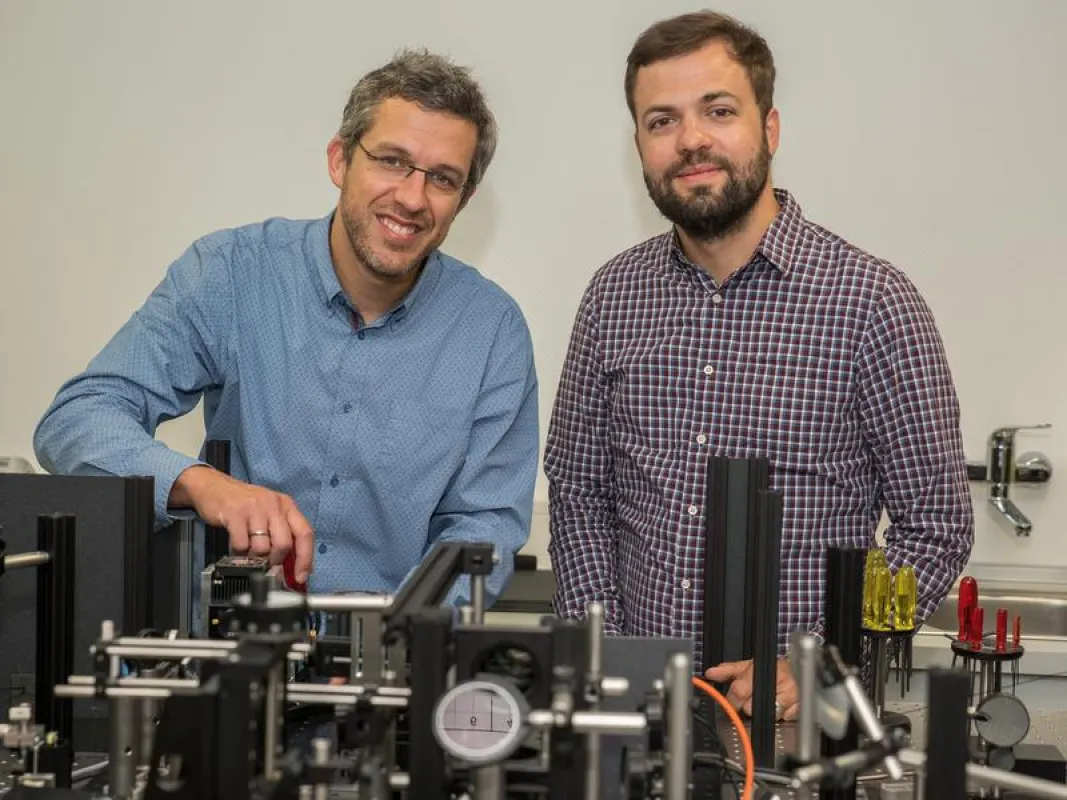
Bild: Researchers measure the basis of color vision
At the Adaptive Optics Scanning Laser Ophthalmoscope: Dr. Wolf M. Harmening (left) from University Eye Hospital Bonn and Dr. William S. Tuten (right) from the University of California, Berkeley.  (© P
At the Adaptive Optics Scanning Laser Ophthalmoscope: Dr. Wolf M. Harmening (left) from University Eye Hospital Bonn and Dr. William S. Tuten (right) from the University of California, Berkeley. (© P

(openPR) Dr. Wolf M. Harmening from University Eye Hospital Bonn, together with American colleagues, studied color vision by probing individual sensory cells – photoreceptors – in the human eye. The results confirm that the photoreceptor cells of the retina are especially sensitive to colors corresponding to their visual pigments, even when stimulated in isolation. A new observation is that proximity effects play a key role: sensitivity of tested photoreceptors varied depending on which cell classes were located in their immediate neighborhood. The results have now been published in advance online and will soon be published in the Journal of Neuroscience.


---
It is a constant ‘aha’ effect: when the light is switched on in a dark room, color vision sets in. “This not only makes the world more colorful,” says Dr. Wolf M. Harmening, who heads an Emmy Noether research group at Bonn University Eye Hospital. “Color also allows spatial detail to become apparent that has proven vital for survival over the course of evolution.” Some predator camouflage can only be identified through color. Poisonous animals and plants also provide warning signals through color. That human color vision emerges from three independent channels within the retina is well established in the vision science literature. By stimulating individual photoreceptor cells in living subjects, the lead authors Dr. Wolf M. Harmening from University Eye Hospital Bonn and Dr. William S. Tuten from the University of California, Berkeley, together with colleagues from the US universities in Seattle, Washington and Birmingham, Alabama, have now shown on a cellular scale how the human retina conveys color signals.

To do this, the researchers used an ophthalmoscope that can examine and stimulate the human retina non-invasively. The novel method – Adaptive Optics Scanning Laser Ophthalmoscopy – employs a combination of a laser and a very high-resolution microscope, which can even map individual sensory cells in the retina. The research team has now used this ophthalmoscope to study vision in the retinas of two human subjects. According to common theory, all color stimuli can be formed by mixing the primary colors red, green, and blue. While rod photoreceptors are specialized for seeing in the dark, cone photoreceptors convey color vision. They carry light sensitive pigments specialized to absorb wavelengths near the primary colors, the basis of trichromatic vision.

Mapping of the retina

The researchers initially mapped the cone mosaic on the subjects’ retinas by measuring light absorption for certain wavelengths in each photoreceptor. In this way, they were able to determine the sensory cells’ identity, or class, within the framework of trichromacy. By reducing the intensity of the stimulation light, the researchers were then able to determine a detection threshold in each cone, at which light was just barely seen by the subjects. “This is important because we could use the sensitivity of each cell to determine how overall perception is governed by the contribution of individual cones,” reports Harmening.

Most notably, the sensitivity of single cells also depended on the immediate neighboring cells. “If a cone sensitive to red light is surrounded by cells that are more sensitive to green, this cone is more likely to behave like a green cone,” summarizes Harmening. Studying visual processing of color is complex, in part because the brain does not receive raw data from individual photoreceptors but rather an already preprocessed retinal signal. Harmening: “Spatial and color information of individual cones is modulated in the complex network of the retina, with lateral information spreading through what are known as horizontal cells.”

Their finding supports previous assumptions about color vision. “What’s new is that we can now study vision on the most elementary level, cell-by-cell,” says the scientist. Conventional tests of vision use stimuli that necessarily activate hundreds to thousands photoreceptor cells at the same time. Harmening emphasizes that cellular-scale retinal computation such as the proximity effect has important implications, for basic and clinical research. “When the basis of vision is understood better, we open avenues for new diagnoses and treatments in case of retinal disease,” says Harmening. The novel single cell approach offers access to new findings in ophthalmology.

Publication: William S. Tuten, Wolf M. Harmening, Ramkumar Sabesan, Austin Roorda, Lawrence C. Sincich: Spatiochromatic interactions between individual cone photoreceptors in the human retina, The Journal of Neuroscience, DOI: 10.1523/JNEUROSCI.0529-17.2017

Media contact:

Dr. Wolf M. Harmening
University Eye Hospital Bonn
Tel. ++49-228-28715882
E-mail: E-Mail

Quelle: idw

Diese Pressemeldung wurde auf openPR veröffentlicht.

Verantwortlich für diese Pressemeldung:

News-ID: 967302
 595

Kostenlose Online PR für alle

Jetzt Ihren Pressetext mit einem Klick auf openPR veröffentlichen

Jetzt gratis starten

Pressebericht „Researchers measure the basis of color vision“ bearbeiten oder mit dem "Super-PR-Sparpaket" stark hervorheben, zielgerichtet an Journalisten & Top50 Online-Portale verbreiten:

PM löschen PM ändern
Disclaimer: Für den obigen Pressetext inkl. etwaiger Bilder/ Videos ist ausschließlich der im Text angegebene Kontakt verantwortlich. Der Webseitenanbieter distanziert sich ausdrücklich von den Inhalten Dritter und macht sich diese nicht zu eigen. Wenn Sie die obigen Informationen redaktionell nutzen möchten, so wenden Sie sich bitte an den obigen Pressekontakt. Bei einer Veröffentlichung bitten wir um ein Belegexemplar oder Quellenennung der URL.

Pressemitteilungen KOSTENLOS veröffentlichen und verbreiten mit openPR

Stellen Sie Ihre Medienmitteilung jetzt hier ein!

Jetzt gratis starten

Weitere Mitteilungen von Rheinische Friedrich-Wilhelms-Universität Bonn

Bild: Näher an der optimalen TourBild: Näher an der optimalen Tour
Näher an der optimalen Tour
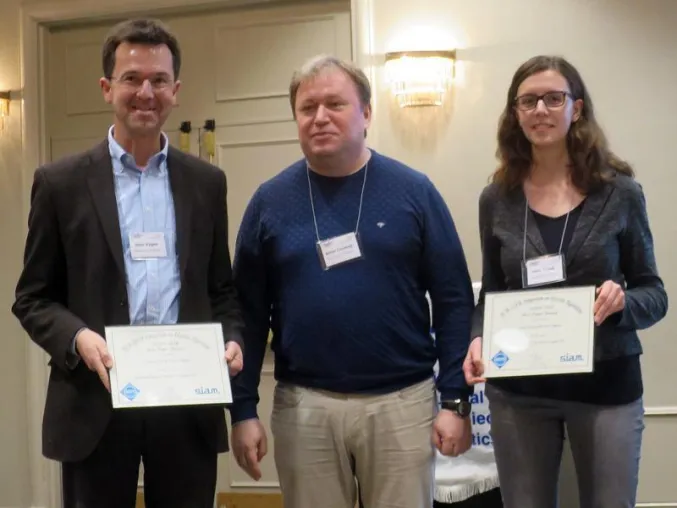
Die Doktorandin Vera Traub und ihr Betreuer, Jens Vygen, Professor am Bonner Forschungsinstitut für Diskrete Mathematik, erhielten auf der weltweit führenden Konferenz für diskrete Algorithmen (SODA) in New Orleans einen Preis für die beste Veröffentlichung („Best Paper Award“). Mit ihrem neu entwickelten Algorithmus kann man Touren durch beliebig viele Städte ermitteln, die der kürzesten Tour „möglichst nah“ kommen. --- Das „Problem des Handlungsreisenden“ ist weltberühmt und wurde erstmals im Jahr 1930 formuliert: Gegeben sind ein Anfangs-…
Bild: Entzündungsmechanismen treiben Alzheimer-Erkrankung voranBild: Entzündungsmechanismen treiben Alzheimer-Erkrankung voran
Entzündungsmechanismen treiben Alzheimer-Erkrankung voran
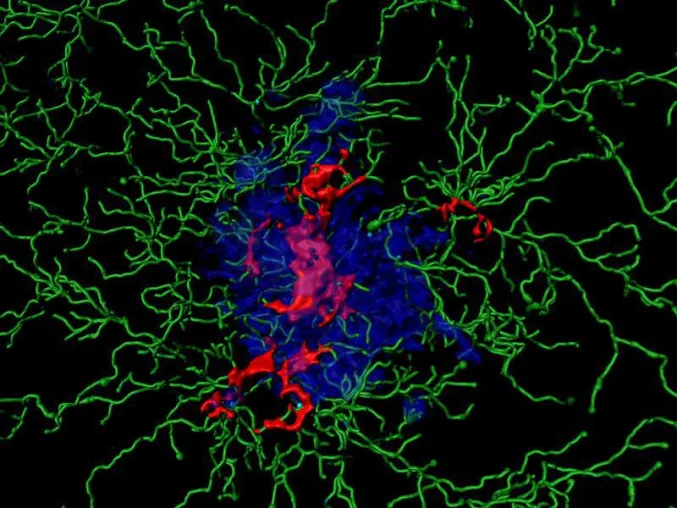
Laut einer jetzt im Fachmagazin „Nature“ veröffentlichten Studie treiben Entzündungsmechanismen grundlegende Prozesse der Alzheimer-Erkrankung voran. Auslöser ist das Immunsystem des Gehirns. Wissenschaftler des Deutschen Zentrums für Neurodegenerative Erkrankungen (DZNE) und der Universität Bonn stützen sich dabei auf aktuelle Laboruntersuchungen. Diese Ergebnisse, an denen weitere Forscher aus Europa und den USA beteiligt waren, könnten auf lange Sicht den Weg für eine frühzeitige Behandlung der Alzheimer-Erkrankung bereiten: zu einem Zeitp…

Das könnte Sie auch interessieren:

Technische Informationsbibliothek (TIB) publishes results of survey
Information procurement and publishing behaviour in science and technology // Researchers would like more advisory services on Open Access, research data and the handling of non-textual material --- HANNOVER, 25 September 2017 – How do researchers in the natural sciences and engineering find out about the latest developments and trends in their discipline? …
Bild: Researchers develop chip-scale optical abacusBild: Researchers develop chip-scale optical abacus
Researchers develop chip-scale optical abacus
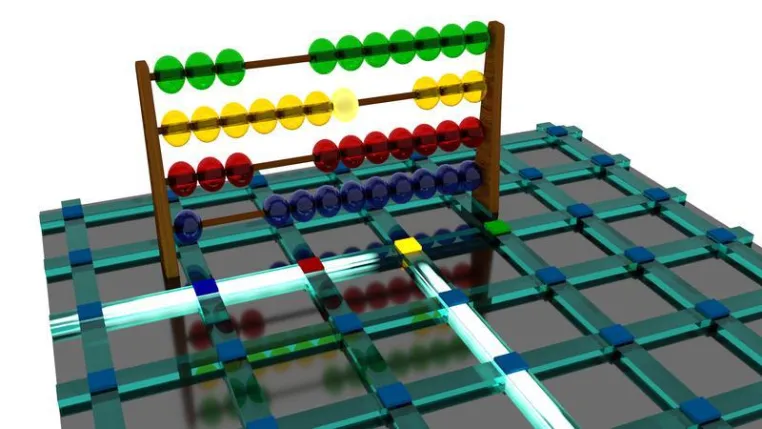
A team of researchers led by Prof. Wolfram Pernice from the Institute of Physics at Münster University has developed a miniature abacus on a microchip which calculates using light signals. With it they are paving the way to the development of new types of computer in which, as in the human brain, the computing and storage functions are combined in one …
SchülerInnen machen Forschung
Citizen-Science-Projekt der FH St. Pölten im Rahmen der European Researchers‘ Night - am 26.9. erstmals in Wien Im Vorfeld der European Researchers‘ Night entwickeln SchülerInnen unter Anleitung von jungen ForscherInnen der FH St. Pölten in Workshops Ideen für die Zukunft. Die Ergebnisse werden im Rahmen der Veranstaltung am 26.9. in der Aula der Wissenschaften …
From a memory too strong to a memory too weak
Heidelberg, 2 August 2017 – Researchers discover a molecular link between post-traumatic stress disorder and Alzheimer’s disease: There is increasing evidence that post-traumatic stress disorder (PTSD) increases the risk of developing dementia later in life. Researchers at the University Medical Center Göttingen, Germany, now shed light on the molecular …
24 new tenure track professorships at FAU
With its commitment to supporting young researchers, FAU is strategically expanding its key research priorities, whilst at the same time giving up-and-coming young researchers the best possible opportunities for professional development. The Federal Ministry of Education and Research (BMBF) is now funding 24 new tenure track professorships at FAU. ‘This …
With clear criteria to a professorship
“Bund-Länder-Programm zur Förderung des wissenschaftlichen Nachwuchses” (Federal and State Programme for the Promotion of Junior Researchers) funds the expansion of tenure-track professorships at the University of Konstanz --- The University of Konstanz plans to systematically expand tenure-track professorships in all of its thirteen departments in order …
Bild: New method of analysing lymphoedema - Making digital 3D images of tissueBild: New method of analysing lymphoedema - Making digital 3D images of tissue
New method of analysing lymphoedema - Making digital 3D images of tissue
Researchers at the Cells-in-Motion Cluster of Excellence have developed a new method for producing digital 3D reconstructions of blood and lymphatic vessels from tissue samples and then creating images of them for analysis. The study has been published in the “JCI Insight” journal. --- When researchers and physicians analyse tissue, for example in order …
Distant Relatives: TOR Protein Regulates Cell Growth in Plants and Animals
… plants and humans developed from a common precursor cell. Traces of this over one-billion-year kinship remain anchored in the genetic material of both organisms. An international team of plant researchers led by Dr Markus Wirtz and Prof. Dr Rüdiger Hell of Heidelberg University has looked more closely into one such trace – the TOR protein. In human and …
Bild: Scientists from Hannover develop a novel lightweight production processBild: Scientists from Hannover develop a novel lightweight production process
Scientists from Hannover develop a novel lightweight production process
… of Welding and Machining (ISAF) of TU Clausthal, the Institut für Integrierte Produktion Hannover (IPH) gGmbH is developing a novel forging process for lightweight car manufacturing. The researchers' aim is to create a material bond between steel sheets and bulk aluminium parts already during the forming process – without the need for an extra joining …
Bild: F.I.T. for Future – European Researchers‘ NightBild: F.I.T. for Future – European Researchers‘ Night
F.I.T. for Future – European Researchers‘ Night
Forschungsfest zum Staunen und Entdecken am 26.09.2014 Jährlich präsentieren wissenschaftliche Institutionen in Europa bei der European Researchers‘ Night eine Nacht lang ihre Forschungsarbeit der breiten Öffentlichkeit. Am 26. September ist es in ca. 300 Städten wieder so weit. Die Fachhochschule St. Pölten gestaltet gemeinsam mit dem Bundesministerium …
Sie lesen gerade: Researchers measure the basis of color vision