openPR Recherche & Suche
Presseinformation

A Protein that Extends Life of Yeast Cells

06.09.201712:00 UhrWissenschaft, Forschung, Bildung
Bild: A Protein that Extends Life of Yeast Cells
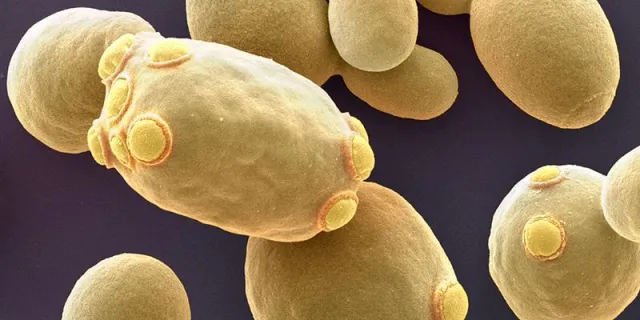
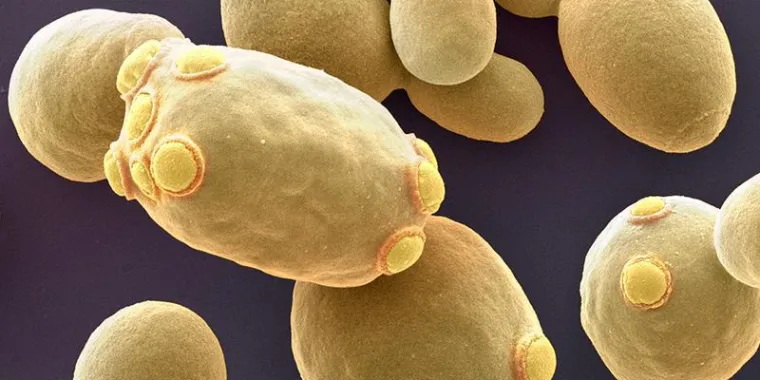
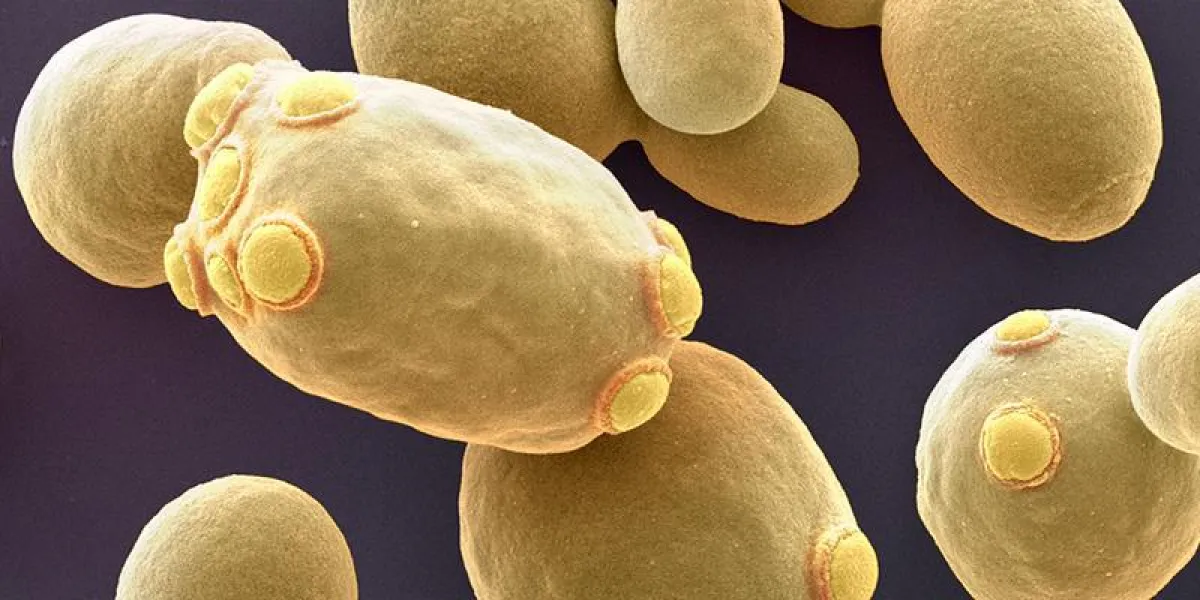
Baker’s yeast Saccharomyces cerevisiae.  ((Image: University of Basel/SNI/Nano Imaging Lab))
Baker’s yeast Saccharomyces cerevisiae. ((Image: University of Basel/SNI/Nano Imaging Lab))

(openPR) To understand and control aging is the aspiration of many scientists. Researchers at the Biozentrum of the University of Basel have now discovered that the protein Gcn4 decreases protein synthesis and extends the life of yeast cells. Understanding how individual genes affect lifespan opens new ways to control the aging process and the occurrence of aging-related diseases. The results of this study have recently been published in “Nature Communications”.


---
For about one hundred years it has been known that nutrient restriction and moderate stress can significantly prolong life. The researchers led by Prof. Mihaela Zavolan and Prof. Anne Spang, both at the Biozentrum of the University of Basel, have discovered how the transcription factor Gcn4, a protein that regulates the expression of many genes, extends the life of baker’s yeast Saccharomyces cerevisiae. In various stress situations, the cells stimulate Gcn4 production which leads to reduced biosynthesis of new proteins and increased yeast lifespan.

Transcription factor represses protein synthesis

It has long been known that protein synthesis – also known as translation – plays an important role in aging. Inhibition of protein synthesis, caused for example by reduced nutrient intake, can have a positive effect on the life expectancy of diverse organisms such as yeast, flies, worms or fish. Reducing the ribosomes, the protein factories of the cell, can also considerably extend the lifespan of yeast cells.

What these cellular stresses have in common is that they activate the production of Gcn4. However, how this protein promotes longevity has remained unclear.

In their study, the team working with Zavolan exposed yeast cells to different stress conditions, measured their lifespan, protein synthesis rates and Gcn4 expression. “We observed that the level of the Gcn4 protein was positively correlated with the longevity of yeast cells,” says Mihaela Zavolan, Professor of Computational and Systems Biology.

“However, we wanted to understand why. We have now shown for the first time that it is the transcriptional suppression of genes that are important for cellular protein synthesis by Gcn4 that seems to account for its lifespan extension effect. As the translation machinery is limiting, the energy-intensive production of new proteins is overall dampened.” From the yeast cell’s point of view, this is an advantage: This enables them to live about 40 percent longer than usual.

Transcription factor is highly conserved in many organisms

The transcription factor Gcn4 is conserved in over 50 different organisms, including mammals, and it likely play a significant role in the aging of these organisms as well.

Zavolan’s group will now investigate whether the mammalian homolog similarly slows aging and extends lifespan by regulating protein synthesis genes in response to nutrients and stress.

Original source

Nitish Mittal, Joao C. Guimaraes, Thomas Gross, Alexander Schmidt, Arnau Vina-Vilaseca, Danny D. Nedialkova, Florian Aeschimann, Sebastian A. Leidel, Anne Spang, Mihaela Zavolan
The Gcn4 transcription factor reduces protein synthesis capacity and extends yeast lifespan
Nature Communications (2017), doi: 10.1038/s41467-017-00539-y

Further information

Prof. Dr. Mihaela Zavolan, University of Basel, Biozentrum, Tel. +41 61 207 15 77, email: E-Mail

Dr. Katrin Bühler, University of Basel, Biozentrum, Communications, Tel. +41 61 207 09 74, email: E-Mail

Weitere Informationen:
- https://www.unibas.ch/en/News-Events/News/Uni-Research/A-Protein-that-Extends-Life-of-Yeast-Cells.html

Quelle: idw

Diese Pressemeldung wurde auf openPR veröffentlicht.

Verantwortlich für diese Pressemeldung:

News-ID: 967190
 429

Kostenlose Online PR für alle

Jetzt Ihren Pressetext mit einem Klick auf openPR veröffentlichen

Jetzt gratis starten

Pressebericht „A Protein that Extends Life of Yeast Cells“ bearbeiten oder mit dem "Super-PR-Sparpaket" stark hervorheben, zielgerichtet an Journalisten & Top50 Online-Portale verbreiten:

PM löschen PM ändern
Disclaimer: Für den obigen Pressetext inkl. etwaiger Bilder/ Videos ist ausschließlich der im Text angegebene Kontakt verantwortlich. Der Webseitenanbieter distanziert sich ausdrücklich von den Inhalten Dritter und macht sich diese nicht zu eigen. Wenn Sie die obigen Informationen redaktionell nutzen möchten, so wenden Sie sich bitte an den obigen Pressekontakt. Bei einer Veröffentlichung bitten wir um ein Belegexemplar oder Quellenennung der URL.

Pressemitteilungen KOSTENLOS veröffentlichen und verbreiten mit openPR

Stellen Sie Ihre Medienmitteilung jetzt hier ein!

Jetzt gratis starten

Weitere Mitteilungen von Universität Basel

Bild: Bei Zuckermangel in der Zelle leben Boten-RNAs längerBild: Bei Zuckermangel in der Zelle leben Boten-RNAs länger
Bei Zuckermangel in der Zelle leben Boten-RNAs länger
Leidet eine Zelle unter Zuckermangel, speichert sie bestimmte Boten-RNAs, um so ihr Leben zu verlängern. Wie eine Forschungsgruppe am Biozentrum der Universität Basel nun herausfand, entscheidet das Protein Puf5p bei Zuckermangel in der Zelle darüber, ob eine Boten-RNA aufbewahrt oder abgebaut wird. Wie die in eLife veröffentlichte Studie zeigt, schickt das Protein die Boten-RNAs dazu in eine Zellorganelle, wo ihr Schicksal besiegelt wird. --- Ist eine Zelle Stress ausgesetzt, sei es durch Mangel an Nährstoffen oder einem Zuviel an Spurenele…
Akshay Venkatesh erhält Ostrowski-Preis für höhere Mathematik
Der US-Mathematiker Akshay Venkatesh erhält den mit 100'000 Franken dotierten internationalen Ostrowski-Preis für höhere Mathematik 2017. Die Auszeichnung geht auf den Mathematikprofessor Alexander M. Ostrowski zurück, der an der Universität Basel gelehrt hat. --- Akshay Venkatesh, Professor an der Stanford University, erhält die Auszeichnung für seine bahnbrechenden Leistungen auf den Gebieten der Zahlentheorie, der Theorie der automorphen Formen, der Repräsentationstheorie, der homogenen Dynamik und der arithmetischen Geometrie. Ein wicht…

Das könnte Sie auch interessieren:

Bild: The “everywhere” protein: honour for the unravellor of its biologyBild: The “everywhere” protein: honour for the unravellor of its biology
The “everywhere” protein: honour for the unravellor of its biology
… Prize for discovering the biology of the ubiquitin system. Dr Varshavsky showed that the ubiquitin system is a master regulator that precisely tunes the levels of proteins in cells, thereby controlling a strikingly wide range of their processes, including division, protein synthesis, and stress responses. The 100,000-euro prize awarded by the non-profit …
Bild: Protein verlängert das Leben von HefezellenBild: Protein verlängert das Leben von Hefezellen
Protein verlängert das Leben von Hefezellen
Den Prozess des Alterns verstehen und steuern zu können, ist Wunsch vieler Wissenschaftler. Forscher der Universität Basel haben nun herausgefunden, dass das Protein Gcn4 das Leben von Hefezellen verlängert, indem es die Produktion neuer Proteine herunterfährt. Dass Verständnis, wie einzelne Gene die Lebensdauer beeinflussen, eröffnet neue Wege, den …
Bild: Mode of action of the vaccine adjuvant flagellin in fusion proteins has been clarifiedBild: Mode of action of the vaccine adjuvant flagellin in fusion proteins has been clarified
Mode of action of the vaccine adjuvant flagellin in fusion proteins has been clarified
Fusion proteins consisting of antigens and the bacterial adjuvant flagellin are promising vaccine candidates. They have the potential to induce immune responses in a targeted and reliable manner, thus conveying protection against infectious diseases. In addition, they can favourably influence misdirected immune reactions, for example as part of a treatment …
Bild: Glycosylation: Mapping Uncharted TerritoryBild: Glycosylation: Mapping Uncharted Territory
Glycosylation: Mapping Uncharted Territory
Glycosylation is the most abundant protein modification - over half of the proteins in our cells are ‘decorated’ with glycans. These sugar structures alter protein activities in all organisms – from bacteria to human - influencing fundamental processes, like protein folding and transport, cell migration, cell-cell interactions, and immune responses. --- However, …
Bild: How cells hack their own genesBild: How cells hack their own genes
How cells hack their own genes
… small snippets of RNA—so called piRNAs—which fit like mirror images onto the transcripts of selfish sequences and thereby initiate silencing with their associated Argonaut proteins. The Brennecke lab at IMBA has been rigorously exploring these RNA-based self-defense mechanisms in fruit flies, using cutting-edge next generation sequencing. The source …
Stabilizing TREM2 – a potential strategy to combat Alzheimer’s disease
… function and suggests a new therapeutic target in Alzheimer's disease treatment. Alzheimer’s disease, just like other neurodegenerative diseases, is characterized by the accumulation of specific protein aggregates in the brain. Specialized brain immune cells called microglia strive to counter this process by engulfing the toxic buildup. But as the brain …
Bild: A Map of the Cell’s Power StationBild: A Map of the Cell’s Power Station
A Map of the Cell’s Power Station
Researchers from the University of Freiburg are mapping the distribution of all proteins in mitochondria for the first time --- Mitochondria are the cell's power stations; they transform the energy stored in nutrients so that cells can use it. If this function is disturbed, many different diseases can develop that often affect organs with a high metabolism, …
Bild: Weeds in the brainBild: Weeds in the brain
Weeds in the brain
A common feature of neurodegenerative diseases such as Alzheimer’s, Parkinson’s, and Huntington’s is the accumulation of toxic protein deposits in the nerve cells of patients. Once these aggregates appear, they begin to proliferate like weeds. If and how these deposits damage nerve cells and lead to their demise remains largely unexplained. A detailed …
Distant Relatives: TOR Protein Regulates Cell Growth in Plants and Animals
… international team of plant researchers led by Dr Markus Wirtz and Prof. Dr Rüdiger Hell of Heidelberg University has looked more closely into one such trace – the TOR protein. In human and animal cells, TOR acts as a signal generator that controls both survival and cell growth. The Heidelberg researchers have now discovered how this protein also functions …
Nucleolus is a life expectancy predictor
… shorter-lived relatives, independent of the pathway that led to their longevity. The nucleolus is a tiny structure within the cell nucleus where special RNA molecules and proteins are assembled to form ribosomes, the protein factories of cells. The strong correlation between nucleolar size and lifespan enables the Max Planck scientists to predict whether …
Sie lesen gerade: A Protein that Extends Life of Yeast Cells