
openPR Recherche & Suche
Presseinformation

Two ERC Starting Grants for IST Austria Professors

04.09.201717:00 UhrWissenschaft, Forschung, Bildung
Bild: Two ERC Starting Grants for IST Austria Professors
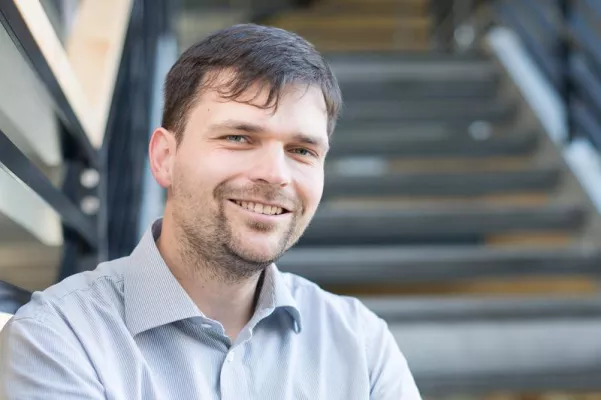
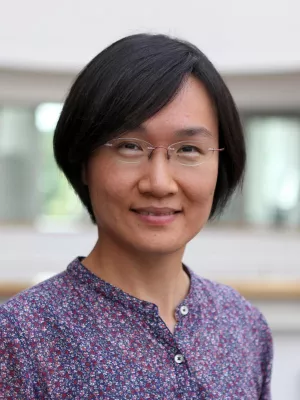
Johannes Fink joined IST Austria in 2016. (Achiamar Lee-Rivera/IQIM)

(openPR) Johannes Fink and Maximilian Jösch receive prestigious ERC Grants – Projects on quantum networks and neuronal mechanisms of attention funded

---
Johannes Fink and Maximilian Jösch, both Assistant Professors at the Institute of Science and Technology Austria (IST Austria), have been awarded Starting Grants by the European Research Council (ERC). With the two new awardees, 31 professors at IST Austria have so far been awarded highly prestigious research grants by the ERC. In their funded projects, Johannes Fink, an experimental physicist, will develop a transceiver for fiber optic quantum networks, while Maximilian Jösch, a neuroscientist, will investigate the neuronal mechanisms required for attention.


Maximilian Jösch – Neuronal basis of attention

We are constantly inundated with information. To cope with all the new sights, smells, and sounds that reach us, we and other animals have evolved attention: the ability to selectively concentrate on one thing, like reading this text, while ignoring others, such as the beep alerting us to the newest text message. Disorders that affect the ability to pay attention are a serious public health concern. Attentional disorder, like ADHD and ASD, affect around 5% of children worldwide. However, the attentional mechanisms the nervous system uses are not well understood.

In this project, Maximilian Jösch and his team seek to build a framework to study attention in health and disease by investigating the mouse superior colliculus. This brain region is evolutionarily conserved across vertebrates and known to be involved in attention and in transforming sensory stimuli into goal directed movements, the so-called sensorimotor transformations. By using the mouse modern genetic toolbox to study the brain, the team will monitor the activity of thousands of neurons while observing the animal’s behaviour. This will allow them to understand the neuronal mechanisms involved in sensorimotor transformations. The focus will be on visual information and how visual scenes seen by the mouse are represented and modulated by the superior colliculus. For example, when running through the forest, our brain needs to constantly process information to calculate the distance to the next branch or root to avoid tripping over them. Once the correct calculation is performed, the brain has to inform the motor system to activate the corresponding muscles correctly. The ability to attend to the relevant object in a natural world filled with task-irrelevant information is a non-trivial task. These studies will allow Maximilian Jösch to characterize the neuronal mechanisms of such attentional and goal directed behaviours, as well as to understand the brain-wide modulations that change these computations according to the momentary need of the animal.

In 2009, Maximilian Jösch received his PhD from the Max Planck Institute of Neurobiology and the Ludwig-Maximilians-University Munich, Germany. He then worked as postdoctoral fellow at the Max Planck Institute of Neurobiology, Martinsried, and since 2010, as postdoctoral fellow at Harvard University in the lab of Markus Meister. Maximilian Jösch joined IST Austria as Assistant Professor at the beginning of 2017.

Johannes Fink – Bridging quantum networks and quantum computation

Superconducting quantum processors are expected to soon help solve complex questions faster. The logical next step in quantum computing will be to connect these processors in a quantum web, similar to the way PCs are connected through the internet. One, so far hypothetical, option would be to use the existing fiber optic infrastructure for a quantum network. But research into developing on-chip quantum devices and large-scale networks has progressed largely independently. Advances in the two are often not compatible. In the project funded by the ERC, Johannes Fink will develop a fiber optic transceiver that allows superconducting quantum processors to connect.

Superconducting qubits, single microwave photons, are the “bits” of superconducting quantum processors. They allow for fast processing, but are susceptible to interference, thermal noise, and losses. This limits the use of qubits for quantum communication. In fact, superconducting quantum processors that work with qubits must be cooled to almost absolute zero degrees Kelvin to function. Sending qubits between such processors with a link at room temperature has so far not been possible.

In the ERC-funded project, Fink will bridge the worlds of quantum networks and quantum computation. He seeks to build a transducer using silicon photonics for low-loss fiber optic communication, and integrate this with superconducting circuits for quantum processing. By integrating silicon photonics and superconducting circuits, Fink seeks to achieve a low-loss and high-bandwidth transceiver and extend the range of current fiber optic quantum networks.

Johannes Fink received his PhD in Physics from ETH Zurich, Switzerland, in 2010. After a year as postdoctoral researcher at ETH Zurich, Fink moved to the California Institute of Technology, US. At Caltech, Fink worked as IQIM postdoctoral research scholar from 2012-2015 and as Senior Staff Scientist from 2015-2016. Fink joined IST Austria as Assistant Professor in 2016.

IST Austria

The Institute of Science and Technology (IST Austria) is a PhD granting research institution located in Klosterneuburg, 18 km from the center of Vienna, Austria. Inaugurated in 2009, the Institute is dedicated to basic research in the natural and mathematical sciences. IST Austria employs professors on a tenure-track system, postdoctoral fellows, and doctoral students at its international graduate school. While dedicated to the principle of curiosity-driven research, the Institute owns the rights to all scientific discoveries and is committed to promote their use. The first president of IST Austria is Thomas A. Henzinger, a leading computer scientist and former professor at the University of California in Berkeley, USA, and the EPFL in Lausanne, Switzerland.
www.ist.ac.at

Weitere Informationen:
- https://quantumids.com/ Website of Professor Fink's group
- http://ist.ac.at/de/forschung/forschungsgruppen/joesch-gruppe/ Website of Prof Jösch's group

Quelle: idw
Diese Pressemeldung wurde auf openPR veröffentlicht.

Verantwortlich für diese Pressemeldung:

News-ID: 966809
 182

Kostenlose Online PR für alle

Jetzt Ihren Pressetext mit einem Klick auf openPR veröffentlichen

Jetzt gratis starten

Pressebericht „Two ERC Starting Grants for IST Austria Professors“ bearbeiten oder mit dem "Super-PR-Sparpaket" stark hervorheben, zielgerichtet an Journalisten & Top50 Online-Portale verbreiten:

PM löschen PM ändern
Disclaimer: Für den obigen Pressetext inkl. etwaiger Bilder/ Videos ist ausschließlich der im Text angegebene Kontakt verantwortlich. Der Webseitenanbieter distanziert sich ausdrücklich von den Inhalten Dritter und macht sich diese nicht zu eigen. Wenn Sie die obigen Informationen redaktionell nutzen möchten, so wenden Sie sich bitte an den obigen Pressekontakt. Bei einer Veröffentlichung bitten wir um ein Belegexemplar oder Quellenennung der URL.

Pressemitteilungen KOSTENLOS veröffentlichen und verbreiten mit openPR

Stellen Sie Ihre Medienmitteilung jetzt hier ein!

Jetzt gratis starten

Weitere Mitteilungen von Institute of Science and Technology Austria

Bild: Tödliche Desinfektion im AmeisennestBild: Tödliche Desinfektion im Ameisennest
Tödliche Desinfektion im Ameisennest
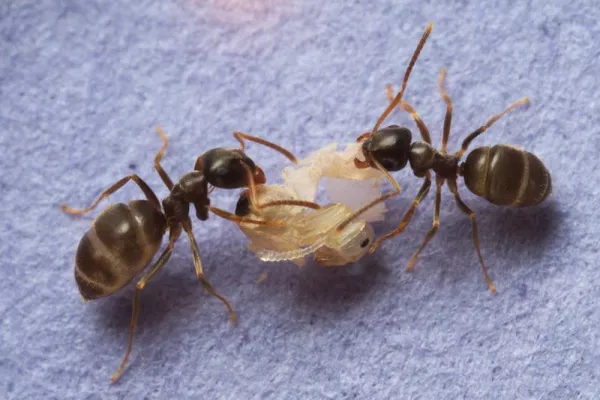
Invasive Ameisen opfern infizierte Koloniegenossen zum Schutz der Kolonie – Studie erschien in eLife --- Ameisen töten infizierte Koloniemitglieder und schützen so ihre Kolonie vor dem Ausbruch einer Epidemie, wenn es ihnen nicht gelungen ist, die Ansteckung mit der tödlichen Erkrankungen zu verhindern. Bei dieser Krankheitsbekämpfung zeigen Ameisenkolonien eine frappierende Ähnlichkeit mit dem Immunsystem, das den Organismus von Wirbeltieren schützt. Das beschreibt ein Forscherteam des Institute of Science and Technology Austria (IST Austri…
Bild: Neue Methode kann bis zu 95% der in Rohrleitungen verbrauchten Pumpenergie einsparenBild: Neue Methode kann bis zu 95% der in Rohrleitungen verbrauchten Pumpenergie einsparen
Neue Methode kann bis zu 95% der in Rohrleitungen verbrauchten Pumpenergie einsparen
Strömungen durch Rohre und Rohrleitungen sind meist turbulent. Bisher wurde angenommen, dass eine turbulente Strömung stets turbulent bleibt. Forscher am Institute of Science and Technology Austria, darunter Professor Björn Hof und Ko-Erstautoren Jakob Kühnen und Baofang Song, haben jetzt gezeigt, dass dies nicht der Fall ist. In ihren Experimenten, welche sie in Nature Physics publizierten, konnten sie Turbulenz in einem Rohr so beeinflussen, dass die Strömung einen laminaren, also nicht-turbulenten, Zustand annahm. Sie beobachteten auch, da…

Das könnte Sie auch interessieren:

Bild: Zwei ERC Consolidator Grants gehen an IST Austria-ForscherInnenBild: Zwei ERC Consolidator Grants gehen an IST Austria-ForscherInnen
Zwei ERC Consolidator Grants gehen an IST Austria-ForscherInnen
Sylvia Cremer und Fyodor Kondraschov erhalten renommierte Förderpreise vom Europäischen Forschungsrat | Die Gesamtzahl der ERC Frontier Research Grants für Forscher am IST Austria steigt damit auf 38 --- Grants des Europäischen Forschungsrat (European Research Council, ERC) gelten angesichts des harten Wettbewerbs und der hohen Standards, die im Auswahlverfahren …
Bild: Neuronale Schaltkreise der AngstBild: Neuronale Schaltkreise der Angst
Neuronale Schaltkreise der Angst
… und ihr Team am Max-Planck-Institut für Neurobiologie in Martinsried bei München genauer untersuchen. Ein Vorhaben, das vom Europäischen Forschungsrat (ERC) nun mit einem Starting Grant unterstützt wird. Der Wissenschaftlerin stehen damit 1,5 Millionen Euro in den nächsten fünf Jahren für die Umsetzung ihres Forschungsvorhabens zur Verfügung. --- Angst …
Bild: ERC-Grant für Wissenschaftlerin am Max-Planck-Institut für Struktur und Dynamik der MaterieBild: ERC-Grant für Wissenschaftlerin am Max-Planck-Institut für Struktur und Dynamik der Materie
ERC-Grant für Wissenschaftlerin am Max-Planck-Institut für Struktur und Dynamik der Materie
Wanzheng Hu, eine Wissenschaftlerin am Max-Planck-Institut für die Struktur und Dynamik der Materie (MPSD) in Hamburg, erhält einen Starting Grant des Europäischen Forschungsrates (ERC). Sie untersucht das kollektive Quantenverhalten von zweidimensionalen Materialien, die nur eine Atomschicht dick sind. --- Ihr Projekt, Dynamical Materials Control in …
A democratic façade
A democratic façade
ERC Starting Grant awarded to democracy researcher Dr Anja Osei from Konstanz --- "Parliaments in autocracies, that is an apparent contradiction in terms", says Dr Anja Osei, democracy researcher at the University of Konstanz. Nevertheless, these "electoral autocracies" exist, and there are many of them: countries that hold elections and have formally …
Bild:  Mathematik: ERC Starting Grant für Manuel KrannichBild:  Mathematik: ERC Starting Grant für Manuel Krannich
Mathematik: ERC Starting Grant für Manuel Krannich
Im Wettbewerb um die vom Europäischen Forschungsrat (European Research Council – ERC) verliehenen Starting Grants hat sich Juniorprofessor Manuel Krannich, Arbeitsgruppenleiter am Institut für Algebra und Geometrie (IAG) des KIT, mit seinem Projekt „Manifolds and Functor Calculus“ (MaFC) durchgesetzt. Das Projekt ist auf fünf Jahre angelegt und wird …
EU-Millionenförderung für Kölner Zoologen: Die Evolution von beißenden zu saugenden Insekten
Dr. Alexander Blanke vom Institut für Zoologie der Universität zu Köln erhält den Starting Grant 2017 des Europäischen Forschungsrats (ERC). Für sein auf fünf Jahre angelegtes Projekt am Biozentrum Köln steht dem Nachwuchswissenschaftler mit 1,5 Millionen Euro die Höchstförderung des Starting Grants zur Verfügung. --- EU-Millionenförderung für Kölner …
Bild: ERC grant for scientist from Max Planck Institute for the Structure and Dynamics of MatterBild: ERC grant for scientist from Max Planck Institute for the Structure and Dynamics of Matter
ERC grant for scientist from Max Planck Institute for the Structure and Dynamics of Matter
Wanzheng Hu, a scientist at the Max Planck Institute for the Structure and Dynamics of Matter (MPSD) in Hamburg, has been awarded a prestigious Starting Grant worth up to €1.79 million by the European Research Council (ERC). She is investigating the collective quantum behavior of two-dimensional materials, which are just one atomic layer thick. --- Her …
U15-Universitäten unverändert stark auf der europäischen Bühne
Ein Drittel der nach Deutschland vergebenen ERC Starting Grants geht 2017 an U15-Mitgliedsuniversitäten --- Die U15-Universitäten haben ihre starke Stellung bei der Vergabe der Starting Grants des European Research Council (ERC) gehalten: Mit 23 von insgesamt 67 Starting Grants, die an Wissenschaftlerinnen und Wissenschaftler an deutschen Forschungseinrichtungen …
EU fördert exzellente Nachwuchsforschung: Zehn Auszeichnungen gehen nach Nordrhein-Westfalen
… - Forschungszentrum Jülich besonders erfolgreich --- Zehn herausragende Forscherinnen und Forscher aus Nordrhein-Westfalen haben sich gegen große Konkurrenz durchgesetzt und die begehrten Starting Grants des Europäischen Forschungsrats (ERC) eingeworben. Ihre Forschungsvorhaben werden jeweils mit bis zu 1,5 Millionen Euro gefördert. Über 3.000 europäische …
Bild: Anderthalb Millionen Euro ERC Starting Grant für Greifswalder BiochemikerBild: Anderthalb Millionen Euro ERC Starting Grant für Greifswalder Biochemiker
Anderthalb Millionen Euro ERC Starting Grant für Greifswalder Biochemiker
Juniorprofessor Matthias Höhne von der Universität Greifswald erhält einen „Starting Grant“ des Europäischen Forschungsrats (European Research Council, ERC). Er lehrt und forscht am Institut für Biochemie der Mathematisch-Naturwissenschaftlichen Fakultät. Mit seiner Arbeitsgruppe entdeckt und optimiert er neue Proteine, die als Biokatalysatoren für chemische …
Sie lesen gerade: Two ERC Starting Grants for IST Austria Professors