openPR Recherche & Suche
Presseinformation

CVD Diamond Coating: New innovative process improves the adhesion of diamond to cemented carbide

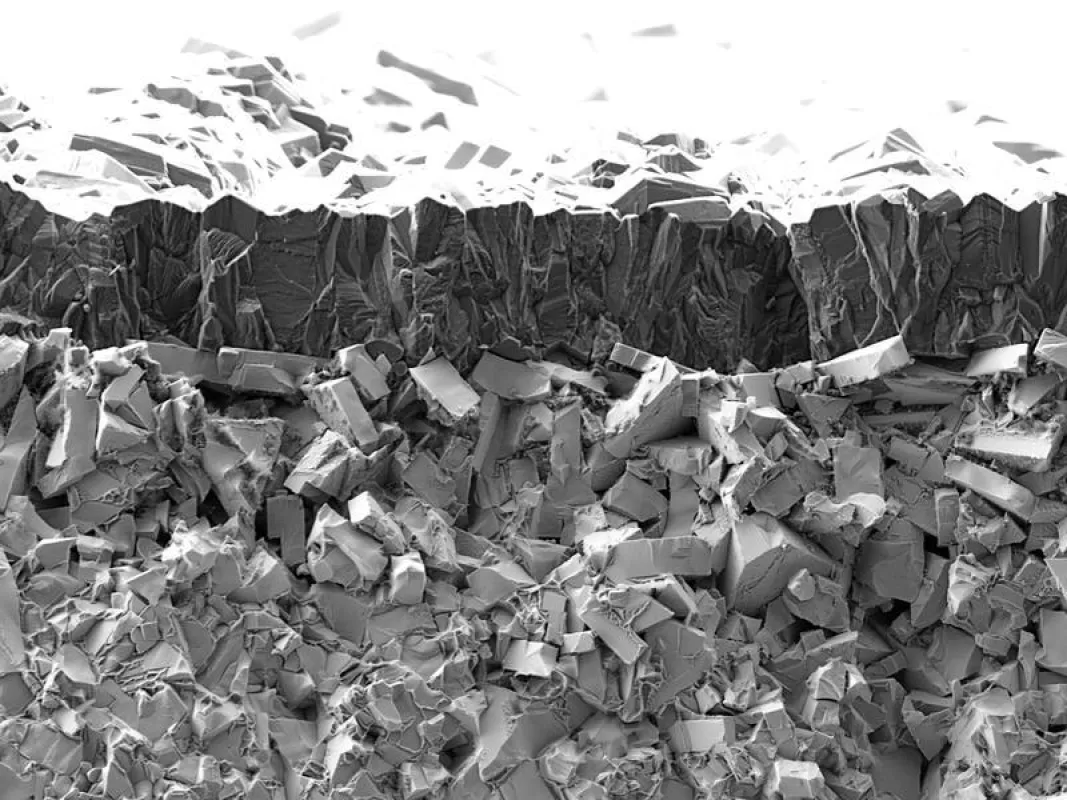
The broken edge of a diamond-coated carbide component pretreated with the newly developed procedure, with significantly improved adhesion of the diamond layer.  (© Fraunhofer Institute for Mechanics o
The broken edge of a diamond-coated carbide component pretreated with the newly developed procedure, with significantly improved adhesion of the diamond layer. (© Fraunhofer Institute for Mechanics o

(openPR) To reduce process costs in industrial parts manufacturing while simultaneously improving quality, the use of diamond-coated, cemented carbide cutting tools has increased. Adhesion of diamond coatings was previously problematic, particularly when processing composite or lightweight materials. Suitable pretreatment is therefore vital. Dr. Manuel Mee of the Fraunhofer Institute for Mechanics of Materials IWM has developed a new pretreatment routine that increases the adhesion of CVD diamond to carbide: by combining several approaches into a single process, all factors which affect the adhesion of the coating can be taken into consideration, leading to a fundamental improvement of the adhesion.


---
Today cemented carbide is the most commonly used material for industrial cutting tools. This is thanks to its combination of tungsten carbide and cobalt. While it is the tungsten carbide that lends this metal its hardness, the toughness that makes it equal to many tasks is provided by the cobalt, which holds the tungsten carbide grains together in the material structure. Coating the cemented carbide with diamond and thus providing greater hardness is intended to further increase the wear resistance of the tool. 'But this is where the challenge lies, because the cobalt present in the carbide prevents stabilization of the diamond structure during the coating process. Instead, a graphite-like structure of carbon is formed,' says Dr. Manuel Mee, a scientist of the Tribological Coatings group at Fraunhofer IWM. To prevent the cobalt from interacting with the diamond that is forming or already synthesized, the cobalt phase on the surface of the carbide tool is nowadays removed by means of a wet-chemical process. This type of pretreatment, however, causes the peripheral zone of the carbide to become porous and affects its toughness. The irregular stresses obtained during cutting, particularly when working with inhomogeneous materials such as carbon fiber-reinforced plastics, can result in the breakdown of the now more vulnerable peripheral zone. As a result, the diamond coating flakes off.

Significantly reduced process Duration

'With the new method we can now maintain the stability of the peripheral zone and even slightly increase it', adds Mee. Since he implements every step of the process with a microwave plasma, the process chain need not be interrupted. This eliminates extra work steps and thus valuable time. Another important factor: tools produced by this method can be recycled once they become worn by removing the old coating and applying the process again. This reduces the amount of materials required, which is particularly advantageous in regard to the tungsten used - this is extracted primarily in China and cannot be reliably obtained on the world markets.

Multiple processes combined into one

Apart from the wet-chemical procedure currently used almost exclusively for ensuring the adhesion of diamond to cemented carbide, other methods of surface treatment are possible - and Dr. Mee has bundled these into an integrated process for the functionalization of the tool material. 'By combining different process approaches I have been able to make use of the advantages of each of the factors influencing adhesion while also being able to compensate for their individual disadvantages', he explains. First the carbon is removed from the surface of the carbide at high temperature, which results in the formation of what is known as the eta phase. Re-enrichment with carbon then leads to a large proportion of the unwanted cobalt in the peripheral zone being vaporized. At the same time, however, the surface structure, hardness and fracture toughness are positively influenced. The process can be controlled in such a way that the eta phase previously created remains in the grain boundaries beneath the surface, and can then be used in the following treatment step to cause a conversion to cobalt tungstate. This has proven itself capable of stabilizing the cobalt and inhibiting its subsequent diffusion. This process step does not, however, prevent a wetting of the surface by a very thin cobalt film. Mee has therefore added a further step to the procedure in which a silicon-based interlayer is added that finally keeps the cobalt away from the diamond layer.

The procedure, which is funded by the 'DiaWerk' project of the Baden-Württemberg Stiftung gGmbH foundation, is meanwhile patent pending and has been described in detail by Mee in his dissertation on microwave plasma-assisted process development for the manufacture of functionally graded hardmetals for CVD diamond coating. For this dissertation Dr. Manuel Mee has been awarded the 2017 Mechanics of Materials Award with its endowment of €3000 by the automotive supplier KSPG AG. This award is given annually by the prize committee of the board of trustees of Fraunhofer IWM to young researchers for outstanding scientific achievement in the field of materials mechanics.

Scientific contact:
Dr. Manuel Mee
Tribological Coatings
Fraunhofer Institute for Mechanics of Materials IWM
Phone +49 761 5142-490

E-Mail

Weitere Informationen:
- http://www.iwm.fraunhofer.de/en/press/press-releases/31_07_2017_processimprovesadhesionofdiamondtocementedcarbide.html - Website Fraunhofer IWM
- http://www.iwm.fraunhofer.de/en/services/tribology/tribological-coatings.html - Tribological Coatings

Quelle: idw
Diese Pressemeldung wurde auf openPR veröffentlicht.

Verantwortlich für diese Pressemeldung:

News-ID: 961311
 448

Kostenlose Online PR für alle

Jetzt Ihren Pressetext mit einem Klick auf openPR veröffentlichen

Jetzt gratis starten

Pressebericht „CVD Diamond Coating: New innovative process improves the adhesion of diamond to cemented carbide“ bearbeiten oder mit dem "Super-PR-Sparpaket" stark hervorheben, zielgerichtet an Journalisten & Top50 Online-Portale verbreiten:

PM löschen PM ändern
Disclaimer: Für den obigen Pressetext inkl. etwaiger Bilder/ Videos ist ausschließlich der im Text angegebene Kontakt verantwortlich. Der Webseitenanbieter distanziert sich ausdrücklich von den Inhalten Dritter und macht sich diese nicht zu eigen. Wenn Sie die obigen Informationen redaktionell nutzen möchten, so wenden Sie sich bitte an den obigen Pressekontakt. Bei einer Veröffentlichung bitten wir um ein Belegexemplar oder Quellenennung der URL.

Pressemitteilungen KOSTENLOS veröffentlichen und verbreiten mit openPR

Stellen Sie Ihre Medienmitteilung jetzt hier ein!

Jetzt gratis starten

Weitere Mitteilungen von Fraunhofer-Institut für Werkstoffmechanik IWM

Bild: Korr: Diamantreibung: Simulation zeigt auf molekularer Ebene bislang unbekannte Reibungsmechanismen
Korr: Diamantreibung: Simulation zeigt auf molekularer Ebene bislang unbekannte Reibungsmechanismen
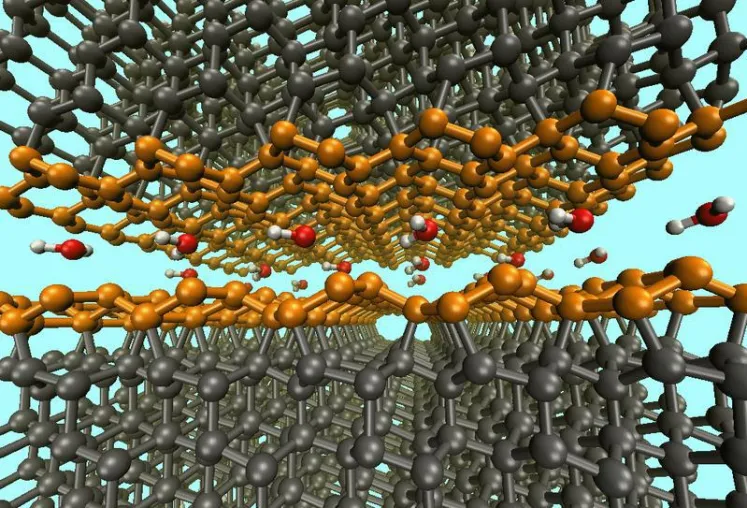
Auf Schneidwerkzeugen, Lagern und Dichtungen helfen Diamantbeschichtungen, Reibung und Verschleiß zu reduzieren. Wasser vermindert die Reibung dabei erheblich. Die Gründe dafür sind bislang nicht vollständig verstanden. Das Fraunhofer-Institut für Werkstoffmechanik IWM und das Institut für Physik der Universität in Freiburg liefern mit einer Simulation neue Erklärungen für das Reibungsverhalten von Diamantoberflächen unter Wasserzugabe: Nicht nur die bekannte Passivierung der Oberflächen mittels Wasserspaltung spielt eine Rolle, es tritt auch…
Bild: Diamantreibung: Simulation zeigt auf molekularer Ebene bislang unbekannte Reibungsmechanismen
Diamantreibung: Simulation zeigt auf molekularer Ebene bislang unbekannte Reibungsmechanismen
An Schneidwerkzeugen, Lagern und Dichtungen helfen Diamantbeschichtungen, Reibung und Verschleiß zu reduzieren. Wasser vermindert die Reibung dabei erheblich. Die Gründe dafür sind bislang nicht vollständig verstanden. Das Fraunhofer-Institut für Werkstoffmechanik IWM und das Institut für Physik der Universität in Freiburg liefern mit einer Simulation neue Erklärungen für das Reibungsverhalten von Diamantoberflächen unter Wasserzugabe. Bedeutende Erkenntnis: Nicht nur die bekannte Passivierung der Oberflächen mit Wasser spielt eine Rolle, es …

Das könnte Sie auch interessieren:

Intelligent coatings: Evonik draws a cloak of invisibility over ships
- New coating to make ships invisible to microorganisms - Evonik Competence Center investigating the biofouling problem - Biofouling on ship hulls increases costs and CO2 emissions worldwide --- In a double benefit for the global economy and world climate, Evonik plans to make ship hulls invisible to microorganisms and so to protect them against biofilms, …
Bild: Keramik-Beschichtung gegen Hitzeprobleme
Keramik-Beschichtung gegen Hitzeprobleme
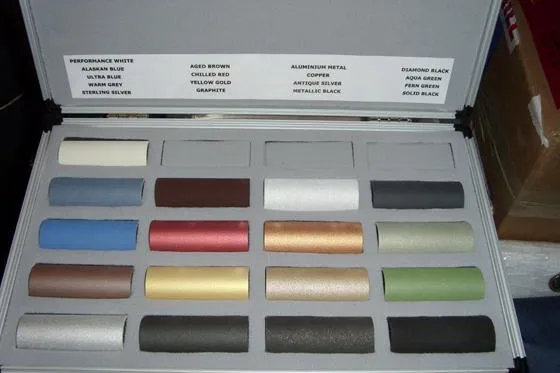
… anderen Fahrzeugen verwendet werden. •High Performance Aluminium Ideal zur Beschichtung von Einlasskrümmern, um eintretende Hitze zu verhindern. Kühlerer Kraftstoff liefert mehr Leistung. •Diamond Black Wurde entwickelt zum Einsatz an Side Pipes, Motorradschalldämpfern, Endschalldämpfern, ist extrem hart und widerstandsfähig. •Primary range (bis zu 25% …
Bild: Kompromisslose Sonderscheibenfräser
Kompromisslose Sonderscheibenfräser
… therefore process reliability. The numerous corner radii available from 0.8 to 4mm cover a whole range of machining needs. Different Tiger.tec® cutting material qualities with CVD or PVD coating make it possible to exactly match to the material. In short: the user receives a custom tool solution without having to do without the advantages of economical …
Bild: SCHWING Technologies mit neuesten Anwendungen und Versuchsanlagen auf POWTECH 2019
SCHWING Technologies mit neuesten Anwendungen und Versuchsanlagen auf POWTECH 2019
… Silizium Industrie (Aufreinigung zum Solargrade, Solarpanel, Chip-Industrie, Bremsscheiben), Silikate (Spezial-Tone, Glasperlen, Waschmittel), Nanopartikel (Graphit-Herstellung, Coating von Graphit, Kohlenstoffpasten, Schmiermittel, Zigarettenfilter, Wasserfilter, Farbreinigung, Lackpigmente), Mineralfarbenindustrie (Pigmenten für Autolacke und Druckfarben, …
Bild: Pfeiffer Vacuum zeigt auf den Messen Semicon Korea und Semicon China innovative VakuumlösungenBild: Pfeiffer Vacuum zeigt auf den Messen Semicon Korea und Semicon China innovative Vakuumlösungen
Pfeiffer Vacuum zeigt auf den Messen Semicon Korea und Semicon China innovative Vakuumlösungen
… langfristiger und zuverlässiger Komplettanbieter von Vakuumtechnologie für alle Kunden weltweit in Aktion zu treten“, so Eric Taberlet, Unit Semiconductor & Coating. Ölfreie Prozesspumpen A4-Serie Die ölfreien, mehrstufigen Wälzkolbenpumpen der A4-Serie bieten ein Saugvermögen von 100 bis 2.300 m3/h. Diese energieeffizienten und zuverlässigen Pumpen …
Bild: Robust and functional – surface finishing by suspension spraying
Robust and functional – surface finishing by suspension spraying
… applications benefit from increased process stability and reliability. --- Rollers with precise printing performance in the paper industry or offshore equipment in aggressive saltwater – coatings protect these components even under harsh conditions. In particular, thermal coating processes such as atmospheric plasma spraying (APS) or high velocity oxygen …
Bild: Delavan-Düsen Spray Technologies auf der POWTECH 2016 in Nürnberg: Düsen-Technik seit 1935Bild: Delavan-Düsen Spray Technologies auf der POWTECH 2016 in Nürnberg: Düsen-Technik seit 1935
Delavan-Düsen Spray Technologies auf der POWTECH 2016 in Nürnberg: Düsen-Technik seit 1935
Delavan-Düsen Spray Technologies NEW´s zur Sprühtrockner Düse SDX® und VCND Variable Coating Düse für das SPRAY Beschichten von Substraten in der Pharma, Food und Allgemeinen Industrien vor! Grossbettlingen/ Widnes, 2.04.2016 Das Delavan-Düsen Spray Technologies Team (www.duesen.de) wird auf der diesjährigen POWTECH, vom 19. bis 21. April 2016 …
Bild: Global Food Coating Ingredients Market Analysis, Development and Demand Forecast to 2020
Global Food Coating Ingredients Market Analysis, Development and Demand Forecast to 2020
The global food coating ingredients market is expected to increase from $2,645.6 million in 2014, and reach $3,698.6 million in 2020 with a CAGR of 5.8%. The up surging bakery and confectionery industries, increasing demand for convenience foods, growing consumer demand for food protection agents are some of the factors, driving the growth of the global …
CemeCon - Diamantbeschichtungen eröffnen enormes Leistungspotenzial
… besonderer Bedeutung sind hierbei die große Härte, die hohe chemische Resistenz und die hohe Wärmeleitfähigkeit des Materials. Chemisch unterscheidet sich Diamant von DLC (Diamond Like Carbon) dadurch, dass Diamant als kubisches Kristallgitter in der sp3-Hybridisierung vorliegt während DLC eine amorphe Mischung aus graphitartig (sp2) und diamantartig (sp3) …
Bild: PLANSEE application laboratory now available for thin-film testing
PLANSEE application laboratory now available for thin-film testing
As one of the leading suppliers of planar and rotary sputtering targets for thin-film solar cells, PLANSEE is continually developing solutions for an efficient coating process. In its in-house application center, the company sputters and characterizes thin-film materials under real conditions. The laboratory is now also available for customers. According …
Sie lesen gerade: CVD Diamond Coating: New innovative process improves the adhesion of diamond to cemented carbide