(openPR) The Chinese internet ecosystem is the largest in the world but also one of the most isolated. Barriers between the Chinese internet and the rest of the world isn’t just a result of Chinese censorship of many foreign sites and services, but also from language and culture obstacle.
How can SME enterprises become part?
Baidu, Alibaba and Tencent have been competing for online domination in the Chinese market for many years, building a large but not necessarily loyal user group with much overlap. Baidu has been concentarating on search and portals, Tencent tends to orient itself towards social media and gaming and Alibaba remains the dominant power in ecommerce.
According to China Internet Watch China B2B e-commerce market reached RMB 5.48 billion (USD 883 million) in Q1 2015, an decrease of 1.6% QoQ according to Analysis International.
Alibaba still dominates China’s B2B market by revenues with 44.13% market share, followed by HC360 (4.86%) and Global Sources (4.69%). And China’s international trading trade B2B platform completely enters a transaction era; and, the value of credit guarantee service entered the stage. Cross-channel collaborations have become new means for B2B e-commerce platforms to enhance the competitiveness.
And according to 52b2b.cn research, the top 10 B2B platforms ranked by brand influence in Q2 2013 were:Alibaba B2B, HC, Global Sources, DHgate, Focus Technology (Made in China), 315.com, Shengyibaoku, Shanghai steel Union (My steel net), the global market, B2B.com and IBI.
Presseinformation
Trends in B2B Business China
Diese Pressemeldung wurde auf openPR veröffentlicht.
Verantwortlich für diese Pressemeldung:
Über das Unternehmen
Golistr.Net is a B2B sourcing platform for SME entering the Chinese market.
Pressebericht „Trends in B2B Business China“ bearbeiten oder mit dem "Super-PR-Sparpaket" stark hervorheben, zielgerichtet an Journalisten & Top50 Online-Portale verbreiten:
Disclaimer: Für den obigen Pressetext inkl. etwaiger Bilder/ Videos ist ausschließlich der im Text angegebene Kontakt verantwortlich. Der Webseitenanbieter distanziert sich ausdrücklich von den Inhalten Dritter und macht sich diese nicht zu eigen. Wenn Sie die obigen Informationen redaktionell nutzen möchten, so wenden Sie sich bitte an den obigen Pressekontakt. Bei einer Veröffentlichung bitten wir um ein Belegexemplar oder Quellenennung der URL.
Weitere Mitteilungen von GOLISTR.NET

Gesucht - Gefunden? Onlinemarketing für Baidu, Weixin und Co
Ausländische Produkte und besonders jene ‚Made in Germany‘, bleiben in China sehr gefragt. Dennoch -Kaixin, Sina Weibo, RenRen, WeChat, Baidu, Sogou 360...Soziale Netzwerke, Suchmaschinen und Instant Messaging Dienste werden von ausländischen Firmen meist nicht genutzt.
So ist das Internet in China mit 632 Millionen Usern ein gigantischer Marktplatz mit eben solchem Potential, das allerdings mit enormem Wettbewerb um Klicks und Konsumenten, auch viel Know-how erfordert. Damit Webseiten in China also überhaupt messbar wahrgenommen werden, gi…
Das könnte Sie auch interessieren:

Catch my online attention - Corporate B2B Online-Präsenz
… tätig und erzielen Umsätze zwischen 1,5 und 20 Mrd. Euro. So breit gefächert das Sample der Unternehmen ist, so eindeutig sind die zentralen Ergebnisse und Trends:
Die Erfahrung der analysierten Unternehmen zeigt, dass sich bei der Corporate Website die meisten Zielgruppen für Content wie Unternehmensportrait und -geschichte sowie News vorwiegend auf …

B.I.P wächst mit neuen Märkten
Businessplattform bindet mit einem Klick 700 neue Partner in China an / crossgate kooperiert mit Cedex
Starnberg, 19. Juli 2007 – Durch die Kooperation mit Cedex verfügt die Business Integration PlatformTM (B.I.P.) der crossgate AG, dem Experten für B2B-Integration und Cross Automation, ab sofort über 700 neu angebundene Partner in China. Die Zusammenarbeit …

8. Jahrestreffen: Networking-Plattform lädt zum Austausch in die Hauptstadt ein
… Zumtobel, E.ON Hanse oder Lufthansa ihre Teilnahme zugesagt. Aufgrund der großen Resonanz wurden zwei neue Workshops gebildet, die sich mit den Themen „Business Integration China“ und „Poststellenoptimierung durch die Digitalisierung von Eingangsdokumenten“ befassen.
Das Event bietet zum ersten Mal nicht nur Vertretern der Automotive-Industrie sondern …
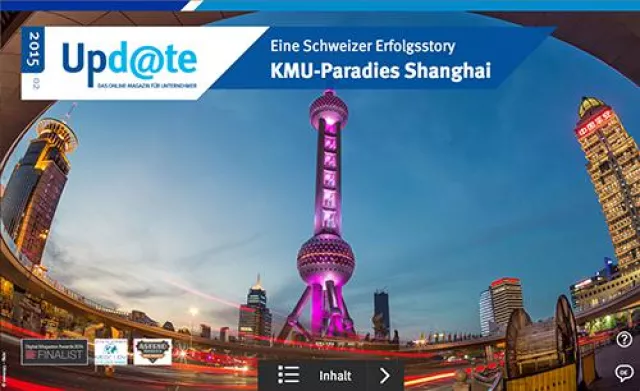
KMU-Paradies Shanghai – Upd@te Schweiz über wachsende Erträge im China-Geschäft
… Millionenstadt Shanghai. Das „Tor zur Welt“, wie die Metropole auch genannt wird, ist für den Asienexperten aus der Schweiz der wichtigste Platz in China für KMU-Business aller Arten. „Die Menschen in Shanghai“, so Nicolas Musy, „haben die grössten und vielfältigsten Geschäftsideen und Angebote für kleinere Unternehmen aus dem Ausland. Der Markt ist …

AIRTEC 2017: Experten tauschen sich erfolgreich über Schlüsseltechnologien der Luft- und Raumfahrt aus
… in Hallbergmoos zu Ende geht, so international wie nie. Drei Tage lang haben sich Akteure der Luft- und Raumfahrtbranche erstmals am Standort Munich Airport Business Park (MABP) in Hallbergmoos über aktuelle Trends und künftige Entwicklungen bei B2B-Meetings, Konferenzen und an den rund 150 Messeständen ausgetauscht.
„Mit unserer unmittelbaren Nähe …

Intershop stellt auf der Internet World 2013 aus
… Kongressprogramms zum Thema „So schaffen Sie im B2B Shopping Erlebnisse“.
Bereits im Laufe der letzten Jahre zeichnete sich ein kontinuierlicher Wachstumstrend im Online-Handel im Business-to-Business-Bereich ab. Der Markt ist milliardenschwer und die Potentiale sind längst nicht ausgeschöpft. „Da Intershop bereits seit vielen Jahren Online-Shops sowohl für Kunden …

Splendid Internet präsentiert E-Commerce und Online-Marketing auf der B2B NORD
… 2013 in Hamburg über aktuelle Trends und Entwicklungen im Online-Bereich. Shopbetreiber und alle Händler und Gewerbetreibenden, die sich für professionelle Lösungen im E-Business interessieren, erhalten von den Experten für E-Commerce und Online-Marketing Auskunft und Beratung zu ihren Fragen rund um den wachsenden Markt im Internet.
Die Geschäftswelt …

B2B Goes Mobile: Online-Produktvermarktung mit adaptiver Website
… strategischen Beratung bis zur langfristigen
Betreuung übernimmt der Full-Service-Dienstleister das Digitale Marketing Management und
kampagnenorientierte Online Marketing. Das Portfolio umfasst weiterhin Business Websites –
einschließlich Business Online Shops – Service Tools, mobile Business Apps und Service & Support.
Kunden der Agentur sind Unternehmen …
Committed to promoting intelligent manufacturing works in the future
… China General Manager Huang Gang and other representatives from SAIC OEMs and Auto-parts companies participated in this event.
HASCO, inheriting from SAIC automotive components business, independently focuses on R&D, production and marketing of automotive components. In 2016, HASCO achieved total sales revenue 124.30 billion RMB, thus becoming the …

B2B - Branche weiterhin sehr erfolgreich - B2B.eu wird verkauft
… besonders boomen. Die finanziell angespannte Lage der Endverbraucher führt dazu, dass sich Trends im B2B Sektor ändern / bzw. verschieben.
Besonders begehrt im B2B Sektor (Business to Business) sind derzeit zum Beispiel Plattformen im Bereich "Restposten", da die Endkunden verstärkt auf günstige Preise bei Produkten achten.
Aber auch im Bereich Elektronik …
Sie lesen gerade: Trends in B2B Business China