openPR Recherche & Suche
Presseinformation

Marine Species Threatened by Deep-Sea Mining

25.10.201714:00 UhrWissenschaft, Forschung, Bildung
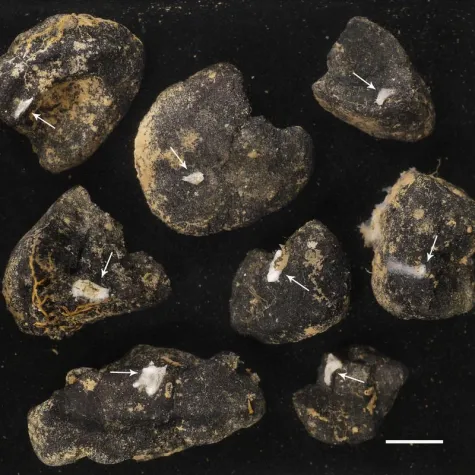
Bild: Marine Species Threatened by Deep-Sea Mining
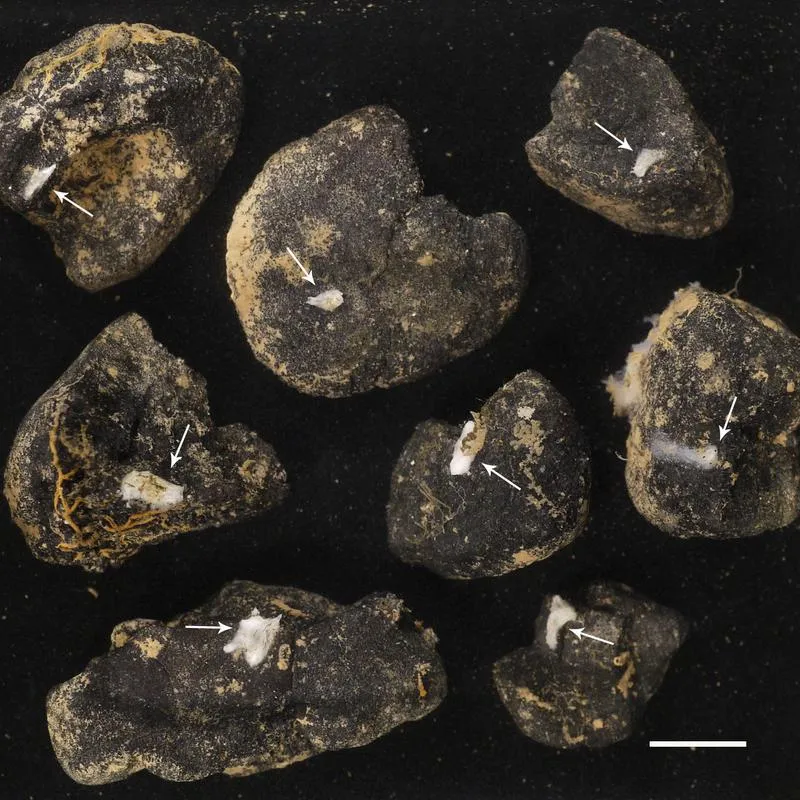
Polymetallic nodules with Plenaster craigi. White line is 1 cm.  (The University of Gothenburg )
Polymetallic nodules with Plenaster craigi. White line is 1 cm. (The University of Gothenburg )

(openPR) Underwater mining poses a great danger to animals inhabiting the seafloors. A new research study describes the most abundant species, a sponge, which can now be used to regulate mining operations and help us better understand their environmental impacts.


---
Less than half of our planet’s surface is covered by land. The rest is water, and this environment is home to an enormous range of animal species, most of which remain undiscovered and thus have not yet been named.

A newly discovered species, Plenaster craigi, has turned out to be the most abundant species on the ocean floors. Its habitat is dominated by nodules, which are metal balls the size of grapefruits that have been formed over millions of years and that are found in most big oceans at depths of over 4 000 metres. A new study involving researchers from the University of Gothenburg finds that, as deep-sea mining companies remove the nodules in order to extract the metals inside them, Plenaster craigi will probably disappear entirely from the affected areas.

‘Modern society, with its power lines and advanced batteries, has a great need for cobalt, nickel and copper, metals found in high concentrations in so-called polymetallic nodules on the Pacific seafloor in the Clarion-Clipperton Zone,’ says Thomas Dahlgren from the Department of Marine Sciences, University of Gothenburg.

The sponge Plenaster craigi must filter the water to find small particles with nutrients and energy that after being formed at surface level several kilometres above have slowly fallen down to the bottom.

‘There is not a whole lot of material that makes it all the way to the bottom. Most of it gets eaten by zooplankton and small fish on its way down and is returned to the food web in the ocean’s upper sunlit layer. Consequently, Plenaster craigi must filter large amounts of water to survive. This makes it vulnerable to the sand and mud stirred up when the nodules are harvested and pumped the 4 000 metres to the collection barges waiting at the surface,’ says Dahlgren.

Since 2013 when the sponge was first discovered, the species has temporarily been referred to as Porifera sp. A. Following the recent species description (see link to the article below), the sponge has now been assigned a permanent name, Plenaster craigi.

Plenaster craigi is the only known species of the newly defined genus Plenaster, which means ‘many stars’. Craigi was included in the name to honour Professor Craig Smith at the University of Hawaii, who led the two expeditions during which the animal was first discovered and collected.

The new species can now be used to explore how deep-see mining of minerals affects an environment that has not been touched for billions of years.

Thomas Dahlgren from the University of Gothenburg’s Department of Marine Sciences in Sweden and Uni Research in Norway participated in the study together with researchers from the National University of Singapore and the Natural History Museum in London.

Title: A new genus and species of abyssal sponge commonly encrusting polymetallic nodules in the Clarion-Clipperton Zone, East Pacific Ocean.

The article is available online at: http://www.tandfonline.com/doi/pdf/10.1080/14772000.2017.1358218?needAccess=true

Contact: Thomas Dahlgren, Department of Marine Sciences, University of Gothenburg, tel.: +46 (0)31 753 80 05, email: E-Mail

Weitere Informationen:
- http://science.gu.se/english/News/News_detail//marine-species-threatened-by-deep-sea-mining.cid1519609

Quelle: idw

Diese Pressemeldung wurde auf openPR veröffentlicht.

Verantwortlich für diese Pressemeldung:

News-ID: 976498
 442

Kostenlose Online PR für alle

Jetzt Ihren Pressetext mit einem Klick auf openPR veröffentlichen

Jetzt gratis starten

Pressebericht „Marine Species Threatened by Deep-Sea Mining“ bearbeiten oder mit dem "Super-PR-Sparpaket" stark hervorheben, zielgerichtet an Journalisten & Top50 Online-Portale verbreiten:

PM löschen PM ändern
Disclaimer: Für den obigen Pressetext inkl. etwaiger Bilder/ Videos ist ausschließlich der im Text angegebene Kontakt verantwortlich. Der Webseitenanbieter distanziert sich ausdrücklich von den Inhalten Dritter und macht sich diese nicht zu eigen. Wenn Sie die obigen Informationen redaktionell nutzen möchten, so wenden Sie sich bitte an den obigen Pressekontakt. Bei einer Veröffentlichung bitten wir um ein Belegexemplar oder Quellenennung der URL.

Pressemitteilungen KOSTENLOS veröffentlichen und verbreiten mit openPR

Stellen Sie Ihre Medienmitteilung jetzt hier ein!

Jetzt gratis starten

Weitere Mitteilungen von University of Gothenburg

The Male Dominance in Diplomacy Is Changing
The number of female diplomats in the world has increased in the last 20 years, although the most prestigious positions remain heavily male dominated. However, even this imbalance is changing, according to new research from the University of Gothenburg. --- In August, the Swedish government appointed Karin Olofsdotter as new Swedish ambassador to the United States. The appointment is of historical importance, since Olofsdotter is the first Swedish woman to hold the position. The male dominance in diplomacy dates far back in time, and men con…

Das könnte Sie auch interessieren:

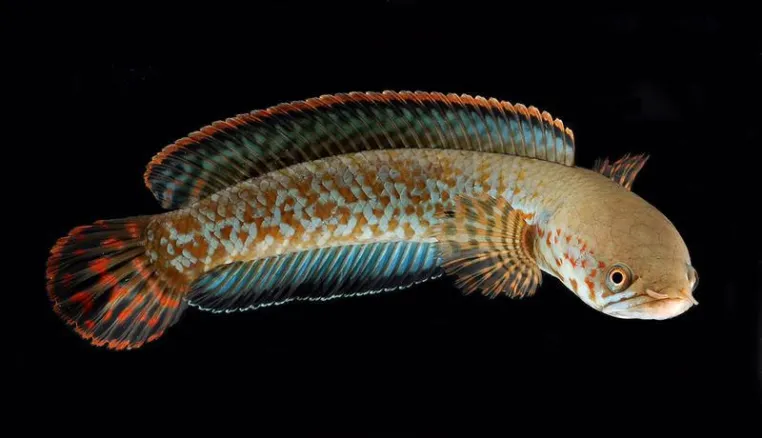
Bild: Snakeheads – new study brings order into species chaosBild: Snakeheads – new study brings order into species chaos
Snakeheads – new study brings order into species chaos
… 2000s one snakehead species, the Northern snakehead Channa argus originally from China and Russia, received wide media attention. The invasive and voracious behaviour of this species threatened the lo-cal fish fauna and the snakehead’s ability to cross short distances over land were perfect in-gredients for the storyline of horror movies; four such movies …
Bild: Large-Mouthed Fish Was Top Predator After Mass ExtinctionBild: Large-Mouthed Fish Was Top Predator After Mass Extinction
Large-Mouthed Fish Was Top Predator After Mass Extinction
… extinction on Earth took place about 252 million years ago – at the boundary between the Permian and Triassic geological periods. Up to 90 percent of the marine species of that time were annihilated. Worldwide biodiversity then recovered in several phases throughout a period of about five million years. Until now, paleontologists have assumed that the …
Bild: Lessons for the future from past storm wavesBild: Lessons for the future from past storm waves
Lessons for the future from past storm waves
… level would be sufficient to achieve the feat. The journal Proceedings of the National Academy of Sciences published their results on October 30, 2017. --- Coastal regions worldwide are threatened by climate change and sea-level rise. Warmer climate conditions can increase the strength of storms and cause floods to occur more often – a growing hazard …
Bild: Flagship species could help protect freshwatersBild: Flagship species could help protect freshwaters
Flagship species could help protect freshwaters
… order to halt the decline of species and habitats in freshwaters. The current study emphasises how legitimate this flagship approach is: 83 per cent of all the world’s threatened freshwater species occur in the same areas as the “imposing” freshwater species examined within the study. However, almost 60 per cent of these potential flagship species are …
Bild: Rapid environmental change makes species more vulnerable to extinctionBild: Rapid environmental change makes species more vulnerable to extinction
Rapid environmental change makes species more vulnerable to extinction
Interactions between species play a key role in shaping biodiversity. A team of researchers including members of UZH has now shown that the coevolution of species that are embedded in complex networks of interactions is not only influenced directly by their partners but also indirectly by other species. This slows down the ability of complex communities …
Wissenschaftlicher Bericht zur Tiefseeforschung: Forschende fordern mehr Wissen für nachhaltiges Management
anaswamy, B. E. (2025) Deep Sea Research and Management Needs. Muñiz Piniella, A., Kellett, P., Alexander, B., Rodriguez Perez, A., Bayo Ruiz, F., Teodosio, M. C., Heymans, J. J. [Eds.] Future Science Brief N°. 12 of the European Marine Board, Ostend, Belgium.https://www.marineboard.eu/publications/deep-sea-research-and-management-needs
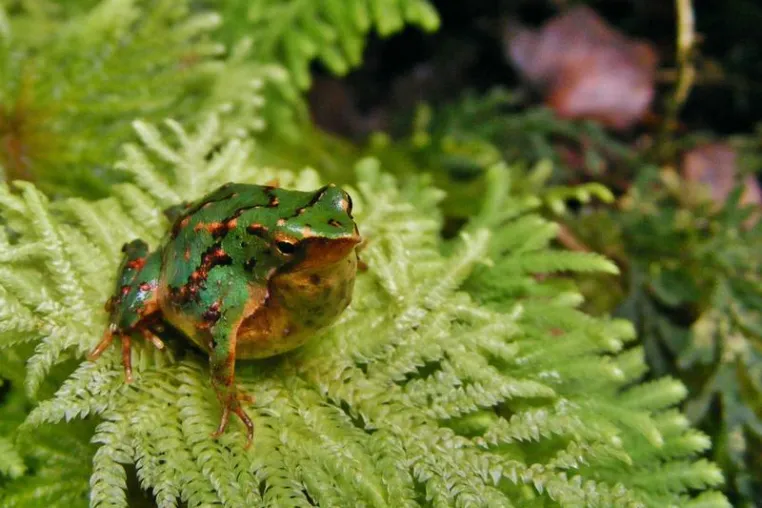
Bild: Emerging infectious disease threatens Darwin’s frog with extinctionBild: Emerging infectious disease threatens Darwin’s frog with extinction
Emerging infectious disease threatens Darwin’s frog with extinction
… that these infected populations are at a serious risk of extinction within 15 years of contracting the disease. Populations of this unique species, currently known as highly threatened, were previously considered to have remained relatively stable in the face of the disease that has ravaged many amphibian species worldwide, but the frogs may have been …
Bild: Giant boulders on the coast of the Bahamas are evidence of ancient stormsBild: Giant boulders on the coast of the Bahamas are evidence of ancient storms
Giant boulders on the coast of the Bahamas are evidence of ancient storms
… level would be sufficient to achieve the feat. The journal Proceedings of the National Academy of Sciences published their results on October 30, 2017. --- Coastal regions worldwide are threatened by climate change and sea-level rise. Warmer climate conditions can increase the strength of storms and cause floods to occur more often – a growing hazard …
Bild: Species Richness – a false friend? Scientists want to improve biodiversity assessmentsBild: Species Richness – a false friend? Scientists want to improve biodiversity assessments
Species Richness – a false friend? Scientists want to improve biodiversity assessments
Assessing the state of an ecosystem solely on the basis of short-term changes in the number of different species it contains can lead to false conclusions. This is according to a new analysis by an international team including researchers of the Helmholtz Institute for Functional Marine Biodiversity (HIFMB) at the University of Oldenburg and the German …
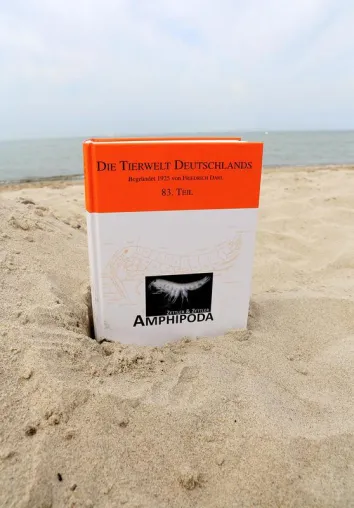
Bild: Amphipods of the Baltic Sea in focus– IOW scientists add new volume to renowned animal encyclopaediaBild: Amphipods of the Baltic Sea in focus– IOW scientists add new volume to renowned animal encyclopaedia
Amphipods of the Baltic Sea in focus– IOW scientists add new volume to renowned animal encyclopaedia
… complemented the extensive encyclopaedia, which was established in 1925 by zoologist Friedrich Dahl, with an English-language monograph on Baltic Sea amphipods. It covers a total of 243 species, which are morphologically characterised down to the last detail, and also contains notes on their ecology and behaviour. The book therefore is a valuable tool for …
Sie lesen gerade: Marine Species Threatened by Deep-Sea Mining