openPR Recherche & Suche
Presseinformation

Adhesives and composite materials made from Swiss tree bark

24.10.201709:00 UhrWissenschaft, Forschung, Bildung

(openPR) Studies conducted by the National Research Programme "Resource Wood" show that tannins extracted from native tree bark can be used to produce adhesives and composite materials. An additional area of application might be 3D printing.

---
The bark of native conifers is known as a waste product in the timber industry. It is mostly burnt or used as garden mulch. A team from the National Research Programme "Resource Wood" (NRP 66) has now developed a new process to extract valuable tannins from tree bark to produce adhesives and composite materials.


Tannins are a hot topic not only among wine experts. They are also in the focus of Swiss wood research. Frédéric Pichelin and his team at the Bern University of Applied Sciences in Biel see great potential in native tree barks. "If we take cascaded use seriously, we need to find ways of using tree bark because the wood industry produces plenty of it. This offers new sources of income, based on a renewable resource, to saw mills and the manufacturing industry," Frédéric Pichelin explains.

Creating added value in Switzerland

Tannin extracts are already employed in wood adhesives. But they are mostly extracted from tropical wood and are produced overseas. Tree bark of native conifers is never used in commercial tannin extraction. The researchers in Biel have been meaning to do something about this for a while. They have developed methods to extract tannins from native tree bark and tested their suitability in the production of adhesives for fibreboards and chipboards.

Applying a two-stage water-based process, the researchers managed to extract tannins with an impressive level of purity. They then tackled the challenge of developing a recipe to turn these extracts into adhesives for fibreboards and chipboards. Their results are promising: by adding water to the spruce bark extracts, they produced adhesives that can be used in the production of boards.

It is notable that the boards produced at pilot scale were made without formaldehyde, an agent with harmful effects that is normally used in glued wood products. Frédéric Pichelin says: "We are solving two problems in one go. We are replacing synthetic oil-based adhesives with products made from renewable resources, and we are getting rid of unhealthy emissions of commonly available fibreboards and chipboards.
With industrial implementation as their goal, the researchers are now pressing ahead with their ideas for using tree bark. At the same time, they are continuously working towards higher purity levels in the native extracts because commonly used tannins from overseas achieve slightly better results in terms of the solidity and water resistance of glued wood products. They hope to achieve a more pure product by developing better extraction methods. In addition, they need to reduce the variability of tannin yields and improve the reproducibility. They need success in both areas before they can upscale their process to industrial maturity.

Tree bark extracts for 3D printing

Bark-based tannins are already being used to bind not only wood products but also other fibrous materials. The researchers from Biel see additional potential in tannin-based foams for boards in light construction and furniture-making. One of the exceptional properties of tannin foams is their fire resistance, which will make them a desirable product in areas where fire prevention is paramount.

In addition, tannin extracts play an important role in developing composite materials for 3D printing. The researchers envisage printable construction and design materials that are entirely or primarily made from wood and bark. Lastly, even the pharmaceutical and food industry are showing interest in tannins because tannins have antioxidant and antibacterial properties. These properties are not necessarily attributable to the tannins themselves but to other components that are extracted from the bark. These components offer natural protection to trees from fungal and bacterial infections and might be useful for wood surface treatments in the future.

"The application potential of wood bark tannins is great. Presently it is difficult to say in which direction the development will go," says Frédéric Pichelin. "What is important is that Switzerland is not left behind."

-------------

NRP 66 "Resource Wood"

In collaboration with the authorities and industry partners, the National Research Programme "Resource Wood" (NRP 66) and its 30 research projects generate scientific knowledge and practical solutions for optimising the exploitation and use of wood in Switzerland. The overall final recommendations of NRP 66 will be published in four thematic summary reports and one overall synthesis report on 7 November 2017. The research project "Extraction of tannins from the bark of native conifers" of the Bern University of Applied Sciences was part of the dialogue field "Innovative wood-based materials for new applications".

Contact

Prof. Dr. Frédéric Pichelin
Berner Fachhochschule, Leiter Institut für Werkstoffe und Holztechnologie
Solothurnerstr. 102, 2504 Biel
Phone: +41 32 344 03 42
E-mail: E-Mail

Prof. Dr. Ingo Mayer
Leiter BFH-Zentrum Holz – Ressource und Werkstoff
Solothurnerstr. 102, 2504 Biel
Phone: +41 32 344 03 43
E-mail: E-Mail

Publications

S. Bianchi et al. Hot water extraction of Norway spruce (Picea abies [Karst.]) bark: analyses of the influence of bark aging and process parameters on the extract composition. Holzforschung (2015) doi: 10.1515/hf-2015-0160

S. Bianchi et al.: Characterization of condensed tannins and carbohydrates in hot water bark extracts of European softwood species. Phytochemistry (2015) doi: 10.1016/j.phytochem.2015.10.006

S. Bianchi et al.: Analysis of the structure of condensed tannins in water extracts from bark tissues of Norway spruce (Picea abies [Karst.]) and Silver fir (Abies alba [Mill.]) using MALDI-TOF mass spectrometry. Industrial Crops and Products (2014) doi: 10.1016/j.indcrop.2014.07.038

(Available to journalists in PDF format from the SNSF: E-Mail)

Weitere Informationen:
- http://www.snf.ch/en/researchinFocus/newsroom/Pages/news-171024-press-release-adhesives-and-composites-made-from-tree-bark.aspx#downloadbilder 'Images available for media use'
- http://www.nfp66.ch/en/projects/dialogue-field-3-innovative-wood-based-materials-for-new-applications/project-pichelin
- https://www.ahb.bfh.ch/fileadmin/content/F-E/Institut_WH/Dokumente/FS_WH_P_Tannin_e.pdf
- https://www.ahb.bfh.ch/en/home/research/institute-for-materials-and-wood-technology.html

Quelle: idw
Diese Pressemeldung wurde auf openPR veröffentlicht.

Verantwortlich für diese Pressemeldung:

News-ID: 976029
 409

Kostenlose Online PR für alle

Jetzt Ihren Pressetext mit einem Klick auf openPR veröffentlichen

Jetzt gratis starten

Pressebericht „Adhesives and composite materials made from Swiss tree bark“ bearbeiten oder mit dem "Super-PR-Sparpaket" stark hervorheben, zielgerichtet an Journalisten & Top50 Online-Portale verbreiten:

PM löschen PM ändern
Disclaimer: Für den obigen Pressetext inkl. etwaiger Bilder/ Videos ist ausschließlich der im Text angegebene Kontakt verantwortlich. Der Webseitenanbieter distanziert sich ausdrücklich von den Inhalten Dritter und macht sich diese nicht zu eigen. Wenn Sie die obigen Informationen redaktionell nutzen möchten, so wenden Sie sich bitte an den obigen Pressekontakt. Bei einer Veröffentlichung bitten wir um ein Belegexemplar oder Quellenennung der URL.

Pressemitteilungen KOSTENLOS veröffentlichen und verbreiten mit openPR

Stellen Sie Ihre Medienmitteilung jetzt hier ein!

Jetzt gratis starten

Weitere Mitteilungen von Schweizerischer Nationalfonds SNF

Bild: Zwischen Filterblasen, ungleicher Sichtbarkeit und TransnationalitätBild: Zwischen Filterblasen, ungleicher Sichtbarkeit und Transnationalität
Zwischen Filterblasen, ungleicher Sichtbarkeit und Transnationalität
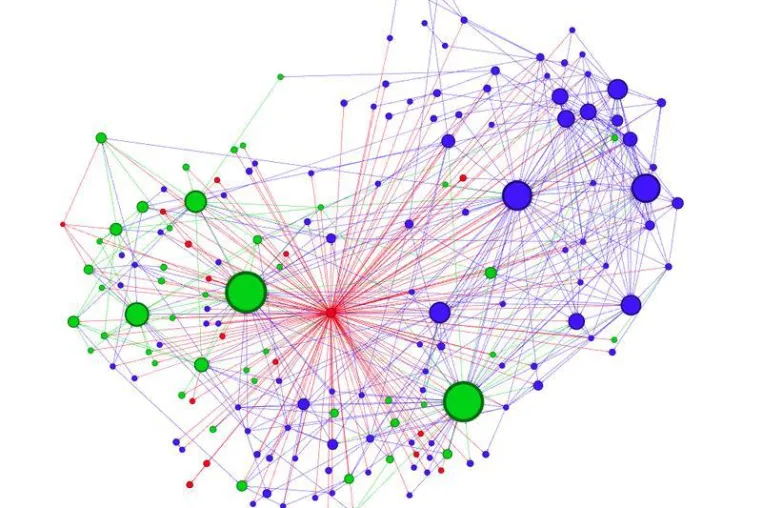
Das Internet wäre nichts ohne Hyperlinks. Sie machen das Netz erst zu einem Netz. Sie definieren die Wege, über die sich die Nutzer Inhalte erschliessen. Zudem bestimmen sie mit, welche Ergebnisse Suchmaschinen prominent anzeigen. Hyperlinks werden weder gleichmässig noch zufällig gesetzt. Was bedeutet das alles für den politischen Diskurs? Und welche Akteure erhalten eine überproportionale Sichtbarkeit? Eine Studie geht dieser Frage nach. --- Ein Forscherteam von Berner Kommunikationswissenschaftlern (Silke Adam, Thomas Häussler, Ueli Reber…
Bild: Die Grundlagen der Verwandlung von MolekülenBild: Die Grundlagen der Verwandlung von Molekülen
Die Grundlagen der Verwandlung von Molekülen
Der Chemiker Xile Hu erhält den Nationalen Latsis-Preis 2017. Xile Hu ist Professor für Chemie an der Eidgenössischen Technischen Hochschule in Lausanne (EPFL). Er wird für seine beeindruckende wissenschaftliche Laufbahn und seine herausragenden Forschungsarbeiten über das grundlegende Verständnis der Katalyse ausgezeichnet. --- Xile Hu ist Experte für Katalyse, die Umwandlungen von Molekülen durch bestimmte Stoffe. Der Chemieprofessor hat bahnbrechende Studien über die Produktion von solaren Treibstoffen und die Synthese von chemischen Mole…

Das könnte Sie auch interessieren:

Führungswechsel bei 3M: G. Gressler nach USA, R. Vaziri ist Nachfolger
Er wird damit Nachfolger von Günter Gressler, 54, der Anfang Juni zum Vice President und General Manager Industrial Adhesives and Tapes Division mit Sitz in St. Paul, USA, ernannt worden ist. Reza Vaziri begann seine 3M Karriere 1981 in der Schweiz und wurde 1994 Bereichsleiter für Industrieprodukte in Deutschland. Bis 2007 war er in verschiedenen nationalen …
Bild: Neuerscheinung: Adhesives Technology Compendium 2015Bild: Neuerscheinung: Adhesives Technology Compendium 2015
Neuerscheinung: Adhesives Technology Compendium 2015
Das vom Industrieverband Klebstoffe (IVK) in Zusammenarbeit mit der Redaktion adhäsion herausgegebene englischsprachige Handbuch Adhesives Technology Compendium ist neu erschienen. Das ursprünglich auf die deutsche Klebstoffindustrie und den IVK fokussierte Kompendium enthält in seiner Neuauflage erstmalig auch wichtige Informationen über die österreichische, …
The Trend to Disposables and Specialty Adhesives Usage in Medical Devices
(Nashua, NH) – Adhesives with enhanced performance characteristics are creating a variety of opportunities for device designers and medical adhesives suppliers. As improved synthetic materials and sophisticated designs widen the application envelope for medical devices, improvements in bonding materials and automated assembly are keeping pace, creating …
Bild: Industrieklebstoffhersteller erhöht die Präsenz auf dem größten Kontinent der ErdeBild: Industrieklebstoffhersteller erhöht die Präsenz auf dem größten Kontinent der Erde
Industrieklebstoffhersteller erhöht die Präsenz auf dem größten Kontinent der Erde
… an. Südostasien und China ist für DELO ein wichtiger Absatzmarkt. Bereits am 1. Dezember 2012 hat das Unternehmen eine eigene Tochtergesellschaft in Singapore, „DELO Industrial Adhesives (Singapore) Pte. Ltd.“, gegründet. Am 27. März 2013 folgte „DELO Industrial Adhesives (Shanghai), Co. Ltd.“ in China. Dadurch verfügt DELO dort über Lagerkapazitäten …
RAMPF Polymer Solutions ernennt Dr. Christian Weber zum Geschäftsführer
… Produkte und Lösungen.“ Organisatorische Neuaufstellung mit vier Business Center Darüber hinaus wurden im Rahmen einer organisatorischen Neuaufstellung vier Business Center gegründet – Adhesives, Electrocasting, Casting Resins & Elastomers, Sealing Systems –, mit denen das Unternehmen die Entwicklung und Herstellung von innovativen Kundenlösungen …
Bild: Geschäftsjahr erfolgreich abgeschlossen – DELO weiter auf WachstumskursBild: Geschäftsjahr erfolgreich abgeschlossen – DELO weiter auf Wachstumskurs
Geschäftsjahr erfolgreich abgeschlossen – DELO weiter auf Wachstumskurs
… Prozent unseres Gesamtumsatzes im Ausland erzielt.“ Um die Position in Asien weiter zu stärken, gründete das Unternehmen am 1. Dezember 2012 DELO Industrial Adhesives (Singapore) Pte. Ltd. als eigene Tochtergesellschaft. Am 27. März 2013 folgte DELO Industrial Adhesives (Shanghai), Co. Ltd. in China. Nachhaltiges Wirtschaften schafft mehr Arbeitsplätze …
Umfirmierung: Aus Medical Adhesive Revolution GmbH wird Adhesys Medical GmbH
… erfolgreichen Jungunternehmens mit Aachener Wurzeln spiegelt sich auch in einer Neuauflage von Logo, Corporate Design und Website wider: adhesys-medical.com. „Adhesys“ leitet sich von „Adhesives“ und „Systems“ ab; „Adhesives“ beschreibt hierbei den Kern der Technologie – medizinische Klebstoffe auf Polyutheranbasis. Auf dieser Basis hat das Unternehmen bislang …
Neue ISO 17178:2013 für Parkettklebstoffe – Deutsche Übersetzung
Die internationale Norm ISO 17178 Adhesives – Adhesives for bonding parquet to subfloor“ steht nun auch in der deutschen Übersetzung zur Verfügung. Seit 1999 werden elastische Parkettklebstoffe für die vollflächige Klebung von Parkett eingesetzt. Handelte es sich zunächst um 1-komponentige Polyurethanklebstoffe, so kamen später sehr emissionsarme (Emicode …
Bild: DELO blickt auf erfolgreiches Geschäftsjahr zurückBild: DELO blickt auf erfolgreiches Geschäftsjahr zurück
DELO blickt auf erfolgreiches Geschäftsjahr zurück
… verlief das Geschäft ebenfalls positiv. „Wir konnten unseren Umsatz um 21,4 Prozent steigern“, so Herold. 2008 hatte DELO die eigene Tochtergesellschaft DELO Industrial Adhesives LLC. in Boston gegründet. Mitarbeiteranzahl wurde gesteigert Das Wachstum des Unternehmens machte sich auch bei der Anzahl der Mitarbeiter bemerkbar: DELO verzeichnet zum …
Bild: Neuerscheinung: Adhesives Technology Compendium 2019Bild: Neuerscheinung: Adhesives Technology Compendium 2019
Neuerscheinung: Adhesives Technology Compendium 2019
Das vom Industrieverband Klebstoffe e.V. (IVK) in Zusammenarbeit mit der Redaktion des Fachmagazins adhäsion herausgegebene englische Handbuch „Adhesives Technology Compendium“ ist neu erschienen. Die englische Ausgabe des bekannten „Handbuch Klebtechnik“ erscheint im jährlichen Wechsel zur deutschen Version, so dass sich Interessierte aus der ganzen …
Sie lesen gerade: Adhesives and composite materials made from Swiss tree bark