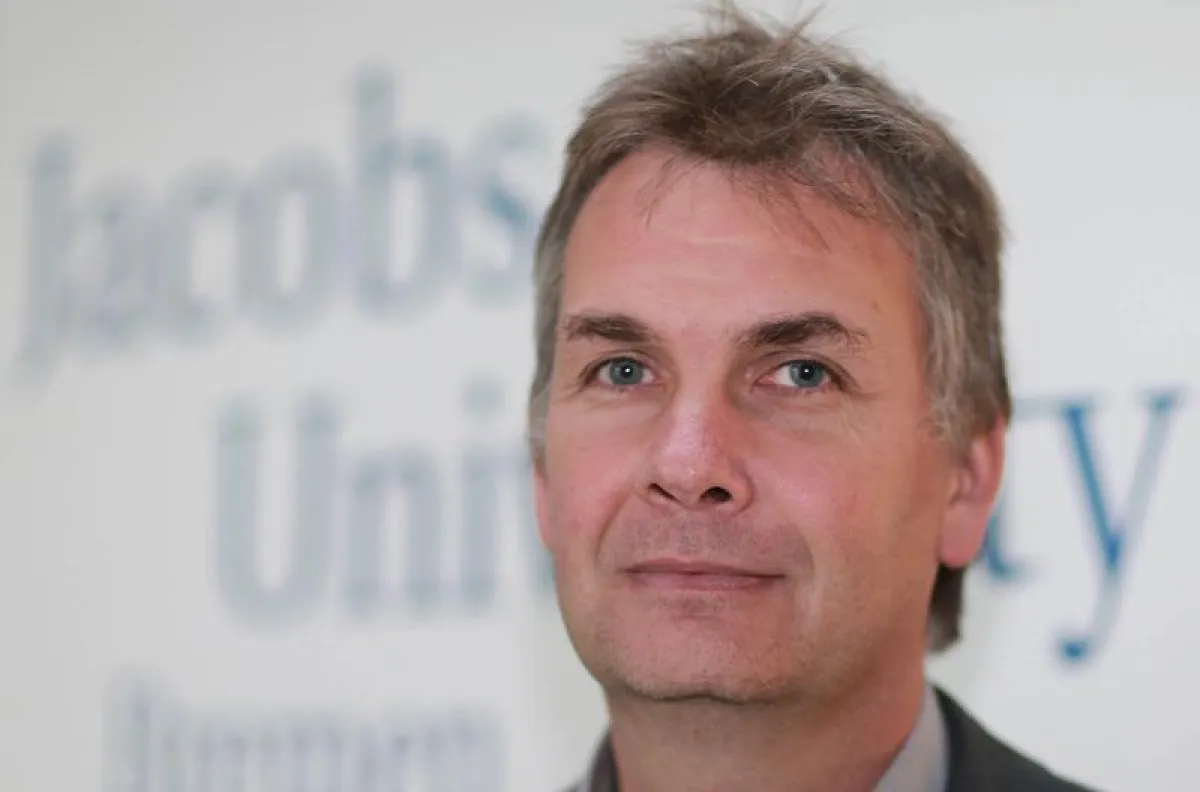
(openPR) At the latest at the age of 30, everything starts to go downhill. For most people, this is when their brain starts to shrink in volume. That’s the bad news, the good news is that this aging process can be stopped by means of targeted training, movement and physical activity. “Everyone has the capability of maintaining their brain function as long as they are physically healthy,” says Dr. Ben Godde, Professor of Neuroscience at Jacobs University in Bremen.
---
Lifelong learning, healthy and successful aging and brain plasticity, i.e. the brain’s ability to change, are the scientist’s research priorities. “It was previously thought that brain development was limited to childhood and that the brain had finished learning when this phase was completed,” says the 52-year-old. But that is not true, the brain retains its plasticity until old age.
“The brain is a network that continuously regenerates itself and forms new connections,” explains Godde. “This depends on what the brain is required to do. If these requirements change, the brain changes. When I learn something, new connections are formed and therefore new networks. The important things are retained. The brain can undergo extreme changes over a lifespan.” It is thus important for young people to learn many new things about the world quickly. In contrast, older people build on the knowledge gained from their experiences to solve problems. The brain works differently at this age and this is often interpreted as decline.
Godde’s research group has proven this process in several trials, for example in tests on hand dexterity. Tying shoelaces, closing buttons or taking an egg without dropping it are important requirements for older people for participating in daily life. Test subjects of various ages were tested to find out how well they can differentiate between different surfaces and feel or stack objects. When measuring brain activity, it can be seen that new networks are formed in the brain and stored. “Both specific functions as well as the general capacity of the brain can be trained,” says Godde. It is important to remain active. Endurance training improves the blood flow to the brain.
Despite these findings, the view that older people cannot learn anything new is still widespread. Godde is fighting this attitude. “Our studies prove the exact opposite. Whoever wants to can still play the piano in old age provided their muscles and hands are healthy”.
The scientist, who trains his coordination skills on the golf course, also teaches his students the basics about neuroscience. As is usual at the international, English-medium university, the students come to Bremen from a wide variety of countries. “This cultural diversity is extremely enriching,” says Godde. “The students are highly motivated and interested. They come up with their own project ideas, which are often very advanced – it’s really great”.
The trained biologist has been teaching and researching at Jacobs University since 2005. He values the interdisciplinary nature of the University as well as the close contact with colleagues in other specialist areas. “We need the knowledge of biologists, mathematicians, physicians and psychologists. The brain can only be understood interdisciplinarily”.
Interdisciplinary learning is also about further studies, which Godde is also responsible for as an academic coordinator: the “Medical Preparatory Year” (MedPrep), a one-year preparatory program for medical studies. This program prepares students for their future studies in a targeted way by providing scientific foundations and giving them their first practical experiences. Godde is certain of one thing: “The knowledge that they gain from us significantly improves their chances of gaining a place to study medicine and to also graduate successfully at the end of their studies”.
Questions will be answered by:
Prof. Dr. Ben Godde | Professor of Neuroscience, Psychology & Methods
 | Tel.: +49 421 200-4760
More information:
http://bgodde.user.jacobs-university.de
https://www.jacobs-university.de
About Jacobs University:
Jacobs University is a private, independent, English-language university in Bremen. Young people from all over the world study here in preparatory, Bachelor, Master, and PhD programs. Internationality and transdisciplinarity are special features of Jacobs University: research and teaching don’t just pursue a single approach, they address issues from the perspectives of multiple disciplines. This principle makes Jacobs graduates highly sought-after new talents who successfully strike out on international career paths.
Contact:
Thomas Joppig | Brand Management, Marketing & Communications
 | Tel.: +49 421 200-4504
Quelle: idw