openPR Recherche & Suche
Presseinformation

First Detailed Decoding of Complex Finger Millet Genome

05.09.201703:00 UhrWissenschaft, Forschung, Bildung
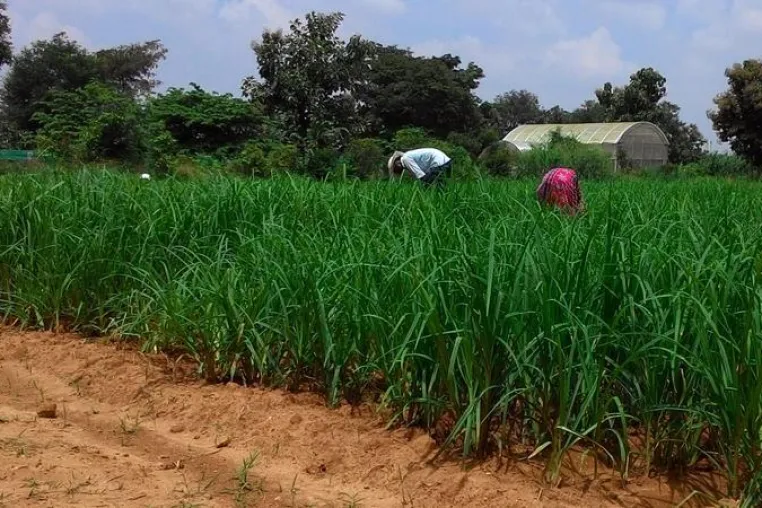
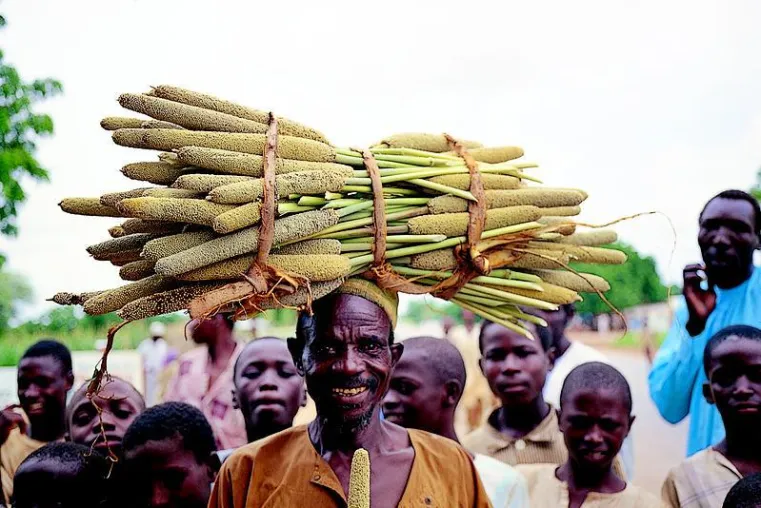
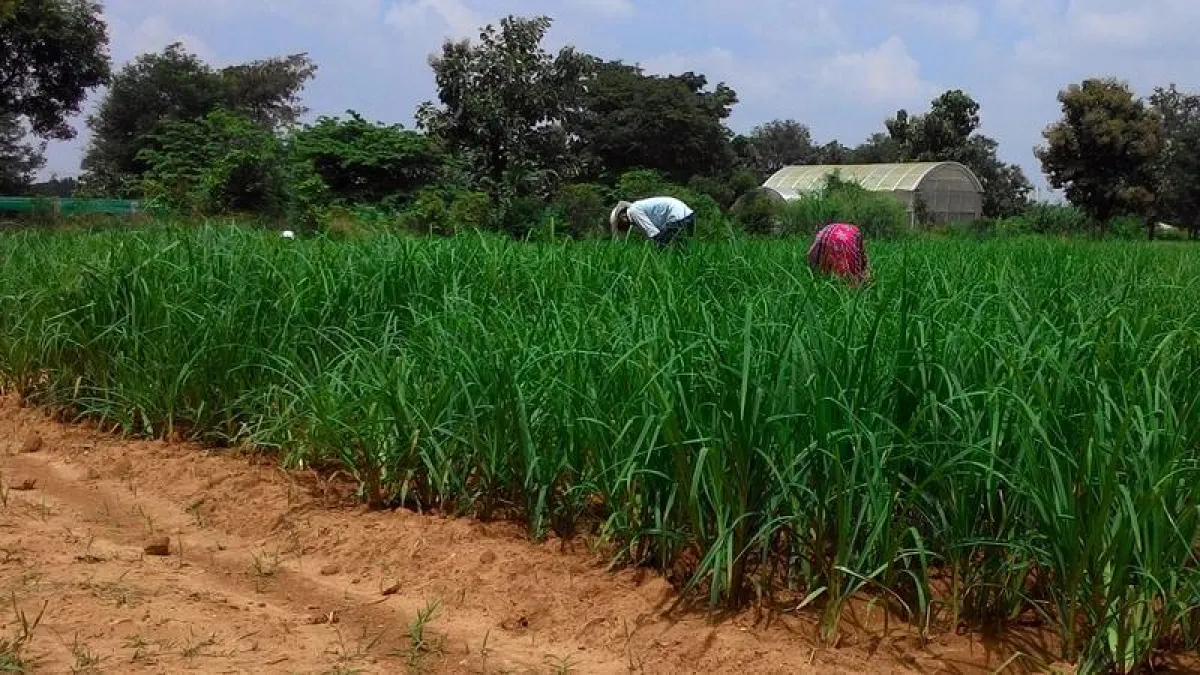
Bild: First Detailed Decoding of Complex Finger Millet Genome
The sequenced finger millet genome is a central basis for improving food security in countries such as India. (Mathi Thumilan Balachadran)

(openPR) Finger millet has two important properties: The grain is rich in important minerals and resistant towards drought and heat. Thanks to a novel combination of state-of-the-art technologies, researchers at the University of Zurich were able to decode the large and extremely complex genome of finger millet in high quality for the first time. This represents a fundamental basis for improving food security in countries like India and parts of Africa.


---
For many poor farmers in India and Africa, finger millet is a major staple food. The crop species is not only a rich source of minerals like calcium, iron, magnesium and zinc, and it contains many vitamins and essential amino acids. The plant is also characterized by its resistance to drought and heat. As it is very healthy and gluten-free, it is finding increased use as a food in industrial countries as well. Despite its importance, finger millet has been given very little scientific attention until now.

Large and complex genome due to fusion of two plant species

Finger millet arose through the hybridization of two different plant species. The plant is therefore polyploid, which means it has a four-fold set of chromosomes and almost twice as many genes as its original species. The size and complexity of the genome are thought to have conferred the broad environmental tolerance of finger millet, while making genome research extremely difficult. For the first time, an international team of researchers from the University of Zurich has now managed to decode the complex genome of finger millet in great detail. It comprises about 2.6 million base pairs and has more than 62,300 genes – about twice as many as rice, for example.

New strategy for genome sequencing and mapping

A good 57,900 finger millet genes – over 90 percent – occur in more than two copies. As their DNA sequences are very similar, it was difficult to correctly allocate the numerous, decoded DNA sections within the entire genome. In cooperation with Ralph Schlapbach and Sirisha Aluri from the Functional Genomics Center at the University of Zurich and ETH Zurich, the team headed up by Kentaro Shimizu, professor at the UZH Department of Evolutionary Biology and Environmental Studies, has managed to overcome these difficulties. For this purpose, the scientists combined a sophisticated bioinformatics strategy developed by Masaomi Hatakeyama that uses state-of-the-art sequencing methods with a new technology that can optically map the long, individual DNA molecules in the genome. “Our newly developed strategy will help sequence the genome of other polyploid cultivated plants that have not been able to be determined until now,” Shimizu says.

Improving the supply of nutrients and drought resistance

An interdisciplinary team of researchers from Zurich and Bangalore, India, worked together on this project. The work was supported by Indo-Swiss Collaboration in Biotechnology (ISCB), a bilateral research and development program financed by the Swiss and Indian governments, as well as by the Japan Science and Technology Agency. The objective is to improve food security and to develop the capacity of biotechnological research in India. “The newly available genome data of finger millet opens up numerous possibilities for modern plant breeding,” Shimizu emphasizes. “On the one hand, to help people with mineral deficiencies in India and in industrialized countries and, on the other hand, to make important crop plants more resistant to drought and aridness.”

Literature:
Masaomi Hatakeyama, Sirisha Aluri, Mathi Thumilan Balachadran, Sajeevan Radha Sivarajan, Andrea Patrignani, Simon Gruter, Lucy Poveda, Rie Shimizu-Inatsugi, John Baeten, Kees-Jan Francoijs, Karaba N. Nataraja, Yellodu A. Nanja Reddy, Shamprasad Phadnis, Ramapura L. Ravikumar, Ralph Schlapbach, Sheshshayee M. Sreeman and Kentaro K. Shimizu. Multiple hybrid de novo genome assembly of finger millet, an orphan allotetraploid crop. DNA Research. 5 September 2017. DOI: 10.1093/dnares/dsx036

Contact:
Prof. Dr. Kentaro K. Shimizu
Department of Evolutionary Biology and Environmental Sciences
University of Zurich
Phone: +41 44 635 67 40
E-mail: E-Mail

Weitere Informationen:
- http://www.media.uzh.ch/en/Press-Releases/2017/Finger-millet-genome.html

Quelle: idw

Diese Pressemeldung wurde auf openPR veröffentlicht.

Verantwortlich für diese Pressemeldung:

News-ID: 966840
 491

Kostenlose Online PR für alle

Jetzt Ihren Pressetext mit einem Klick auf openPR veröffentlichen

Jetzt gratis starten

Pressebericht „First Detailed Decoding of Complex Finger Millet Genome“ bearbeiten oder mit dem "Super-PR-Sparpaket" stark hervorheben, zielgerichtet an Journalisten & Top50 Online-Portale verbreiten:

PM löschen PM ändern
Disclaimer: Für den obigen Pressetext inkl. etwaiger Bilder/ Videos ist ausschließlich der im Text angegebene Kontakt verantwortlich. Der Webseitenanbieter distanziert sich ausdrücklich von den Inhalten Dritter und macht sich diese nicht zu eigen. Wenn Sie die obigen Informationen redaktionell nutzen möchten, so wenden Sie sich bitte an den obigen Pressekontakt. Bei einer Veröffentlichung bitten wir um ein Belegexemplar oder Quellenennung der URL.

Pressemitteilungen KOSTENLOS veröffentlichen und verbreiten mit openPR

Stellen Sie Ihre Medienmitteilung jetzt hier ein!

Jetzt gratis starten

Weitere Mitteilungen von Universität Zürich

Neue Biomarker sagen Erfolg von Immuntherapie gegen Krebs  voraus
Neue Biomarker sagen Erfolg von Immuntherapie gegen Krebs voraus
Ob Krebspatienten auf eine Immuntherapie positiv ansprechen werden, lässt sich bereits vorgängig im Blut nachweisen. Forschende der Universität Zürich haben entsprechende Biomarker identifiziert. Patienten, bei denen die Therapie nicht wirkt, können frühzeitig mit anderen Methoden behandelt werden. --- Mit einer Immuntherapie kann bereits heute der schwarze Hautkrebs (Melanom) und der Lungen-krebs erfolgreich bekämpft werden. Dabei wird die normale Funktion des Immunsystems, das re-gelmässig alle Gewebe im Körper auf Krankheitserreger und St…
Bild: Universität Zürich und Karls-Universität Prag spannen zusammenBild: Universität Zürich und Karls-Universität Prag spannen zusammen
Universität Zürich und Karls-Universität Prag spannen zusammen
Die Universität Zürich und die Karls-Universität Prag gehen eine strategische Partnerschaft ein. Die grössten Universitäten Tschechiens und der Schweiz stärken die Zusammenarbeit in Forschung und Lehre sowie den Austausch von Studentinnen und Studenten. --- Die dritte strategische Partnerschaft geht die Universität Zürich mit der ältesten Universität Mitteleuropas ein. In Prag haben Rektor Michael Hengartner und Tomas Zima, Rektor der Karls-Universität, am 19. Dezember 2017 den Vertrag unterzeichnet. Die Universität ist im Jahre 1348 gegründ…

Das könnte Sie auch interessieren:

Bild: Getreide, das der Dürre trotztBild: Getreide, das der Dürre trotzt
Getreide, das der Dürre trotzt
… genomische Information war für diese Studien sehr wichtig. ICRISAT:< http://www.icrisat.org/> CGIAR: VIME (Vienna Metabolomics Center): Publikation in "Nature Biotechnology" International Pearl millet genome consortium (2017) Pearl millet genome sequence provides a resource to improve agronomic traits in arid environments Nature Biotechnology …
Bild: Precision breeding needed to adapt corn to climate change, ancient samples showBild: Precision breeding needed to adapt corn to climate change, ancient samples show
Precision breeding needed to adapt corn to climate change, ancient samples show
… it took a long time to accumulate enough of the early flowering variants in the same plant to adapt to short growing seasons. A trait like flowering time is so complex that it involves changes to hundreds of genes,” says Kelly Swarts from Cornell University and now at the MPI for Developmental Biology. The samples reveal that the first maize successfully …
Bild: Gregor Mendel Institute: Genetic adaptation to SIV protects Vervet monkeys from immunodeficiencyBild: Gregor Mendel Institute: Genetic adaptation to SIV protects Vervet monkeys from immunodeficiency
Gregor Mendel Institute: Genetic adaptation to SIV protects Vervet monkeys from immunodeficiency
… first clarified the genetic relationships between vervet monkey species across Africa and then showed that evolutionary processes that gave rise to the different species were complex, involving periods of separation and secondary contact. According to Dr. Nordborg “This analysis reinforces many of our evolving hypotheses on species formation that have …
Bild: Building New Moss FactoriesBild: Building New Moss Factories
Building New Moss Factories
New EU project will promote the environmentally friendly production of complex molecules for medicine and industry --- For millions of years, plants have been producing highly complex molecules out of simple chemical building blocks, sustainably and cheaply. Many of these chemical substances are used in medicine and the perfume industry today. Prof. …
Bild: Komplexes Genom von Fingerhirse erstmals in hoher Qualität entschlüsseltBild: Komplexes Genom von Fingerhirse erstmals in hoher Qualität entschlüsselt
Komplexes Genom von Fingerhirse erstmals in hoher Qualität entschlüsselt
Fingerhirse verfügt über zwei wichtige Eigenschaften: Die Getreideart ist reich an wichtigen Mineralstoffen, und sie resistent gegenüber Trockenheit und Hitze. Dank einer neuartigen Kombination modernster Technologien konnten Forschende der Universität Zürich das grosse und sehr komplexe Genom der Fingerhirse erstmals in hoher Qualität entschlüsseln. …
A playground for evolution
The term “genome” refers to the entirety of the genetic material that is encoded in each individual cell of an organism and contains information that dictates how species-specific morphological structures are formed. For instance, the genome of a fruit fly encodes the information for developing wings, whereas a spider’s genome contains the code for it …
Bild: COMPRION First with GSMA SGP.23 RSP eUICC Test BenchBild: COMPRION First with GSMA SGP.23 RSP eUICC Test Bench
COMPRION First with GSMA SGP.23 RSP eUICC Test Bench
… process, COMPRION offers integrated views for comprehensive monitoring and logging: the Sequence Diagram. Oberhokamp explicates: “On the one hand, it provides a clearly-structured overview of the extremely complex processes. On the other hand, displaying detailed information for RSP functions helps developers to analyze and resolve problems.” About COMPRION
Bild: How cells hack their own genesBild: How cells hack their own genes
How cells hack their own genes
… protein bound to heterochromatin at the selfish genes. Rhino recruits Moonshiner to the heterochromatic region, and Moonshiner initiates assembly of the RNA polymerase II pre-initiation complex, that catalyzes the transcription. Therefore, gene expression is activated in an otherwise silent region via a different code embedded in histone marks rather than …
Bild: The sweet potato and it´s evolutionary tracesBild: The sweet potato and it´s evolutionary traces
The sweet potato and it´s evolutionary traces
… our local kitchen. The relationship to our normal potato is distant but nevertheless the usage of these two ingredients, like mashed or as fries, is quite similar. How astonishing complex the genome of the sweet potato is was revealed now in the journal Nature Plants by scientists from the Chenshan Botanical Garden (CSBG) in Shanghai, the Max Planck …
Communication between Wheat Genes Contributes to Increasing Crop Productivity
… increase from 1 to 6°C by 2100, with serious consequences for agriculture and thereby the food security of the growing human world population. From this perspective, pearl millet (Pennisetum glaucum (L.) R. Br., syn. Cenchrus americanus (L.) Morrone) is an interesting crop producing reliable grain in regions of drough, heat and low soil fertility where …
Sie lesen gerade: First Detailed Decoding of Complex Finger Millet Genome