openPR Recherche & Suche
Presseinformation

Marine litter: Where does all the plastic come from?

09.08.201713:00 UhrWissenschaft, Forschung, Bildung

(openPR) The new project "MicroCatch_Balt" funded by the Federal Ministry of Education and Research will investigate the sources of plastic particles within the catchment area of the Baltic Sea by taking the Warnow river catchment basin as an example.


---
Wherever our beaches are not tidied on an every day basis, it is clear to see: the flotsam transported to the beaches by the sea contains among algae and mussel shells a lot of man-made litter. One can find cigarette butts as well as large, small or smallest plastic particles. Where does all the plastic litter come from? What we already know is, that in coastal waters, the load of plastic litter is especially high in the vicinity of river mouths. Somewhere between the source and the mouth of rivers, there have to be the originators of these particles. The range of possible sources is broad as well as the variety of plastic types getting into the environment.

On August 1, 2017, a new project funded by the Federal Ministry of Education and Research (BMBF) officially started. It focusses on the different sources of plastic particles within the catchment area of the Baltic Sea taking the Warnow catchment basin as an example. The project consortium under the lead of Dr. Matthias Labrenz from IOW gathers the expertise of environmental science, modelling, computer science, geo sciences, agricultural science and communication. They are aiming to detect exemplarily the relevant pathways plastic particles take on their way to the sea and to identify hotspots. Finally, they will conclude their results in a travelling exhibition to be shown in cities and municipalities along the German Baltic Sea coast.

On August 7 - 8, 2017, the project partners met for the first time in Warnemünde in order to coordinate the different working plans and to organize joint activities.

Members of the MicroCatch_Balt consortium are:
• Leibniz Institute for Baltic Sea Research Warnemünde (responsible for the coordination, sampling campaigns and exhibition concepts)

• Leibniz Institute for Polymer Research Dresden (responsible for microplastic analyses)

• Forschungszentrum Jülich (responsible for modelling the pathways of microplastic from diffuse and point sources on the basis of the hydrological conditions within the catchment basin of the Warnow river)

• Thünen Institute of Rural Areas, Braunschweig (responsible for the identification of potential microplastic sources on agricultural areas)

• Fraunhofer Institute for Computer Graphics Research (responsible for the development of a multi-touch application related to the travelling exhibition)

The project will be supported for the next three years with a total fund of 1,7 mio Euro.

Quelle: idw
Diese Pressemeldung wurde auf openPR veröffentlicht.

Verantwortlich für diese Pressemeldung:

News-ID: 962830
 191

Kostenlose Online PR für alle

Jetzt Ihren Pressetext mit einem Klick auf openPR veröffentlichen

Jetzt gratis starten

Pressebericht „Marine litter: Where does all the plastic come from?“ bearbeiten oder mit dem "Super-PR-Sparpaket" stark hervorheben, zielgerichtet an Journalisten & Top50 Online-Portale verbreiten:

PM löschen PM ändern
Disclaimer: Für den obigen Pressetext inkl. etwaiger Bilder/ Videos ist ausschließlich der im Text angegebene Kontakt verantwortlich. Der Webseitenanbieter distanziert sich ausdrücklich von den Inhalten Dritter und macht sich diese nicht zu eigen. Wenn Sie die obigen Informationen redaktionell nutzen möchten, so wenden Sie sich bitte an den obigen Pressekontakt. Bei einer Veröffentlichung bitten wir um ein Belegexemplar oder Quellenennung der URL.

Pressemitteilungen KOSTENLOS veröffentlichen und verbreiten mit openPR

Stellen Sie Ihre Medienmitteilung jetzt hier ein!

Jetzt gratis starten

Weitere Mitteilungen von Leibniz-Institut für Ostseeforschung Warnemünde

Bild: Umweltgeschichte aus dem Faulschlamm: Klimawandel lässt „tote Zonen“ im Schwarzen Meer wachsenBild: Umweltgeschichte aus dem Faulschlamm: Klimawandel lässt „tote Zonen“ im Schwarzen Meer wachsen
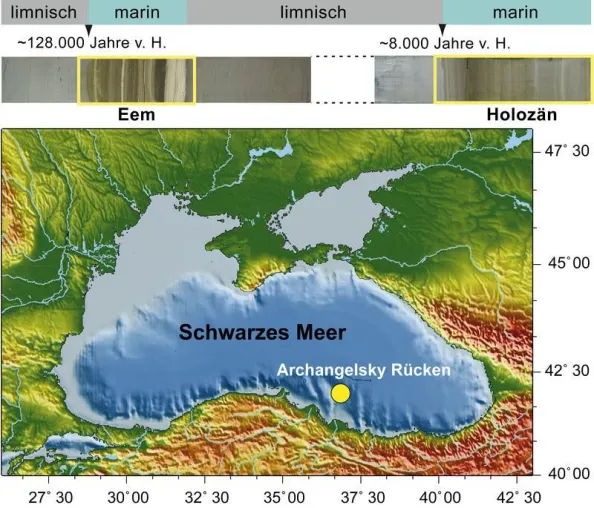
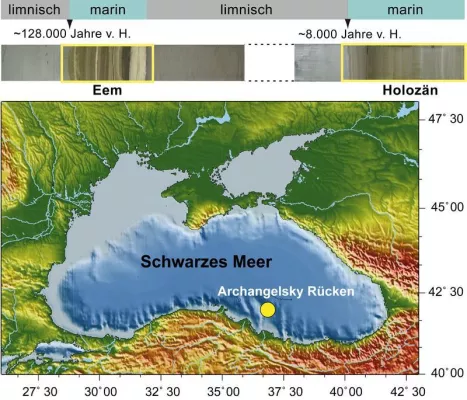
Umweltgeschichte aus dem Faulschlamm: Klimawandel lässt „tote Zonen“ im Schwarzen Meer wachsen
Erstmalig ist es GeowissenschaftlerInnen des Leibniz-Instituts für Ostseeforschung Warnemünde (IOW), der Universitäten Oldenburg und Hannover sowie der Rutgers University (USA) gelungen, die Ablagerungsbedingungen im Schwarzen Meer während der letzten Warmzeit (Eem) vor rund 128.000 Jahren zeitlich hoch aufgelöst zu analysieren. Damit wurde ein Vergleich der heutigen sauerstofffreien Bedingungen im Tiefenwasser des Schwarzen Meeres mit denen zur Eem-Zeit möglich, als die Sommer-Temperaturen des Wassers rund 3°C höher waren. Demnach können sic…
Bild: Welche Belastungen bringen Megastädte für die Küstenmeere? Spurensuche in chinesischen RandmeerenBild: Welche Belastungen bringen Megastädte für die Küstenmeere? Spurensuche in chinesischen Randmeeren
Welche Belastungen bringen Megastädte für die Küstenmeere? Spurensuche in chinesischen Randmeeren
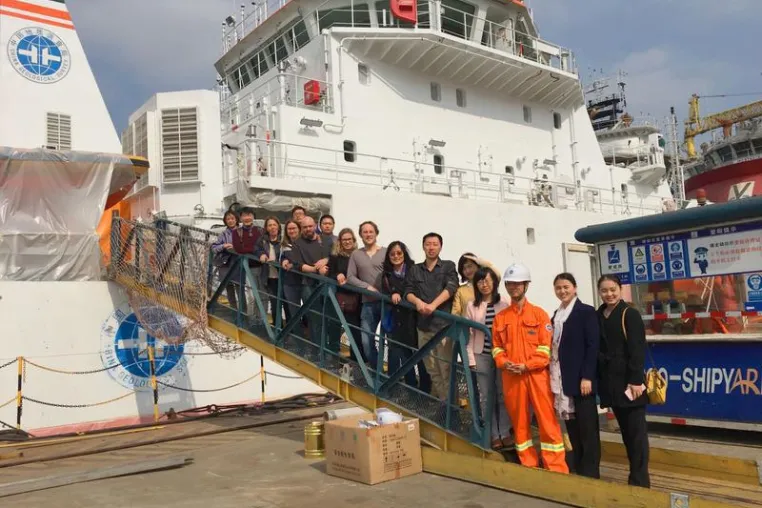
In der chinesischen Millionenstadt Guangzhou geht heute das Kick-off-Treffen (4. – 8. Dezember 2017) für zwei neue deutsch-chinesische Verbundprojekte zu ende, die das Bundesministerium für Bildung und Forschung (BMBF) in den kommenden drei Jahren mit insgesamt 1,25 Mio. Euro fördert. Ziel der Vorhaben ist, den Fingerabdruck von Megastädten in den Meeresablagerungen von chinesischen Randmeeren zu erkennen. Beide Projekte werden auf deutscher Seite vom Leibniz-Institut für Ostseeforschung Warnemünde (IOW) koordiniert. Angesichts einer weltweit…

Das könnte Sie auch interessieren:

Bild: Lessons for the future from past storm wavesBild: Lessons for the future from past storm waves
Lessons for the future from past storm waves
… It has been long debated whether the rocks were actually transported by ancient “super storms”. Dr. Alessio Rovere, along with scientific colleagues from MARUM – Center for Marine Environmental Sciences of the University of Bremen and from the Leibniz Centre for Tropical Marine Research (ZMT), have now discovered that storms with intensities that are …
Bild: AnY-1 vs. 1.4.7 CreW bringen ihren aktuellen HandsUp-Titel „WHERE ARE YOU NOW“ an den StartBild: AnY-1 vs. 1.4.7 CreW bringen ihren aktuellen HandsUp-Titel „WHERE ARE YOU NOW“ an den Start
AnY-1 vs. 1.4.7 CreW bringen ihren aktuellen HandsUp-Titel „WHERE ARE YOU NOW“ an den Start
… mehr positivem Feedback, brachten sie im Sommer 2009 erfolgreich ihren Track „Activate“ heraus. Nun wollen die Jungs von AnY-1 vs. 1.4.7 CreW mit dem HandsUp-Kracher „WHERE ARE YOU NOW“, der beim Lüneburger Dance-Label Lovetraxx Records als MP3 Download erscheint, an ihren ersten Erfolg anknüpfen. Verschiedene Remixer durften sich auch an den glanzvollen …
Bild: Seiko Velatura Yachting Timer Chronograph SPC149P1 SPC149P SPC149 Mens WatchBild: Seiko Velatura Yachting Timer Chronograph SPC149P1 SPC149P SPC149 Mens Watch
Seiko Velatura Yachting Timer Chronograph SPC149P1 SPC149P SPC149 Mens Watch
… robustness, durability and high functionality, Velatura is the watch partner of the International 49er Class Association. It currently forms the core for the brand’s renowned marine collections and it amazes also with its unique design and advanced features, not just by its high performance. It comes specially developed for professional sailors. Seiko …
Bild: Climate change weakens Walker circulationBild: Climate change weakens Walker circulation
Climate change weakens Walker circulation
… produce flooding on one extreme, and droughts on the other, influence the lives of millions of people in tropical regions. Dr. Mahyar Mohtadi of MARUM, the Center for Marine Environmental Sciences at the University of Bremen, with a team of scientific colleagues, has studied how the atmospheric water cycle could develop in the future. Their results are …
Bild: Giant boulders on the coast of the Bahamas are evidence of ancient stormsBild: Giant boulders on the coast of the Bahamas are evidence of ancient storms
Giant boulders on the coast of the Bahamas are evidence of ancient storms
… It has been long debated whether the rocks were actually transported by ancient “super storms”. Dr. Alessio Rovere, along with scientific colleagues from MARUM – Center for Marine Environmental Sciences of the University of Bremen and from the Leibniz Centre for Tropical Marine Research (ZMT), have now discovered that storms with intensities that are …
Bild: Icebergs: Mathematical model calculates the collapse of shelf iceBild: Icebergs: Mathematical model calculates the collapse of shelf ice
Icebergs: Mathematical model calculates the collapse of shelf ice
… process known as calving, Julia Christmann from the University of Kaiserslautern (TU) has developed mathematical models in cooperation with the Alfred Wegener Institute, Helmholtz Centre for Polar and Marine Research (AWI). On the basis of physical factors, it is claimed that these models can be used to predict when and where the ice may collapse. This …
Bild: Versatile marine bacteria could be an influence on global warming, scientists discoverBild: Versatile marine bacteria could be an influence on global warming, scientists discover
Versatile marine bacteria could be an influence on global warming, scientists discover
Scientists have discovered that a ‘rare’ type of marine bacteria is much more widespread than previously thought – and possesses a remarkable metabolism that could contribute to greenhouse gas production. EMBARGOED UNTIL WEDNESDAY NOVEMBER 1, 18:00 LONDON TIME (19:00 BERLIN TIME) --- An international team of scientists now shows that the previously little-studied …
Bild: Rapid environmental change makes species more vulnerable to extinctionBild: Rapid environmental change makes species more vulnerable to extinction
Rapid environmental change makes species more vulnerable to extinction
… Studies at the University of Zurich. 75 communities of interacting species analyzed For their investigation, the researchers drew on 75 networks of interacting species in terrestrial and marine environments. These biological communities differ with regard to the number of interactions that a species enters into with other species, as well as the level …
The IASS at the World Climate Conference in Bonn
… like Fiji are already struggling with. Entire ecosystems are threatened, including coral reefs, which are extremely sensitive to temperature rises. In order to advance marine conservation and climate protection in accordance with the UN sustainable development goals, ocean governance must be strengthened – more effective regulation is needed, especially …
Bild: Large-Mouthed Fish Was Top Predator After Mass ExtinctionBild: Large-Mouthed Fish Was Top Predator After Mass Extinction
Large-Mouthed Fish Was Top Predator After Mass Extinction
… mass extinction on Earth took place about 252 million years ago – at the boundary between the Permian and Triassic geological periods. Up to 90 percent of the marine species of that time were annihilated. Worldwide biodiversity then recovered in several phases throughout a period of about five million years. Until now, paleontologists have assumed that …
Sie lesen gerade: Marine litter: Where does all the plastic come from?